
You click a button on a website, and something happens. Usually, that action travels to a central server owned by a company, gets processed, and sends back a result. But what if that server didn’t exist? What if the code ran on thousands of computers at once, with no single boss pulling the strings? That is exactly how dApps (decentralized applications) work.
If you have heard buzzwords like Web3, Ethereum, or DeFi, you have encountered dApps. They look like normal apps-often just websites-but under the hood, they are built on blockchain technology. This means they are transparent, censorship-resistant, and run automatically without intermediaries. Understanding how they function demystifies the entire crypto ecosystem.
The Anatomy of a dApp: Front-End vs. Back-End
To understand a dApp, you first need to separate what you see from what makes it tick. Every application has two parts: the front-end and the back-end. In a traditional app like Facebook or Uber, both parts are controlled by the same company. The front-end is the interface you interact with, while the back-end is the database and logic running on their private servers.
In a dApp, this structure changes dramatically. The front-end can still be a standard website built with HTML, CSS, and JavaScript. It might even be hosted on centralized servers for speed. However, the back-end is entirely different. Instead of a private database, the back-end lives on a public blockchain. This is where the magic happens. The core logic of the application is encoded into smart contracts, which are self-executing programs stored on the blockchain.
When you interact with a dApp, your front-end interface sends a request to these smart contracts. The contract checks if your request meets specific conditions. If it does, it executes the action automatically. For example, if you swap tokens on a decentralized exchange, the smart contract verifies you have enough funds, locks them up, and releases the other token to your wallet-all in one go, without asking a bank for permission.
The Role of Smart Contracts and the EVM
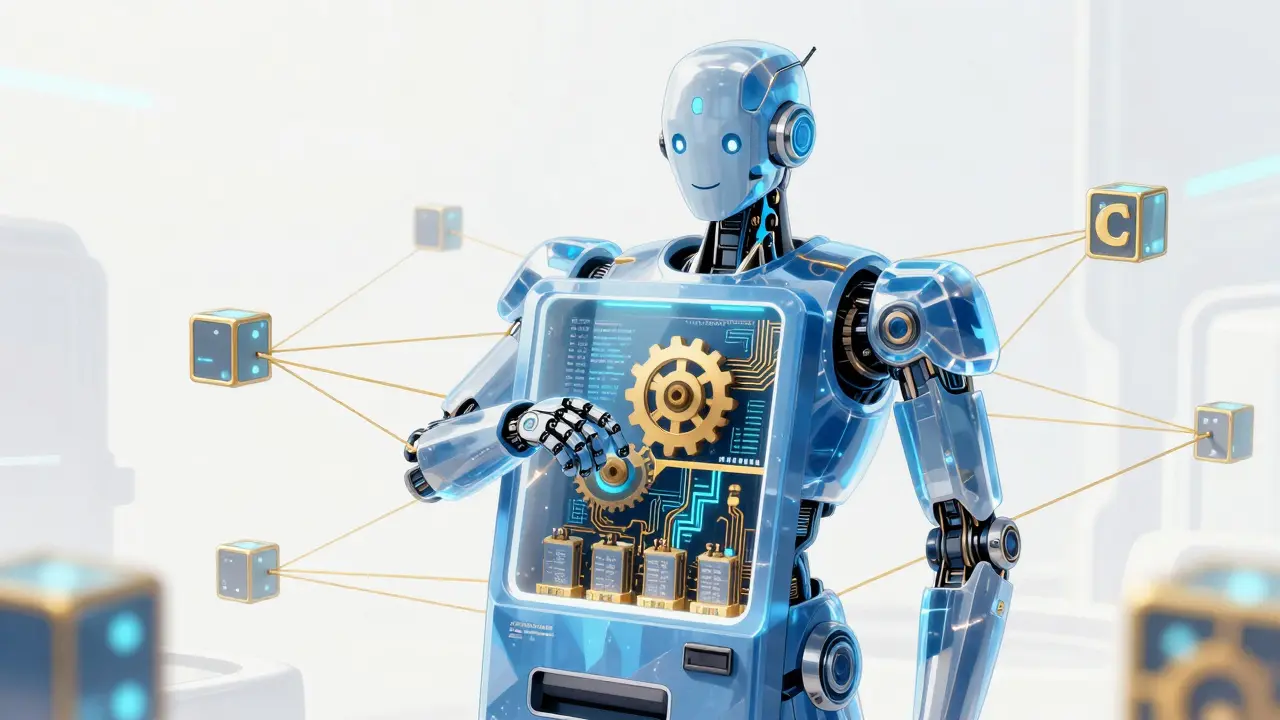
Smart contracts are the engine of every dApp. Think of them as digital vending machines. You put money in, select an item, and the machine gives it to you. There is no cashier, no negotiation, and no way for the machine to change its mind once it is programmed. These contracts are immutable, meaning once deployed, their code cannot be easily altered. This ensures trust because users know the rules won't change mid-game.
Most dApps run on the Ethereum network, which uses something called the Ethereum Virtual Machine (EVM). The EVM acts as a global computer that runs on every node in the network. When a smart contract executes, every computer in the Ethereum network processes that transaction simultaneously. This consensus mechanism ensures that everyone agrees on the outcome. If one computer tries to cheat, the others reject it. This distributed verification is what makes the system secure and resistant to hacking or shutdown.
Data Storage and Immutability
In traditional apps, data is stored in centralized databases that can be edited, deleted, or hacked. In a dApp, data integrity is paramount. Transactions and state changes are recorded on the blockchain ledger. Each block of data is cryptographically linked to the previous one, creating a chain that is nearly impossible to alter retroactively.
However, storing large amounts of data directly on the blockchain is expensive and slow. Most dApps do not store user photos or video files on-chain. Instead, they use decentralized storage solutions like IPFS (InterPlanetary File System). These systems break files into chunks and distribute them across a peer-to-peer network. The blockchain only stores a unique hash-a digital fingerprint-that points to where the file is located. This keeps the blockchain light while ensuring the content remains accessible and unchangeable.
User Interaction: Wallets and Gas Fees
You cannot use a dApp with a username and password. Instead, you connect using a cryptocurrency wallet like MetaMask or Phantom. Your wallet serves as your identity. It holds your private keys, which prove ownership of your assets and allow you to sign transactions. When you sign a transaction, you are essentially saying, "I authorize this smart contract to move my funds or update my data."
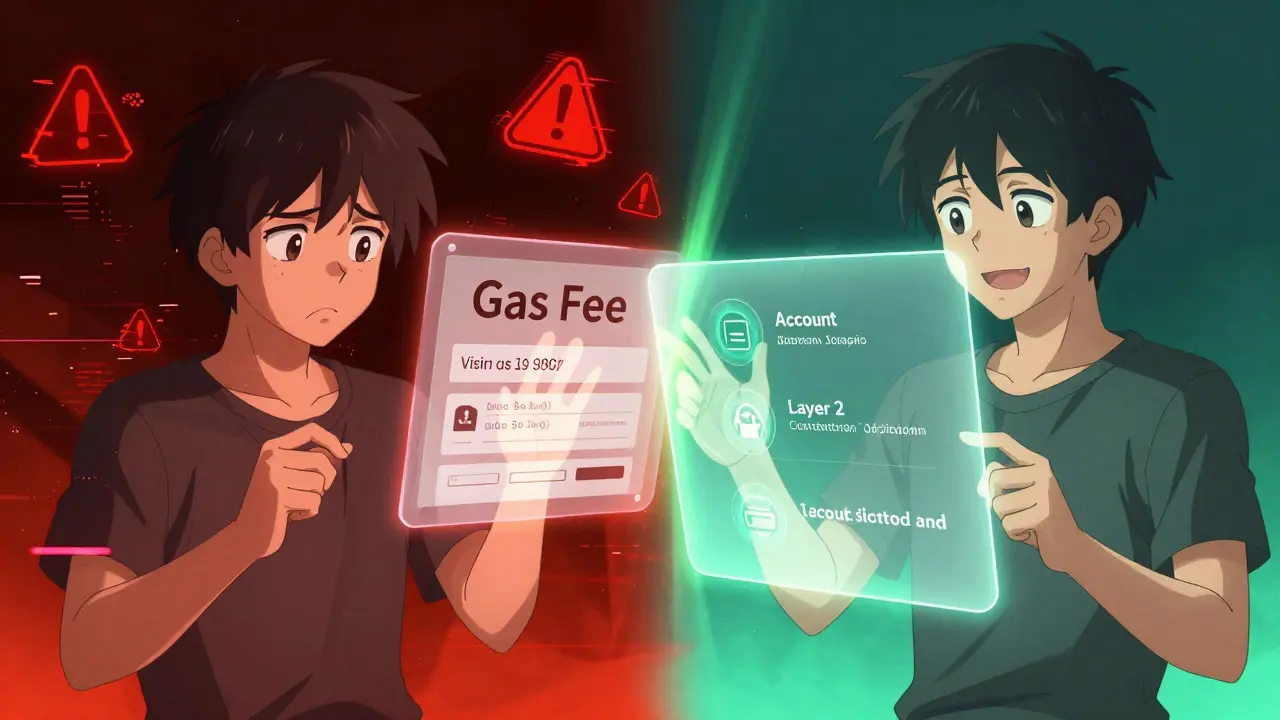
This interaction comes with a cost known as gas fees. Since dApps run on a shared network, users must pay miners or validators to process their transactions. Gas fees fluctuate based on network congestion. During peak times, fees can spike significantly, making simple actions expensive. This is one of the biggest hurdles for mainstream adoption. Layer 2 solutions, such as Optimism and Arbitrum, have emerged to solve this by processing transactions off the main chain and settling them later, drastically reducing costs and increasing speed.
Advantages Over Centralized Applications
Why build a dApp when centralized apps are faster and cheaper? The answer lies in trust and control. Here are the key benefits:
- Censorship Resistance: No single entity can shut down a dApp or freeze your account. As long as the blockchain is running, the app is available.
- Transparency: All code and transactions are public. Anyone can audit the smart contracts to ensure there are no hidden tricks.
- Data Ownership: You control your data through your private keys. Companies cannot sell your information to advertisers without your explicit consent.
- Uptime: DApps rarely suffer from downtime. Because they are distributed across thousands of nodes, there is no single point of failure. Studies show dApps often achieve 99.99% uptime compared to lower rates for traditional cloud services.
Challenges and Limitations
DApps are not perfect. They face significant technical and usability challenges that developers are still working to overcome.
Scalability is a major issue. While Visa can process tens of thousands of transactions per second, Ethereum’s base layer handles far fewer. Although Layer 2 solutions help, complex interactions can still feel sluggish compared to web2 experiences. User Experience is another hurdle. Managing seed phrases, understanding gas fees, and fearing irreversible mistakes create a steep learning curve for average users. According to industry surveys, many potential users abandon dApps due to confusion over wallet management.
Security Risks are also prevalent. While the blockchain itself is secure, the smart contracts interacting with it can contain bugs. If a developer makes a mistake in the code, hackers can exploit it. In recent years, billions of dollars have been lost to smart contract vulnerabilities. Unlike a bank, there is no customer support to reverse a fraudulent transaction. Once the code executes, it is final.
Real-World Use Cases
DApps are already transforming several industries. The most prominent sector is DeFi (Decentralized Finance). Platforms like Uniswap and Aave allow users to lend, borrow, and trade assets without banks. In 2023 alone, these platforms facilitated trillions of dollars in volume. Another growing area is NFTs (Non-Fungible Tokens), which use dApps to verify ownership of digital art, music, and collectibles. Supply chain tracking is also benefiting, with companies using dApps to provide immutable records of product origins, ensuring authenticity for luxury goods and pharmaceuticals.
The Future of dApps
The landscape of dApps is evolving rapidly. Upgrades like Ethereum’s Dencun update have significantly reduced costs for Layer 2 networks, making microtransactions viable. Account abstraction standards are being implemented to simplify wallet creation, allowing users to log in with email addresses instead of managing complex seed phrases. As these technologies mature, dApps may become indistinguishable from regular apps to the end-user, hiding the complexity of blockchain underneath a smooth interface.
While regulatory scrutiny increases globally, the core appeal of dApps-autonomy and transparency-remains strong. For developers and users alike, understanding how these decentralized systems work is the first step toward participating in the next generation of the internet.
What is the difference between a dApp and a regular app?
A regular app relies on centralized servers controlled by a single company, which can modify rules or shut down the service. A dApp runs on a decentralized blockchain network, using smart contracts to execute logic automatically. This makes dApps censorship-resistant and transparent, but often slower and more complex to use.
Do I need coding skills to use a dApp?
No, you do not need coding skills to use a dApp. You only need a cryptocurrency wallet (like MetaMask) and some crypto currency to pay for transaction fees. However, building a dApp requires knowledge of blockchain languages like Solidity or Rust.
Are dApps safe to use?
DApps are generally secure because they run on immutable blockchains. However, risks exist in the form of smart contract bugs or phishing attacks. Users must always verify the legitimacy of the dApp URL and never share their private keys. Security audits are crucial for high-value dApps.
Why are gas fees so high sometimes?
Gas fees represent the cost of computational power on the blockchain. When many users try to transact at the same time, demand exceeds supply, causing prices to rise. Using Layer 2 networks or transacting during off-peak hours can help reduce these costs.
Can a dApp be shut down?
The smart contract part of a dApp cannot be easily shut down once deployed, as it lives on the blockchain. However, the front-end website hosting the interface could potentially be taken offline if it relies on centralized servers. Truly decentralized dApps host their front-ends on networks like IPFS to prevent this.