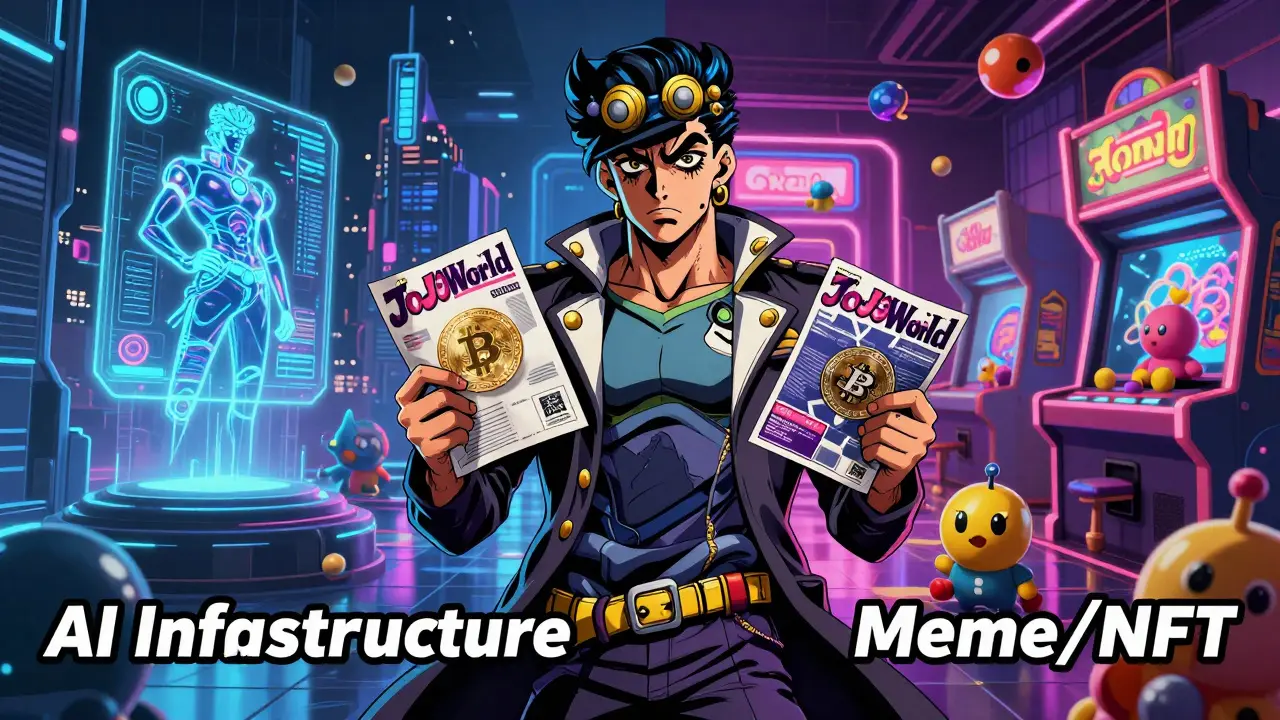
There is a serious identity crisis happening in the world of micro-cap cryptocurrencies right now. If you look up JoJoWorld, ticker symbol JOJO, is a cryptocurrency token on the BNB Smart Chain that claims to power decentralized AI data infrastructure while simultaneously being described as a meme and NFT metaverse project on major platforms, you will get two completely different stories. One side says it is building critical spatial 3D data for artificial intelligence. The other side says it is a fun entertainment platform with toys and memes. This confusion isn't just a marketing glitch; it is a massive red flag for anyone thinking about buying this coin.
Launched in 2025, JOJO has seen price swings that would make a seasoned trader nervous. It hit an all-time high near $0.83, only to crash by over 98% to trade fractions of a cent. Understanding what this token actually does requires digging past the hype and looking at the technical reality versus the public narrative.
The Two Faces of JoJoWorld
When you research a new crypto project, consistency in its description is key. With JOJO, the descriptions are wildly inconsistent across major data aggregators. This discrepancy is the first thing you need to understand before interacting with the token.
| Platform | Primary Narrative | Key Features Mentioned |
|---|---|---|
| CoinMarketCap, CoinGecko, Weex | AI-driven spatial 3D data infrastructure | Embodied AI, text-to-3D models, large world models, contributor rewards |
| Coinbase | NFT Metaverse & Entertainment | Memes, NFTs, SmartTOY devices, pan-entertainment platform |
On one hand, platforms like CoinMarketCap describe JoJoWorld as a New York-based spatial 3D data platform. They claim it supports embodied AI systems and helps developers access high-quality 3D assets. In this version, the JOJO token is used to reward people who upload raw 3D scans and metadata. It sounds like a serious utility token for the AI industry.
On the other hand, Coinbase lists JOJO as an NFT Metaverse project combining memes and "SmartTOY" hardware. This suggests a focus on consumer gaming and collectibles rather than enterprise AI data. Why does this matter? Because if you buy the token expecting it to benefit from the AI boom, but the project is actually pivoting to low-value meme content, your investment thesis falls apart. Or worse, the team might be using the popular AI narrative to pump the price of a fundamentally weak entertainment project.
Technical Foundation: BNB Smart Chain and Tokenomics
Regardless of which narrative is true, the technical backbone of JOJO is clear. It is a BEP-20 token running on the BNB Smart Chain (also known as BSC), a blockchain network compatible with Ethereum Virtual Machine (EVM) that offers fast transaction speeds and low gas fees. This means it shares the same infrastructure as thousands of other tokens. You can use wallets like MetaMask or Trust Wallet, provided they are configured for the BSC network.
The tokenomics reveal a classic micro-cap structure:
- Total Supply: 800,000,000 JOJO
- Circulating Supply: Approximately 112,000,000 JOJO
- Launch Date: September 19, 2025 (via Initial DEX Offering)
- IDO Price: $0.0125 per JOJO
At launch, the project raised around $200,000 in its public sale. This implies an initial fully diluted valuation (FDV) of $10 million. However, the current market reality is starkly different. Recent snapshots show a market capitalization fluctuating between $36,000 and $1 million, depending on the exchange and time of day. This indicates that the vast majority of the token's value has been wiped out since its inception.
Some sources label JOJO as "deflationary," suggesting there may be burn mechanisms where tokens are removed from circulation. However, no specific burn schedule or percentage is publicly documented in transparent audits. Without verifiable on-chain proof of these burns, this claim remains speculative.
Price Volatility and Market Reality
If you are looking for stability, JOJO is not it. The price history of this token is a textbook example of extreme volatility common in unregulated micro-caps.
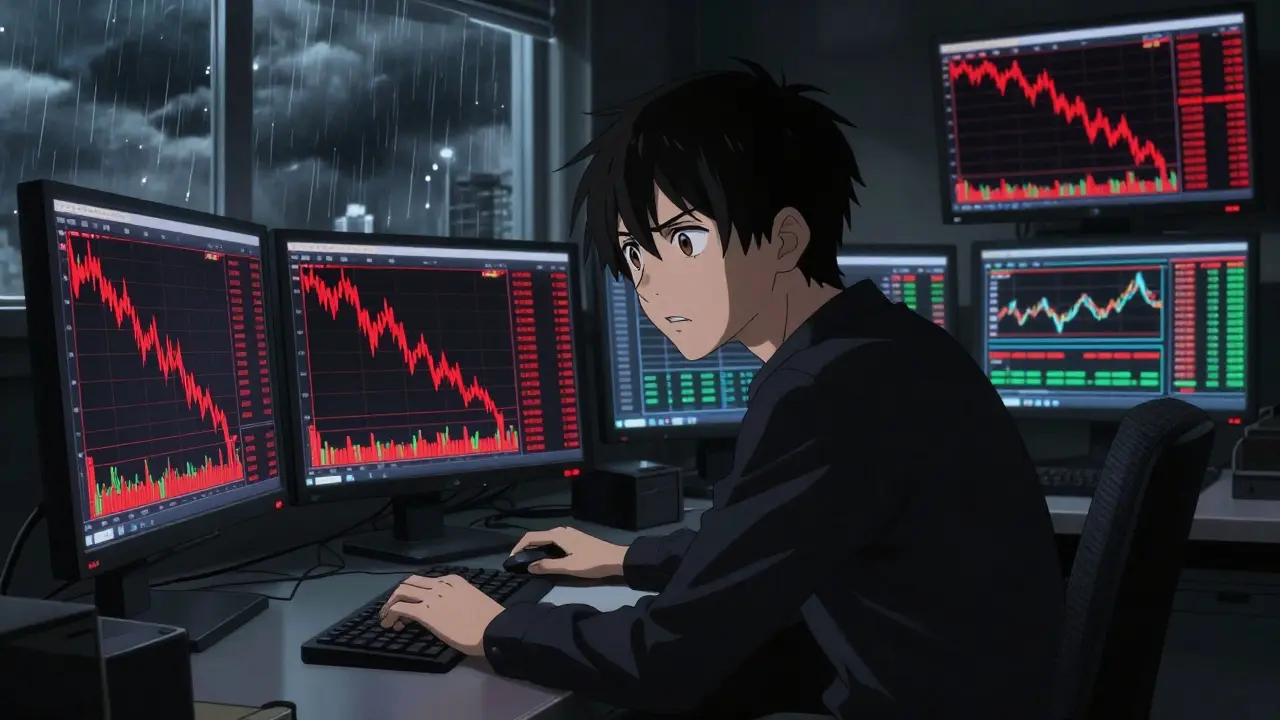
Let’s look at the numbers. According to aggregated data, JOJO reached an All-Time High (ATH) of approximately $0.8320. At its peak, investors who bought at the IDO price of $0.0125 saw returns of over 6,000%. That sounds incredible until you look at the present. As of mid-2026, the price has crashed by roughly 98%, trading in the range of $0.00024 to $0.0150 depending on the liquidity pool. Some analytics platforms even recorded 24-hour price swings exceeding 1,000% due to thin liquidity and whale manipulation.
This volatility is driven by several factors:
- Low Liquidity: With daily trading volumes often under $1,000 on some exchanges, large buy or sell orders can move the price drastically.
- Fragmented Markets: JOJO trades on various centralized exchanges (like MEXC Global) and decentralized platforms (like PancakeSwap). Prices differ significantly between these venues, leading to arbitrage opportunities but also confusion for retail buyers.
- Speculative Nature: Without clear revenue streams or enterprise partnerships publicly verified, the price is driven purely by sentiment and hype cycles.
For context, when Bitcoin dominance sits above 56% and the total crypto market cap is in the trillions, a token with a sub-$10 million FDV represents less than 0.01% of the entire ecosystem. It is a tiny speck in a massive ocean, easily swallowed by market shifts.
The AI Data Promise vs. Execution
Proponents of the "AI Infrastructure" narrative argue that JoJoWorld solves a real problem: the lack of high-quality 3D data for training AI models. Concepts like "embodied AI" (robots that interact with the physical world) and "text-to-3D" generation require massive datasets of meshes, point clouds, and spatial metadata. Currently, this data is siloed or expensive to acquire.
The proposed solution is a decentralized marketplace. Contributors upload 3D assets and earn JOJO tokens. Developers then pay with JOJO to access these curated datasets. In theory, this creates a flywheel effect: more data attracts more developers, which increases demand for the token.
However, there is a significant gap between this vision and execution. There is no public evidence of major AI companies using JoJoWorld’s data in production. No case studies, no API documentation for developers, and no named partners are listed on primary aggregator pages. The project relies heavily on the promise of future adoption rather than current utility. In the crypto world, promises do not generate cash flow; active users do.
Risks and Due Diligence Checklist
Before considering any interaction with the JOJO token, you must weigh the risks. This is not financial advice, but these are objective facts derived from available data.
- Anonymous Team: None of the major profiles list named founders or core team members. An anonymous team reduces accountability. If the project fails or engages in unethical behavior, there is no one to hold responsible.
- Regulatory Status: JOJO is an unregulated asset. There are no mentions of licenses, registrations, or compliance with securities laws. This makes it vulnerable to regulatory crackdowns in various jurisdictions.
- Data Inconsistency: The conflict between the "AI Data" and "Meme/NFT" narratives suggests poor communication or potential misrepresentation. Investors deserve clarity on what they are funding.
- Liquidity Risk: With low trading volume, selling large amounts of JOJO could result in significant slippage, meaning you receive much less money than the displayed price suggests.

How to Buy and Store JOJO (If You Choose To)
If you have done your own research and decide to proceed, here is the practical process based on current availability. Note that steps may change as listings evolve.
- Set Up a BSC-Compatible Wallet: Download MetaMask or Trust Wallet. Configure it to connect to the BNB Smart Chain. Ensure you have some BNB (the native coin of the chain) to pay for gas fees.
- Acquire BNB: Buy BNB on a major regulated exchange (like Coinbase or Binance) and transfer it to your wallet address.
- Choose a Trading Venue:
- Centralized Exchange (CEX): Check if MEXC Global or similar platforms currently list JOJO. CEXs offer easier interfaces but require KYC (identity verification).
- Decentralized Exchange (DEX): Use PancakeSwap. Connect your wallet, paste the official BEP-20 contract address for JOJO (verify this carefully on CoinMarketCap or CoinGecko to avoid scams), and swap your BNB for JOJO.
- Verify the Contract Address: This is critical. Scammers create fake tokens with the same name. Always cross-reference the contract address from multiple reputable sources before swapping.
Conclusion: A High-Risk Speculative Asset
JoJoWorld (JOJO) presents a fascinating case study in modern cryptocurrency chaos. It sits at the intersection of two booming sectors-Artificial Intelligence and Web3-but lacks the transparency and consistency required to be trusted as a serious infrastructure play. The conflicting narratives between AI data utility and meme entertainment suggest a project that is either still finding its footing or actively misleading its audience.
With a 98% drawdown from its all-time high and an anonymous team, JOJO should be classified strictly as a high-risk speculative asset. It is not suitable for conservative investors or those seeking stable store-of-value properties. If you are drawn to the AI narrative, wait for verifiable partnerships and open-source code repositories. If you are drawn to the meme aspect, recognize that you are gambling on community sentiment rather than fundamental value.
In the crypto market, information is power. The fact that basic descriptions of what JOJO is vary so wildly across top-tier platforms is itself a powerful signal. Proceed with extreme caution, never invest more than you can afford to lose, and prioritize projects with clear, consistent, and verifiable roadmaps.
Is JoJoWorld (JOJO) a legitimate AI project?
While JoJoWorld describes itself as an AI-driven 3D data infrastructure platform on sites like CoinMarketCap and CoinGecko, there is currently no public evidence of major enterprise adoption or verified technical deliverables. Additionally, Coinbase lists it as a meme/NFT project, creating significant ambiguity about its true purpose. Until verifiable partnerships and open-source code are released, its legitimacy as a serious AI tool remains unproven.
Why is the price of JOJO so volatile?
JOJO is a micro-cap token with low liquidity and a small circulating supply relative to its total supply. This means that relatively small buy or sell orders can cause massive price swings. Furthermore, the lack of clear utility and conflicting project narratives lead to speculative trading rather than steady investment, exacerbating volatility.
Where can I buy JOJO tokens?
JOJO is a BEP-20 token on the BNB Smart Chain. It can typically be traded on decentralized exchanges like PancakeSwap or centralized exchanges such as MEXC Global. Always verify the official contract address on reputable trackers like CoinMarketCap before purchasing to avoid scam tokens.
Who is behind the JoJoWorld project?
As of mid-2026, the core team and founders of JoJoWorld remain anonymous according to major cryptocurrency data aggregators. This lack of transparency is a common risk factor in early-stage crypto projects, as it limits accountability.
What is the maximum supply of JOJO?
The maximum total supply of JOJO is 800,000,000 tokens. Approximately 112,000,000 JOJO were in circulation shortly after its launch in 2025, though exact circulating figures may vary slightly depending on token burns or unlocks.