You’ve probably heard that crypto is evolving beyond simple payments. But what does that actually look like in practice? Enter Smart Layer Network, a protocol that turns standard crypto tokens into mini-applications. If you are wondering what the SLN coin is and why it matters, you are not alone. The landscape of Ethereum infrastructure is getting crowded, and distinguishing between a new blockchain, a layer-2 solution, and a middleware protocol can be confusing. Smart Layer Network (SLN) falls into that last category, and it has a very specific job to do.
This guide breaks down exactly what Smart Layer Network is, how its native SLN token functions, and whether this technology represents a genuine shift in how we use digital assets or just another buzzword. We will look at the technical architecture, the economic model, and the real-world applications that define this project as of mid-2026.
What Is Smart Layer Network?
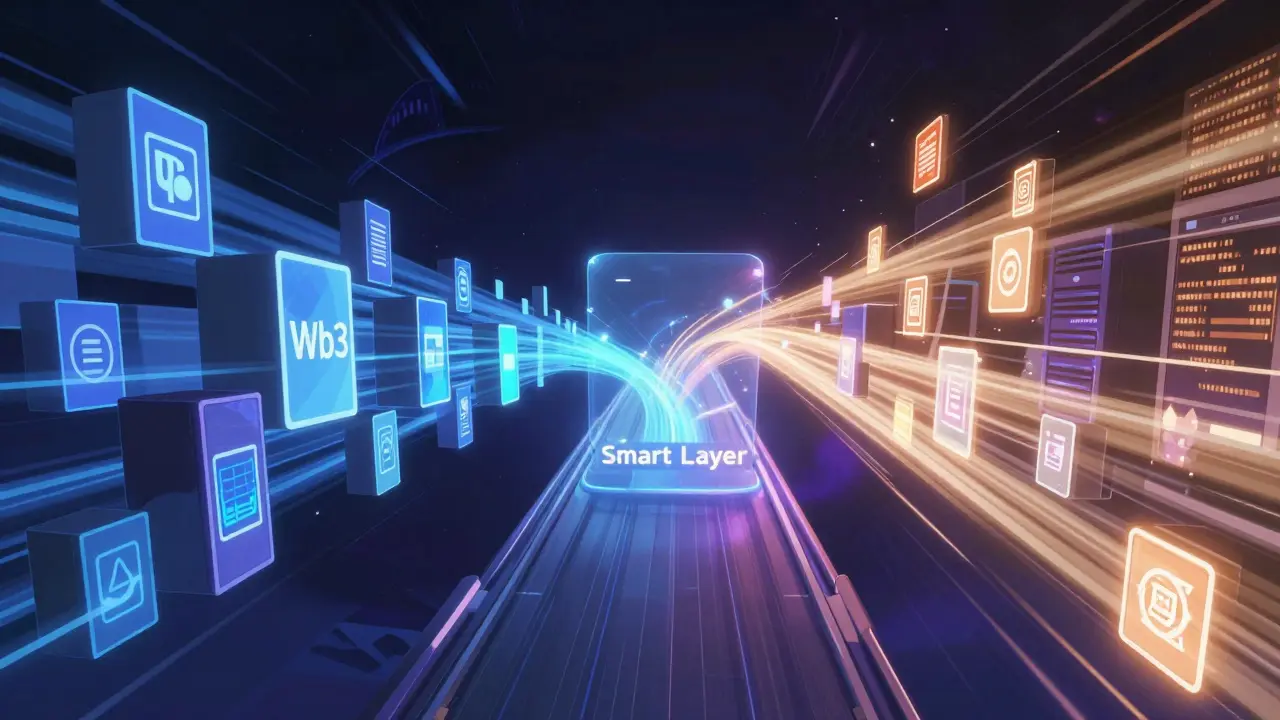
To understand Smart Layer Network, you first need to unlearn the idea that every crypto project must be its own blockchain. Smart Layer is not a Layer-1 chain like Bitcoin or Ethereum. It does not produce blocks, and it does not finalize transactions directly on a ledger. Instead, it operates as an off-chain distributed network of nodes that sits between EVM-compatible chains (like Ethereum) and external web applications.
Think of it as a bridge or a translator. On one side, you have Web3 smart contracts-rigid, code-based agreements living on the blockchain. On the other side, you have Web2 servers and apps-the websites and services you use daily. Smart Layer connects these two worlds. It provides the runtime infrastructure that allows token logic to execute outside the blockchain while still being anchored and verified on-chain. This setup solves a major pain point: pure on-chain execution is often slow and expensive, while pure off-chain solutions lack security and transparency. Smart Layer aims to give you both.
The Core Concept: Tokens as Apps (tApps)
The most distinct feature of Smart Layer Network is its push for "smart tokens" or "tokens as apps" (tApps). In traditional crypto, an ERC-20 token is just a number representing value. You hold it, you send it, but it doesn't do much else. An NFT (ERC-721) might represent ownership of an image, but that image is usually static.
Smart Layer changes this by attaching executable scripts and front-ends directly to the token. Using standards like ERC-5169 and TokenScript, a token becomes a portable digital right. Imagine holding a token that isn’t just a receipt for a concert ticket, but an actual app that grants you access to exclusive content, verifies your identity across different platforms, and updates its status automatically based on predefined rules. You don’t need to log into a centralized website to claim these benefits; the token itself carries the functionality.
This concept addresses the fragmentation problem in Web3. Currently, your rights are siloed within specific dApps. With tApps, the utility travels with the asset. This is particularly powerful for sectors like Web3 gaming, where in-game items need complex logic, or Real-World Assets (RWA), where physical goods require dynamic tracking and verification.
Technical Architecture: How It Works Under the Hood
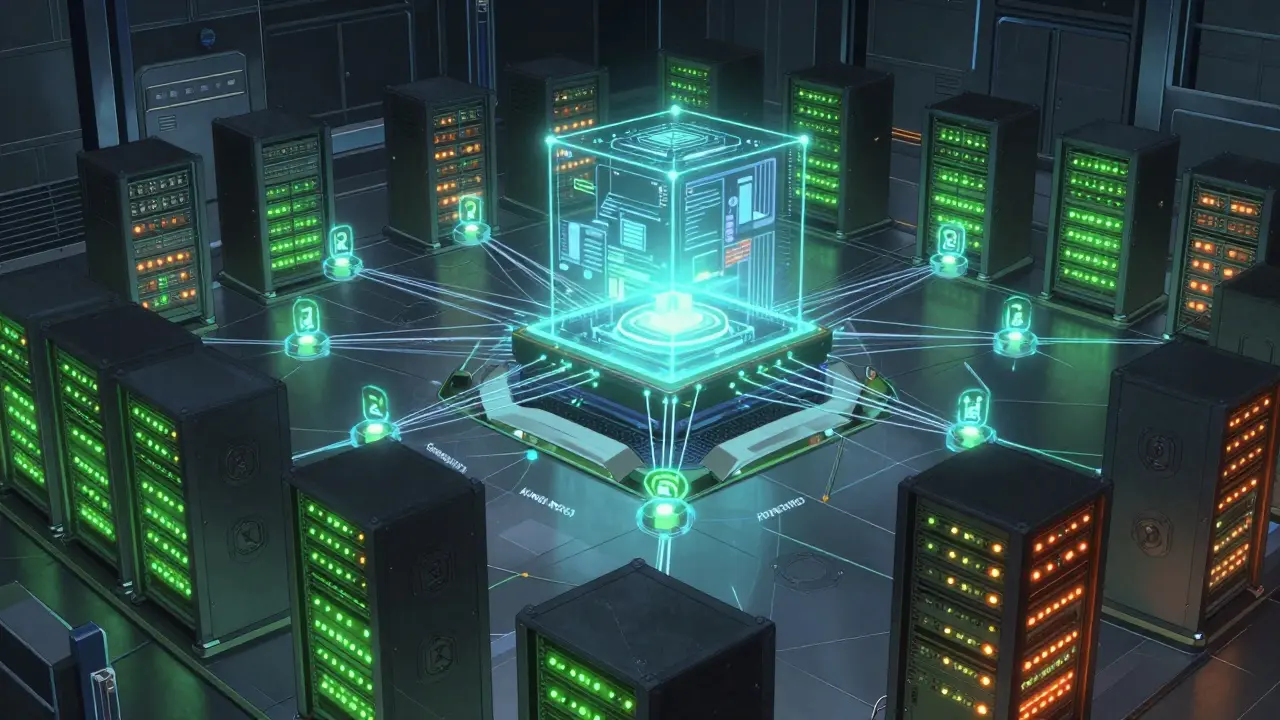
Underneath the user-friendly concept of tApps lies a robust technical structure. The Smart Layer Network relies on a decentralized network of nodes to handle the heavy lifting. These nodes are not miners competing to solve puzzles; they are service providers executing token logic.
There are two primary types of nodes in this ecosystem:
- Service Nodes: These handle the actual operations of smart tokens. They interact with external applications, manage token issuance, revocation, and expiration, and ensure that the embedded scripts run correctly. They provide the server-side runtime environment for complex workflows.
- Anchoring Nodes: These connect the Smart Layer to underlying blockchains. Their job is to ensure that the state of the tokens and the results of off-chain computations are accurately recorded and verified on-chain. This maintains the integrity and security of the system without bogging down the main blockchain.
The protocol uses mature distributed-systems technologies, including Distributed Hash Tables (DHTs) for efficient data retrieval, load-balancing mechanisms to prevent bottlenecks, and Merkle trees for data integrity verification. This means the network is designed to scale horizontally. As more users and tokens join the network, more nodes can be added to handle the increased load, keeping performance stable.

SLN Tokenomics: Supply, Utility, and Economics
The SLN token is the fuel that keeps this engine running. It serves dual purposes: utility and governance. Understanding its economic design is crucial for evaluating the long-term viability of the network.
Supply Cap: The maximum supply of SLN is hard-capped at 100,000,000 tokens. This fixed ceiling prevents inflationary pressure that could dilute holder value over time.
Deflationary Mechanism: The protocol is designed to be deflationary. While specific burn schedules vary, the general principle is that the circulating supply may decrease over time through various network activities. This scarcity model aims to align the interests of users, developers, and node operators.
Utility Use Cases:
- Paying for Services: Developers and users pay fees in SLN to utilize the Smart Layer’s integration services and runtime execution.
- Incentivizing Nodes: Node operators earn SLN rewards for maintaining uptime, processing requests, and securing the network. This creates a sustainable economic loop where good performance is financially rewarded.
- Governance: Holders of SLN can participate in the platform’s DAO (Decentralized Autonomous Organization). They vote on protocol upgrades, parameter changes, and ecosystem developments.
Market Status (Mid-2026): As of July 2026, the SLN token remains a niche asset. Data from aggregators like Coingecko shows a circulating supply of approximately 81 million tokens. However, the market capitalization is modest, hovering around $25,000 USD, with a price fractionally above zero. Trading volume is low, indicating that while the technology has institutional interest and active development, widespread retail adoption and liquidity are still in early stages. Prices have fluctuated significantly since its earlier listings, reflecting the high volatility typical of micro-cap infrastructure projects.
Real-World Applications: Smart Cats and Beyond
Theory is one thing, but proof of concept is another. Smart Layer Network has moved beyond whitepapers into live deployments. The most prominent example is the Smart Cats project. This initiative demonstrated the scalability of the "token as app" paradigm by generating over 22 million blockchain transactions and engaging more than 500,000 users.
In the Smart Cats ecosystem, NFTs were not just collectible images. They were interactive entities with embedded logic. Owners could engage in mini-games, unlock rarities, and interact with community features directly through their tokens. This proved that Smart Layer could handle high-volume, consumer-facing use cases without collapsing under the weight of gas fees or latency issues associated with purely on-chain interactions.
Beyond gaming, the protocol is being explored for Smart Passes and RWA tokenization. A Smart Pass could act as a universal membership card, verifying your status across multiple partner platforms without requiring separate accounts. For RWAs, such as real estate or luxury goods, the embedded scripts could automate compliance checks, transfer ownership records, and trigger maintenance alerts, all tied to the physical asset’s digital twin.
Comparison: Smart Layer vs. Traditional Middleware
| Feature | Smart Layer Network (SLN) | Layer-1 Blockchains (e.g., Ethereum) | Oracle Networks (e.g., Chainlink) |
|---|---|---|---|
| Primary Function | Token logic execution & Web2/Web3 integration | Transaction settlement & consensus | Data feed delivery to smart contracts |
| Execution Environment | Off-chain nodes with on-chain anchoring | On-chain Virtual Machine (EVM) | Off-chain nodes with on-chain reporting |
| Token Utility | Fuel for computation & governance | d>Gas fees & staking | Staking & payment for data |
| User Experience | App-like behavior within tokens | Wallet-based interactions | Invisible to end-users |
Unlike Layer-1 chains that focus on base-level security and finality, Smart Layer focuses on usability and complexity management. Unlike oracle networks that primarily bring external data *into* the blockchain, Smart Layer enables tokens to actively interact with external systems *and* maintain state. This positions SLN uniquely in the stack, closer to application-layer middleware than foundational infrastructure.
Risks and Considerations for Investors
While the technology is promising, potential investors and developers should approach Smart Layer Network with clear eyes. The primary risk is liquidity. With a low market cap and thin trading volume, large trades can significantly impact the price. Slippage is a real concern.
Secondly, there is the risk of technological obsolescence. The Web3 space moves fast. If alternative standards for programmable tokens emerge and gain broader support, Smart Layer’s proprietary approaches (like ERC-5169) could lose relevance. Continuous development and strong community engagement are vital to staying ahead.
Finally, regulatory uncertainty remains a factor for all crypto assets. Since SLN is used for governance and network fees, its classification could vary by jurisdiction. Always conduct your own due diligence and consult local regulations before participating.
Is Smart Layer Network a Layer-1 blockchain?
No, Smart Layer Network is not a Layer-1 blockchain. It is a middleware protocol and service network that operates off-chain. It connects to existing EVM-compatible blockchains like Ethereum to anchor data and verify states, but it does not produce its own blocks or handle base-layer transaction finality.
What is the maximum supply of the SLN token?
The maximum supply of the SLN token is hard-capped at 100,000,000 tokens. The token is designed to be deflationary, meaning the circulating supply may decrease over time through burn mechanisms, ensuring scarcity.
How do "Tokens as Apps" (tApps) work?
tApps are smart tokens that contain executable scripts and front-end interfaces, defined by standards like ERC-5169 and TokenScript. Instead of being static assets, these tokens can perform actions, such as granting access rights or updating status, directly within wallets or integrated platforms without needing a separate centralized app.
Where can I buy SLN tokens?
SLN has been listed on several centralized exchanges, including KuCoin, Kraken, and Bitget. However, as of mid-2026, liquidity is relatively low. Users should check current availability and trading pairs on these platforms or via aggregators like Coingecko and CoinMarketCap before attempting to trade.
What role do nodes play in the Smart Layer Network?
Nodes are the backbone of the network. Service Nodes execute the logic of smart tokens and interact with external applications, while Anchoring Nodes connect the network to blockchains to verify and record data. Operators are incentivized with SLN tokens for providing reliable service and maintaining network uptime.