

Remember when you could buy a coffee with Bitcoin without worrying if the platform holding your money would vanish overnight? Those days feel like a lifetime ago now. In May 2019, FTX was a cryptocurrency exchange founded by Sam Bankman-Fried that rapidly grew to become one of the largest trading platforms globally before collapsing in 2022. It promised innovation, high yields, and a seamless user experience. By November 2022, it became the biggest cautionary tale in financial history. If you are looking at an "FTX crypto exchange review" today, you aren't looking for tips on how to trade better. You are likely trying to understand what happened, whether you can get your money back, or simply learning how to avoid similar traps.
This isn't just a story about bad luck. It is a masterclass in fraud, mismanagement, and the dangers of trusting opaque systems. Whether you were an active trader, a passive holder of the native token, or just curious about the crash that shook the entire industry, this guide breaks down the reality of FTX’s downfall and what it means for your crypto portfolio in 2026.
The Rise of a Crypto Giant
To understand the fall, you have to look at the height. FTX wasn't just another exchange; it was marketed as the premium choice for sophisticated traders. Founded in the Bahamas, it offered features that competitors like Coinbase was a major US-based cryptocurrency exchange known for its user-friendly interface and regulatory compliance. lacked at the time. Think of futures contracts settled in stablecoins rather than crypto, leveraged tokens, and even prediction markets. It felt cutting-edge.
The platform issued its own token, FTT is the native utility token of the FTX exchange, designed to offer fee discounts and governance rights., which provided trading fee discounts and governance rights. This created a closed ecosystem where users bought FTT to save on fees, driving up the token's value, which in turn boosted confidence in the exchange. It was a self-reinforcing loop that looked incredibly profitable-until it didn't.
By early 2022, FTX had reached a valuation of $18 billion. They sponsored Formula 1 teams and bought naming rights to the Miami Heat arena. The branding screamed stability. But behind the flashy marketing, the foundation was rotting. The exchange operated with two distinct entities: FTX Global (Bahamas) and FTX US was the United States subsidiary of the FTX exchange, operating under separate legal and regulatory frameworks.. While they appeared connected, their financial realities were dangerously intertwined with another entity entirely.
The Alameda Research Connection
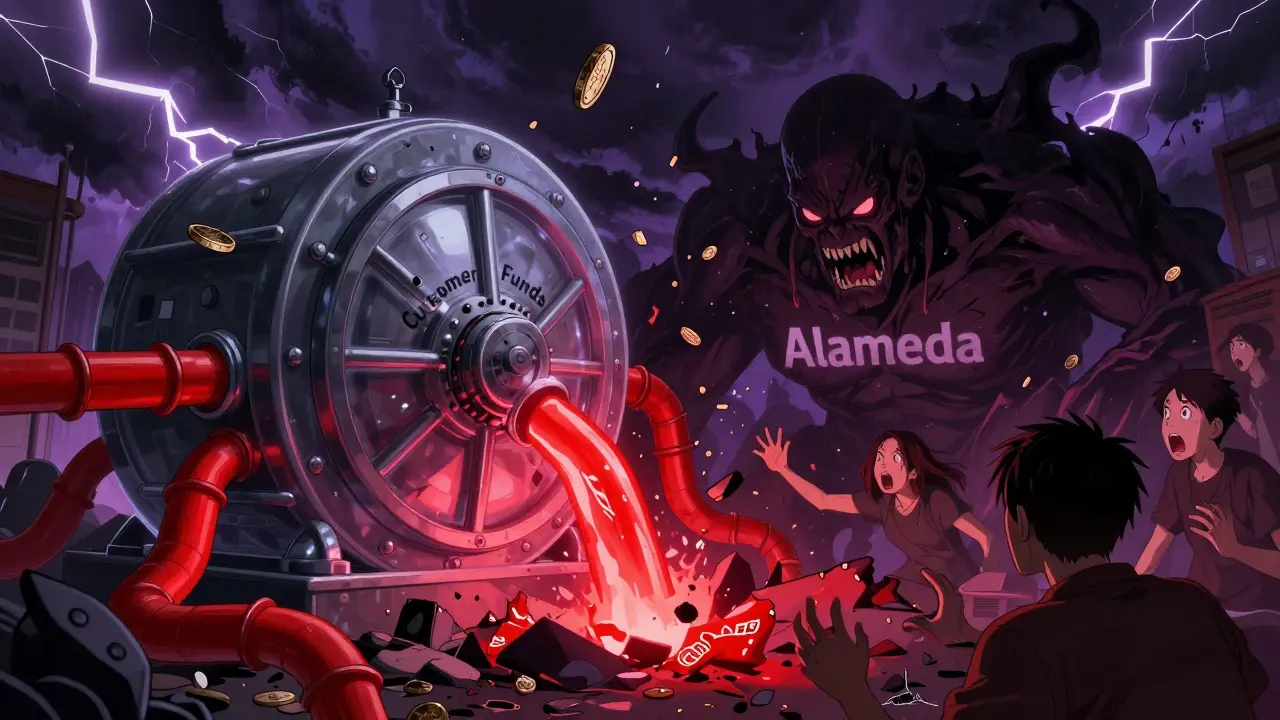
Here is where the story turns dark. FTX was closely linked to Alameda Research is a cryptocurrency trading firm founded by Sam Bankman-Fried that held significant assets on the FTX exchange., a hedge fund also founded by Sam Bankman-Fried (SBF). On paper, they were separate companies. In practice, they shared code, infrastructure, and most critically, customer funds.
Alameda Research held billions of dollars worth of FTT tokens on the FTX balance sheet. This wasn't unusual in itself, but the terms were. Alameda had special privileges: they could borrow unlimited amounts of crypto from customer deposits without collateral. Essentially, when you deposited Bitcoin into FTX, there was a high chance it wasn't sitting in a secure wallet waiting for you to withdraw it. It was being lent out to Alameda to gamble on risky trades or prop up the price of FTT.
This commingling of funds is a massive red flag in traditional finance. Banks are required to keep customer deposits separate from corporate investments. FTX ignored this basic principle. They treated customer money as free capital for their trading arm. When the market turned, this lack of segregation became fatal.
The Collapse: How It Happened
The dominoes started falling in late October 2022. A leaked balance sheet from Alameda Research surfaced online. It showed the firm was heavily insolvent, with nearly all its assets tied up in illiquid FTT tokens. The market reacted instantly. Panic spread.
On November 2, 2022, CoinDesk published a report confirming the leak. Suddenly, everyone realized that FTX might not have enough liquid cash to cover withdrawals. A bank run ensued. Users tried to pull their money out en masse. FTX initially claimed it could handle the demand, but within days, the cracks widened.
Then came the final blow. Binance, the world's largest exchange, announced it would acquire FTX to stabilize it. But after reviewing FTX's books, Binance CEO Changpeng Zhao cited "concerns about the veracity of customer data" and pulled out. Without a buyer, FTX filed for Chapter 11 bankruptcy on November 11, 2022. They blocked all withdrawals. Apps were disabled. Over $8 billion in customer funds had vanished.
It wasn't a hack in the traditional sense. As NerdWallet noted, the "hack" was internal. Funds had been systematically drained over years. The chaos led to criminal charges against SBF and other executives, resulting in prison sentences and massive fines.
What Happened to Your Money?
If you lost money in the FTX collapse, you are part of a group of approximately 1 million affected customers. The good news? Some recovery is happening. The bad news? It won't be full restitution anytime soon.
In January 2024, FTX officially announced it would not restart operations. Instead, it entered liquidation. The bankruptcy trustee has recovered roughly $16 billion in assets from various sources, including seized properties and sold digital assets. However, this doesn't mean every cent is accounted for. Estimates suggest creditors will receive between 20% and 40% of their original deposits.
Distributions began in phases starting in mid-2024. If you had an account, you needed to file a claim through the official FTX bankruptcy portal. Make sure you did this. Missing the deadline could mean losing your right to any payout. Keep an eye on updates from the trustee, as the process is slow and bureaucratic.
Lessons Learned: Safety First
The FTX disaster changed the crypto industry forever. Before 2022, many exchanges operated in the shadows. Now, transparency is non-negotiable. Here is what you need to check before trusting any platform with your funds:
- Proof of Reserves (PoR): Reputable exchanges now publish monthly PoR reports. These use cryptographic proofs to show they hold 1:1 backing for user deposits. Don't just look for a press release; verify the Merkle Tree yourself if possible.
- Fund Segregation: Ensure the exchange keeps customer funds separate from corporate treasury. This prevents them from using your money to pay salaries or invest in risky ventures.
- Regulatory Compliance: Choose platforms licensed in reputable jurisdictions like the US, UK, or EU. Regulations like MiCA in Europe set strict standards for custody and transparency.
- Not Your Keys, Not Your Coins: For long-term holdings, consider moving assets to a hardware wallet. Exchanges are convenient for trading, but risky for storage.
Exchanges like Coinbase, Kraken, and Binance have since tightened their security protocols. They conduct regular audits and maintain clear separation between operational funds and client assets. While no system is immune to risk, these measures significantly reduce the chance of an FTX-style collapse.
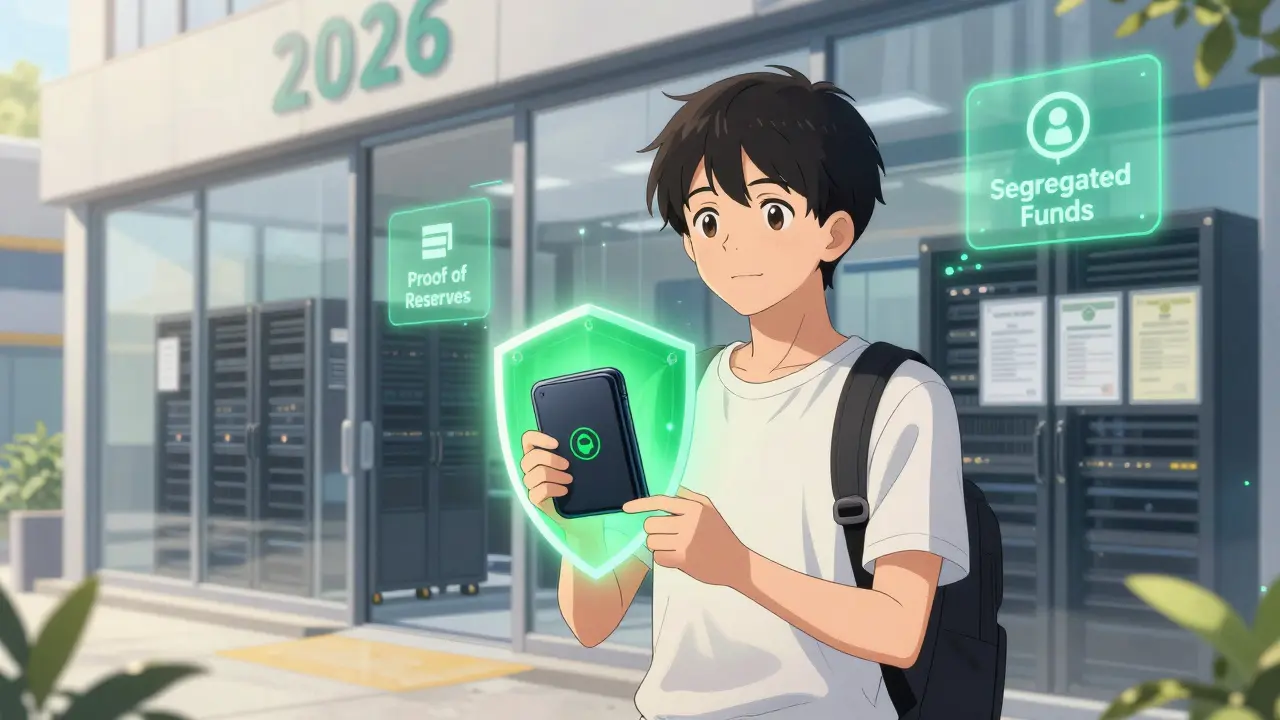
Comparison: FTX vs. Modern Safe Exchanges
| Feature | FTX (Pre-Collapse) | Modern Regulated Exchanges |
|---|---|---|
| Fund Custody | Commingled with Alameda Research | Segregated, audited wallets |
| Transparency | Opaque balance sheets | Monthly Proof of Reserves |
| Regulation | Minimal oversight (Bahamas) | Licensed in multiple jurisdictions |
| Insurance | Illusory coverage | Clear insurance policies for hot wallets |
| Status | Liquidated/Bankrupt | Operational/Active |
Is FTX Coming Back?
No. Despite rumors and hopes among some investors, FTX is dead. The brand is tarnished beyond repair. The intellectual property and remaining assets are being sold off to pay creditors. Any website claiming to be "New FTX" or offering refunds directly is a scam. Always refer to the official bankruptcy court documents for legitimate information.
The legacy of FTX is a more cautious, regulated industry. We’ve learned that innovation without integrity is dangerous. As you navigate the crypto space in 2026, prioritize platforms that value transparency over hype. Your financial security depends on it.
Did FTX go bankrupt?
Yes, FTX filed for Chapter 11 bankruptcy on November 11, 2022. It ceased operations shortly after and is currently in the process of liquidating assets to repay creditors.
Can I still use the FTX app?
No. The FTX apps were removed from app stores and disabled following the bankruptcy. Do not download any unofficial versions, as they may contain malware.
How much money did FTX lose?
Approximately $8 billion in customer funds went missing due to mismanagement and fraud involving Alameda Research. Total losses including investor funds were higher.
Will I get my money back from FTX?
Partial restitution is expected. The bankruptcy trustee has recovered around $16 billion in assets. Customers who filed claims may receive 20-40% of their original deposits, though timelines vary.
What happened to Sam Bankman-Fried?
Sam Bankman-Fried was convicted of multiple counts of fraud and conspiracy. He was sentenced to 25 years in prison in March 2024.
Is FTT token worthless?
Yes, the FTT token lost almost all its value during the collapse. It remains listed on some exchanges but has negligible liquidity and no utility.
Why did FTX fail?
FTX failed because it commingled customer funds with those of its sister company, Alameda Research. When a leaked balance sheet revealed insolvency, a bank run occurred, exposing the lack of actual reserves.
Are other crypto exchanges safe?
Reputable exchanges like Coinbase, Kraken, and Binance have implemented stricter security measures, including proof-of-reserves audits and fund segregation, making them safer than pre-2022 standards.



Comments
Barclay Chantel
May 29, 2026 AT 09:32 AMIt is truly pathetic that people still fall for this digital snake oil. The entire premise of trusting a Bahamian shell company with your life savings was always a joke waiting to happen. SBF wasn't just incompetent; he was actively malicious, treating retail investors like ATM machines for his personal hedging bets. The fact that anyone missed the red flags when Alameda was borrowing billions in uncollateralized FTT tokens speaks volumes about the collective stupidity of the crypto bro community. We are now in 2026 and you are still reading reviews instead of learning basic financial literacy. Keep your keys or keep your mouth shut.
Christina Pearce
May 31, 2026 AT 03:13 AMI really appreciate how clearly this breaks down the timeline. It’s scary to think about how close so many people came to losing everything. I’m curious though, do you know if there are any specific resources for people who might have missed the initial claim filing deadline? That seems like a huge hurdle for average users who weren’t glued to bankruptcy court documents.
trisya hazriyana
June 1, 2026 AT 23:14 PMlook at the irony here we built a decentralized revolution on code and math then handed our keys to some guy in a hoodie who treated customer deposits like his personal piggy bank it is absolutely hilarious how quickly the narrative shifted from freedom to fraud sbf thought he could outsmart the market with leverage and opaque balance sheets but the market always wins eventually especially when you are lying about solvency
Miss Masquer
June 2, 2026 AT 20:34 PMI find it fascinating to look back at the rise and fall of FTX because it really highlights the importance of regulatory frameworks which were largely absent during their peak years. When you consider that they were operating in the Bahamas with minimal oversight while simultaneously trying to appeal to US-based traders through their subsidiary, it becomes clear that jurisdictional arbitrage was a key part of their strategy until it completely collapsed under the weight of its own insolvency. The lesson here isn't just about checking for proof of reserves but also understanding the legal protections-or lack thereof-that exist depending on where an exchange is incorporated, and perhaps we should all take a moment to reflect on how quickly innovation can turn into disaster when ethical boundaries are ignored in favor of rapid growth and speculative gains.
Joshua Alcover
June 3, 2026 AT 01:34 AMThe fundamental failure here was not merely technical but epistemological, representing a profound breakdown in the fiduciary duties owed by custodial entities to their constituents within the American financial ecosystem. One must interrogate the very nature of 'trust' in a system where the counterparty risk is obscured by complex tokenomics and offshore structures. It is imperative that we assert national sovereignty over digital assets, ensuring that no entity operates beyond the reach of domestic law enforcement and regulatory bodies. The commingling of funds was not just a breach of contract but an affront to the rule of law itself, demonstrating why strict adherence to traditional banking regulations is essential for the integrity of our economic infrastructure.
Diana Morris
June 3, 2026 AT 14:55 PMstop crying about lost money and start taking responsibility you knew it was risky you bought the hype and now you want the government to bail you out typical weak behavior get a hardware wallet and stop using exchanges as banks
Dianne Wright
June 5, 2026 AT 10:28 AMi feel so drained just reading about this mess it is exhausting to see how much pain one person caused millions of people i wish i could help everyone who lost money but i cant fix it for them i just sit here feeling bad for everyone involved it is so heavy on my heart knowing that families lost their savings because of greed
Debbie Lewis
June 6, 2026 AT 09:42 AMpretty straightforward stuff honestly. most people just wanted easy yields without reading the fine print. glad the industry is cleaning up its act a bit.
Joe Clements
June 7, 2026 AT 20:17 PMI totally understand why people are still cautious after what happened. It’s tough to rebuild trust once it’s broken like that. I’ve been sticking to Coinbase since then because they seem to prioritize security and compliance. It’s nice to see that other exchanges are following suit with regular audits. Just takes time to feel safe again.
Rosie Morris
June 8, 2026 AT 21:07 PMthats crazy how much money disappeared i hope everyone gets something back even if its partial its better than nothing right? i still dont fully understand how they hid it for so long but im glad its over now
lorna erni
June 8, 2026 AT 22:02 PMLet’s be real, the whole crypto community needs to wake up and smell the coffee. This wasn’t an accident; it was a scam from day one. Anyone who says they didn’t see it coming is either lying or too dumb to notice. We need to stop making excuses for these clowns and demand absolute transparency. If an exchange can’t prove they have your money, don’t put a cent there. Period. Let’s clean up this space together and kick out the bad actors who ruin it for the rest of us.