
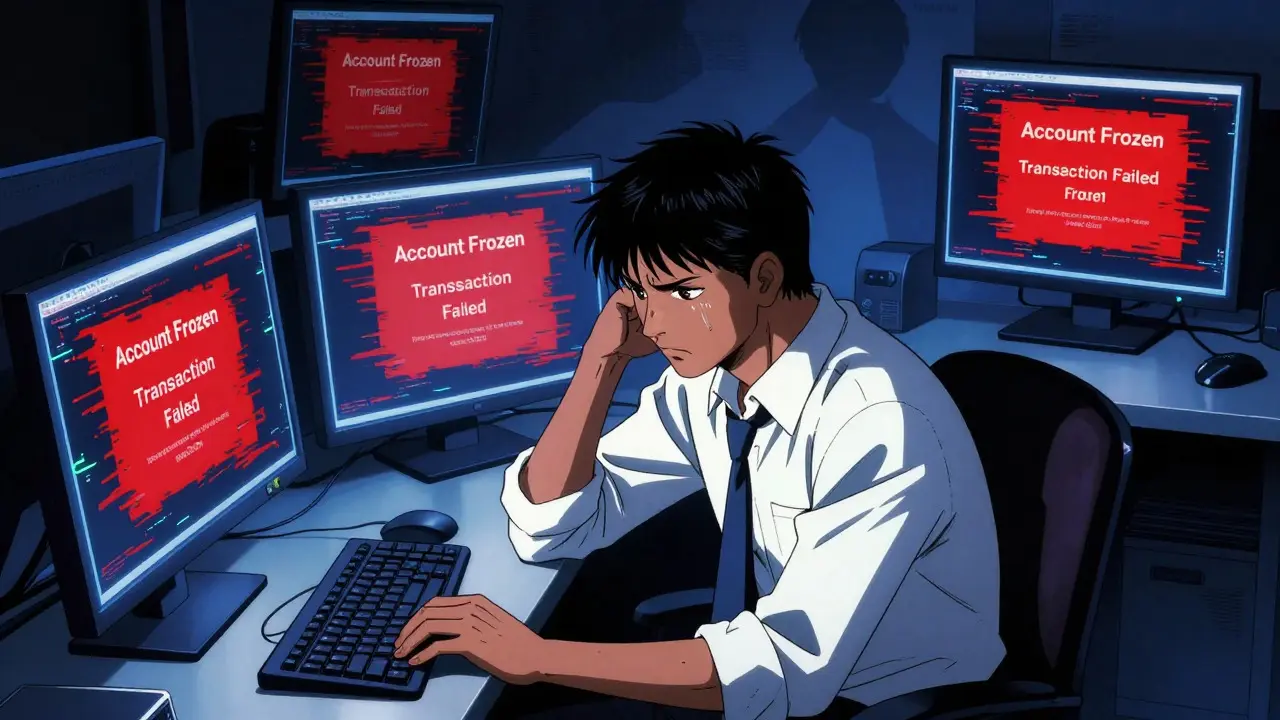
Imagine logging into your favorite cryptocurrency exchange to sell some Bitcoin, only to find your account frozen. Your INR deposits are stuck, the customer support chat is unresponsive, and worse, you realize the platform isn't registered with India's financial watchdogs. For millions of Indian traders, this isn't just a nightmare scenario-it's a daily reality on several major platforms.
The landscape for crypto exchanges to avoid if you are Indian has shifted dramatically since the regulatory crackdowns began. With the Financial Intelligence Unit of India (FIU-IND) tightening its grip and high-profile hacks making headlines, choosing the wrong platform can cost you more than just a bad trade. It can mean losing your entire portfolio or facing legal headaches with the Enforcement Directorate (ED).
As we move through 2026, the line between 'safe' and 'risky' is drawn by one critical factor: compliance. If an exchange hasn't registered with the FIU-IND, it operates in a gray zone that puts your funds and your tax filings at severe risk. Here is exactly which platforms you should steer clear of, why they are dangerous, and what you should look for instead.
The FIU-IND Mandate: The New Gold Standard
To understand which exchanges to avoid, you first need to understand the rulebook. In recent years, the Financial Intelligence Unit of India (FIU-IND) has become the gatekeeper for legitimate crypto operations in the country. Under the Prevention of Money Laundering Act (PMLA), Virtual Asset Service Providers (VASPs)-which include crypto exchanges-are required to register with the FIU-IND to operate legally.
Why does this matter to you? Because banks listen to the FIU-IND. When an exchange is not compliant, Indian banks often view it as a high-risk entity. This leads to the dreaded 'blocked transaction' where your UPI payment fails, or your bank account gets flagged for suspicious activity. As of mid-2025, the FIU-IND had not released a single, easy-to-read public list of all compliant exchanges, creating confusion. However, penalties have been levied against non-compliant giants, signaling clearly who is out of favor.
If an exchange cannot prove its FIU-IND registration, it lacks the regulatory backing needed to protect you. Without this shield, you have little recourse if things go wrong. The absence of a comprehensive official list means you must do your own due diligence, checking for penalty notices and banking partnerships.
International Giants Facing Heat: Binance and Bybit
You might think that using a global giant like Binance makes you safe. After all, it’s the world’s largest exchange by volume. But for Indian users, the story is different. Binance has faced significant friction with Indian authorities. In late 2023 and early 2024, the company was penalized heavily for failing to comply with FIU guidelines. While they continue to operate globally, their relationship with the Indian regulatory framework remains strained.
Similarly, Bybit, another popular international platform known for derivatives trading, has faced substantial financial penalties for non-adherence to Indian requirements. These aren't minor fines; they are signals that the platform is operating outside the preferred regulatory channel.
What does this mean for your wallet? International exchanges that are not fully compliant often struggle to maintain smooth fiat on-ramps. You might find yourself unable to deposit Indian Rupees via standard banking channels, forcing you to use peer-to-peer (P2P) markets. P2P trading carries its own risks, including fraud and the potential for your bank account to be frozen if the counterparty is involved in illicit activities.
| Exchange | Primary Risk Factor | Regulatory Status (India) | User Recourse |
|---|---|---|---|
| Binance | Penalties for FIU non-compliance | Non-compliant / Penalized | Limited legal protection |
| Bybit | Financial penalties for regulatory gaps | Non-compliant / Penalized | Limited legal protection |
| WazirX | Major security breach ($230M loss) | Operational uncertainty | Funds held during restructuring |
The WazirX Warning: Security Failures and Frozen Funds
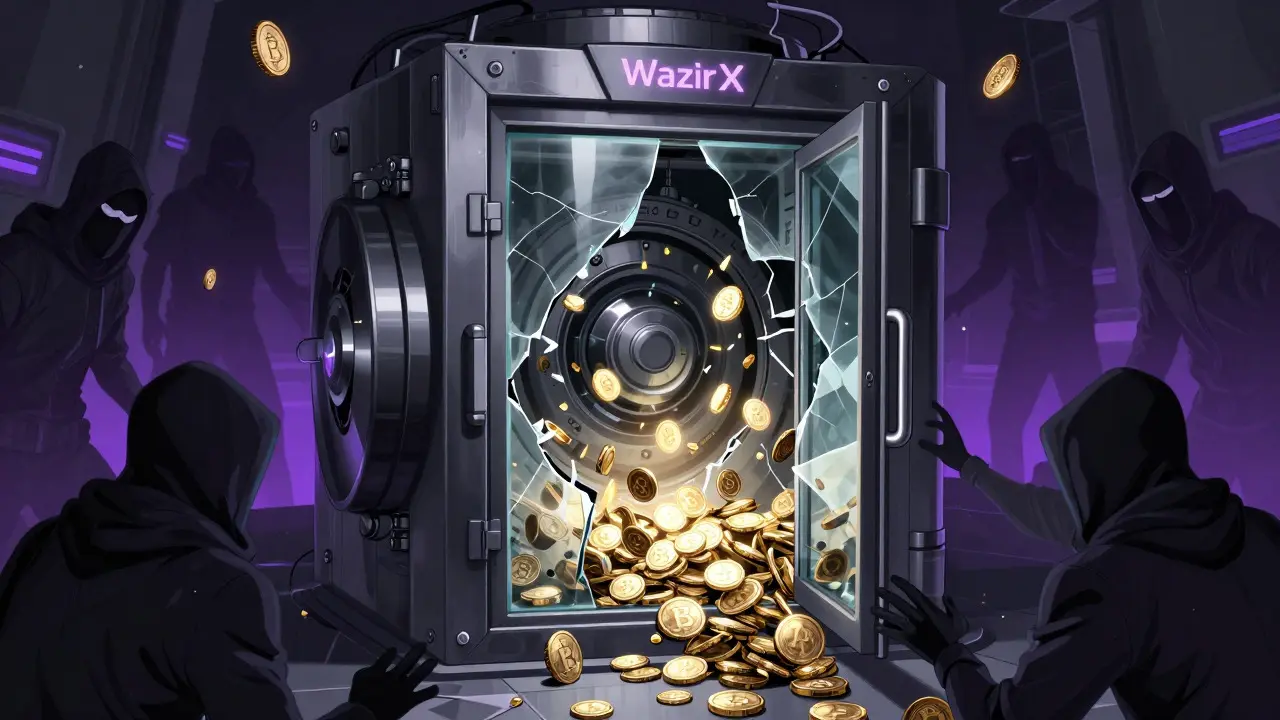
If there is one case study every Indian trader needs to know, it is WazirX. Once considered the homegrown champion of Indian crypto, boasting over 6 million users and processing $5.4 billion in monthly trades, WazirX suffered a catastrophic blow in July 2024.
A sophisticated hack compromised their multi-signature cold wallets, resulting in a staggering $230 million loss. This wasn't just a technical glitch; it was a failure of fundamental security protocols. What followed was worse than the hack itself. Instead of immediately compensating users or returning remaining funds, the exchange announced restructuring plans. Investors and users criticized these moves heavily, as the platform continued to hold user funds while navigating internal chaos.
For the average trader, this meant months of uncertainty. Withdrawals were delayed, communication was sparse, and the trust that took years to build evaporated overnight. Even though WazirX supports over 250 cryptocurrencies and offers competitive fees (0.10% - 0.40%), the risk of your capital being locked up in a restructuring saga is too high. It serves as a stark reminder: size doesn't equal safety. An exchange can be massive and still fail to protect your assets.
The Hidden Costs of Non-Compliance: Taxes and Legal Trouble
Beyond the fear of hacks and frozen accounts, there is a bureaucratic minefield waiting for those who choose non-compliant exchanges. India introduced strict tax rules for cryptocurrencies: a flat 30% tax on capital gains and a 1% Tax Deducted at Source (TDS) on sales exceeding ₹50,000 per financial year.
Compliant exchanges usually help you by providing consolidated transaction reports that align with Indian Income Tax Department requirements. Non-compliant platforms? Not so much. You will likely be left to manually calculate every single trade, fee, and gain. One mistake in your spreadsheet could lead to underreporting, triggering notices from the tax authorities.
More alarmingly, using non-compliant platforms can attract the attention of the Enforcement Directorate (ED). The ED investigates money laundering cases. If your funds flow through an exchange that is blacklisted or penalized for lack of transparency, your transactions might be flagged as suspicious. You could face investigations simply because you chose a convenient but unregulated platform. This isn't paranoia; it's a documented risk for users of offshore, non-FIU registered entities.
Red Flags: How to Spot a Risky Exchange
Not every risky exchange makes the news. Many smaller platforms operate quietly without proper licenses. Here is how to spot them before you deposit your hard-earned money:
- No Clear Banking Partnerships: If you can't find information about which Indian banks partner with the exchange, or if deposits frequently fail, walk away. Banks avoid high-risk clients.
- Vague Regulatory Disclosures: Check the footer of the website. Do they mention FIU-IND registration? If they claim to be 'globally regulated' but omit Indian specifics, be skeptical.
- Poor Customer Support: Try contacting them before you sign up. If responses take days or are generic bots, imagine what happens when you need urgent help during a crash.
- Aggressive Marketing Over Substance: Platforms offering unrealistic bonuses or focusing solely on referral schemes rather than security features are often trying to attract liquidity quickly to cover other deficits.

Safer Alternatives: Where Should You Trade?
So, if you should avoid Binance, Bybit, and WazirX, where do you go? The safer path lies with domestic exchanges that have invested heavily in compliance. Platforms like CoinDCX, CoinSwitch, ZebPay, Unocoin, and Bitbns have generally maintained better alignment with Indian regulations.
These platforms prioritize seamless INR integration through trusted payment gateways and provide tax-friendly reporting tools. They are also more responsive to local consumer grievance mechanisms. While no exchange is immune to market volatility or future regulatory changes, these domestic players have a vested interest in maintaining their license to operate in India. They are less likely to vanish overnight or ignore local laws.
Remember, the crypto ecosystem in India is evolving rapidly. A platform that is safe today might face challenges tomorrow. Continuous monitoring of news regarding FIU-IND updates is essential. Don't set and forget; stay informed.
Final Thoughts on Protecting Your Crypto Assets
The decision of which exchange to use is not just about fees or coin variety. It is about risk management. In the current Indian context, regulatory compliance is the ultimate safety net. By avoiding exchanges that have been penalized by the FIU-IND or have suffered major security failures like WazirX, you protect yourself from frozen funds, tax nightmares, and potential legal scrutiny.
Stick to platforms that respect the local regulatory framework. Verify their status regularly. And always remember: if an offer looks too good to be true, or if the platform hides its regulatory details, it probably is. Your digital wealth deserves a secure home, not a gamble.
Is crypto trading legal in India in 2026?
Yes, cryptocurrency trading is legal in India. However, cryptocurrencies are not recognized as legal tender. The government imposes a 30% tax on profits and a 1% TDS on transactions above ₹50,000. Traders must ensure their chosen exchange complies with FIU-IND regulations to avoid banking issues.
Why was WazirX hacked and is it safe now?
WazirX suffered a $230 million hack in July 2024 due to a compromised multi-signature wallet. While the exchange continues to operate, it has faced criticism for holding user funds during restructuring. Many experts advise caution due to the precedent of poor crisis management and potential ongoing operational instability.
Can I use Binance in India safely?
Using Binance in India carries significant risk. The exchange has been penalized by Indian authorities for non-compliance with FIU-IND guidelines. This can lead to blocked bank transfers, difficulties in withdrawing INR, and limited legal recourse if disputes arise. It is generally recommended to use FIU-registered domestic alternatives.
What happens if I trade on a non-FIU compliant exchange?
Trading on non-compliant exchanges can result in blocked INR deposits, failed withdrawals, and frozen bank accounts. Additionally, you may face challenges filing accurate tax returns and could potentially attract scrutiny from the Enforcement Directorate (ED) for money laundering concerns, even if you are innocent.
Which crypto exchanges are considered safe for Indians?
Domestic exchanges like CoinDCX, CoinSwitch, ZebPay, Unocoin, and Bitbns are generally considered safer as they tend to maintain better compliance with Indian regulations. Always verify their current FIU-IND registration status before depositing funds, as the regulatory landscape can change.





Comments
Tawny Holmes
July 26, 2026 AT 15:08 PMThe FIU-IND mandate is not optional; it is the baseline for legitimacy. If an exchange ignores it, they are operating illegally.
Kristine Lawson
July 27, 2026 AT 21:55 PMOne must consider that regulatory compliance often stifles innovation and liquidity. While the article presents a compelling argument for safety, it overlooks the fact that global giants like Binance offer superior user experiences and deeper markets precisely because they are not shackled by local bureaucratic inefficiencies. To suggest that Indian users should abandon these platforms is to ignore the broader ecosystem of crypto adoption. Furthermore, the notion that domestic exchanges are inherently safer is a fallacy; WazirX was a domestic entity, yet it failed spectacularly. Therefore, the distinction between 'safe' and 'risky' is not merely about registration but about fundamental security architecture and decentralization, which many compliant domestic platforms lack. It is also worth noting that the Enforcement Directorate's scrutiny can be arbitrary, targeting users regardless of their platform's compliance status if the transactions themselves appear suspicious. Thus, relying solely on FIU-IND registration as a shield against legal trouble is naive. The true risk lies in self-custody practices and personal operational security, not just the exchange one chooses. Moreover, the tax implications mentioned are standard across all jurisdictions with mature crypto frameworks, so singling out India's approach as uniquely burdensome is somewhat misleading. In conclusion, while caution is warranted, a blanket avoidance of international exchanges may deprive traders of essential market access and competitive fees.
Lisa Chong
July 28, 2026 AT 15:55 PMThey want you to think its about safety but its really about control. The FIU is just another tool for the deep state to track your every move. Why do you think they push these domestic exchanges? Because they can freeze them instantly when the narrative changes. Its all part of the CBDC rollout plan. Wake up people.
Ran Tao
July 29, 2026 AT 16:02 PMOh, please. 🙄 You people are so easily scared by a little regulation. I've been trading on Binance since day one and never had an issue. The real drama is watching amateurs panic over nothing. 😂
Heather Austin
July 30, 2026 AT 14:01 PMi mean look at wazirx though. thats pretty bad. i switched to coindcx after reading similar stuff and havent had issues with my inr deposits. just keep your keys safe too obviously.
John Curry
July 30, 2026 AT 19:17 PMIn the grand tapestry of financial evolution, we find ourselves at a crossroads where trust is no longer placed in institutions but in code. Yet, the human element remains the weakest link. The tragedy of WazirX is not merely a technical failure but a philosophical one: the hubris of centralized power. When we entrust our digital souls to intermediaries, we surrender our autonomy. The question is not which exchange is safer, but whether any central authority deserves our trust at all. Perhaps the only true safety lies in the cold embrace of self-custody, where the chain is your only witness.
Deep Rahman
July 30, 2026 AT 20:50 PMI have been thinking about this situation for a long time and it seems that the problem is not just the exchanges but the way we think about money itself. When we put our money in a bank or an exchange we are trusting someone else with our future and that is always risky because people make mistakes and systems fail. The hack at WazirX shows us that even big companies with lots of money can lose everything if they are not careful. It makes me wonder if we should keep more of our money in things that cannot be hacked like gold or land or maybe just under our mattress. But then again keeping cash under the mattress has its own problems like fire or theft. So maybe the answer is to spread our money around in many different places so that if one place fails we do not lose everything. This is what they say in investing don't put all your eggs in one basket. And maybe we should also learn how to use hardware wallets so that we can hold our own coins without needing an exchange at all. It takes some time to learn but it is worth it for peace of mind.
Melissa Beckwith
August 1, 2026 AT 02:15 AMThe assumption that domestic exchanges are inherently more compliant is flawed because compliance is a moving target, not a static achievement. Regulatory bodies in India have historically demonstrated a tendency toward retroactive enforcement, meaning that today's compliant platform could be tomorrow's pariah if political winds shift. Furthermore, the lack of transparency in how FIU-IND evaluates exchanges creates an opaque environment where 'compliance' might simply mean paying the right dues rather than maintaining robust security standards. Users who flock to CoinDCX or ZebPay based on this article's recommendation are ignoring the systemic risks inherent in any centralized entity operating within a volatile regulatory framework. The real expertise lies in understanding that no exchange is truly safe; the only safety mechanism is diversification of custody solutions and constant vigilance regarding legislative changes. It is also crucial to note that international exchanges often have more resources to dedicate to cybersecurity than their smaller domestic counterparts, making them potentially more resilient against sophisticated attacks despite their regulatory standing in India.
Josephine Finlayson
August 1, 2026 AT 16:08 PMIt is wonderful to see such detailed analysis! Everyone should definitely check the footer of their exchange websites for those FIU details. It gives such a sense of security knowing your funds are protected by proper regulations. Keep up the good work!
Tuan Nguyen
August 2, 2026 AT 01:08 AMThe masses flock to Binance like sheep to slaughter, oblivious to the regulatory abyss they stand upon. Their inability to grasp the nuance of FIU-IND mandates reveals a profound intellectual deficiency in the retail trader demographic. Only the discerning few understand that true value lies in adherence to the highest standards of legal conformity, however tedious. The rest are merely gambling with their financial futures.
Hazel Fruitman
August 2, 2026 AT 12:19 PMits just crazy how hard they are trying to stop us from having freedom. its not fair that we have to pay so much tax and deal with all these rules. its basically stealing our money.