You clicked this link because you want to know about the Elemon airdrop. Maybe you missed it in 2021 and are wondering if there is a second chance. Or maybe you received tokens back then and are curious why your wallet balance looks different today. The short answer is that the specific Elemon x CoinMarketCap promotional campaign ended years ago. It was a limited-time event that ran from September 24 to September 28, 2021. If you are looking for an active claim button right now, you won't find one.
However, understanding what happened with Elemon offers a valuable lesson in how early GameFi projects operated. It also helps you make sense of the current state of the ELMON token. Let's break down exactly what this airdrop was, how it worked, and where the project stands in the current market landscape of 2026.
What Was the Elemon x CoinMarketCap Airdrop?
To understand the hype, we need to look at the context of late 2021. That was the peak era of NFTs and play-to-earn gaming. Projects were desperate for attention, and users were hunting for free tokens. Elemon partnered with CoinMarketCap, the giant cryptocurrency data aggregator, to distribute their native token.
This wasn't just any random giveaway. By partnering with CoinMarketCap, Elemon gained instant credibility and visibility among millions of crypto traders who check the site daily for price updates. The campaign lasted only five days. This scarcity tactic created urgency. Participants had to act fast to secure their share of the distribution.
The goal was simple: build a user base for the Elemon platform. Elemon describes itself as a digital monster platform inspired by the mysterious world of Elematris. It combines NFT technology with idle RPG mechanics. Unlike other games that demand hours of daily grinding, Elemon promised financial benefits without requiring extensive time commitments. The airdrop was the hook to get people into that ecosystem.
How the Campaign Worked: Mechanics and Requirements
While specific technical details of the claim process are less documented now, these types of CoinMarketCap partnerships typically followed a standard pattern. Users usually needed to:
- Create or log in to their CoinMarketCap account.
- Connect a compatible cryptocurrency wallet (often MetaMask or Trust Wallet).
- Complete simple social tasks, such as following Elemon on Twitter or joining their Discord server.
- Click a claim button during the five-day window.
The barrier to entry was low. This was intentional. The more wallets that held ELMON, the higher the holder count would appear on tracking sites. At its peak, the project reported over 37,930 holders. This number was largely driven by the success of this initial distribution phase. For many participants, it was their first introduction to the concept of owning fractional shares in a gaming ecosystem.
Current Status of the ELMON Token in 2026
If you still hold ELMON from that 2021 airdrop, you might be checking your portfolio and feeling confused. The numbers don't look like they did five years ago. Let's look at the hard data.
| Metric | Value / Status |
|---|---|
| Current Price | ~$0.000710 USD (varies slightly by exchange) |
| All-Time High (ATH) | $3.322508 USD |
| Market Cap | ~$449,840 USD |
| Circulating Supply | 644.9 Million out of 2 Billion Total |
| 24-Hour Volume | $0 (No significant trading activity) |
| Ranking | #2571 on CoinMarketCap |
The most striking figure here is the 24-hour trading volume: $0. In the crypto world, zero volume means the market has gone silent. There are no buyers and sellers actively moving the token on major exchanges like Binance or others tracked by CoinMarketCap. This suggests that while the token exists on the blockchain, it lacks liquidity. You might have tokens in your wallet, but selling them could be difficult without crashing the price further due to thin order books.
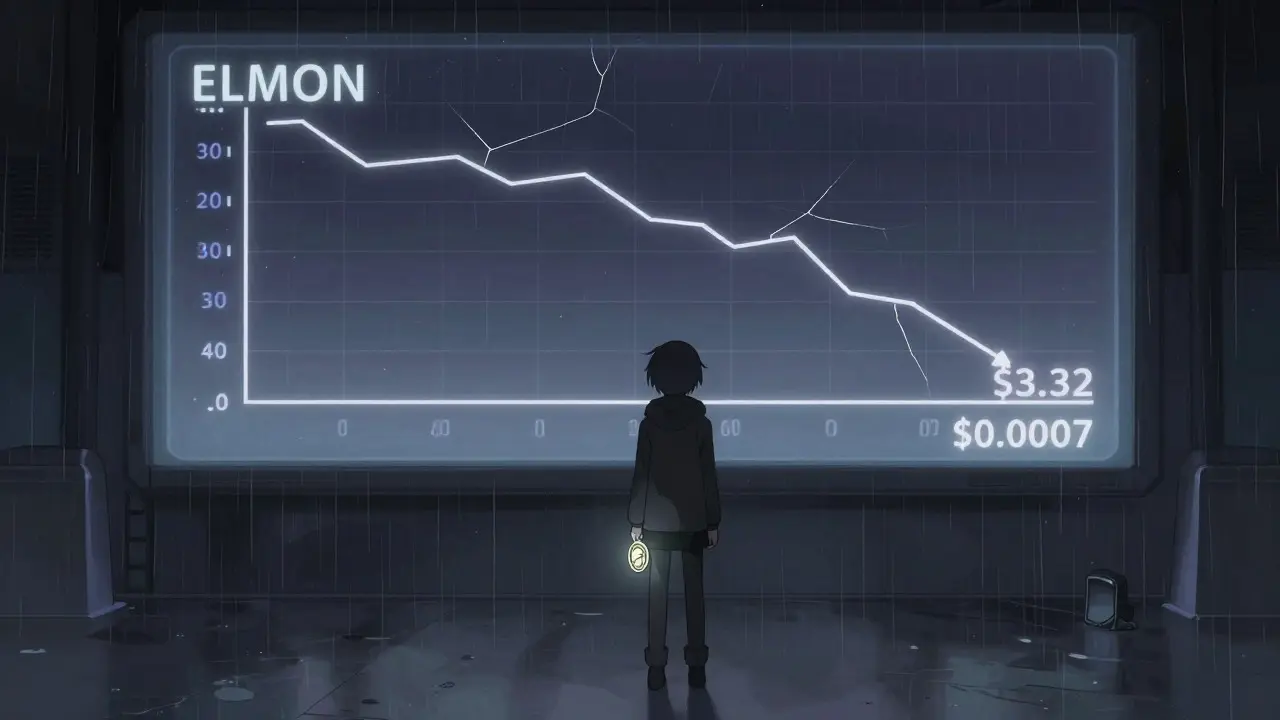
Compare the current price of roughly $0.0007 to the all-time high of $3.32. That is a decline of over 99%. This dramatic drop is common for many early GameFi projects that failed to sustain long-term engagement. The initial excitement faded, new players stopped joining, and the economic model struggled to keep up with inflationary pressures.
Understanding the Elemon Platform and GameFi Model
Why did the value drop so much? To answer that, we have to look at the product itself. Elemon operates as an idle RPG. In traditional gaming, you grind monsters to level up your character. In idle RPGs, the game progresses even when you are offline. Elemon added a financial layer to this: earn tokens while you sleep.
On paper, this sounds appealing. Who doesn't want passive income? However, the reality of GameFi economics is harsh. These models rely on a constant influx of new users bringing fresh capital into the system. When the growth slows down, the rewards shrink. For Elemon, the lack of recent market activity indicates that the user base has likely plateaued or declined significantly since 2021.
The platform leverages NFTs for its "digital monsters." Each monster is a unique asset on the blockchain. Players can own, trade, and use these assets within the game. While the technology works, the demand for these specific assets has cooled. Without active gameplay driving demand for the ELMON token (used for transactions, upgrades, or staking), the token becomes speculative rather than functional.
Is Elemon Still Active? Assessing Long-Term Viability
So, is the project dead? Not necessarily. The term "dead" in crypto is tricky. The smart contracts still exist. The website may still load. But "active" implies development, community engagement, and market interest. Currently, Elemon shows signs of dormancy.
Consider these red flags:
- Zero Trading Volume: Indicates a lack of market confidence or interest.
- Low Ranking: Being ranked #2571+ means it has fallen off the radar of most serious investors.
- Price Decline: A 99% drop from ATH suggests structural issues in the tokenomics or project execution.
However, having nearly 38,000 holders suggests there is still a residual community. Some of these holders might be "diamond hands"-investors who refuse to sell despite the losses. Others might simply have forgotten they hold the tokens. The project team may continue to operate the gaming platform independently of the token's performance, focusing on the utility of the NFTs rather than the speculative value of ELMON.

Lessons from the Elemon Airdrop for Future Investors
If you are looking at this article because you want to avoid making similar mistakes in future airdrops, here is what you should take away. The Elemon case study highlights several critical lessons for navigating the volatile world of crypto giveaways.
1. Airdrops Are Marketing, Not Guarantees
Airdrops are designed to distribute tokens widely, not necessarily to create immediate wealth for recipients. They build a holder base, which can help decentralization, but they do not guarantee price appreciation. Always research the underlying project before claiming.
2. Liquidity Matters More Than Price
A token might show a high price on a chart, but if the volume is zero, you can't sell it. Always check the 24-hour trading volume. If it's negligible, treat the token as illiquid. You might be holding paper gains that cannot be realized.
3. GameFi Models Are Fragile
Play-to-earn economies are complex. They require a delicate balance between reward rates and user growth. When growth stalls, the economy often collapses. Look for projects with sustainable revenue models, not just high promises of passive income.
4. Time Decay Is Real
Crypto moves fast. A project that was hot in 2021 might be irrelevant in 2026. Don't hold onto tokens out of nostalgia. Regularly audit your portfolio and assess whether the project still has active development and community engagement.
Conclusion: What Should You Do Now?
If you participated in the Elemon x CoinMarketCap airdrop, your tokens are likely still in your wallet. You can view them using any standard Ethereum-compatible wallet viewer. However, given the near-zero trading volume and significant price decline, the practical value of selling them is currently minimal. You might choose to hold them as a souvenir of the early GameFi boom, or you might decide to cut your losses if there is any remaining liquidity.
For those hoping for a new airdrop, keep an eye on official channels. While the 2021 campaign is over, projects sometimes revive with new initiatives. But approach any new offer with skepticism. Verify the source, check the contract address, and never connect your main wallet to unverified sites. The era of easy money via airdrops has matured into a space that requires diligence and patience.
Can I still claim the Elemon airdrop in 2026?
No, the specific Elemon x CoinMarketCap airdrop campaign concluded on September 28, 2021. There is currently no active claim period for that historical event. Any websites claiming you can still claim it may be scams.
Why is the ELMON token price so low compared to its all-time high?
The price dropped from an all-time high of ~$3.32 to ~$0.0007 due to decreased market interest, lack of trading volume, and broader challenges faced by early GameFi projects in sustaining long-term economic models. The 99% decline reflects reduced demand and liquidity.
Is it safe to hold ELMON tokens?
Holding tokens in your personal wallet is generally safe from hacking, but the financial risk is high. With zero trading volume, selling may be difficult. Assess whether you want to keep them as a collectible or try to sell if any liquidity appears.
What is the total supply of ELMON tokens?
The total supply of ELMON is 2 billion tokens. Approximately 644.9 million are currently in circulation, representing about 32.25% of the total supply.
Does Elemon still operate as a gaming platform?
While market activity for the token is minimal, the platform may still operate. However, the lack of recent news and trading volume suggests reduced community engagement and development focus compared to its 2021 launch.