

Imagine walking into a bank where the manager won't tell you who owns it, where the security cameras are broken, and where the rules of the game change whenever they feel like it. Now imagine putting your life savings inside. That is essentially what using an unregulated or poorly documented cryptocurrency exchange feels like. In 2026, with global regulations tightening under frameworks like the EU's MiCA and strict US SEC enforcement, choosing a platform without clear oversight is one of the biggest financial risks you can take.
You might have stumbled upon XueBi, which is described as a cryptocurrency exchange platform facilitating the buying, selling, and trading of digital assets. It promises access to over 50 cryptocurrencies, including Bitcoin and Ethereum. But here is the hard truth: there is almost no reliable information about this platform. No founding date. No known founders. No clear corporate structure. And critically, no visible regulatory license. This article breaks down why that silence is louder than any marketing claim, and whether XueBi deserves a spot in your portfolio-or if you should steer clear entirely.
The Regulatory Black Hole: Why Silence Is Dangerous
In the world of finance, transparency isn't just a nice-to-have; it's your safety net. When you deposit money into Coinbase or Kraken, you know exactly which government agencies oversee them. Coinbase is regulated by the New York State Department of Financial Services. Kraken holds multiple money transmitter licenses across the United States. Binance operates under frameworks like Dubai’s VARA. These aren't just badges on a website; they mean these exchanges must follow strict rules regarding fund segregation, anti-money laundering (AML) checks, and customer protection.
XueBi offers none of this clarity. There is no public record of which jurisdiction regulates XueBi. This places it in a dangerous category of "wild west" exchanges. Without a regulator, who do you call when your funds disappear? Who audits their books to ensure they actually hold the assets they say they hold? The lack of regulatory status means XueBi likely does not comply with the Financial Action Task Force's (FATF) "Travel Rule," which requires exchanges to share customer data for transactions over $1,000. As governments worldwide crack down on anonymous platforms, exchanges like XueBi face a high risk of sudden shutdowns or blocked banking relationships, leaving users stranded with their assets.
| Feature | XueBi | Coinbase | Kraken | Binance |
|---|---|---|---|---|
| Regulatory Status | Unspecified / None found | NYS DFS Regulated | Multiple US Licenses | Dubai VARA & others |
| Fund Insurance | Not Disclosed | Yes (up to limits) | Partial Coverage | Limited/Self-insured |
| Cold Storage Disclosure | No Details | 98% in Cold Storage | Most Funds Offline | Majority Offline |
| Transparency Reports | None Found | Regularly Published | Regularly Published | Regularly Published |
Security Protocols: What You Don't Know Can Hurt You
Security is the bedrock of any crypto exchange. History is littered with the graves of platforms that failed to protect user funds. Remember MtGox? Bitfinex? Coincheck? According to research from Curtin University, historical hacks resulted in over $606 million in losses. These weren't small errors; they were catastrophic failures of infrastructure and governance.
Top-tier exchanges combat this by storing the vast majority of user funds in "cold storage"-offline wallets that hackers cannot reach remotely. Coinbase publicly states that 98% of customer funds are stored in cold storage. They also provide details on insurance coverage for online holdings. XueBi provides zero such details. While basic reviews mention "standard security measures" like two-factor authentication (2FA), this is the bare minimum. Any decent app has 2FA. The real question is: how are the private keys managed? Are there dedicated security staff? Is there multi-signature authorization for withdrawals?
Without transparent documentation of their security architecture, you are flying blind. If XueBi suffers a breach, will they cover your losses? Unlikely. Most unregulated exchanges have no insurance policy. Your money is simply gone. In contrast, established platforms undergo regular SOC 2 Type 2 audits, independent checks that verify their security controls are working. XueBi shows no evidence of undergoing such rigorous scrutiny.

Fees and Trading Experience: Hidden Costs and Limited Tools
Let's talk about what you pay. Fees eat into your profits more than taxes do. Major exchanges like Binance and Kraken publish clear fee schedules based on trading volume. They use a maker-taker model, rewarding you for adding liquidity to the market. XueBi describes its fees as "variable based on trading volume," but offers no specific schedule. This vagueness is a red flag. It often means hidden withdrawal fees, higher spreads (the difference between buy and sell prices), or unexpected charges that only appear when you try to move your money out.
Regarding the trading experience, XueBi supports over 50 cryptocurrencies. This sounds decent until you compare it to the competition. Binance lists over 350 coins. Coinbase offers 200+. If you are looking for niche altcoins or new tokens, XueBi will likely disappoint you. Furthermore, the platform lacks advanced trading tools. There is no mention of API availability for algorithmic traders, limited charting capabilities, and no sophisticated order types beyond basic market and limit orders. For a casual buyer, this might suffice. For anyone serious about trading, the interface is too restrictive and opaque.
User Support and Community Sentiment: The Ghost Town Effect
How do you know if an exchange is trustworthy? Look at what real users say. Go to Reddit, Trustpilot, or Twitter. Search for "Coinbase support" or "Kraken withdrawal." You will find thousands of discussions, complaints, and praises. This visibility is healthy; it means the company is accountable to its community.
Now search for "XueBi reviews." You will find virtually nothing. No active Reddit communities. No substantial Trustpilot ratings. No social media buzz. This absence suggests three possibilities: the user base is tiny, the platform restricts access from major English-speaking countries, or worse, users are afraid to speak out because they have had negative experiences. The Wikibit review mentions email and live chat support, but without response time metrics or satisfaction scores, this is meaningless. If you get locked out of your account during a market crash, can you rely on an email reply that takes days? With major exchanges offering 24/7 live chat with sub-2-minute response times, XueBi's silent support channel is a significant liability.
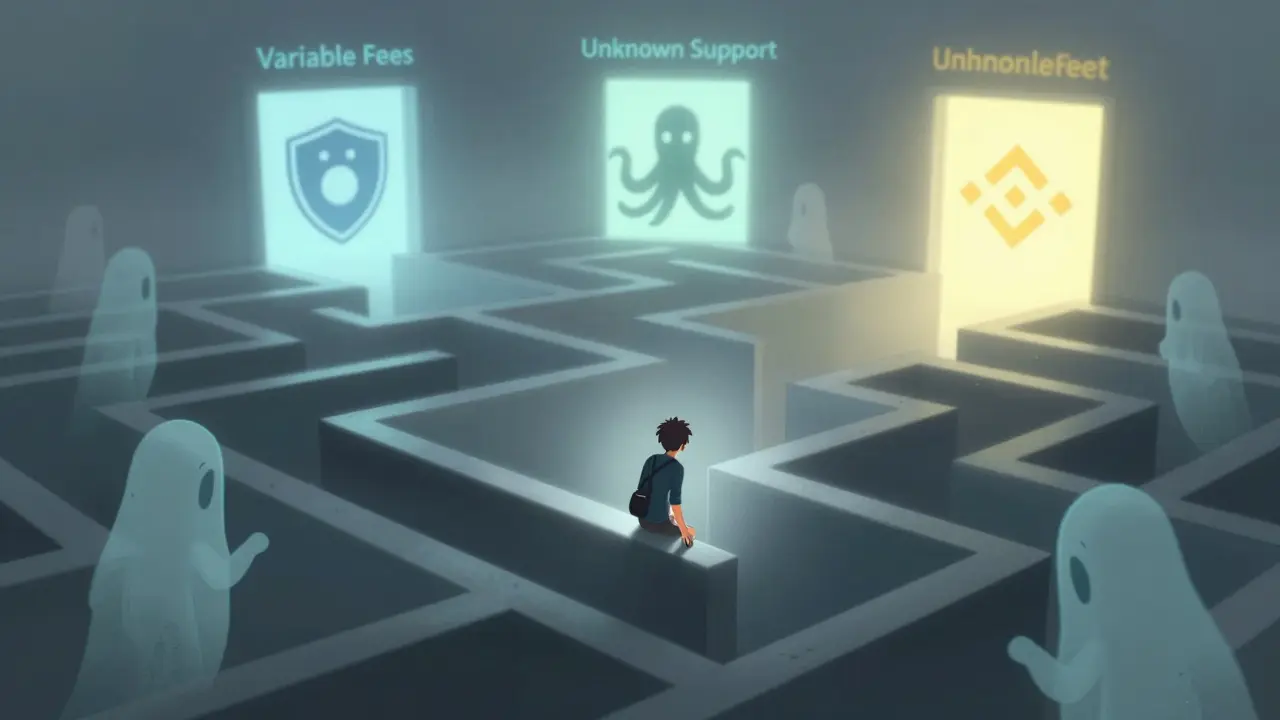
Who Should Use XueBi? (And Who Shouldn't)
Is there any scenario where XueBi makes sense? Perhaps if you reside in a country where major exchanges like Coinbase or Binance are banned, and XueBi is your only option. Even then, the risks are extreme. For the vast majority of users, especially those in North America, Europe, or Australia, XueBi offers no advantages over regulated competitors.
If you are a beginner, avoid XueBi. The lack of educational resources, tutorials, and clear fee structures makes it a hostile environment for learning. If you are an experienced trader, the lack of APIs, advanced charts, and deep liquidity will frustrate you. If you are holding long-term investments, the security risks are unacceptable. There is simply no compelling reason to choose XueBi when safer, more transparent, and feature-rich alternatives exist.
Safer Alternatives for 2026
Instead of risking your capital on an obscure platform, consider these proven alternatives:
- Coinbase: Best for beginners. Highly regulated in the US, excellent customer support, and strong security with insured funds. Ideal for buying Bitcoin and Ethereum easily.
- Kraken: Best for security-conscious traders. Known for never being hacked, offers robust privacy features, and has competitive fees. Great for both spot and margin trading.
- Binance: Best for variety and low fees. Offers the widest selection of cryptocurrencies and advanced trading tools. Note: Ensure you are using the correct regional entity (e.g., Binance.com or Binance.US) compliant with your local laws.
- Bitbuy or CoinSpot: If you are in New Zealand or Australia, local regulated exchanges offer fiat on-ramps with full compliance to local financial standards.
Is XueBi a legitimate exchange?
While XueBi appears to operate as a functional trading platform, its legitimacy is questionable due to the complete lack of regulatory oversight, unknown ownership, and absent security disclosures. In the crypto industry, "legitimate" implies accountability and legal recourse, which XueBi does not demonstrate. Proceed with extreme caution.
Does XueBi store funds in cold storage?
There is no public information confirming that XueBi uses cold storage for user funds. Unlike top exchanges like Coinbase, which disclose that 98% of assets are offline, XueBi provides no transparency on its custody solutions. This increases the risk of loss in case of a hack.
What are the fees on XueBi?
XueBi states that fees are variable based on trading volume, but it does not publish a clear fee schedule. This lack of transparency can lead to unexpected costs, particularly for withdrawals and large trades. Always check the latest terms on their site before trading, but expect higher spreads compared to regulated competitors.
Can I trust XueBi with my Bitcoin?
It is not recommended to leave significant amounts of Bitcoin on XueBi. Due to the lack of insurance, regulatory protection, and verified security audits, your funds are at higher risk. If you must use the platform for trading, withdraw your assets to a personal hardware wallet immediately after purchasing.
Why is there so little information about XueBi?
The scarcity of information likely stems from its unregulated status and limited market presence. Reputable exchanges invest heavily in marketing, community building, and transparency reports. XueBi's silence suggests it may be operating in a niche market or avoiding scrutiny that comes with public visibility and regulatory compliance.