

There’s a new crypto exchange popping up in your feed: FutureX Pro. It promises anonymous trading, no KYC, and even claims to be "FinCEN-Approved." Sounds too good to be true? That’s because it is.
What FutureX Pro Claims vs. What It Actually Does
FutureX Pro says it’s built for privacy. No ID checks. No forms. Just deposit your Bitcoin or Ethereum and trade. Their website uses phrases like "revolutionizing crypto privacy" and "trade anonymously, safely." But here’s the catch: they also say they’re "FinCEN-Approved." That’s not just misleading - it’s impossible. FinCEN doesn’t "approve" exchanges. It requires them to register as a Money Services Business (MSB). And every single MSB registration in the U.S. requires KYC - Know Your Customer - procedures. You can’t have both. You can’t claim regulatory compliance and then say you don’t collect user identities. It’s like saying your restaurant is "FDA-approved" but doesn’t check if your staff wash their hands. The system doesn’t work that way. This contradiction isn’t a mistake. It’s a red flag baked into the brand. Experts like Dr. David Yermack from NYU Stern and regulatory reporters from the Wall Street Journal have called this kind of language "marketing nonsense." If a platform says it’s "FinCEN-Approved" while offering no KYC, it’s either lying or doesn’t understand basic financial regulation. Either way, you shouldn’t trust it with your money.No Transparency, No Trust
Legitimate exchanges don’t hide how they protect your assets. Kraken publishes quarterly proof-of-reserves. Coinbase keeps 98% of customer funds in cold storage. Binance.US complies with all 50 U.S. state regulations. They show you the receipts. FutureX Pro? Nothing. No details on where their servers are. No numbers on how much crypto they hold in cold storage. No third-party audit reports. No API documentation. No GitHub repo. No security whitepaper. Not even a help center with basic FAQs. Compare that to Bitstamp, which has a 147-page help guide, or Gemini, which offers a full regulatory compliance handbook. FutureX Pro’s website is just marketing fluff. No substance. No proof. Just promises.Users Are Already Getting Locked Out
If you’re thinking, "Maybe it’s new and just needs time," check what real users are reporting. On Reddit’s r/CryptoCurrency, multiple users posted about depositing crypto into FutureX Pro - and never seeing it again. One user, "CryptoSaver87," shared a blockchain transaction ID showing $1,200 in BTC sent to FutureX Pro’s deposit address. The funds never appeared in their account. The platform didn’t respond. No error message. No email. Just silence. Trustpilot has zero verified reviews. Bitcoin Talk forums have active scam alerts. WhistleCrypto reports that emails to [email protected] bounce back as undeliverable. That’s not poor customer service - that’s a shutdown in progress. This isn’t a startup struggling to scale. This is a classic exit scam pattern: attract users with bold claims, collect deposits, then vanish. Thodex did this in 2021 and vanished with $2 billion. The same signs are here.
The Name Game: Impersonating a Legit Company
FutureX Pro isn’t just making false claims - it’s stealing credibility. There’s a real company called Futurex, founded in 1991, based in Texas. They make hardware security modules for banks and governments. Their website clearly states: "We have no affiliation with any cryptocurrency exchange platform named FutureX Pro." FutureX Pro is using a nearly identical name to trick people into thinking they’re connected to a trusted enterprise. That’s not a coincidence. That’s a scam tactic the CFTC specifically warns about: "imposter sites using names similar to legitimate companies." If you see a brand that sounds like a well-known company but isn’t - walk away.Security Tools? Not Real
FutureX Pro claims to use "multi-factor authentication, end-to-end encryption, and advanced monitoring tools." But where’s the proof? No technical documentation. No open-source code. No penetration test results. No security certifications. Just buzzwords on a landing page. Compare that to Kraken, which publishes detailed API specs with 127 endpoints, or Coinbase, which has a full developer portal with code examples. Legit platforms show their work. Scams hide behind vague promises. Even CertiK, a top blockchain security firm, refused to evaluate FutureX Pro because of "insufficient regulatory documentation and operational transparency." That’s not a minor oversight. That’s a death sentence for any exchange trying to be taken seriously.Regulatory Reality Check
The global crypto market is $4.2 trillion. And 98 out of 134 countries now have crypto regulations. In the U.S., the Bank Secrecy Act requires all exchanges handling U.S. customers to implement KYC, report suspicious activity, and undergo audits. FutureX Pro claims to serve U.S. users while ignoring all of this. That’s not "privacy-focused." It’s illegal. The SEC fined LBX $2.4 million in 2022 for operating without registration. BitMEX paid $100 million for the same offense. These aren’t theoretical risks. These are real penalties. And if you use a platform like FutureX Pro, you’re not just risking your funds - you’re potentially exposing yourself to legal trouble.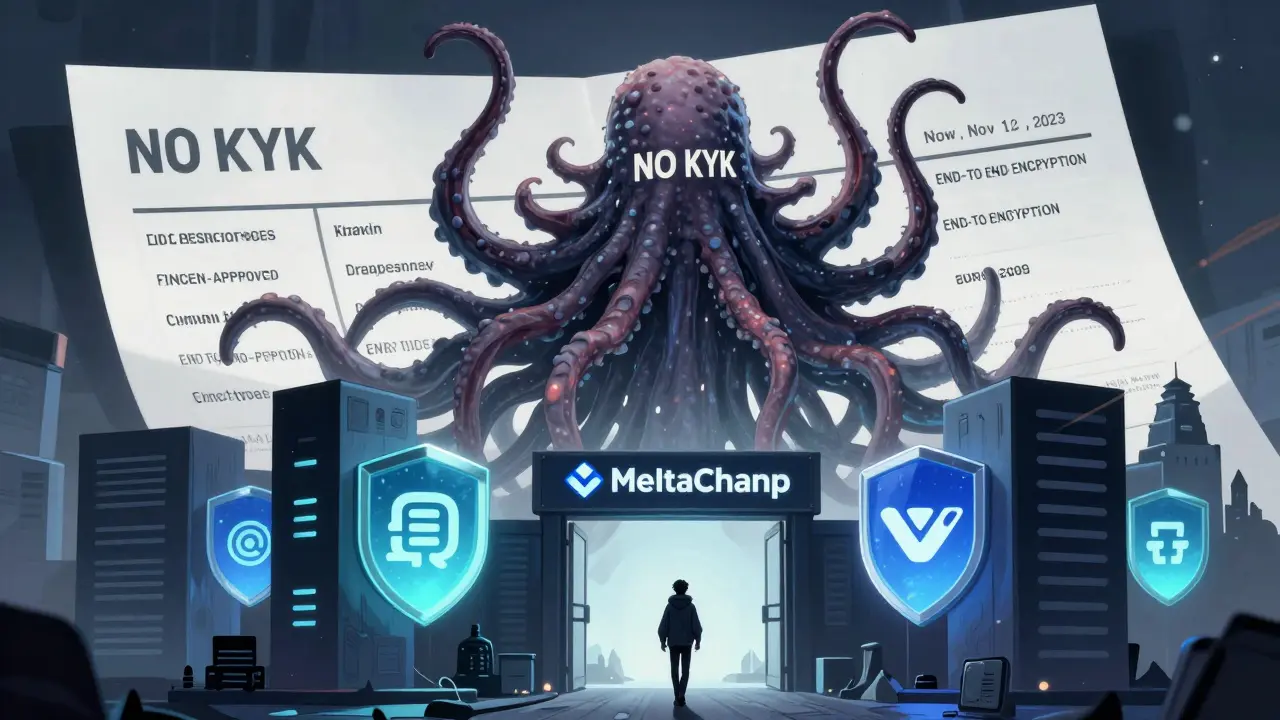
Domain and Tech Red Flags
The domain futurexpro.com was registered on November 1, 2023 - just weeks before the platform launched. That’s not a sign of a mature company. That’s a sign of a fly-by-night operation. VirusTotal scans show 12 out of 71 security vendors flag the site as suspicious. That’s a high rate for a brand-new platform. And when you check WHOIS records, there’s no trace of a corporate entity behind it. No legal address. No registered agent. Just a domain bought with a credit card and a marketing team. Meanwhile, legitimate exchanges like Coinbase and Kraken have domains registered for over a decade. They have legal teams, physical offices, and public corporate filings. FutureX Pro has none of that.What Should You Do?
Don’t deposit a single dollar. Don’t even sign up. If you want privacy, use a decentralized exchange like Uniswap or PancakeSwap. They don’t collect your identity - and they’re built on open, auditable blockchains. No middleman. No promises. No scams. If you want a regulated, safe exchange, stick with Coinbase, Kraken, or Binance.US. They’re transparent. They’re audited. They’ve survived SEC crackdowns and market crashes. They’ve earned trust. FutureX Pro is a trap dressed up as innovation. It’s not a new kind of exchange. It’s an old kind of scam - with better graphics.Why This Matters Beyond Your Wallet
Every time someone falls for a scam like FutureX Pro, it makes it harder for real crypto projects to get traction. Regulators crack down harder. Exchanges get overburdened with compliance. Legit users get scared off. This isn’t just about losing money. It’s about protecting the entire ecosystem. Avoiding scams like this isn’t paranoia - it’s responsibility. Don’t be the next person who says, "I didn’t know it was a scam." You know now.Is FutureX Pro a legitimate crypto exchange?
No. FutureX Pro is not a legitimate exchange. It makes impossible claims - like being "FinCEN-Approved" while offering "NO KYC" - which violate U.S. financial regulations. There is no verifiable evidence of its operations, security measures, or corporate structure. Multiple users report failed withdrawals, and security firms have flagged it as high-risk. It matches the pattern of known exit scams.
Can I trust FutureX Pro’s "no KYC" feature?
No. While no-KYC sounds appealing for privacy, centralized exchanges that offer it while claiming regulatory compliance are operating illegally. The U.S. requires all crypto exchanges handling U.S. customers to register with FinCEN and enforce KYC. FutureX Pro’s model is fundamentally incompatible with any legal framework. If you want true privacy without legal risk, use a decentralized exchange like Uniswap, not a fake centralized platform.
Why does FutureX Pro claim to be "FinCEN-Approved"?
It’s a deceptive marketing tactic. FinCEN doesn’t "approve" exchanges - it requires them to register as a Money Services Business (MSB), which mandates KYC and AML compliance. Claiming "FinCEN-Approved" is like saying a restaurant is "FDA-Approved" when it’s just a food truck. The phrase is meaningless in this context and is used to falsely imply legitimacy. Experts and regulators have called this language outright fraud.
Is FutureX Pro connected to the company Futurex?
No. Futurex (futurex.com) is a legitimate U.S.-based company founded in 1991 that makes hardware security modules for banks and governments. Their official website explicitly states they have no affiliation with FutureX Pro. The similar name is intentional - it’s a classic scam tactic to trick users into believing there’s a connection to a trusted brand.
What should I do if I already deposited crypto into FutureX Pro?
If you’ve already sent crypto to FutureX Pro, act immediately. Stop sending more funds. Document all transaction IDs and dates. Report the incident to local authorities and file a complaint with the FTC at ReportFraud.ftc.gov. Share your experience on forums like Bitcoin Talk and Reddit to warn others. Unfortunately, recovery of funds is unlikely - most exit scams disappear quickly. Your best defense now is to prevent others from falling for the same trap.
Are there any safe alternatives to FutureX Pro for anonymous trading?
Yes. Decentralized exchanges (DEXs) like Uniswap, PancakeSwap, and Curve allow you to trade without KYC because they run on public blockchains - no central company holds your funds. You control your wallet, and trades happen directly on-chain. While DEXs have their own risks (like smart contract bugs), they don’t have the same exit scam potential as fake centralized platforms like FutureX Pro. Always use a non-custodial wallet like MetaMask when trading on DEXs.
Why don’t I see any reviews for FutureX Pro on Trustpilot or Reddit?
Because there are no legitimate reviews. Trustpilot shows zero verified reviews. Reddit threads contain warnings from users who couldn’t withdraw funds. The lack of reviews isn’t due to low traffic - it’s because the platform is either too new to have earned trust, or it’s already in the process of vanishing. Real exchanges have hundreds or thousands of user reviews. FutureX Pro has silence - and that’s a red flag.
How can I spot a crypto exchange scam in the future?
Look for these red flags: 1) Claims of "regulatory approval" without details, 2) No KYC but claims to serve regulated markets like the U.S., 3) No transparency on security, reserves, or audits, 4) Similar name to a legitimate company, 5) No API or developer documentation, 6) Bounced support emails, 7) Domain registered recently, 8) No third-party security audits. If you see two or more of these, walk away. Legit exchanges don’t hide - they show their work.