
You've probably heard of streaming wars between Netflix and Disney+, but have you ever thought about who actually owns the content you watch? Most platforms keep creators on a tight leash with fixed contracts. SynVision (TWS) tries to flip that model on its head. It's an AI-driven entertainment platform token operating on the Solana blockchain that aims to let viewers, creators, and investors share in the profits of short-form drama series.
But here's the catch: while the concept sounds futuristic, the reality of trading this coin right now involves navigating low liquidity and conflicting data sources. If you're wondering whether TWS is the next big thing in Web3 entertainment or just another speculative gamble, you need to look past the marketing buzzwords. This guide breaks down exactly what SynVision does, how its tech stack works, and why the market data looks so messy.
The Core Concept: Micro-Drama Meets Blockchain
Think about your last scroll through TikTok or YouTube Shorts. You likely watched a few seconds of a clip, maybe stayed for a minute if it was good. SynVision targets this exact behavior but packages it as "micro-short drama." Instead of random clips, they produce serialized narrative content designed for fast-paced consumption. The platform positions itself as a Real World Asset (RWA) project, meaning the value isn't just in the code-it's tied to actual media production.
The goal is simple: create a decentralized ecosystem where the audience doesn't just consume content; they help fund it and govern it. By using blockchain incentives, SynVision hopes to solve the classic creator economy problem where platforms take huge cuts. Here, the idea is "co-build, co-govern, and co-share." Creators get direct feedback loops, and token holders potentially see returns based on the success of the shows they support.
How the Technology Stack Works
SynVision isn't just a video player with a crypto wallet attached. The backbone of the project relies on two major technologies working in tandem: the Solana blockchain and artificial intelligence tools for content optimization.
Why Solana? Because when you're dealing with millions of micro-transactions for viewing rewards or voting rights, Ethereum's gas fees would kill the user experience. Solana offers the speed and low cost necessary for high-frequency interactions. The platform uses this infrastructure to distribute rewards automatically without intermediaries.
The AI component is arguably more interesting for users. It’s not just there for show. The system analyzes real-time audience sentiment to tweak scripts and marketing strategies. Imagine a scenario where a specific plot twist causes viewer drop-off rates to spike. The AI detects this pattern instantly and suggests adjustments for future episodes. This data-driven approach aims to maximize engagement metrics, which directly correlates to revenue generation for both creators and token holders.
Tokenomics and Supply Confusion
If you try to buy TWS, you might hit a wall of confusion regarding supply numbers. Different tracking sites report wildly different figures. Some cite a total supply of 1.96 billion tokens, while others mention maximum supplies ranging from 200 billion to even quadrillions. This discrepancy usually points to either ongoing token burns, complex vesting schedules, or simply poor data aggregation by third-party trackers.
As of mid-2026, the fully diluted valuation estimates vary significantly across platforms like CoinMarketCap and CoinCarp. One source might show a market cap of $1.41 million, while another reports zero because it hasn't detected active listings on major exchanges. This inconsistency is a red flag for institutional investors but also indicates that the token is still in its early, volatile stages.
| Metric | Value / Status | Note |
|---|---|---|
| Blockchain Network | Solana | Chosen for low transaction fees and speed |
| All-Time High Price | $0.0998 | Reached August 1, 2025 |
| All-Time Low Price | $0.00038 | Recorded May 7, 2025 |
| Current Trading Volume | <$4,000 USD (24h) | Indicates very low liquidity |
| Primary Use Case | Governance & Rewards | Used for voting and earning content perks |

Where to Buy and Liquidity Issues
Here is the practical part: can you actually trade TWS easily? The answer is complicated. Unlike Bitcoin or Ethereum, SynVision doesn't have deep order books on Binance or Coinbase. In fact, some aggregators state that TWS has yet to be listed on any centralized exchange (CEX) or decentralized exchange (DEX) with significant volume.
Most trading activity appears to happen through Over-the-Counter (OTC) channels. For the average retail investor, this means buying and selling can be slow and expensive due to wide spreads. If you hold a large position, exiting it quickly without crashing the price could be difficult. The 24-hour trading volume often hovers near zero or a few thousand dollars, which confirms that this is not a highly liquid asset yet.
This lack of accessibility protects the community from massive pump-and-dump schemes driven by bots, but it also limits mainstream adoption. Until the project secures listings on reputable exchanges, TWS remains a niche play for those comfortable with manual OTC transactions or smaller DEX swaps.
Risks and Volatility Warning
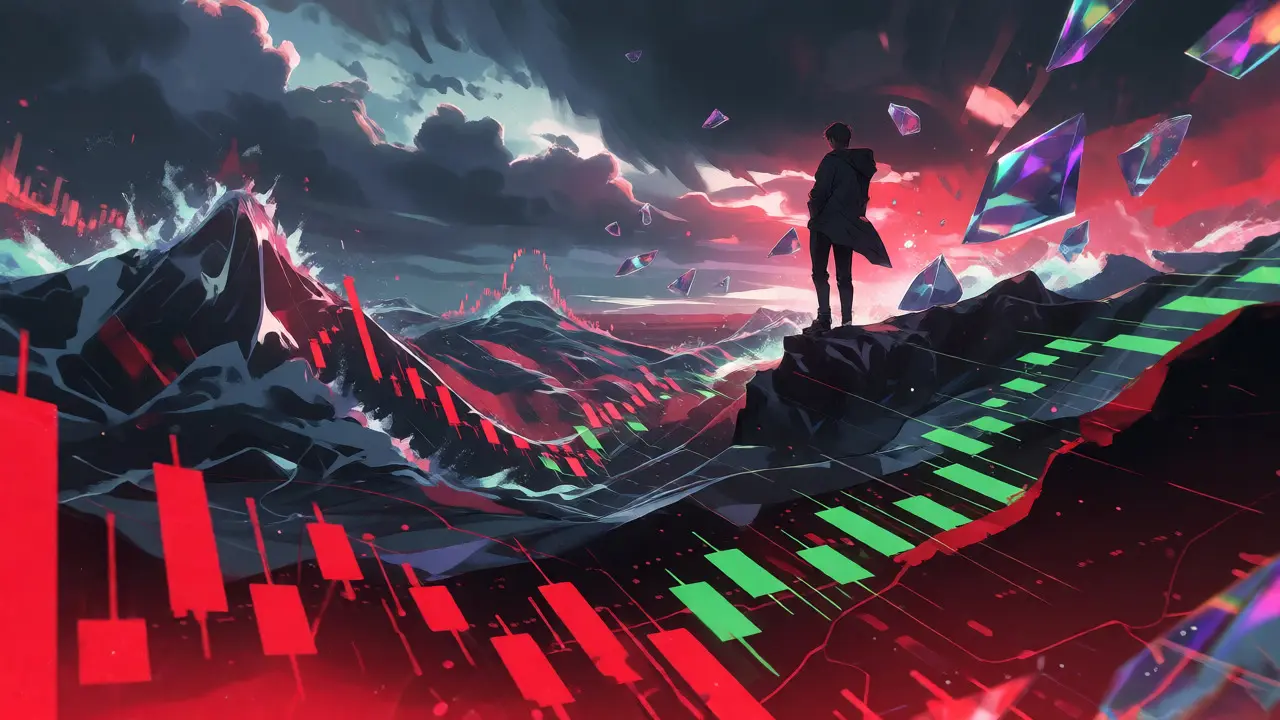
Let's talk about the price action. TWS experienced a brutal 76% decline from its all-time high in August 2025 to late 2026 prices. Conversely, it saw a massive percentage gain from its all-time low, but that’s typical for assets starting from pennies. The volatility is extreme. A single week can see double-digit percentage swings.
CoinCarp explicitly warns that SynVision is "highly volatile" and may not suit all investors. This isn't boilerplate text; it reflects the reality of early-stage crypto projects with limited utility adoption. If the platform fails to attract enough creators to produce compelling dramas, the token loses its fundamental backing. Without engaging content, the AI features and blockchain infrastructure are just empty shells.
Additionally, the competition is fierce. TikTok and YouTube Shorts already dominate the short-form video space with billions of daily users. Convincing mainstream audiences to switch to a blockchain-based app requires more than just a token incentive. It requires superior content quality and a seamless user experience that doesn't feel clunky compared to Web2 apps.
Community and Governance Structure
SynVision operates on a decentralized governance model. This means token holders aren't just passive observers; they participate in decision-making processes. The project maintains communication channels via Twitter (@SYN_VISION_W), Medium, and multiple Telegram groups. These channels suggest an organized effort to build a dedicated user base, though the exact size of the active community remains unclear.
The "co-govern" aspect allows users to vote on key platform updates, such as new feature rollouts or partnership decisions. While this sounds democratic, in practice, governance participation in small-cap tokens is often low. Most voting power tends to concentrate among early investors and team members unless incentives for voting are strong enough to engage regular users.
Is SynVision Worth Your Attention?
If you are looking for a safe haven investment, TWS probably isn't it. The data inconsistencies, low liquidity, and uncertain tokenomics make it a speculative venture. However, if you believe in the convergence of AI, blockchain, and short-form storytelling, SynVision represents an intriguing experiment.
The project addresses a real pain point: creator compensation in the digital age. By leveraging Solana's efficiency and AI's analytical power, it attempts to create a fairer ecosystem. But execution is everything. Keep an eye on their upcoming content releases and any announcements regarding major exchange listings. Those two factors will determine whether TWS stays a niche curiosity or becomes a viable player in the Web3 entertainment sector.
What blockchain does SynVision use?
SynVision operates on the Solana blockchain. This choice was made to leverage Solana's high transaction speed and low fees, which are essential for handling frequent micro-transactions related to content viewing and reward distribution.
Is TWS available on Binance or Coinbase?
Currently, TWS has limited presence on major centralized exchanges. Much of its trading occurs through Over-the-Counter (OTC) channels or smaller decentralized exchanges. Investors should verify current listing status before attempting to purchase, as availability changes frequently.
What makes SynVision different from TikTok?
While TikTok focuses on broad social interaction, SynVision specializes in serialized "micro-short dramas" and integrates blockchain technology. This allows for transparent ownership, direct creator monetization via tokens, and community governance, whereas TikTok retains centralized control over algorithms and revenue sharing.
Why are token supply numbers inconsistent?
Discrepancies in reported supply (e.g., 1.96 billion vs. 200 billion) often stem from differences between circulating supply, total supply, and maximum supply definitions, or delays in data aggregator updates. Always check the project's official whitepaper for the most accurate current tokenomics.
Is SynVision a good long-term investment?
It is considered a high-risk, high-reward speculative asset. Its long-term viability depends on achieving mainstream adoption against established competitors like YouTube Shorts and maintaining sufficient liquidity. Due to high volatility, it may not be suitable for conservative investors.