Bitcoin has long been criticized for being slow and expensive to use for complex applications. You can send money, sure, but trying to build a decentralized finance app or a game on it? That’s a headache. Enter SatoshiVM, a project that promises to fix this by bringing Ethereum-like speed to Bitcoin without sacrificing security. It’s a Zero-Knowledge (ZK) Rollup Layer 2 solution that lets you pay gas fees in native BTC instead of wrapped tokens. If you’ve ever wondered how developers are trying to unlock Bitcoin’s potential beyond simple value storage, understanding what SatoshiVM is-and its token, SAVM-is the first step.
The Core Problem: Why We Need Bitcoin Layer 2s
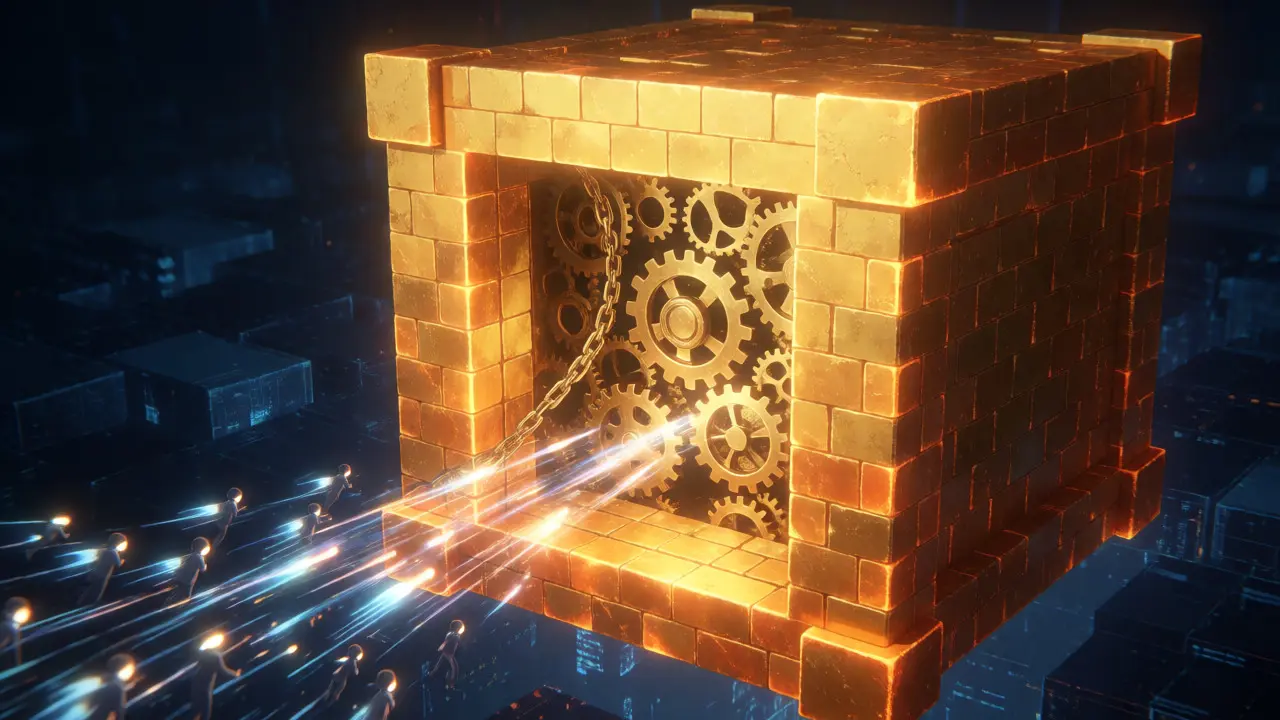
Think of Bitcoin as a massive, secure bank vault. It’s incredibly safe, but getting things in and out is slow because everyone needs to agree on every transaction. This is why Bitcoin processes only about 7 transactions per second. In contrast, Ethereum handles thousands, but it comes with high fees and different security assumptions. Developers want the best of both worlds: Bitcoin’s ironclad security and Ethereum’s programmability. Traditional solutions often require "wrapping" Bitcoin-turning your real BTC into a token like WBTC on another chain. This introduces risk; if the bridge holding your BTC gets hacked, your wrapped token becomes worthless. SatoshiVM solves this by allowing users to interact with the network using native BTC as gas. There is no wrapping involved. Your Bitcoin stays on Bitcoin, but you can execute smart contracts on a faster layer that settles back to the main Bitcoin chain.
How SatoshiVM Works: The Tech Behind the Magic
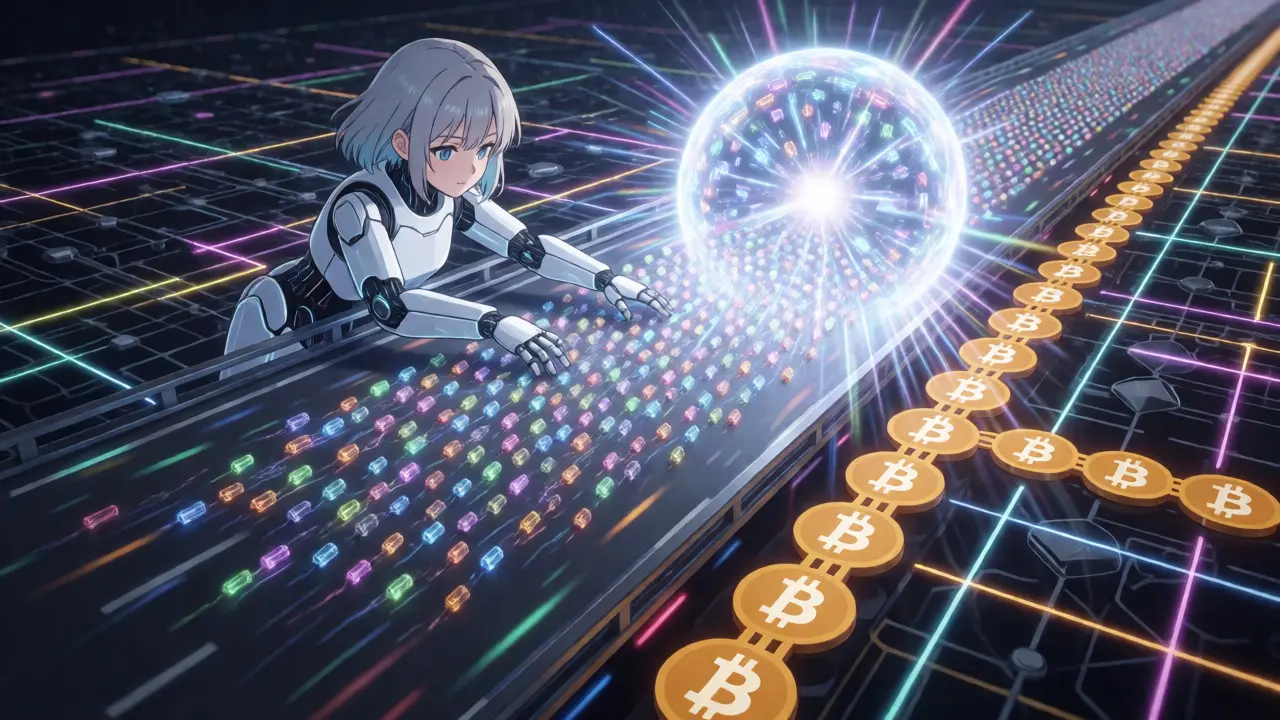
You don’t need a PhD in cryptography to grasp the basics, but knowing the mechanism helps you judge the project's legitimacy. SatoshiVM uses a technology called Zero-Knowledge Rollups. Here is the simplified flow:
- Execution Off-Chain: Transactions happen quickly on the Layer 2 network, not directly on Bitcoin.
- ZK Proofs: Instead of sending every single transaction data point to Bitcoin (which is expensive), the network generates a mathematical proof. This proof says, "I processed these 1,000 transactions correctly," without revealing all the messy details.
- Verification On-Chain: This tiny proof is sent to Bitcoin. Using Bitcoin’s Taproot upgrade, the network can verify this proof efficiently.
This approach means Bitcoin doesn't need any code changes to support these apps. It just sees a small, verifiable update. For developers, this is huge because they can use existing tools from the Ethereum Virtual Machine (EVM) ecosystem. If you know how to code in Solidity for Ethereum, you can likely deploy on SatoshiVM with minimal adjustments.
Inside the SAVM Token: Utility and Economics
Every crypto project needs a fuel source. For SatoshiVM, that’s the SAVM token. It’s not just a speculative asset; it has specific jobs within the ecosystem.
| Attribute | Detail |
|---|---|
| Total Supply | 21 million (mirroring Bitcoin’s cap) |
| Primary Use Case | Governance and Validator Staking |
| Gas Payment | Native BTC (not SAVM) |
| Launch Date | January 2024 (IDO) |
Notice something odd? You pay gas in BTC, so what do you need SAVM for? Validators-the people securing the network-must stake SAVM tokens. They earn rewards from the network activity. Additionally, SAVM holders get voting rights on future upgrades. This separation is clever: it keeps the user experience smooth (paying in familiar BTC) while ensuring the security providers have skin in the game via their own token.
Market Position: How Does It Stack Up?
If you’re looking at investing or building, you need to know where SatoshiVM sits compared to competitors. It’s currently ranked around #2038 by market capitalization, which places it in the early-stage, high-risk category. Let’s compare it to the big players in the Bitcoin Layer 2 space.
| Feature | SatoshiVM | Stacks (STX) | Rootstock |
|---|---|---|---|
| Gas Token | Native BTC | STX | RBTC (Wrapped BTC) |
| EVM Compatible | Yes | No (Clarity Language) | Yes |
| Tech Type | ZK Rollup | Sidechain | Pegged Sidechain |
| Maturity | Early Stage | Established | Established |
The advantage here is clear: EVM compatibility plus native BTC gas is a rare combo. Most competitors force you to learn new languages or use wrapped assets. However, the disadvantage is liquidity. With a 24-hour trading volume hovering around $80,000, it’s much harder to buy or sell large amounts of SAVM without moving the price significantly compared to giants like Arbitrum or Optimism.
Risks and Realities: What Could Go Wrong?
Don’t let the tech hype blind you to the risks. First, adoption is still in its infancy. While partnerships with projects like Portal DeFi and Supra Labs are promising, we haven’t seen a killer app yet that drives millions of users to SatoshiVM. Second, technical complexity is a barrier. Verifying ZK proofs on Bitcoin via Taproot is cutting-edge stuff. Any bug in the verification logic could theoretically halt the network or cause fund losses. Unlike Ethereum, where billions are already secured, Bitcoin Layer 2s are still proving themselves under load. Finally, look at the price action. As of late 2026, SAVM has experienced significant volatility. After launching at $0.05, it saw an all-time high ROI of nearly 300x, but recent months have shown bearish trends, with some analysts predicting further downside before stability hits. If you’re buying now, you’re betting on the team executing their roadmap perfectly in a crowded market.
Who Should Pay Attention to SatoshiVM?
You might ask, "Is this relevant to me?" For Developers: If you’re an Ethereum dev curious about Bitcoin but don’t want to learn Rust or Clarity, SatoshiVM offers the lowest friction entry point. You keep your tools, you tap into Bitcoin’s brand recognition, and you avoid wrapped token risks. For Investors: This is a high-beta play. It moves faster than Bitcoin and has more upside potential than established L2s, but it carries higher risk. Keep an eye on total value locked (TVL) growth. If TVL starts climbing consistently, the narrative shifts from "speculative tech" to "viable infrastructure." For Bitcoin Purists: If you believe Bitcoin should only be digital gold, you might ignore this. But if you see Bitcoin evolving into a settlement layer for global apps, SatoshiVM represents one of the cleanest paths to get there.
Do I need SAVM tokens to pay for transactions on SatoshiVM?
No. One of SatoshiVM's key features is that you pay gas fees in native Bitcoin (BTC). SAVM is primarily used for staking by validators and governance voting, not for direct user transaction costs.
Is SatoshiVM compatible with MetaMask?
Yes. Because SatoshiVM is fully compatible with the Ethereum Virtual Machine (EVM), you can connect standard wallets like MetaMask. You just need to add the SatoshiVM network details manually to your wallet settings.
What makes SatoshiVM different from other Bitcoin Layer 2s?
The main difference is the combination of EVM compatibility and native BTC gas. Other solutions often require learning new programming languages (like Stacks) or using wrapped Bitcoin tokens (like Rootstock), which adds complexity and counterparty risk.
How many SAVM tokens exist?
The total supply of SAVM is capped at 21 million tokens, mirroring Bitcoin's maximum supply limit. This scarcity model is designed to align the token's economic incentives with Bitcoin's monetary policy.
Is SatoshiVM safe to use right now?
As an early-stage protocol, it carries inherent smart contract and technical risks. While it leverages Bitcoin's security for finality, the Layer 2 execution environment itself is newer. Users should start with small amounts until the network demonstrates long-term stability.