
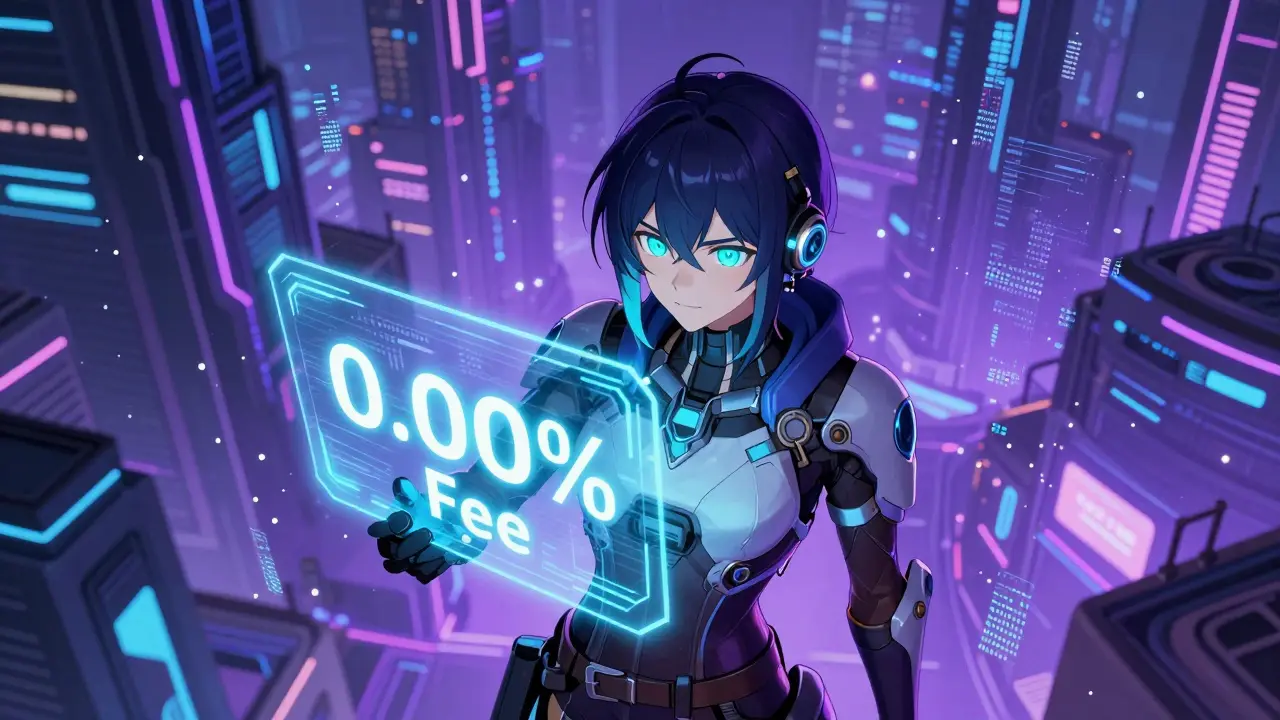
Here is the deal: this isn't the same QuickSwap you might have used on Polygon. While they share a name and a codebase, the Manta deployment is a strategic move to capture a new ecosystem. If you are looking for a way to trade tokens without the constant drain of transaction costs, this is an interesting option, but it comes with a learning curve and some risks that typical swap platforms don't have.
The Core Mechanics: How Quickswap v3 (Manta) Actually Works
At its heart, Quickswap v3 (Manta) is an Automated Market Maker (AMM). It doesn't use a traditional order book where buyers and sellers wait for a match. Instead, it uses liquidity pools. Specifically, it borrows the Concentrated Liquidity model pioneered by Uniswap v3. In the old days (v2), if you provided liquidity, your funds were spread across every possible price from zero to infinity. That was inefficient. With v3, you can pick a specific price range. For example, if you think a token will stay between $0.90 and $1.10, you put your money only in that bracket. This makes your capital work harder, which is great for earning fees-except here, the protocol is currently pushing a zero-fee environment to attract users.
Because it's built on Manta Network, it leverages a blockchain designed for scalability and privacy. This means your trades happen almost instantly, and you aren't fighting the network congestion common on Ethereum. It supports ERC-20 tokens, making the transition from other networks relatively straightforward once you have your wallet configured.
Breaking Down the Fee Structure
The most striking feature here is the cost. Most DEXs charge a flat fee (like 0.3%) or a dynamic fee based on volatility. Quickswap v3 (Manta) has set both maker and taker fees to 0.00%. For a trader, this is a dream; you get the exact market price without a "tax" on every swap.
| Version/Network | Fee Type | Typical Fee Value |
|---|---|---|
| QuickSwap v2 (Polygon) | Flat Fee | 0.3% |
| QuickSwap v3 (Polygon) | Dynamic | Varies by Volatility |
| Quickswap v3 (Manta) | Zero-Fee | 0.00% |
While this is great for the user, it raises a question: how do liquidity providers make money if there are no fees? In many new ecosystem deployments, the "incentive" comes from yield farming and liquidity mining rewards rather than trading fees. You're essentially being paid in tokens to keep the pool healthy while the platform tries to steal market share from competitors.

The Risks: Impermanent Loss and Liquidity Management
Concentrated liquidity is a double-edged sword. Because you are focusing your capital in a tight range, you can earn significantly more than in a wide pool. However, if the price of the token swings outside your chosen range, your position becomes "inactive." You stop earning rewards, and you might find yourself holding 100% of the asset that is crashing in value.
This is known as Impermanent Loss. It's more aggressive in v3 than in v2. If you aren't actively monitoring your positions, you could end up with less value than if you had simply held the tokens in your wallet. For those who find this too complex, the integration with tools like Gamma helps automate the rebalancing of these ranges, though this adds another layer of smart contract risk.
User Experience and Ecosystem Integration
Getting started requires a bit of homework. You can't just plug in a standard Ethereum wallet and expect it to work; you need to configure your wallet for the Manta Network. Support for Brave Wallet and other common Web3 providers exists, but you'll likely need to use a bridge to move your assets from Polygon or Ethereum into the Manta ecosystem first.
Once inside, the interface is clean. You have a swap screen for quick trades and a liquidity tab for those looking to earn. The analytics dashboards are surprisingly detailed, allowing you to track your performance metrics in real-time. However, the "ghost town" feeling is real. There is a noticeable lack of community reviews and public sentiment specifically for the Manta version compared to the Polygon version. This suggests that while the tech is there, the crowds haven't fully arrived yet.

Is it a Good Choice for You?
Whether this exchange is a "win" depends on who you are. If you are a high-frequency trader who hates paying fees and is comfortable with the Manta ecosystem, the 0% fee is an unbeatable edge. If you are a passive investor, the complexity of concentrated liquidity might be more trouble than it's worth.
- For the Degens: The zero-fee environment and yield farming opportunities make this a playground for those chasing high APYs.
- For the Cautious: The lack of extensive user reviews and the unregulated nature of the exchange mean you should only deposit what you can afford to lose.
- For the Long-termers: Keep an eye on the MANTA token. The success of the DEX is heavily tied to the growth of the Manta Network itself. If the network grows, the liquidity on QuickSwap will likely deepen, reducing slippage.
Final Practical Tips for New Users
If you decide to jump in, don't just throw your funds into a pool. Start by testing the bridge with a small amount of capital. Use a tool like the Manta explorer to verify your transactions. Most importantly, if you are providing liquidity, set your ranges wide at first. It's better to earn a smaller, steady reward than to get knocked out of your range in ten minutes because of a sudden price wick.
What is the difference between QuickSwap on Polygon and Manta?
The main difference is the underlying blockchain and the fee structure. While the Polygon version is well-established with dynamic fees, the Manta version is a newer deployment featuring a 0.00% fee for both makers and takers to attract new users to the Manta Network.
Are there actually zero fees on QuickSwap v3 (Manta)?
Yes, according to the protocol's current specifications, taker and maker fees are set at 0.00%. However, you still have to pay the native gas fees of the Manta Network to execute the transaction on the blockchain.
How does concentrated liquidity help me?
It allows you to provide liquidity within a specific price range rather than across the entire price curve. This increases your capital efficiency, meaning you can earn more rewards with less money, provided the asset price stays within your chosen range.
What happens if the price moves outside my liquidity range?
If the price exits your range, your position becomes inactive. You stop earning any trading fees or rewards, and your liquidity is converted entirely into the less valuable of the two assets in the pair.
Is QuickSwap v3 (Manta) regulated?
No. Like most decentralized exchanges, it operates as an unregulated protocol. There is no central authority or government oversight, which means users are responsible for their own security and fund management.




Comments
vijendra pal
April 8, 2026 AT 20:31 PMBro this is basic stuff 🙄 zero fees are just a hook to get likuidity in before they switch to dynamic models lol typical DEX strat 🚀
Emma Pease-Byron
April 10, 2026 AT 16:39 PMThe naive assumption that "zero fees" translates to actual value is profoundly amusing. One simply wonders why anyone would trust a protocol that actively disincentivizes its own liquidity providers through a lack of sustainable revenue.
Sharhonda Walker
April 12, 2026 AT 04:55 AMJust a heads up for anyone tryin to bridge... make sure you use the official manta bridge or you might lose your funds it's realy easy to get scammed by fake sites right now
Alexandra Lance
April 12, 2026 AT 21:36 PMOmg zero fees? 😱 Definitely a trap by the global elite to track our wallet movements through the Manta network 👁️ keep your eyes open people 🕵️♀️✨
Bruce Micciulla Agency
April 14, 2026 AT 14:02 PMconcentrated liquidity is just a way to make retail users feel like they are pros while they actually just take on massive impermanent loss risk without realizing the delta exposure they are managing in a low volume environment where slippage will eat them alive anyway regardless of the 0 percent fee
david head
April 14, 2026 AT 17:18 PMtotally agree on the bridge tip! thanks for sharing 💎🙌
Erica Mahmood
April 15, 2026 AT 07:47 AMbasically just a v3 fork with a liquidity mining subsidy to offset the lack of swap fees since there is no real organic demand for the pairs yet so the tvl is mostly mercenary capital
Sonya Bowen
April 16, 2026 AT 13:28 PMFocus on the learning curve first. Understanding range boundaries is more critical than the fee structure.
Lauren Gilbert
April 18, 2026 AT 00:09 AMIt is quite fascinating to consider how the concept of value is shifting in these digital ecosystems where the removal of a fee is seen as a primary attraction, perhaps reflecting a broader human desire for frictionless existence, even if that friction is what actually ensures the stability and sustainability of the system in the long run, leading us to wonder if we are merely trading stability for the illusion of speed.
Manisha Sharma
April 19, 2026 AT 01:21 AMOnly an idiot would think this is new tech... we in india already understand these market dynamics better than westerners who just follow trends while we build the real infra for the future of finance 🇮🇳
Krystal Moore
April 20, 2026 AT 21:55 PMI can't even believe people are okay with these unregulated platforms taking our money. It's honestly immoral to market this to beginners who don't understand that they could lose everything in a heartbeat!
Siddharth Bhandari
April 21, 2026 AT 21:55 PMFor those struggling with the bridge, I recommend checking the Manta documentation specifically for the RPC settings to avoid timeout errors during the transfer process.
Patty Levino
April 22, 2026 AT 18:19 PMIf you are feeling overwhelmed by the concentrated liquidity part, maybe just start with a very wide range like the post suggests. It's a much safer way to get a feel for the UI without stressing over price wicks.
alex rodea
April 23, 2026 AT 09:48 AMYou can do it! Just take it slow and learn as you go.
Brooke Herold
April 23, 2026 AT 14:15 PMInteresting perspective on the ecosystem growth.