

Portugal isn’t just a sunny destination for beach lovers-it’s one of the few places in Europe where you can hold Bitcoin for over a year and pay zero in capital gains tax. That’s not a rumor. It’s the law. As of 2026, Portugal still offers the most straightforward and favorable crypto tax environment in the region, especially for individual Bitcoin investors who aren’t trading daily. But there’s a catch: not all crypto activity is treated the same. Knowing which rules apply to you could mean keeping thousands in your pocket-or accidentally owing a fortune.
How Portugal Taxes Bitcoin: Three Simple Rules
Since the 2023 tax reform, Portugal doesn’t treat all crypto activity as income. Instead, it splits it into three clear buckets, each with its own rules:
- Category G (Capital Gains): This covers selling Bitcoin for euros, or exchanging it for another cryptocurrency. If you hold your Bitcoin for more than 365 days, you pay nothing. Period. No declaration needed. But if you sell within a year? You owe 28% on the profit. No deductions. No complex calculations. Just 28%.
- Category E (Capital Income): This is for passive income from Bitcoin. If you earn interest from staking, lending, or receive airdrops, that’s taxed at a flat 28%. No matter how much you make, the rate doesn’t go up. And unlike some countries, Portugal doesn’t withhold tax at the source-you report it yourself when you file.
- Category B (Self-Employment Income): If you’re mining Bitcoin, running a node, or trading as a business (think: 10+ trades per week, using leverage, or treating crypto like a job), then you’re taxed as a self-employed person. Rates range from 14.5% to 53%, depending on your total income. This is where things get heavy. Most casual investors never touch this category.
That’s it. No hidden fees. No confusing thresholds. Just three clear boxes. Most people fall into Category G or E. Only professional traders get hit with Category B.
Why Portugal Beats Other European Countries
Compare Portugal to Germany: if you sell Bitcoin after a year, you’re tax-free there too. But if you sell within a year? You could pay up to 45% in income tax. France? A flat 30% on everything-even crypto-to-crypto trades. The Netherlands taxes every swap as a taxable event. Portugal doesn’t.
The real advantage? Crypto-to-crypto trades are not taxable events in Portugal. You can swap Bitcoin for Ethereum, then Ethereum for Solana, then back to Bitcoin, and as long as you hold each asset over a year before cashing out, you pay zero. That’s huge. In most countries, every swap triggers a tax bill. In Portugal? It’s just portfolio rebalancing.
Even passive income is simpler. In Spain or Italy, staking rewards get added to your income and taxed at your top marginal rate-sometimes over 45%. In Portugal? Flat 28%. No matter if you earn €500 or €50,000 from staking, the rate stays the same.
And here’s something most people don’t realize: Portugal doesn’t tax foreign-sourced crypto income if you’re a Non-Habitual Resident (NHR). Even if you bought Bitcoin in the U.S. and sold it while living in Lisbon, you might owe nothing. That’s why digital nomads from the U.S., Canada, and Australia are flocking here.
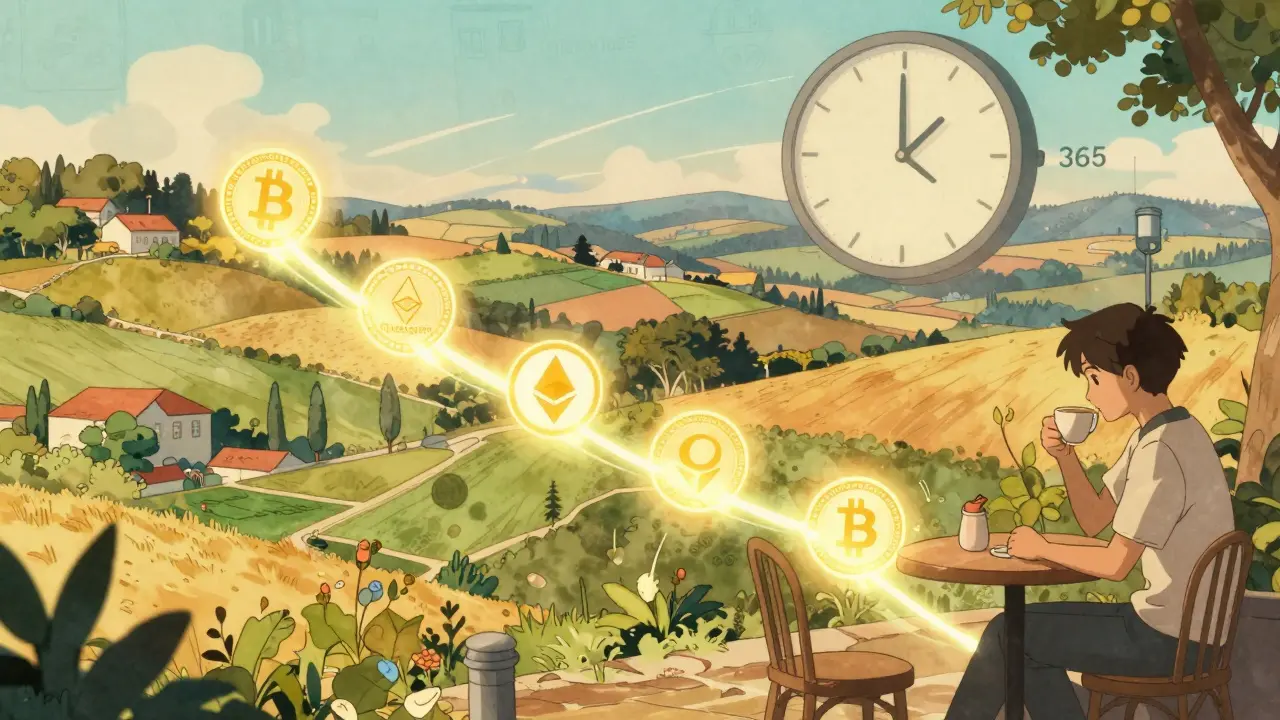
What You Must Track: The 365-Day Rule
The biggest mistake investors make? Not tracking when they bought their Bitcoin. Portugal doesn’t ask for receipts. But if you get audited-and they’re getting better at it-you’ll need proof. The clock starts ticking the moment you acquire Bitcoin. Not when you move it to a wallet. Not when you convert it. When you first buy it.
Let’s say you bought 1 BTC on January 10, 2024. You sell it on January 15, 2025. That’s 370 days. Tax-free. But if you sell on January 9, 2025? That’s 364 days. You owe 28% on the profit. One day makes the difference between keeping €15,000 or handing over €4,200.
Use a crypto tax tool like CoinTracking or Koinly. They sync with exchanges, import your history, and automatically flag which trades qualify for the long-term exemption. Manual tracking? Possible. But error-prone. Most people who try it end up overpaying-or worse, underreporting.
Who Gets Hit Hard? Professional Traders
If you’re trading Bitcoin 5+ times a week, using margin, or running a crypto fund, you’re likely classified as a professional trader. That means Category B. And that’s where Portugal gets strict.
Under Category B, your crypto income is added to your total annual earnings. If you make €80,000 from trading and another €30,000 from a job? You’re taxed at 53% on the portion above €80,000. That’s higher than most EU countries tax their top earners. Some traders in Lisbon have walked away from high-frequency strategies because the tax burden killed their margins.
But here’s the twist: if you structure your activity as a company (Lda), you can pay corporate tax at 21% instead. Many traders do this. It’s legal. It’s common. And it’s often smarter than trying to stay under the professional threshold.
Compliance: Do You Really Need to Report?
Technically, yes. Portugal’s tax authority (AT) doesn’t actively track crypto wallets yet. But they’re building the infrastructure. In 2025, they started requiring banks to report large crypto-related transfers. Exchanges operating in Portugal (like Bitpanda and Coinbase) now report user data to AT under EU rules.
Don’t assume you’re invisible. If you cash out €10,000+ into a Portuguese bank account, they’ll notice. And if you’re audited without documentation? You’ll pay the tax, plus penalties and interest.
The smart move? File an annual tax return (Modelo 3) even if you think you owe nothing. Declare your holdings under Category G or E. It creates a paper trail. It shows you’re compliant. And if you’re ever audited? You’ve already done the work.

The Bigger Picture: NHR and Golden Visa
Portugal doesn’t just offer tax breaks for crypto. It offers life-changing ones.
If you qualify for the Non-Habitual Resident (NHR) program, you can pay just 20% on Portuguese-sourced income and 0% on foreign income-including crypto gains from outside Portugal-for ten years. That means: buy Bitcoin in the U.S., hold it for two years, move to Lisbon, and sell it in 2026? You pay nothing. Not even 28%.
And if you invest €500,000+ in a Portuguese fund that includes Bitcoin or blockchain startups? You can get a Golden Visa-a path to residency and eventually citizenship. The government doesn’t just welcome crypto investors. They’re actively courting them.
What Could Change? The Risks
Portugal’s system is stable-for now. The 2023 reforms were meant to bring clarity, not crackdown. But as the EU pushes for unified crypto reporting (MiCA), pressure is building. Portugal could be forced to adopt stricter rules. Maybe crypto-to-crypto trades become taxable. Maybe the 365-day rule shrinks to 180 days.
But here’s the thing: Portugal’s economy needs this. Digital nomads spend money. Crypto firms open offices. Investors buy homes. The government knows that. Reversing these rules would hurt more than help.
Still, if you’re planning to stay long-term, don’t assume it’ll stay this way forever. Keep records. Stay informed. And if you’re serious about holding Bitcoin, consider locking in your tax position now-before rules change.
Final Take: Is Portugal Still the Best?
Yes. For individual investors who hold Bitcoin long-term, Portugal is still the easiest, cheapest place in Europe to own crypto. No other country offers a combination of:
- Tax-free long-term gains
- Flat 28% rate on short-term trades
- No tax on crypto-to-crypto swaps
- Simple passive income rules
- Pathways to residency and citizenship
It’s not perfect. Professional traders pay more than elsewhere. The system demands discipline. But for the average Bitcoin investor? It’s the closest thing to a tax-free haven you’ll find in the EU.
Is Bitcoin really tax-free in Portugal if I hold it for a year?
Yes. If you hold Bitcoin for more than 365 days before selling it for euros or another currency, you pay zero capital gains tax in Portugal. This applies only to individual investors-not professional traders. The clock starts from the date you bought the Bitcoin, not when you moved it to a wallet or exchanged it.
Do I have to report my Bitcoin holdings to Portuguese tax authorities?
Technically, yes. Even if you didn’t sell, you’re required to file an annual tax return (Modelo 3) and declare your crypto activity under Category G or E. While enforcement is currently light, the tax authority is improving its tracking. Filing protects you from penalties if you’re audited later.
Are crypto-to-crypto trades taxed in Portugal?
No. Swapping Bitcoin for Ethereum, or Solana for Cardano, is not considered a taxable event in Portugal. You only trigger tax when you convert crypto into euros or another fiat currency. This makes portfolio rebalancing much easier than in countries like the U.S. or Germany.
What if I mine Bitcoin in Portugal?
Mining Bitcoin is treated as a business activity under Category B. You’ll pay progressive income tax between 14.5% and 53%, depending on your total earnings. If you’re mining as a hobby with low volume, you might still fall under Category E. But if you’re using professional hardware or earning consistent income, you’re likely classified as self-employed.
Can I use Portugal’s Non-Habitual Resident (NHR) program with Bitcoin?
Yes. If you qualify for NHR, you can pay just 20% on Portuguese-sourced income and 0% on foreign-sourced income-including Bitcoin gains earned outside Portugal. This makes NHR one of the most powerful tools for crypto investors moving to Portugal. You must apply before becoming a tax resident.



Comments
George Hutchings
March 16, 2026 AT 15:50 PMPortugal’s crypto tax rules are stupidly simple compared to the US. I bought BTC in 2021, held it, moved to Lisbon last year, sold this spring. Zero tax. Zero paperwork. Just filed Modelo 3 and called it a day. Best financial decision I ever made.
Derek Lynch
March 16, 2026 AT 21:05 PMStop pretending this is some secret loophole-it’s a national strategy. Portugal’s economy is built on tourism and digital nomads. Crypto tax breaks? That’s just them saying ‘come here, spend money, don’t leave.’ They’re not being generous-they’re being smart.
iam jacob
March 18, 2026 AT 04:21 AMi just want to know if i can buy btc in the us, move to portugal, hold for 366 days, then sell and keep it all… or is that too sketchy??
Jesse Pals
March 19, 2026 AT 21:11 PMbro i moved to algarve last year with 3 btc and a laptop. staked some, swapped a few times, sold half after 14 months. 28% on the profit? nah. zero. i’m living on a beach with a view of the ocean and a crypto portfolio that didn’t get taxed once. life is good 🌊😎
Diane Overwise
March 21, 2026 AT 11:20 AMZero capital gains? Really? That’s… oddly specific. Like someone wrote this after a long lunch with a tax lawyer who just got back from a yoga retreat in the Azores. I’m not saying it’s fake, but it feels too perfect. Like a marketing brochure disguised as a tax guide.
Patty Atima
March 22, 2026 AT 14:36 PMhold for a year, sell, pay nothing. that’s it. no drama. no forms. no stress. just crypto and sunshine. why is this so hard for people to get?
Lucy de Gruchy
March 23, 2026 AT 00:01 AMLet’s be real: the EU is coming. MiCA is already in motion. Portugal’s zero-tax policy is a temporary anomaly, not a permanent gift. The moment they’re forced to comply with centralized reporting, this whole system collapses. Don’t be the idiot who moves there in 2025 thinking it’ll last forever.
Ernestine La Baronne Orange
March 23, 2026 AT 22:29 PMI’ve been tracking this since 2022. I moved to Lisbon. I filed. I declared. I even kept receipts from Binance for my 2021 purchase. Then, last month, I got a letter from AT saying they ‘noticed a discrepancy in your 2023 wallet activity.’ I had to hire a Portuguese tax attorney. Cost me €8,000. Now I’m terrified to even touch my wallet. They’re watching. They’re always watching. And they don’t care if you’re ‘just a casual investor.’ You’re a data point now.
They’re building a blockchain surveillance net. And you’re all just laughing like it’s a vacation.
I’m moving to Uruguay. At least there, they don’t ask for your private keys.
Taylor Holloman.
March 25, 2026 AT 05:12 AMThere’s something beautiful about Portugal’s approach-it’s not about punishing people for being smart. It’s about saying: ‘We value long-term thinking. We value stability. We value people who don’t flip everything.’ I’ve seen too many countries treat crypto like a vending machine of tax revenue. Portugal? They treat it like a neighbor who moved in and started fixing up the whole block.
Yeah, the rules are simple. But that’s not lazy-it’s intentional. And honestly? That’s rare.
sai nikhil
March 26, 2026 AT 03:48 AMIndia has 30% tax on crypto gains even if held for 10 years. Portugal has zero if held for 365 days. I am considering relocation. But I need to know: can I open a bank account without a local job? What’s the process?
Sahithi Reddy
March 26, 2026 AT 16:50 PMhold btc sell after 365 days pay nothing move on
Steph Andrews
March 27, 2026 AT 12:03 PMI’m from California. Paid 37% on my gains last year. Moved to Lisbon last month. Sold 0.5 BTC this week. Zero tax. I cried. Not because I made money. Because I finally felt like I could breathe.
Prakash Patel
March 27, 2026 AT 14:23 PMPortugal’s system only works if you’re not trading. If you’re doing 5 swaps a day, you’re still getting taxed. So it’s not ‘crypto paradise.’ It’s ‘casual investor paradise.’ Big difference.
Zachary N
March 28, 2026 AT 00:55 AMFor anyone considering this: use Koinly. Sync your wallets. Export the PDF. File Modelo 3. Even if you owe nothing, file. That’s the golden rule. I’ve helped 12 people move to Portugal. Every single one of them got audited within 18 months. Not because they did anything wrong-but because the system is now automated. The audit isn’t punishment. It’s verification. And if you filed? You passed. If you didn’t? You’re in trouble. Don’t be the person who says ‘I thought it was fine.’ You’ll regret it.
Also: if you’re mining, treat it like a business. Register an Lda. Pay 21%. It’s cheaper than paying 53% as an individual. I’ve seen people lose half their profits because they didn’t structure it right. It’s not complicated. Just… do it.
Anastasia Thyroff
March 28, 2026 AT 04:54 AMI moved here thinking it was the answer… then I found out my ex-husband’s crypto holdings from 2020 were linked to my wallet because we shared a Ledger once. Now AT thinks I’m a ‘crypto syndicate.’ I had to prove I didn’t know he had a second seed phrase. I had to hire a forensic blockchain analyst. I’m still paying for it. This isn’t freedom. It’s a legal trap wrapped in sunshine.