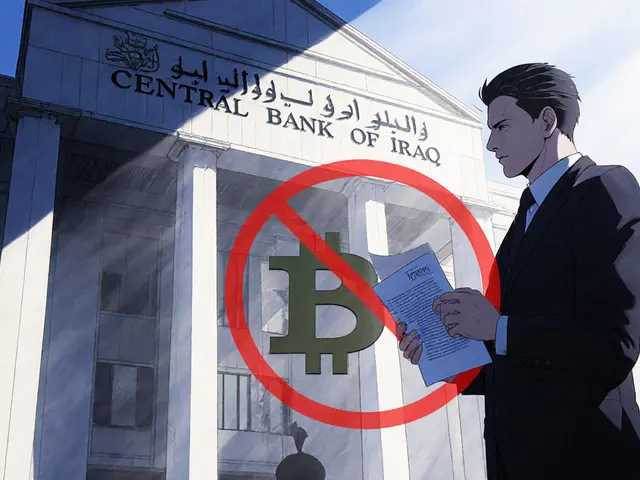
Imagine sending money to your family in Casablanca from Toronto. The bank charges you a hefty fee, takes three days, and gives you a poor exchange rate. Now imagine doing it in ten minutes for a fraction of the cost using Bitcoin or USDT. Sounds easy? In Morocco, that transaction is technically illegal.
Since November 2017, Morocco has banned cryptocurrency transactions. Yet, walk through the markets of Marrakech or talk to freelancers in Rabat, and you will hear about digital wallets changing hands. Why do people risk fines and legal uncertainty? Because the traditional banking system simply cannot keep up with their needs for speed, cost, and accessibility. This article breaks down exactly how Moroccans navigate this regulatory grey zone to move money across borders.
The Paradox: Banned but Busy
On paper, buying or selling crypto in Morocco can get you fined. The Ministry of Economy and Finance declared all cryptocurrency transactions illegal, citing risks like money laundering, extreme volatility, and a lack of consumer protection. Governor Abdellatif Jouahri of the Central Bank of Morocco (Bank Al-Maghrib) has been vocal about these dangers. He argues that without regulation, users are on their own if an exchange collapses or if they lose their private keys.
But reality on the ground tells a different story. Projections suggest the Moroccan crypto market will hit USD 292.4 million by 2026. That is not a shrinking market; that is a growing one operating in the shadows. Users aren't just speculating on price swings; they are using stablecoins like USDT (Tether) to bypass strict foreign exchange controls. For many, crypto isn't an investment-it's a lifeline.
Why Traditional Banking Fails Cross-Border Needs
To understand why crypto thrives underground, look at the alternatives. Morocco has a large diaspora population spread across Europe, North America, and the Gulf States. When these expats send money home, they often face:
- High Fees: Traditional wire transfers can cost between 5% and 10% when you factor in hidden spreads and intermediary bank charges.
- Slow Settlements: SWIFT transfers can take 2-5 business days. If your mother in Fez needs cash for a medical emergency today, she waits until Thursday.
- FX Restrictions: Strict currency controls make it difficult for local businesses to pay international suppliers directly. Crypto offers a workaround by settling value outside the formal banking rails.
A freelancer in Tangier working for a client in London might find it easier to receive payment in Ethereum or USDT than to open a dedicated international business account, which requires bureaucratic hoops. The blockchain settles the transaction permanently and immutably, eliminating the chargeback fraud that plagues credit card payments.
How the Underground Network Works
So, how do you actually use crypto if you can't walk into a bank and ask for it? Most Moroccans rely on Peer-to-Peer (P2P) platforms and informal networks. Here is the typical workflow:
- Acquisition: A user buys Bitcoin or USDT on an international exchange like Binance or Paxful. They fund their account using a foreign bank card or via P2P trades with other locals who have excess crypto.
- Transfer: To send money abroad, they convert their Dirham-denominated assets into a stablecoin (like USDT) to avoid volatility during the transfer.
- Settlement: They send the coins to the recipient's wallet address. The network validates the transaction in minutes.
- Liquidation: The recipient converts the crypto back into local currency (Dirham, Euro, or Dollar) via a P2P marketplace or a trusted local agent who acts as an unofficial exchange.
This process relies heavily on trust. There is no central authority to call if something goes wrong. If you send funds to the wrong address, they are gone forever. If your P2P counterparty scams you, your recourse is limited. Yet, the speed and low cost outweigh these risks for many.
The Rise of Stablecoins for Remittances
While Bitcoin gets the headlines, USDT (Tether) and USDC are the real workhorses for international payments in Morocco. Why? Stability.
Moroccans don't want to send $100 worth of Bitcoin today only for it to be worth $85 tomorrow when their family tries to spend it. Stablecoins pegged to the US Dollar offer the same blockchain efficiency without the wild price swings. This makes them ideal for:
- Rent Payments: Expats paying rent for relatives living abroad.
- E-commerce: Buying goods from Chinese or Turkish suppliers where direct bank wires are too slow.
- Savings: Holding digital dollars to hedge against potential Dirham devaluation.
The technical barrier is low. All you need is a smartphone and internet access. You scan a QR code, confirm the amount, and the money moves. No forms, no bank visits, no waiting lines.
Bank Al-Maghrib’s Counter-Strategy: The Digital Dirham
The government hasn't ignored this trend. Instead of just cracking down harder, Bank Al-Maghrib is developing its own solution: a Central Bank Digital Currency (CBDC), often referred to as the "Digital Dirham." Unlike decentralized cryptocurrencies, this will be fully managed by the state.
Governor Jouahri has stated that the central bank is collaborating with the IMF and World Bank to design this system. The goal is to capture the benefits of digital payments-speed, security, and financial inclusion-without the risks of unregulated crypto. Recently, the central bank announced it had finalized a draft law to potentially legalize and regulate cryptocurrencies, signaling a shift from total prohibition to controlled acceptance.
This creates a fascinating race. Will the official Digital Dirham be fast and cheap enough to compete with the underground crypto market? Or will Moroccans continue to prefer the freedom of decentralized networks despite the legal risks?
| Feature | Underground Crypto | Traditional Banks | Future CBDC (Digital Dirham) |
|---|---|---|---|
| Legal Status | Banned/Grey Zone | Fully Regulated | Planned/Regulated |
| Transaction Speed | Minutes | Days | Real-time/Instant |
| Cost/Fees | Low (Network fees) | High (Spreads & fees) | Expected Low |
| Consumer Protection | None | Full Insurance | Central Bank Backing |
| Accessibility | Smartphone + Internet | Bank Account Required | Digital Wallet App |

Regional Cooperation and Cross-Border Hubs
Morocco isn't acting alone. Recognizing that cross-border payments require interoperability, Bank Al-Maghrib is partnering with Egypt’s central bank and the World Bank. They are evaluating how CBDCs can streamline transfers between North African economies. This regional approach suggests that future digital currencies won't just replace cash domestically; they will aim to replace the SWIFT network for regional trade.
For now, however, the blockchain remains the most effective tool for global connectivity. It doesn't care about national borders. A transaction from New York to Agadir looks the same to the network as one from Paris to London. This neutrality is powerful for a country positioned as a bridge between Africa, Europe, and the Middle East.
Risks You Cannot Ignore
Using crypto in Morocco is not without danger. Beyond the legal threat of fines, users face significant operational risks:
- No Recourse: If you send funds to a fraudulent seller on a P2P platform, there is no customer service hotline to reverse the transaction.
- Volatility: While stablecoins mitigate this, holding Bitcoin or Ethereum exposes you to massive price drops. A 20% drop overnight can wipe out savings.
- Tax Ambiguity: As regulations evolve, tax authorities may retroactively scrutinize large flows of capital, leading to unexpected liabilities.
- Exchange Failure: If an offshore exchange freezes accounts due to compliance issues, your funds could be locked indefinitely.
Despite these risks, the demand persists. The projected growth to nearly $300 million by 2026 proves that convenience and necessity often trump regulation.
What Does the Future Hold?
The July 2025 announcement regarding a draft law for regulating cryptocurrencies marks a turning point. It suggests Morocco is moving toward a nuanced framework that distinguishes between speculative trading and legitimate utility payments. If implemented well, this could bring the underground market into the light, offering users legal protection while maintaining the efficiency they crave.
Until then, the underground network continues to hum along. Freelancers, students studying abroad, and small business owners will keep using USDT and Bitcoin to move value because the alternative is simply too slow and expensive. The question isn't whether Moroccans will use digital assets for international payments-they already are. The question is how long the official ban can hold back the tide before adaptation becomes inevitable.
Is it illegal to buy crypto in Morocco?
Yes, since November 2017, the Ministry of Economy and Finance has declared cryptocurrency transactions illegal. However, enforcement varies, and many users operate in a grey zone, particularly when using peer-to-peer methods for personal transfers rather than commercial speculation.
Which cryptocurrencies are most popular for payments in Morocco?
Stablecoins like USDT (Tether) and USDC are the most popular for international payments because they maintain a stable value pegged to the US Dollar. Bitcoin is also widely held but is less common for everyday transactions due to its price volatility.
How do Moroccans cash out crypto without a bank?
Most users rely on Peer-to-Peer (P2P) platforms or local agents. They sell their crypto to another individual who transfers Dirhams to their local bank account or provides cash. These transactions happen outside the formal banking system, avoiding direct scrutiny from Bank Al-Maghrib.
Will Morocco launch its own digital currency?
Yes, Bank Al-Maghrib is actively developing a Central Bank Digital Currency (CBDC) known as the Digital Dirham. It aims to provide the speed of crypto with the stability and regulation of fiat currency, specifically targeting cross-border payments and financial inclusion.
Can I use crypto to pay for services in Morocco?
Directly paying merchants in crypto is rare and legally ambiguous. Most users convert crypto to Dirhams first via P2P exchanges and then pay with cash or standard bank transfers. Some tech-savvy freelancers may accept crypto directly from international clients, but this is done privately.