
As of 2026, crypto mining in Pakistan is no longer a gray-area activity - it’s a regulated industry with clear rules, taxes, and infrastructure backing. Just two years ago, miners operated in the shadows, fearing raids or bank account freezes. Today, the government has opened the door - but with strict conditions. If you’re thinking about starting or expanding a mining operation in Pakistan, here’s what actually matters.
Electricity Allocation: The Core of Pakistan’s Mining Strategy
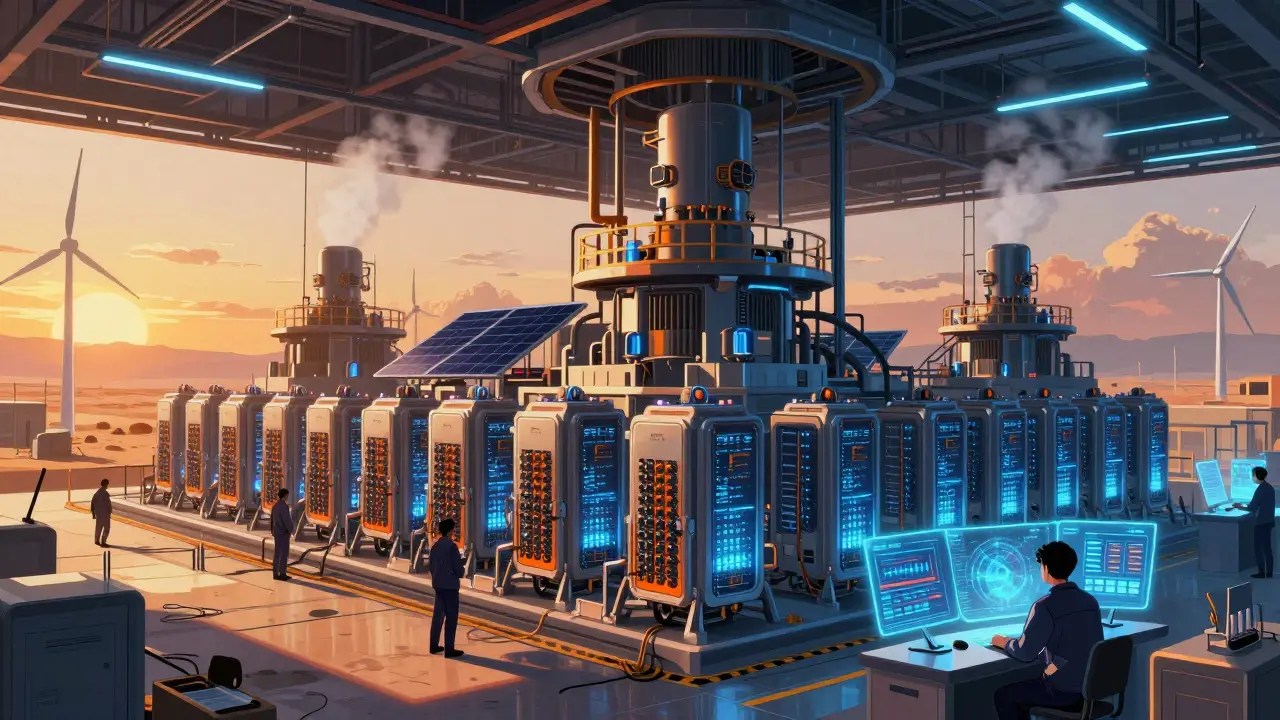
The biggest shift came in August 2025, when the government allocated 2,000 megawatts (MW) of electricity specifically for crypto mining and AI data centers. This isn’t new power generation - it’s surplus energy from underused coal plants and areas where small businesses have switched to solar to cut costs. Before this, Pakistan contributed almost nothing to the global Bitcoin hash rate. Now, if all that power is used efficiently, experts estimate Pakistan could jump to the top five mining countries worldwide.
Here’s the catch: you can’t just plug in a rig at home. The rules forbid using residential electricity. All mining operations must connect to industrial-grade power lines with a minimum 500 kW capacity. This stops individuals from gaming the system with subsidized home rates. The goal? Use waste energy, not drain the grid.
PVARA: The New Regulator in Charge
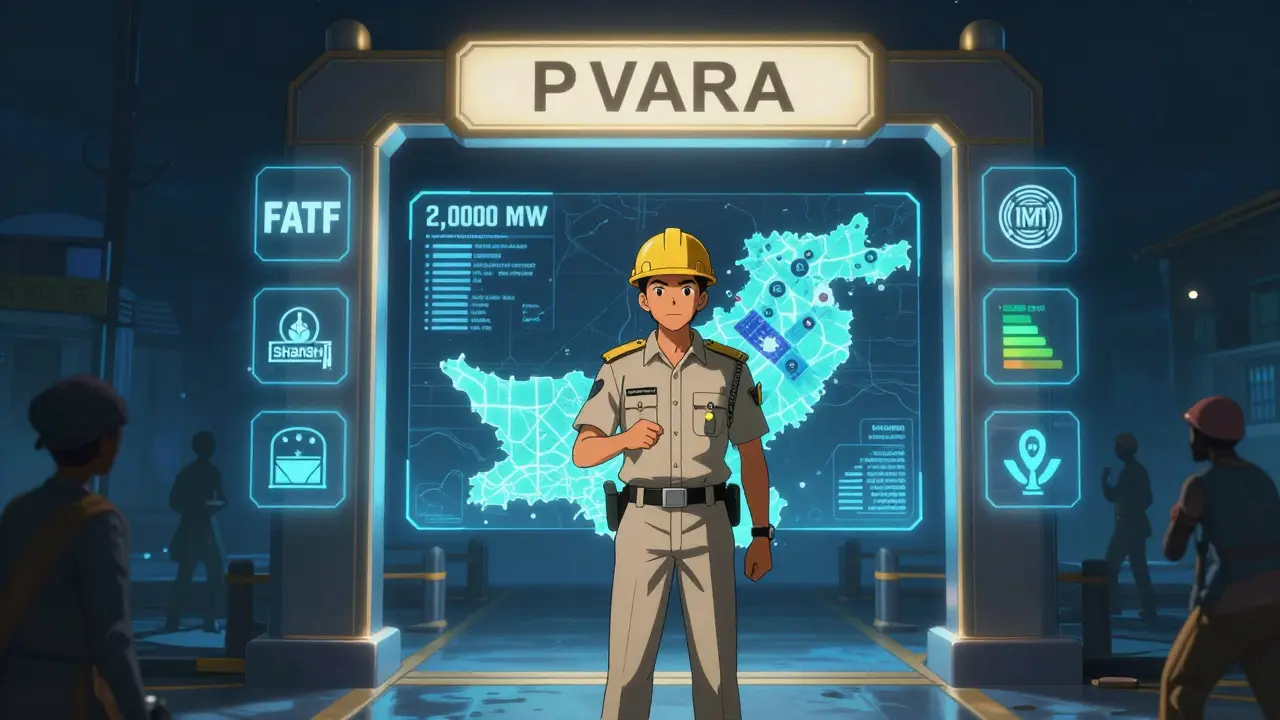
In July 2025, Pakistan created the Pakistan Virtual Asset Regulatory Authority (PVARA) an autonomous federal body overseeing all virtual asset activities including mining, trading, and staking. Before PVARA, there was no official regulator - just conflicting signals from the State Bank of Pakistan (which called crypto illegal) and the Pakistan Crypto Council (which encouraged adoption). Now, PVARA is the only legal gateway.
To get licensed, mining operators must submit detailed plans covering:
- Technology specs (ASIC models, hash rate capacity)
- Energy consumption estimates
- Security protocols
- Environmental impact plans
- Compliance with FATF, IMF, and World Bank standards
Foreign companies must already be licensed by regulators like the US SEC, UK FCA, UAE’s VARA, or Singapore’s MAS. This means PVARA isn’t looking for startups - it’s inviting established global players.
Taxation: Mining Income Is Now Officially Taxable
Before 2025, crypto mining income was ignored - or taxed inconsistently. Now, it’s fully integrated into Pakistan’s tax system. All mining profits are treated as regular income and taxed at progressive rates:
- 5% on income up to ₨600,000
- 15% on income between ₨600,001 and ₨1.2 million
- 25% on income between ₨1.2 million and ₨2.4 million
- 30% on income between ₨2.4 million and ₨6 million
- 35% on income over ₨12 million
If you sell mined Bitcoin or other coins, capital gains are taxed at a flat 15%. All mining income must be reported on Form IT-1 by September 30 each year. PVARA shares transaction data with the Federal Board of Revenue (FBR), so hiding income isn’t an option anymore.
Shariah Compliance and Environmental Rules
Pakistan’s regulatory framework includes special provisions for Shariah-compliant mining. This isn’t just symbolic - it’s a real pathway for religiously cautious investors. PVARA runs regulatory sandboxes where operators can test models that avoid interest-based financing, leverage, or speculative trading structures.
Environmental concerns were a major sticking point. To address them, PVARA’s draft guidelines (released August 28, 2025) require mining operations to use at least 70% renewable or repurposed energy by 2027. That means solar, wind, or waste heat from coal plants - not new fossil fuel plants built just for mining.
Who Can Mine? The Two-Phase Licensing Plan
PVARA’s rollout is split into two clear phases:
- Phase 1 (Q3-Q4 2025): Only large international operators with hash rates over 1 exahash per second (EH/s) could apply. These are companies like Bitmain, Core Scientific, or Argo Blockchain.
- Phase 2 (Q1 2026): Domestic miners can now apply - but only if they have at least 100 petahash per second (PH/s) capacity. That’s roughly 1,000 modern ASIC miners running nonstop. Small-scale home miners (1-10 rigs) are still excluded.
This structure makes it nearly impossible for local startups to compete. The goal isn’t to empower Pakistani entrepreneurs - it’s to attract foreign capital and tech expertise.

Contradictions Still Exist
Despite the progress, confusion remains. The State Bank of Pakistan still says digital currencies are not legal tender and that banks can’t deal with them. That means miners can’t open business bank accounts easily. Many use third-party payment processors or crypto-native financial services to move funds - but that creates compliance risks.
In September 2025, Pakistan’s Senate recommended moving the Pakistan Crypto Council from the Ministry of Finance to the Ministry of Information Technology. Why? Because digital assets are more about tech infrastructure than finance. This signals that even within government, there’s no clear consensus on how to manage crypto.
The Bigger Picture: Why Pakistan Is Doing This
Pakistan isn’t just trying to make money from mining. It’s trying to become a tech player. With over 40 million crypto wallets - third-highest in the world after the U.S. and India - the country already has a massive user base. Mining is a way to turn that adoption into economic output.
The $21 billion crypto market in Pakistan isn’t just about speculation. Mining could contribute 15-20% of that value in the next two years. That’s billions in foreign investment, tech jobs, and energy infrastructure upgrades.
It’s also a hedge against economic instability. With inflation, currency devaluation, and banking restrictions, crypto mining gives people a way to earn and store value outside the traditional system - legally.
What’s Next?
PVARA’s roadmap shows this is just the beginning. By 2027, the government expects to have 10-15 major mining facilities operating under license. Each will be required to publish quarterly energy and hash rate reports. There are talks of creating a national crypto mining zone near coal regions in Punjab and Sindh, with dedicated grid connections and tax incentives.
But the real test will be enforcement. Will banks finally accept crypto-linked accounts? Will the FBR audit miners effectively? Will international firms actually set up shop, or will they wait to see if regulations change again?
One thing is clear: Pakistan is no longer asking whether crypto mining should exist. It’s asking how to do it right - and who gets to benefit.





Comments
kieron reid
February 18, 2026 AT 14:39 PMSo let me get this straight - they’re letting big US and Chinese firms mine with waste coal power, but regular folks can’t plug in a few rigs? Classic. The government didn’t legalize crypto. They just made it a corporate tax dodge with extra steps.
george chehwane
February 20, 2026 AT 03:53 AMAh yes, the grand spectacle of state-sanctioned energy arbitrage. They’ve taken the most volatile asset class on Earth and wrapped it in regulatory velvet gloves while quietly siphoning the value into offshore corporate shells. The real innovation here isn’t mining - it’s the algorithm that turns public infrastructure into private profit streams. The blockchain’s promise was decentralization. What we got? A state-backed cartel with a fancy logo and a 70% renewable energy PowerPoint slide.
Avantika Mann
February 20, 2026 AT 13:00 PMI’m really curious how this will impact local tech talent. If these big firms are bringing in their own engineers, will there be any room for Pakistani developers to grow into the space? Maybe there’s a way to create training programs or partnerships so the tech stays here, not just the profit?
yogesh negi
February 22, 2026 AT 05:09 AMI think this is actually a huge opportunity - if we focus on building local capacity alongside the big players. Imagine training centers in Punjab, partnerships with universities, even micro-mining co-ops that use solar microgrids in rural areas. It’s not just about the hash rate - it’s about building a whole new digital economy from the ground up. Let’s not miss this moment!
Chris Thomas
February 23, 2026 AT 16:11 PMThe fact that they’re requiring FATF, IMF, and World Bank compliance is laughable. Those institutions helped destabilize Pakistan’s economy for decades. Now they’re the gold standard for crypto legitimacy? This isn’t regulation - it’s ideological colonization dressed up as fiscal responsibility.
Kyle Tully
February 25, 2026 AT 13:36 PMSo the only people who can mine are those who already have billions? And the tax rates are basically punitive unless you’re a multinational? This isn’t policy - it’s a velvet rope at a club where the bouncer only lets in people who own private jets
Sasha Wynnters
February 27, 2026 AT 09:12 AMThey didn’t legalize mining. They baptized it. Slapped a Shariah-compliant seal on it, gave it a corporate suit, and called it ‘economic development.’ Meanwhile, the real miners - the ones who ran rigs in garages with extension cords and prayers - got erased from the story. The revolution didn’t come with a bang. It came with a compliance form and a 35% tax bracket.
Rajib Hossaim
February 27, 2026 AT 12:06 PMWhile the structure favors foreign capital, there is potential for domestic innovation if the government allows for phased scaling. Perhaps a tiered licensing system could be introduced for SMEs with lower hash thresholds but higher compliance standards. This would encourage participation without compromising regulatory integrity.
Jenn Estes
February 28, 2026 AT 14:36 PMLet’s be real - this is just a fancy way to let foreign companies exploit Pakistan’s cheap energy and lax enforcement. The ‘renewable energy’ requirement? A PR stunt. Coal plants don’t magically become clean because you label them ‘surplus.’
Nikki Howard
March 2, 2026 AT 04:07 AMI’m surprised they didn’t require miners to wear traditional attire while operating ASICs. 🤔 Shariah compliance is one thing - but do we really need a cultural performance to validate energy consumption? The optics are more important than the output here.
Tarun Krishnakumar
March 2, 2026 AT 08:09 AMThis whole thing is a distraction. The real power isn’t in the rigs - it’s in the data. PVARA has access to every hash, every transaction, every wallet. Who’s to say they’re not building a surveillance backbone under the guise of regulation? The IMF didn’t push this for economic growth. They pushed it because they want to track every rupee that escapes the system.
jennifer jean
March 4, 2026 AT 06:35 AMThis is actually kind of exciting!! 🌞⚡ Imagine if these mining zones became tech hubs - solar farms + ASICs + local engineers = a whole new economic model for rural Pakistan. It’s not perfect, but it’s a start. Let’s build this right!!
Ruby Ababio-Fernandez
March 4, 2026 AT 06:44 AMForeign firms get in. Locals get locked out. Taxed to death. Energy stolen from the grid. This isn’t progress. It’s colonization with a blockchain logo.
Anandaraj Br
March 5, 2026 AT 17:06 PMThey say they’re using waste energy but everyone knows coal plants are being upgraded just for this. And the 70% renewable rule? That’s 2027. By then the rigs will be obsolete and the environmental damage done. This isn’t regulation - it’s a slow-motion heist
AJITH AERO
March 7, 2026 AT 13:42 PMSo you need 100 PH/s to even apply? That’s like saying you need a Ferrari to get a driver’s license. Meanwhile, the guy with 5 rigs in his garage gets fined for using his own electricity. This isn’t policy. It’s a joke.
andy donnachie
March 9, 2026 AT 01:56 AMThe real success here will be measured not in hash rate, but in how many local engineers get trained and retained. If the big firms just bring in their own teams and leave after two years, this will be another resource extraction play. The infrastructure must include education and retention.
Sarah Shergold
March 10, 2026 AT 13:05 PM70% renewable by 2027? Lol. The coal plants are still gonna be running. They just gonna slap some solar panels on the roof and call it green. This is greenwashing with a tax code