

Ethereum Gas Fee Calculator
Calculate Your Transaction Cost
Estimate Ethereum gas fees based on current network conditions
Approximate cost in ETH
Important: Gas prices fluctuate wildly (as shown in article: $1.78 to $56 fees). This calculator uses current network parameters.
Web3 isn’t just another tech buzzword. It’s a complete rewrite of how the internet works - and it’s already changing things, even if most people don’t realize it yet. If you’ve ever used Bitcoin, traded an NFT, or heard someone talk about owning your data online, you’ve touched Web3. But what does it actually mean? And how does it work behind the scenes?
Web3 Is About Ownership, Not Just Access
Right now, when you use Facebook, Google, or Instagram, you’re not really using a service - you’re giving away your data. Every like, search, and message becomes a product sold to advertisers. You don’t own your profile, your photos, or your history. The company does. Web3 flips that. Instead of trusting corporations to hold your stuff, Web3 gives you direct control through cryptography. Think of it like owning a house instead of renting an apartment. You hold the keys - literally. Your digital identity, your money, your art - all stored under your control, not a company’s server. This idea wasn’t born in a boardroom. It was coined in 2014 by Gavin Wood, one of Ethereum’s founders. He called it a "decentralized and fair internet where users control their own data, identity, and destiny." That’s not marketing fluff. It’s the core promise.How Web3 Works: Blockchain, Smart Contracts, and Wallets
Web3 runs on three main pieces: blockchain, smart contracts, and crypto wallets. Together, they remove middlemen and let you interact directly with digital systems. Blockchain is the backbone. It’s a public, shared digital ledger that records every transaction across thousands of computers worldwide. Unlike a bank’s database, which only one company controls, blockchain has no single owner. Ethereum, the most popular Web3 platform, has over 8,300 active nodes keeping the network running. Every change is verified by the network - not by a CEO or a customer service rep. Smart contracts are the rules that make Web3 automated. These are self-executing programs stored on the blockchain. Need to send someone $50 when a movie drops? A smart contract can do it automatically - no PayPal, no bank, no delays. Ethereum runs about 1.1 million smart contracts every day. They’re what power DeFi apps, NFT marketplaces, and DAOs. Crypto wallets are your key to everything. Instead of logging in with an email and password, you use a wallet like MetaMask. It generates a public address (like an account number) and a private key (like a password you never share). If you lose your private key, you lose access forever - no reset button, no customer support. That’s the trade-off for true ownership.Real Examples of Web3 in Action
Web3 isn’t just theory. People are using it right now - even if they don’t call it that. - DeFi (Decentralized Finance): You can lend your crypto and earn interest without a bank. Platforms like Aave and Compound let you do this directly, with over $42 billion locked in as of late 2023. - NFTs (Non-Fungible Tokens): These are unique digital certificates of ownership. Nike’s .Swoosh platform sold $185 million in digital sneakers in 2022. Artists sell art directly to buyers, cutting out galleries and auction houses. - DAOs (Decentralized Autonomous Organizations): These are online communities that run on rules written in code. Members vote on decisions using tokens. For example, the ConstitutionDAO raised $47 million in 2021 to buy a rare copy of the U.S. Constitution - not to keep it, but to prove collective ownership could work. - Decentralized Storage: Instead of storing files on Google Drive or Dropbox, you can use IPFS (InterPlanetary File System). Files are broken into pieces and stored across thousands of computers. Even if one server goes down, the file stays up.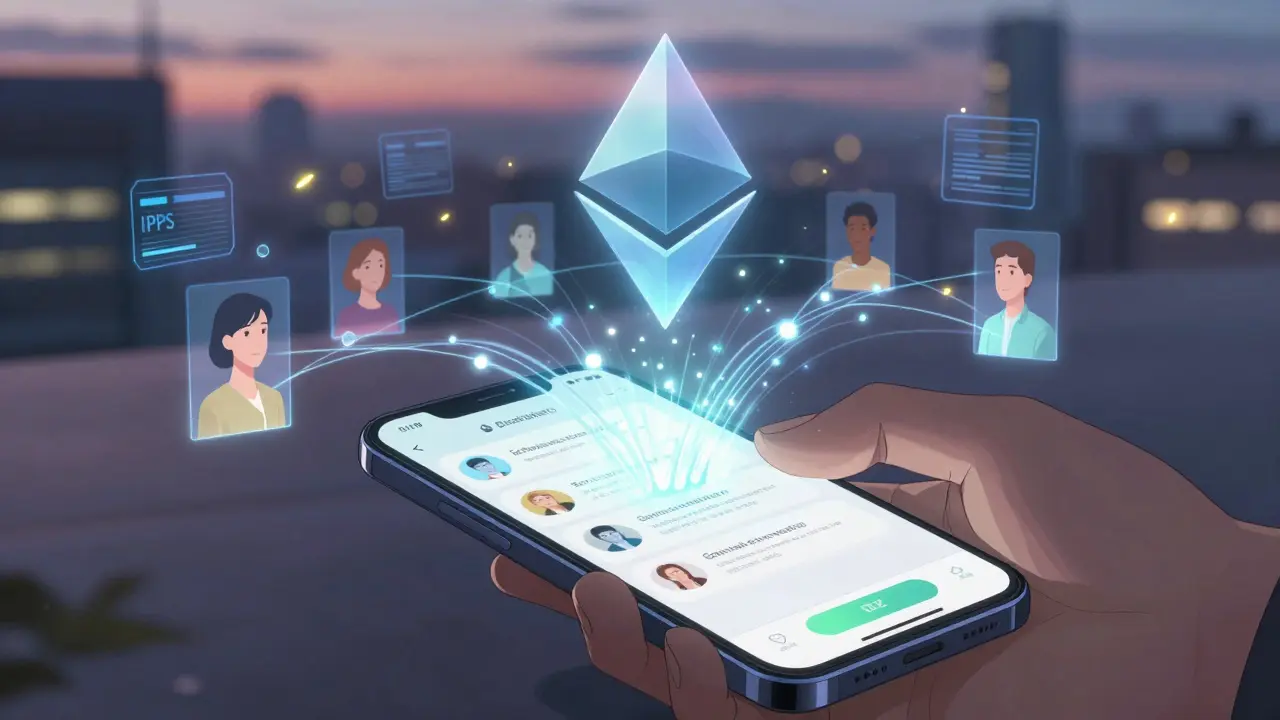
Why Web3 Still Feels Like a Mess
Despite the promise, Web3 is far from user-friendly. Most people give up within hours. - Gas fees: Every action on Ethereum costs money - called a gas fee. It can be $1.78 one minute and $56 the next. That’s not just annoying - it’s a barrier for everyday use. - Lost keys: Around 19% of all Bitcoin - worth over $100 billion - is permanently locked away because people lost their passwords. No one can recover it. - Complexity: Setting up a wallet, buying crypto, connecting to a DApp - it’s like assembling IKEA furniture without instructions. A 2023 study found 68% of new users quit after failing to set up their wallet. - Regulation: The U.S. SEC has filed 87 crypto-related enforcement actions in 2023 alone. Companies like Coinbase got sued for selling unregistered securities. No one knows what’s legal and what’s not. And let’s not forget the hype cycle. NFTs went from $24 billion in sales in late 2021 to just $1.1 billion in 2023. Crypto Twitter went from 1.2 million monthly #Web3 tweets in 2021 to 327,000 by late 2023. Enthusiasm cooled - and that’s normal. Real tech doesn’t explode overnight.Who’s Actually Building With Web3?
Big companies aren’t waiting for permission. They’re experimenting quietly. - Starbucks launched Odyssey, a rewards program where customers earn digital collectibles. Over 225,000 people have signed up. - Visa processes $300 million monthly in stablecoin settlements - real money moving on blockchain. - Walmart uses blockchain to track 2.3 million food products from farm to shelf. - Microsoft’s ION system handles over 5,000 decentralized digital identities every hour. These aren’t crypto experiments. They’re practical uses of decentralized tech to solve real problems: transparency, security, efficiency.Web3 vs. Web 2.0: The Big Differences
Here’s how Web3 changes the game:| Feature | Web 2.0 | Web3 |
|---|---|---|
| Ownership | Companies own your data | You own your data via private keys |
| Control | Platforms can ban you or delete your content | No one can censor you - unless you lose your key |
| Payments | Pay via credit card, PayPal | Pay with crypto, directly to anyone |
| Infrastructure | Centralized servers (Google, Meta) | Decentralized nodes (Ethereum, IPFS) |
| Transparency | Black box - you don’t see how it works | Open code - anyone can audit the rules |

Is Web3 the Future - or a Dead End?
Critics have plenty to say. Tim Berners-Lee, the inventor of the original web, called Web3 a "brand name" that ignores his vision of a semantic, open web. Jack Dorsey said Web3 is just VC money in disguise. But supporters point to real wins: During Nigeria’s 2021 Twitter ban, decentralized platforms like Mastodon saw 2,300% user growth. People didn’t just want to tweet - they wanted to be uncensored. The tech is improving fast. Ethereum’s 2022 switch to proof-of-stake cut its energy use by 99.95%. New upgrades like "Dencun" (coming in early 2024) aim to slash transaction costs by 90%. Layer-2 solutions like StarkNet are already handling 9,000 transactions per second - close to Visa’s speed. The biggest hurdle isn’t tech. It’s trust. People need to believe they can own their digital lives - and that the system won’t collapse if the price of ETH drops.Where to Start With Web3
You don’t need to be a coder to explore Web3. Here’s how to dip your toes in:- Get a wallet: Download MetaMask (free on Chrome or mobile).
- Buy $5-$10 of Ethereum (ETH) from a trusted exchange like Coinbase or Kraken.
- Connect your wallet to a simple DApp like Uniswap (to swap tokens) or OpenSea (to view NFTs).
- Try sending a small amount to a friend’s wallet - see how it feels to control your own money.
What Comes Next?
Web3 won’t replace the internet tomorrow. But it’s laying the groundwork for a new kind of digital economy - one where you’re not the product. The next five years will decide if it’s a revolution or a footnote. The question isn’t whether Web3 works. It’s whether you want to be part of a system where you own your digital life - or keep renting it from someone else.Is Web3 the same as blockchain?
No. Blockchain is the technology - like the engine of a car. Web3 is the whole vehicle: it uses blockchain, plus smart contracts, crypto wallets, and decentralized storage to create a new kind of internet. You can have blockchain without Web3 (like in corporate supply chains), but you can’t have Web3 without blockchain.
Do I need to buy crypto to use Web3?
Not always. You can explore NFT marketplaces or DAO forums without spending money. But to interact with most Web3 apps - like sending payments, staking tokens, or voting in a DAO - you’ll need crypto. It’s the fuel that powers the system. Think of it like needing gasoline to drive a car.
Is Web3 safe?
It’s secure in theory, but risky in practice. The blockchain itself is nearly impossible to hack - but your wallet isn’t. If you click a fake link, give away your private key, or use a shady app, you can lose everything. There’s no customer service to call. Security depends entirely on you.
Can I use Web3 on my phone?
Yes. Apps like MetaMask, Rainbow, and Trust Wallet work on iOS and Android. You can browse NFTs, swap tokens, and connect to DApps right from your phone. But be careful: mobile wallets are more vulnerable to phishing scams than desktop ones.
Will Web3 replace banks and PayPal?
Not yet - and maybe not completely. But it’s already replacing parts of them. DeFi lets you earn interest without a bank. Stablecoins let you send money across borders in seconds, with fees under $0.10. For people in countries with unstable currencies or restricted banking, Web3 isn’t a replacement - it’s the only option.




Comments
Sarah Roberge
December 4, 2025 AT 04:45 AMok but like... if i lose my private key am i just... dead? like my digital soul is gone forever? 🤡 no customer service?? no 'forgot password'?? this feels like leaving your house key in a volcano and then crying when you can't get in. #web3reality
Shari Heglin
December 5, 2025 AT 19:04 PMThe assertion that Web3 grants true ownership is semantically misleading. Ownership implies legal recourse, which is absent in permissionless systems. Without regulatory recognition, one possesses cryptographic artifacts, not property rights.
Mani Kumar
December 5, 2025 AT 22:21 PMWeb3 is not innovation. It is rebranding of distributed ledger technology with crypto-fanboy semantics. Real progress lies in enterprise blockchain, not degens trading monkey JPEGs.
Tatiana Rodriguez
December 6, 2025 AT 22:21 PMI just cried reading about the 19% of Bitcoin lost forever. Like... imagine your entire life’s savings, your grandma’s photo album, your first digital art piece-gone because you typed the wrong character in your seed phrase? It’s beautiful and horrifying. I want to believe in ownership, but I’m terrified of being the one who loses it. I just want to feel safe. Why can’t we have both? 🥺
Britney Power
December 8, 2025 AT 10:05 AMThe entire Web3 movement is a grotesque parody of libertarian fantasy, masquerading as technological liberation. The gas fees are predatory, the wallets are Trojan horses for phishing, and the so-called 'decentralization' is merely a redistribution of control from Silicon Valley CEOs to anonymous whale wallets. The SEC isn't overreaching-they're the only thing preventing a full-scale financial massacre. This isn't the future. It's a Ponzi dressed in blockchain pajamas.
ashi chopra
December 9, 2025 AT 23:59 PMI think the real beauty of Web3 is how it gives people in places with broken banking systems a real chance. My cousin in Kerala uses USDC to send money home without waiting days or paying 15% fees. It’s not perfect, but it’s the first time she’s felt like she has control. Maybe the tech is messy, but the human impact? That’s real.
Darlene Johnson
December 11, 2025 AT 09:05 AMDid you know the NSA is secretly mining Ethereum to track everyone who uses MetaMask? They’re using the public ledger to build behavioral profiles. That’s why they’re pushing for CBDCs-to replace Web3 before it becomes too powerful. They don’t want you owning your data. They want you to think you do. It’s all a trap. 🕵️♀️
Sharmishtha Sohoni
December 13, 2025 AT 00:04 AMHow does IPFS handle file updates? If I change a photo on IPFS, does it get a new hash? Then how is that different from just uploading to a new server?
Althea Gwen
December 14, 2025 AT 13:19 PMweb3 is just crypto but with more emojis 😅 i tried to buy an nft once and my wallet got hacked. now i just use tiktok. at least they don't make me remember 12 words. 🤷♀️
Durgesh Mehta
December 16, 2025 AT 07:15 AMI like how web3 lets me send money directly to my friend in Delhi without going through western union. The fees are low and it works even when banks are down. Yeah its clunky but its real
Layla Hu
December 17, 2025 AT 13:01 PMI read this whole thing. I’m still not sure I understand. But I’m not mad. Just... confused.
Ann Ellsworth
December 17, 2025 AT 20:04 PMThe notion that decentralized storage equals freedom is a fallacy rooted in naive technoutopianism. IPFS is not censorship-resistant-it’s merely unregulated. The same actors who exploit centralized platforms will exploit decentralized ones: scammers, extremists, and botnets. The architecture changes, the pathology persists. You haven’t solved trust-you’ve outsourced it to entropy.
Heather Hartman
December 19, 2025 AT 01:15 AMI started with $5 of ETH just to see how it felt to send money to a friend without a bank. I did it. I felt like a wizard. I didn’t get rich. But I felt free. And honestly? That’s enough for now. Keep building, keep learning, and don’t let the haters scare you off. You got this 💪✨
Andrew Brady
December 19, 2025 AT 08:02 AMWeb3 is a Trojan horse for globalist elites to dismantle national monetary sovereignty. Why else would they push this on American citizens? The Fed is already preparing CBDCs to replace it. This isn’t freedom-it’s a prelude to digital serfdom under UN-backed crypto.
Steve Savage
December 20, 2025 AT 22:55 PMI used to think Web3 was just hype. Then I saw a small artist in Colombia sell a painting for 0.3 ETH and use it to pay for her kid’s meds. No gallery. No middleman. Just her, the blockchain, and a good internet connection. That’s not magic. That’s justice. The tech is rough, yeah-but the intention? That’s worth fighting for.
Bhoomika Agarwal
December 21, 2025 AT 11:28 AMSo you’re telling me the same people who sold me NFT apes for $20k are now selling me ‘decentralized identity’? Honey, I didn’t get scammed once-I got scammed in 3D. Web3 is just Wall Street with better branding. And I’m not buying the upgrade.
Katherine Alva
December 22, 2025 AT 07:36 AMI think the real win of Web3 is that it makes us question who really owns the internet. Even if it fails... it made us ask. And that’s powerful. 🌱✨