
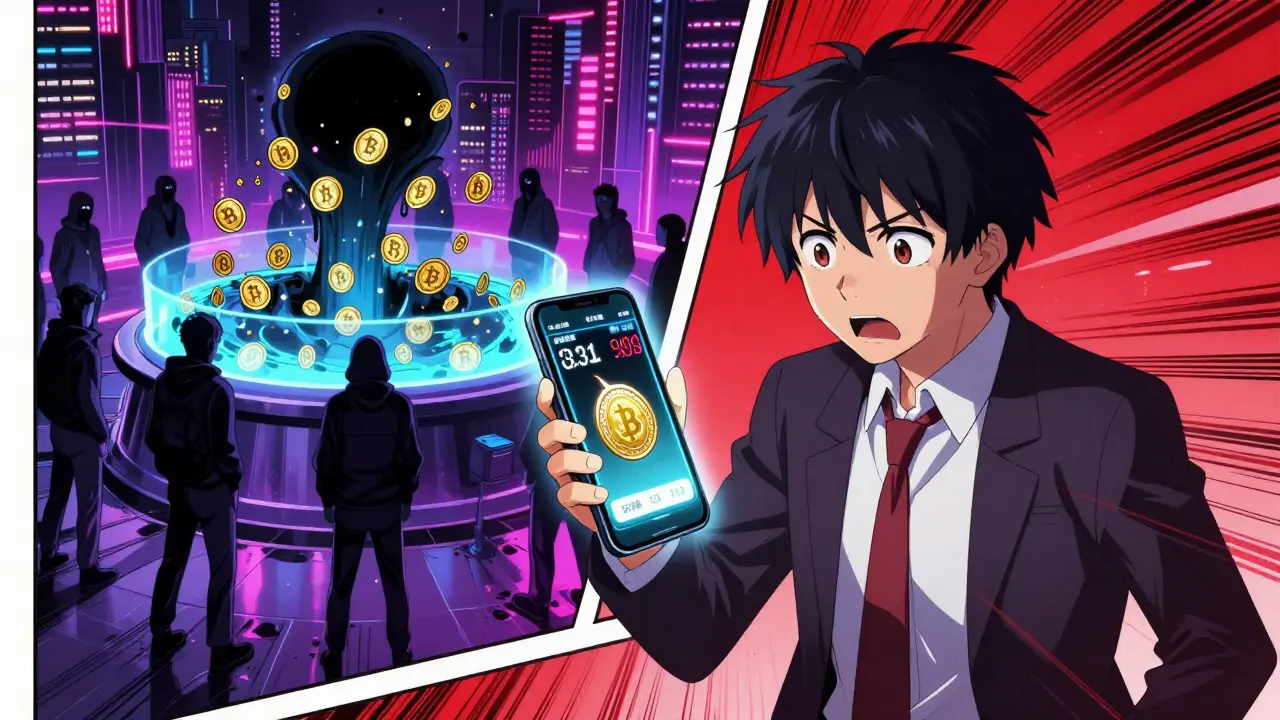
Imagine putting your life savings into a new crypto project. You see the hype: influencers promoting it, a sleek website, a Discord full of excited users. You buy in. Then, overnight, the price crashes to zero. The team vanishes. Your tokens or NFTs are now worthless. This isn’t fiction. It’s a rug pull-and it’s happening every day on blockchain networks.
What Exactly Is a Rug Pull?
A rug pull is when the people behind a crypto project suddenly disappear with all the money investors put in. They build up trust, create fake excitement, and then yank the rug out from under everyone. The term comes from the old phrase “pulling the rug out,” meaning to suddenly remove support. In crypto, that support is liquidity, community trust, or promised utility. Rug pulls aren’t rare. In 2023, over $3.2 billion was stolen through these scams, up from $2.8 billion the year before. They’re not just a few bad actors-they’re a full industry of deception, with specialized tools, social engineering tactics, and even AI-generated marketing now being used to make scams look real.How Token Rug Pulls Work
Token rug pulls target fungible tokens like ERC-20 or BEP-20. These are the coins you can trade on exchanges like Uniswap or PancakeSwap. The scam follows a clear, brutal pattern. First, the team creates a token with a catchy name-maybe something tied to a trending meme or movie, like the infamous SQUID token based on the Netflix show Squid Game. They pair it with ETH or BNB in a liquidity pool. This makes it look like the token has real value and trading volume. Then comes the hype. They flood Twitter, Telegram, and Reddit with fake testimonials. They pay influencers. They create a sense of FOMO. Investors rush in. The token price spikes. Sometimes it goes up 1,000% in a day. And then-bam. The developers drain the liquidity pool. They pull out all the ETH or BNB that was locked in. Without liquidity, the token can’t be sold. It’s dead. The price hits zero. And there’s no way back. The smart contracts behind these tokens are often rigged. Hidden functions prevent you from selling. Some have “honeypots”-code that lets the devs sell but locks your tokens. Others have hidden mint functions that let them create unlimited new tokens, diluting your holdings. One study found that 8% of all Ethereum-based tokens contain code designed for rug pulls. The whole process can take as little as 3.2 days from launch to collapse. That’s faster than most people can even read the whitepaper.How NFT Rug Pulls Are Different
NFT rug pulls don’t drain liquidity. They drain trust. Instead of selling a coin, they sell a digital image-usually a cartoon ape, a pixelated alien, or a generic avatar. But the real scam isn’t the image. It’s the promise. NFT projects often claim they’ll build a game, a metaverse, a utility platform. They show roadmaps with milestones: “Phase 1: Minting,” “Phase 2: Game Beta,” “Phase 3: Marketplace Launch.” They post videos of “team members,” use fake LinkedIn profiles, and even hire actors to pose as developers on YouTube. Investors buy in, thinking they’re getting early access to something valuable. But here’s the twist: the team never intended to deliver. After 30 to 90 days, the updates stop. The Discord goes quiet. The website disappears. The promised game? Never built. The metaverse? Just a blank screen. A 2023 analysis found that 78% of NFT rug pulls involve abandoned utility. Another 65% involve fake roadmaps. And 42% involve stolen community funds-money meant for marketing, development, or rewards that just vanished into the devs’ wallets. Unlike token rug pulls, NFT scams don’t crash instantly. They fade. The floor price drops slowly. The community slowly realizes they’ve been lied to. That’s why NFT rug pulls take longer-56.7 days on average-but they’re harder to catch because they don’t rely on code tricks. They rely on human psychology.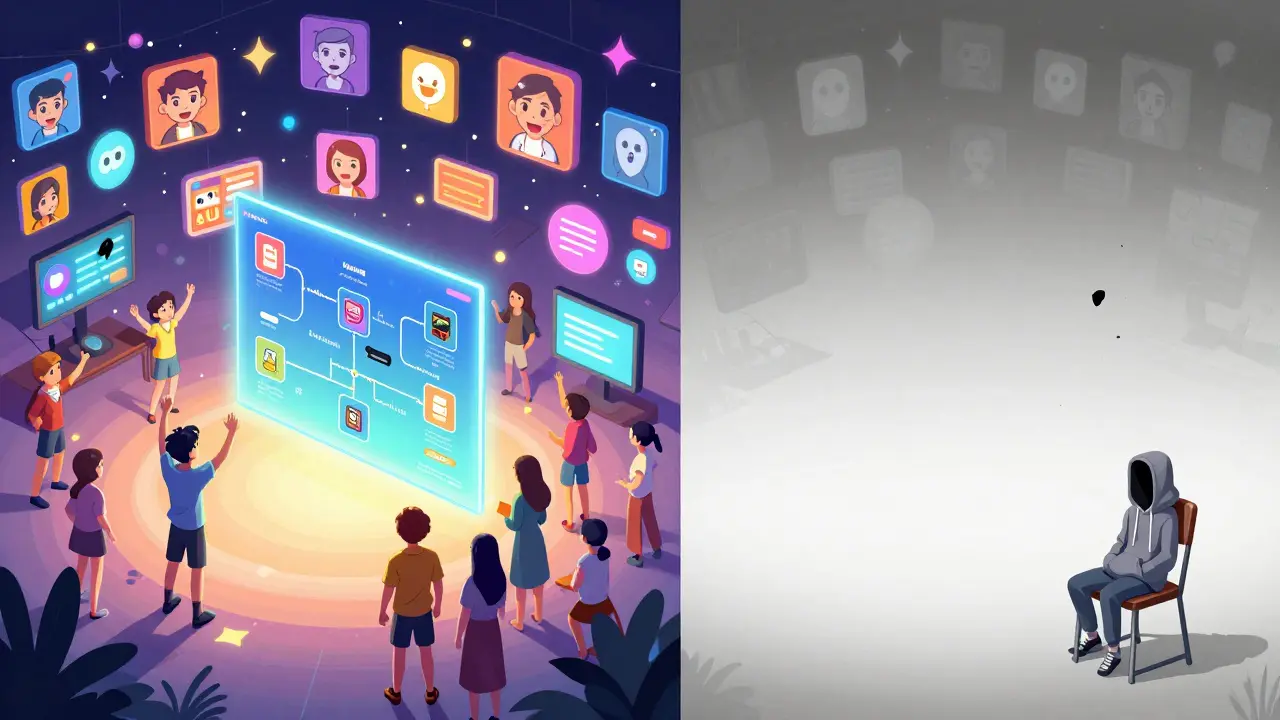
Why NFT Rug Pulls Are Harder to Detect
Token rug pulls leave digital footprints. Tools like RPHunter and RugDoc.io can scan smart contracts and flag hidden functions with 92% accuracy. You can see the liquidity pool drain in real time. Blockchain explorers show exactly where the money went. NFT rug pulls? Not so much. There’s no liquidity pool to drain. No token supply to dump. The scam is in the story. Most detection tools can’t tell if a roadmap is fake. They can’t verify if a team is real. They can’t detect a deepfake video of someone pretending to be the project’s CEO. That’s why 73% of successful NFT rug pulls involved verified Twitter accounts and active Discord servers. The scammers built credibility the old-fashioned way: by lying consistently. Even worse, many NFT rug pulls target mid-sized projects-not the huge blue-chip ones like Bored Apes, but ones with 5,000 to 10,000 holders. These are the “Goldilocks” targets: big enough to attract attention, small enough to avoid scrutiny.What You Can Do to Protect Yourself
The truth? No tool is perfect. No checklist guarantees safety. But you can drastically reduce your risk. For token investments:- Check the liquidity pool. Is it locked? Use tools like Unicrypt or Team Finance to see if the devs can pull it out. If it’s not locked, walk away.
- Use RugDoc.io or RPHunter. Paste the contract address. If it flags “hidden mint,” “honeypot,” or “max sell limit,” don’t buy.
- Look at the team. Are they doxxed? Do they have LinkedIn profiles that check out? If the team is anonymous, treat it like a red flag.
- Don’t chase pumps. If a token goes up 500% in 24 hours, it’s not a miracle-it’s a trap.
- Read the roadmap. Does it have vague promises like “exclusive utilities” or “future partnerships”? Real projects list dates, features, and deliverables.
- Check Discord and Twitter. Are the mods active? Are they answering questions? Or is it just bots and paid shills?
- Look for code. If the project says it’ll be a game, is there a GitHub repo? Are there commits? Or is the code just a placeholder?
- Don’t buy based on hype. If everyone’s talking about it, it’s probably already too late.
Recovery Is Almost Impossible
Some people think, “I’ll just report it to the police.” Good luck. Crypto is decentralized. There’s no central server. No CEO to sue. No customer service line. The money is gone, and it’s scattered across wallets, bridges, and mixers. Only 8% of token rug pull victims recover anything. For NFTs, it’s 23%-slightly better, because sometimes the community bands together to buy back NFTs or launch a new project. But even then, you’re lucky to get 10% of your money back. The SEC has gone after a few big cases-the $33 million Squid Game token settlement in early 2024 was one. But they’ve filed only 3 cases against NFT rug pulls. The system isn’t built to protect retail investors. You’re on your own.The Future: Hybrid Rug Pulls Are Coming
The next wave of scams won’t be just tokens or just NFTs. They’ll be both. Researchers predict that by 2025, 35% of rug pulls will be hybrid-where an NFT project issues a token to fund development, then drains both the NFT sales and the token liquidity pool. Imagine buying an NFT that gives you access to a token. The token seems legit. The NFT seems valuable. Then both vanish. AI is making this worse. Scammers now use AI to generate fake team videos, write convincing whitepapers, and even mimic real project tones on social media. One study found 17% of Q1 2024 token rug pulls used AI-generated marketing. That number is climbing. Regulators are starting to pay attention. The SEC says token rug pulls are a top priority. But NFTs? Still a gray area. That’s why NFT rug pulls are growing faster than token ones-47% YoY versus 28%.Final Thought: If It Sounds Too Good to Be True, It Is
Crypto rewards curiosity. But it punishes greed. The biggest mistake investors make isn’t lack of knowledge-it’s lack of skepticism. You don’t need to be a coder to avoid rug pulls. You just need to ask: “Why would they give me this opportunity? What’s their real incentive?” If the team is anonymous, the roadmap is vague, the liquidity isn’t locked, and the community feels forced-walk away. No project is worth losing your money over. Rug pulls aren’t going away. But they’re getting easier to spot-if you know what to look for. Stay sharp. Stay skeptical. And never invest more than you can afford to lose.What’s the difference between a token rug pull and an NFT rug pull?
A token rug pull happens when developers drain the liquidity pool of a fungible token (like an ERC-20 coin), making it impossible to sell. The value crashes to zero within hours. An NFT rug pull is different-it’s about broken promises. Developers sell NFTs with fake roadmaps (like a game or metaverse) and disappear after 30-90 days, leaving collectors with worthless digital art. Token scams use code tricks; NFT scams use lies.
Can you recover money lost in a rug pull?
Almost never. Crypto is decentralized, so there’s no central authority to reverse transactions. Only 8% of token rug pull victims recover any funds. For NFTs, it’s slightly higher at 23%, mostly when the community bands together to buy back NFTs. But even then, you’re lucky to get a fraction of your money back. Don’t count on recovery.
How do I check if a token is a rug pull?
Use tools like RugDoc.io or RPHunter. Paste the token’s contract address. They’ll scan for red flags: hidden mint functions, honeypots (that block selling), max sell limits, or unlocked liquidity. Also check if the liquidity is locked on Unicrypt or Team Finance. If it’s not locked, or if the team is anonymous, avoid it.
Are NFT rug pulls harder to detect than token rug pulls?
Yes. Token rug pulls leave clear digital traces-smart contract flaws, liquidity drains-that automated tools can catch. NFT rug pulls rely on social engineering: fake teams, misleading roadmaps, and deleted Discord servers. No tool can verify if a “game” will ever be built. That’s why 73% of successful NFT rug pulls used verified social media accounts to build trust before disappearing.
Is it safe to invest in new crypto projects?
It’s never safe to assume a new project is legitimate. Most rug pulls happen in the first week after launch. If a project is new, anonymous, and has a hype-driven social media push, treat it as high-risk. Only invest what you can afford to lose. Do your own research-don’t follow influencers. Check the code, check the team, check the liquidity. If anything feels off, walk away.
Why are NFT rug pulls growing faster than token rug pulls?
NFT rug pulls are growing faster because they’re harder to detect and regulate. Unlike tokens, NFTs don’t have standardized smart contracts or liquidity pools. Their value is based on perception, not code. Scammers exploit that subjectivity. Plus, regulators have focused mostly on token scams. With only 3 NFT-related enforcement actions as of 2024, there’s less fear of consequences for NFT fraud.
Comments
Devyn Ranere-Carleton
February 2, 2026 AT 07:29 AMso i just lost 3k on some doge-themed token and now i’m scared to even look at crypto lol
why do people still fall for this? the name alone should’ve been a red flag - ‘SquidGameCoin’? really?
Raju Bhagat
February 3, 2026 AT 22:11 PMbro this is wild i just saw a guy on telegram selling an NFT of a cat wearing sunglasses for 5 eth and he said it unlocks a metaverse game
turns out the whole discord was bots and the website was just a wordpress template
my heart broke man
laurence watson
February 5, 2026 AT 06:41 AMjust want to say - if you’re new to crypto and reading this, you’re already ahead of most people
asking questions and staying skeptical is the #1 skill you need
don’t feel bad if you got burned - we all have
but now you know what to watch for and that’s power
Elizabeth Jones
February 6, 2026 AT 17:07 PMThe fundamental flaw in crypto investing isn’t technical - it’s epistemological. We are asked to assign value to assets whose utility is predicated on collective belief, not objective function.
Token rug pulls exploit the mechanics of liquidity; NFT rug pulls exploit the psychology of narrative. Both are forms of speculative ritual, where trust is commodified and then liquidated.
There is no regulation because there is no authority to regulate - only distributed consensus, which is easily corrupted by charismatic fraudsters.
Until we develop institutional mechanisms to verify intent - not just code - this cycle will repeat.
And it will. Because human nature hasn’t changed since tulip mania.
Rachel Stone
February 7, 2026 AT 15:00 PMso the answer is just… don’t invest?
wow. revolutionary.
Gurpreet Singh
February 8, 2026 AT 12:53 PMi live in india and saw so many friends get scammed with fake crypto apps
they thought if it had a hindi voiceover and a temple in the logo it was safe
lol
the scammers know how to play culture too
stay smart, stay humble
Christopher Michael
February 9, 2026 AT 10:45 AMImportant note: Always verify the liquidity lock duration - not just whether it’s locked. Some contracts lock for 7 days, then auto-unlock. Use Unicrypt’s audit feature, not just the ‘locked’ badge.
Also, check the wallet history of the dev wallets - if they’ve ever sent funds to known mixer addresses (like Wasabi or Samourai), RUN.
And for NFTs - look at the creator’s Ethereum address on Etherscan. If it’s been used for 5 other NFT projects in the last 6 months? That’s a serial rug-puller.
Also, if the project says ‘team is anonymous for security’ - that’s not security, that’s cowardice.
And one more thing: if the whitepaper uses the word ‘revolutionary’ more than twice - close the tab immediately.
And don’t trust Twitter influencers - even if they have blue checks. Many are paid shills with fake engagement bots.
And don’t forget to check the GitHub commit history - zero commits? Red flag. One commit from 8 months ago? Red flag.
And if the Discord has 10k members but only 3 active voices - that’s a ghost town.
And if the roadmap says ‘coming soon’ for the 3rd time - it’s never coming.
And if the token supply is over 1 trillion - it’s designed to be worthless.
And if you’re reading this and still thinking ‘but what if this one’s real?’ - you already lost.
Freddy Wiryadi
February 9, 2026 AT 21:28 PMbro i just bought an NFT of a banana with a hat and now i’m crying in the shower
the dev said it’d unlock a game where you feed bananas to aliens
the game is just a loading screen with a spinning banana
and now the discord is gone
😭
why do i keep doing this to myself
also i think i’m addicted to FOMO
send help or just send memes
Brianne Hurley
February 11, 2026 AT 19:30 PMWow, such a deep and insightful post. Truly, I’m moved.
But let’s be real - if you had to ask how to avoid a rug pull, you probably already got rekt.
And if you’re reading this thinking ‘I’m not that dumb’ - congratulations, you’re the target.
Also, the fact that you’re still holding any crypto means you’re emotionally compromised.
Just cash out. Go buy a house. Or a dog. Or a toaster.
At least those don’t vanish into a blockchain void.
christal Rodriguez
February 13, 2026 AT 12:16 PMIt’s not about avoiding rug pulls. It’s about accepting that crypto is a pyramid.
And you’re not the architect.
You’re the brick.
Gustavo Gonzalez
February 14, 2026 AT 09:55 AMEveryone’s talking about smart contracts and liquidity locks - but nobody’s talking about the fact that 90% of these projects don’t even have a legal entity registered.
You can’t sue a pseudonym.
You can’t subpoena a Discord admin.
You can’t freeze a wallet that’s been moved through 17 cross-chain bridges.
And yet people still send ETH to strangers who say ‘DM for whitelist’.
It’s not ignorance. It’s willful stupidity.
And now you’re all surprised when the rug gets pulled?
Wake up. The system is designed to extract value from the naive.
And you’re the product.
Mark Ganim
February 15, 2026 AT 20:10 PMEvery time I read about another rug pull, I feel like I’m watching a horror movie - except the monster is real, the victims are real, and the screams are silent because no one believes you when you say you lost your life savings to a cartoon ape.
It’s not just financial loss - it’s spiritual. You trusted something that didn’t exist.
And the worst part? The scammers sleep just fine.
They’re already on to the next one.
And we’re still here…
Still clicking.
Still hoping.
Still believing.
And that’s the real tragedy.