

You might have seen Upfire (UPR) listed on a few crypto tracking sites and wondered what it actually does. It isn’t just another meme coin or a speculative asset with no purpose. Upfire is a project that tries to fix a broken part of the internet: file sharing. If you’ve ever used BitTorrent, you know that people who share files (seeders) usually do it for free. Upfire wants to change that by paying users in cryptocurrency for their bandwidth.
But here is the catch: while the idea sounds great, the reality in mid-2026 is quite different. The project has struggled with liquidity, adoption, and market visibility. Before you decide whether to buy, hold, or ignore UPR, you need to understand exactly how the technology works, where the money comes from, and why the price looks the way it does today.
How Upfire Works: Paying for Bandwidth
At its core, Upfire is a decentralized peer-to-peer (P2P) file-sharing platform. Think of it like a modern, crypto-powered version of uTorrent or BitTorrent. In traditional torrenting, if you want to download a large file, you rely on other users (peers) to send you pieces of that file. If those peers stop sharing, the download slows down or fails. There is no financial incentive for them to keep sharing; they just do it out of goodwill.
Upfire changes this dynamic by adding blockchain incentives. Here is the basic flow:
- Seeding for Profit: When you upload (seed) a file on the Upfire network, you are compensated with UPR tokens whenever someone downloads your content. Your bandwidth becomes a revenue stream.
- Paying for Downloads: Users who want to download encrypted files must pay using UPR tokens. This payment covers both the cost of the file (set by the creator) and the gas fees required to process the transaction on the blockchain.
- Encryption & Security: Unlike standard torrents, files on Upfire are encrypted. They can only be decrypted by the official Upfire desktop application once the smart contract verifies that the payment was made. This prevents piracy outside the ecosystem and ensures creators get paid.
The software runs as a desktop dApp (decentralized application) primarily for Windows and macOS. It uses a modified BitTorrent protocol to manage the actual data transfer between computers, but it relies on Ethereum and BNB Smart Chain smart contracts to handle the money and ownership verification.
From Upfiring (UFR) to Upfire (UPR): The Rebrand
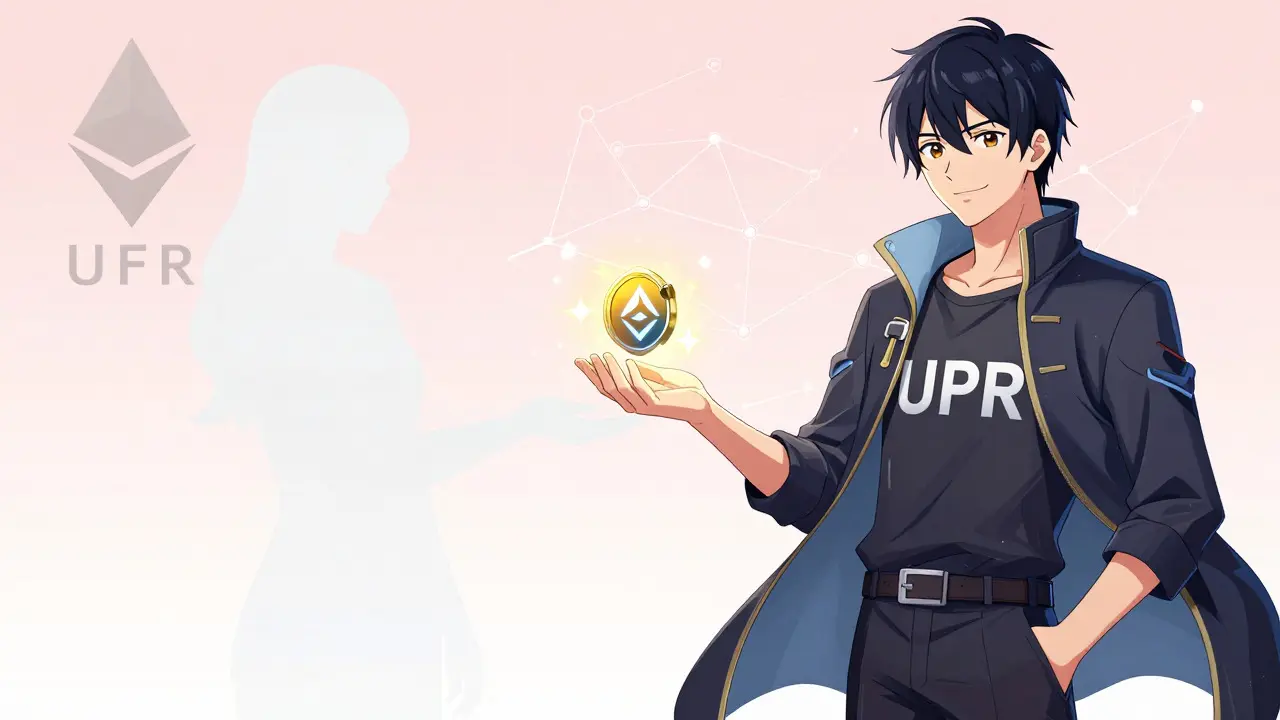
To understand Upfire, you have to look at its history. The project didn't start as Upfire. It began as Upfiring (UFR), an Ethereum-based project that launched its initial coin offering (ICO) in October 2017. Back then, it raised about 844 ETH and promised to revolutionize P2P sharing by paying users in UFR tokens.
For several years, the project operated under the Upfiring name. However, by late 2021, the team decided to rebrand and expand. They announced "Upfire" as an evolution of the original concept. This wasn't just a name change; it involved a technical migration. The team moved the incentive layer from Ethereum exclusively to include the BNB Smart Chain (now known as BNB Chain). This move was likely intended to lower transaction costs and tap into the larger user base of the Binance ecosystem.
During this transition, existing holders of the old UFR token were offered a swap. The rate was fixed at 1 UFR = 10 UPR. This meant the total supply of tokens increased tenfold, creating the new UPR token that you see listed today. While the goal was to revitalize the project, this rebrand also coincided with a period where many similar projects lost momentum.
Tokenomics: How UPR is Distributed
The UPR token is designed to be both a utility token (used within the app) and a governance token (used to vote on platform decisions). Understanding the supply helps explain the potential value-or lack thereof-of the coin.
| Allocation Category | Amount (UPR) | Purpose |
|---|---|---|
| User Swaps (from UFR) | 240,000,000 | Rewards for early adopters migrating from the old system |
| Development Funding | 200,000,000 | Building the desktop app, smart contracts, and infrastructure |
| Liquidity Incentives | 100,000,000 | Providing depth on decentralized exchanges (DEXs) |
| Marketing & Growth | 200,000,000 | Airdrops, promotions, and community building |
| Exchange Listings & OTC | 260,000,000 | Reserve for future partnerships and trading venues |
The maximum total supply is set at 1 billion UPR. As of mid-2026, reports suggest that around 195 million UPR are in circulation, though this number varies depending on which data aggregator you check. Some platforms even list the circulating supply as zero due to inconsistent reporting from the project team. This discrepancy is a red flag for investors, as it makes calculating the true market capitalization difficult.
Market Status and Price Reality in 2026
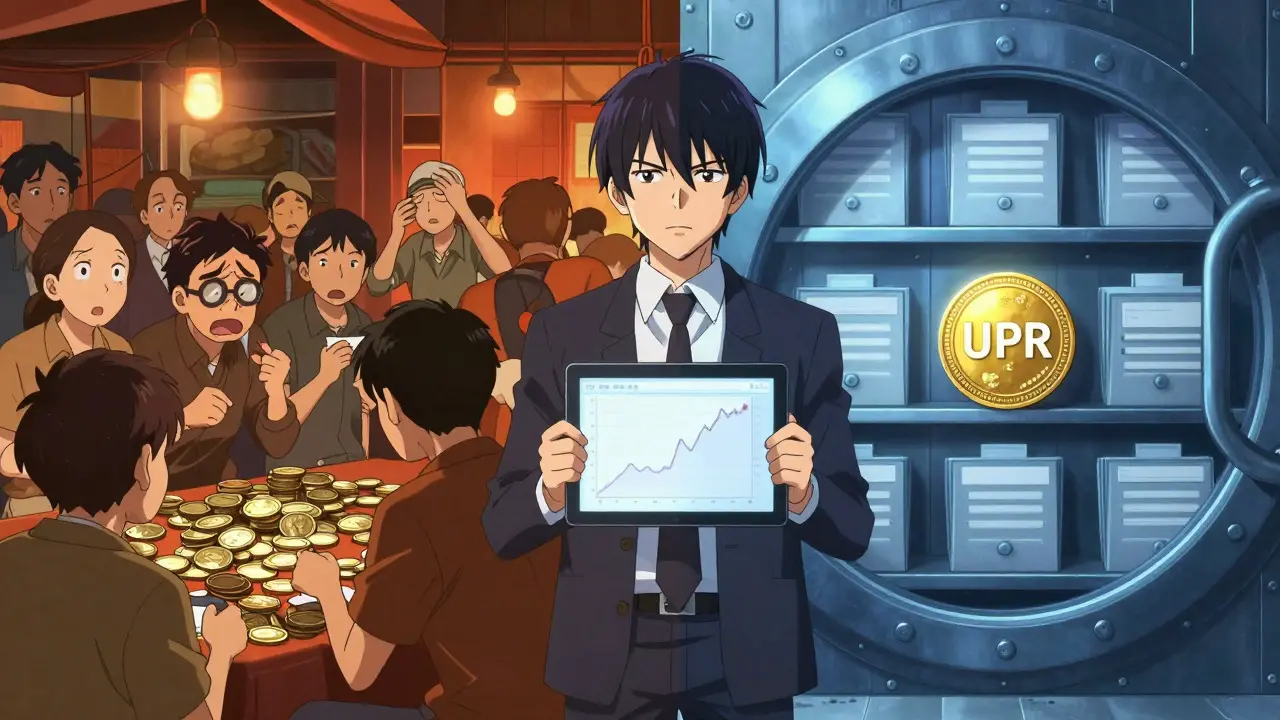
If you are looking at the price of UPR right now, you will likely see a very small number, hovering around $0.00047. But the price alone doesn't tell the whole story. The bigger issue is liquidity.
In the world of crypto, liquidity means how easily you can buy or sell an asset without crashing its price. For Upfire, liquidity is extremely low. Major aggregators like CoinMarketCap and CoinPaprika often show near-zero trading volume for UPR. On some days, the reported 24-hour volume is literally $0. This means that even if you wanted to buy a significant amount of UPR, you might struggle to find enough sellers, or your purchase could spike the price artificially.
Several factors contribute to this status:
- Limited Exchange Listings: UPR is not listed on major centralized exchanges like Coinbase or Kraken. It trades on smaller, less liquid venues, and sometimes appears "inactive" on analytics platforms like Holder.io.
- Micro-Cap Classification: With a market cap that fluctuates between negligible and zero depending on the data source, UPR is considered a micro-cap asset. These coins are highly speculative and carry high risk.
- Data Inconsistencies: Different websites report conflicting information. One site might say the price is $0.00047, while another says it's effectively untradeable. This confusion scares away institutional investors and casual traders alike.
Historically, UPR saw slightly more activity during the 2021-2022 bull run, when interest in decentralized storage and Web3 projects was at its peak. Prices reached highs of nearly $0.03 at one point. However, since then, the momentum has faded significantly.
Upfire vs. BitTorrent Token (BTT)
When discussing crypto-based file sharing, the biggest competitor is BitTorrent Token (BTT). Tron acquired BitTorrent in 2018, giving BTT massive exposure and integration with the popular BitTorrent client. So, how does Upfire compare?
Proponents of Upfire argue that it offers better privacy and true decentralization. Because Upfire encrypts files and requires specific wallet interactions, it claims to offer more control to the user compared to the more centralized approach of Tron’s BitTorrent. Additionally, Upfire’s governance model promises that token holders have a say in the platform’s future, whereas BTT’s development direction is largely controlled by Tron’s leadership.
However, in terms of adoption, BTT wins by a landslide. Billions of people use BitTorrent clients daily. Upfire, despite its technical merits, has a tiny user base. For a network effect to work in file sharing, you need many seeders and many leechers. Without a critical mass of users, the incentives don't kick in effectively. You can’t earn much UPR if there are almost no one downloading your files.
Is Upfire Still Active?
This is the most common question from potential investors. The answer is mixed. Technically, yes, the project still exists. The GitHub repository shows updates as recently as August 2025, and the social media accounts occasionally post about version updates (like v2.0.0 on BNB Chain). The smart contracts are live, and the desktop application can still be downloaded.
However, "active" doesn't mean "successful." The lack of significant marketing, the absence of major exchange listings, and the dwindling community engagement suggest that the project is in maintenance mode rather than growth mode. Many analysts label it as "awaiting listing" or "not active" because there is no meaningful trading happening. If you are considering investing, treat UPR as a high-risk, speculative bet on a niche technology that hasn't yet found product-market fit.
How to Use Upfire (If You Want To)
If you are interested in trying the platform for its utility rather than speculation, here is what you need to do:
- Get a Wallet: You need a crypto wallet that supports Ethereum and/or BNB Smart Chain, such as MetaMask or Trust Wallet.
- Buy UPR: Purchase UPR tokens on a decentralized exchange (DEX) like PancakeSwap (for BSC) or Uniswap (for Ethereum). Be prepared for high slippage due to low liquidity.
- Download the App: Install the Upfire desktop client from their official website or GitHub.
- Connect and Seed: Connect your wallet to the app. You can start seeding files to earn rewards or browse available files to download.
Keep in mind that you will need to pay gas fees for transactions. On the BNB Chain, these fees are generally lower than on Ethereum, which is why the team pushed for the BSC integration.
What is the current price of Upfire (UPR)?
As of mid-2026, the price of UPR hovers around $0.00047 USD. However, trading volume is extremely low, often reported as zero on major aggregators, making the price volatile and difficult to trade in large quantities.
Is Upfire a scam?
There is no evidence suggesting Upfire is a outright scam. It has a working product, open-source code, and a clear history dating back to 2017. However, it suffers from poor execution, low adoption, and illiquidity, which are common traits of failed or stalled crypto projects.
Can I mine Upfire (UPR)?
No, you cannot mine UPR in the traditional sense. Instead, you "earn" it by seeding files on the Upfire network. The more bandwidth you provide to other users, the more rewards you receive via smart contracts.
What is the difference between UFR and UPR?
UFR was the original token of the Upfiring project launched in 2017. UPR is the new token introduced during the 2021/2022 rebrand to Upfire. Holders of UFR could swap their tokens for UPR at a rate of 1:10.
Which blockchains does Upfire support?
Upfire operates on both Ethereum and BNB Smart Chain (BSC). The team migrated to BSC to reduce transaction costs and improve speed for users.
Comments
Sus Sawyer
July 29, 2026 AT 05:54 AMlook, i’ve been watching this space since the UFR days and honestly? it’s a ghost town. the tech is cool on paper but nobody uses it because there’s no network effect. you can’t earn bandwidth if there are no leechers. it’s like building a toll road in the middle of a desert. nice asphalt though.
Aryan MISHRA
July 31, 2026 AT 03:26 AMLiquidity is non-existent. Volume is effectively zero. This is a textbook definition of a failed project. The tokenomics are flawed from inception; inflationary supply with no burn mechanism leads to inevitable dilution. Avoid at all costs. Do not engage. Stay away from illiquid assets.
Ryan Robinson
August 1, 2026 AT 03:39 AMi mean its not dead dead. the github updates were real last year. maybe they just need better marketing or a listing on a bigger dex. feels like they got stuck in maintenance mode tho which sucks cause the idea was solid. wish them luck really.
Earl Kott65
August 1, 2026 AT 20:52 PMOh wow! 🤯 Can you believe we’re still talking about this?! 😂 I remember when people thought this would replace BitTorrent! Now it’s basically digital dust! 💀 But hey, at least the encryption is tight! 🔒 Who needs users when you have secrets, right?! 🤐
Ethan Yuwono
August 2, 2026 AT 18:11 PMit is what it is. technology moves fast and projects that dont adapt die. upfire tried to pivot to bsc but it was too late. the market had already chosen winners. sometimes you just have to accept the loss and move on. peace.
Jack Delasquez
August 3, 2026 AT 02:30 AMi actually downloaded the app once just to see how it worked. super clunky interface. took forever to connect my wallet. gas fees on eth were insane so i switched to bsc but even then it felt sluggish. why use this when torrenting is free? doesnt make sense to me.
Harman Singh
August 3, 2026 AT 17:31 PMwhy does everyone hate on small caps?? u guys are so boring. i hold some upr and im happy. who cares if volume is low as long as the team is working. ignore the haters they just want ur money. keep holding friends.
Qolbina Islami
August 5, 2026 AT 08:14 AMThis is typical American greed!!! You want instant returns without doing any work!!! Upfire is a noble attempt at decentralization!!! Why do you mock it??? It supports local seeders!!! Support your community!!! Don't let the big tech giants win!!! Fight back!!!
SUBHAM CHOUDHURY
August 6, 2026 AT 13:31 PMdon't lose hope. every great project has a quiet period before the explosion. upfire is building in silence. trust the process. the rebrand to upr was necessary for growth. stay positive and keep learning about web3.
Joy Kwant
August 7, 2026 AT 08:46 AMit’s pathetic how people throw money at these zombie projects. the founders clearly abandoned ship years ago. it’s morally bankrupt to promote this as an investment. it’s just a vanity metric for the devs. wake up.
amy miranda
August 8, 2026 AT 00:47 AMThe sheer audacity of calling this a 'revolution' when the trading volume is literally zero is staggering. It is a complete waste of time and resources. The writing is on the wall.