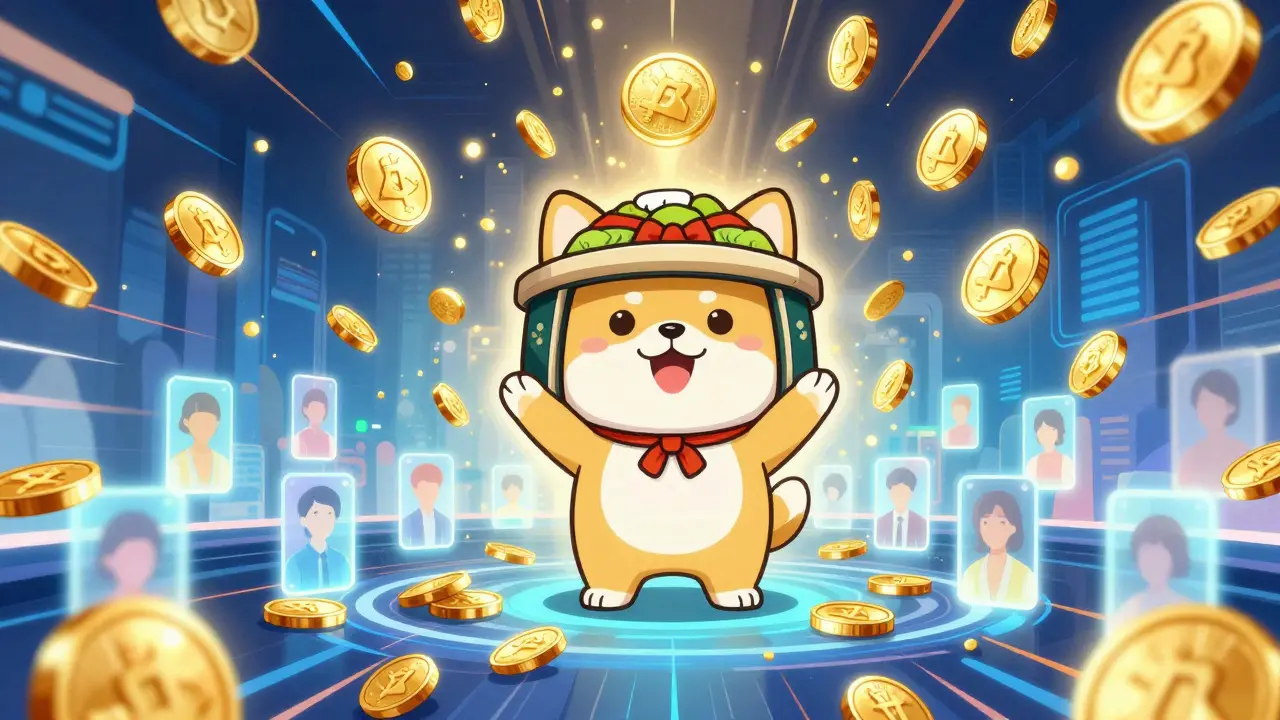
You might have seen Bento (BENTO) is a micro-cap meme cryptocurrency launched on the Base Layer-2 network in October 2024. It’s not a new technology or a revolutionary financial tool. It’s a "meme coin"-specifically, a dog-themed token designed to ride the wave of community hype and social media attention. If you’re wondering what this coin actually does, how it got here, and whether it has any real value, you’ve come to the right place. Let’s cut through the noise and look at the facts.
The Origin Story: An Airdrop to a Million Users
Bento didn’t launch like traditional coins that sell tokens to early investors. Instead, its entire launch strategy revolved around a massive airdrop distributed to over one million unique user addresses on the Base blockchain. This happened in October 2024. The goal was simple: give away free tokens to anyone who had interacted with popular decentralized applications (dApps) on the Base network before the launch.
This approach created a huge initial holder base. Unlike projects where a small group of insiders controls most supply, Bento spread its wealth widely. However, this also meant that many people claimed their tokens just to sell them immediately for profit, creating significant downward pressure on the price right from the start.
Tokenomics: Supply and Distribution
To understand Bento, you need to look at its numbers. Here is the breakdown of its
Metric
Value
Max Supply
100 Trillion (100,000,000,000,000) BENTO
Circulating Supply
~90 Trillion BENTO
Token Standard
ERC-20 compatible (on Base Chain)
Decimals
18
Market Cap
Approximately $700,000 - $800,000 USD
The supply is enormous. One hundred trillion tokens sounds like a lot, but in the world of meme coins, large supplies are common because they allow prices to be fractions of a cent. This makes it psychologically easier for retail investors to buy "millions" of tokens, even if each one is worth very little.
Most of these tokens were distributed via the airdrop. The remaining portion was allocated to liquidity pools and treasury funds to support trading. There are no known vesting schedules for developers because the project operates largely anonymously without a formal corporate structure.
Utility: Is There Any Real Use Case?
If you are looking for governance rights, staking rewards, or access to exclusive services, you won’t find them with Bento. It is a pure meme coin with no intrinsic protocol utility beyond speculative trading and community engagement.
There is no whitepaper detailing technical innovations. There is no GitHub repository showing active code development beyond the basic smart contract required to create the token. The project’s website and social media channels focus entirely on branding, humor, and community vibes. For some investors, this lack of complexity is a feature-it means there’s no complicated tech to fail. For others, it’s a major red flag indicating a lack of long-term viability.
Price Performance and Volatility
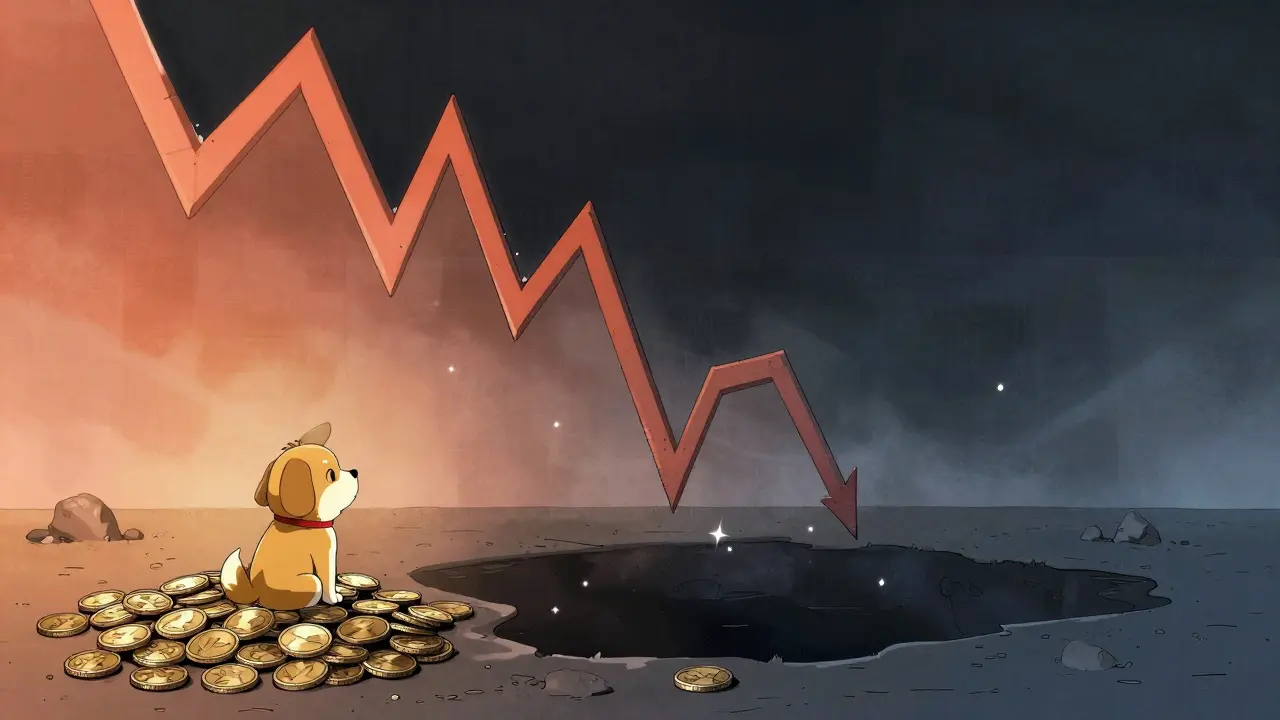
Bento’s price history is a classic example of high volatility in the crypto market. After its launch in October 2024, the token reached an all-time high (ATH) of $0.00000005. As of mid-May 2026, the price hovers around $0.000000007 to $0.000000003, depending on the data source.
This represents a drawdown of over 85% from its peak. Trading volume is thin, often dipping below $1,000 per day. Low volume means that even small trades can cause significant price swings. If you try to sell a large amount of BENTO, you might experience high slippage, meaning you get less money than expected because there aren't enough buyers in the pool.
Trading and Liquidity
You won’t find Bento listed on major centralized exchanges like Coinbase Spot or Kraken. Instead, trading happens almost exclusively on decentralized exchanges (DEXs). Specifically, the primary market is the Uniswap v2 pool on Base which handles nearly 99.8% of all BENTO trading volume and liquidity.
To trade BENTO, you need:
- A Web3 wallet like MetaMask.
- Ethereum (ETH) bridged to the Base network.
- An account on Uniswap connected to your wallet.
Gas fees on Base are generally low, often costing less than $1 for a transaction, making it cheap to experiment with small amounts. However, always double-check the contract address before swapping to avoid scams.
Bento vs. Other Base Meme Coins
Base is home to several meme coins. How does Bento stack up against the bigger names?
| Token | Market Cap (Approx.) | Daily Volume | Primary Driver |
|---|---|---|---|
| Bento (BENTO) | $0.7M | <$2,000 | Airdrop distribution |
| Brett (BRETT) | $100M+ | $5M+ | Community & Brand |
| Toshi (TOSHI) | $50M+ | $2M+ | Ecosystem integration |
As you can see, Bento is significantly smaller in terms of liquidity and adoption compared to tokens like Brett or Toshi. These larger competitors have deeper liquidity pools, meaning they can handle larger trades with less price impact. Bento remains a niche asset within the Base ecosystem.

Important Distinction: Not Boundless Bento
When researching "Bento," you might encounter references to "Bento by Boundless." Do not confuse the two. Bento by Boundless is a zero-knowledge proof infrastructure tool for developers, unrelated to the BENTO cryptocurrency. Boundless provides computing resources for verifying complex calculations on blockchains. It has no token, no price, and no connection to the meme coin we are discussing. Always ensure you are looking at the correct entity when reading news or technical docs.
Risks and Considerations
Investing in Bento comes with substantial risks. First, the anonymity of the development team means there is no accountability if issues arise. Second, the lack of utility means the price relies entirely on speculation and social sentiment. If interest fades, the price could continue to decline toward zero.
Regulatory uncertainty also looms over meme coins. While no specific action has been taken against Bento, regulators globally are scrutinizing unregistered securities. As a purely speculative asset with no underlying revenue stream, it sits in a gray area legally.
Conclusion
Bento (BENTO) is a speculative asset born from a viral marketing campaign on the Base chain. It offers a glimpse into the culture of modern crypto memes-highly distributed, community-driven, and extremely volatile. It is not an investment in technology or a company. It is a bet on continued social attention. Treat it accordingly, only allocate funds you can afford to lose, and stay informed about the broader Base ecosystem trends.
Is Bento (BENTO) a scam?
It is not classified as a scam in the traditional sense of stealing funds directly, as the smart contract is verified and public. However, it lacks fundamental utility and has a history of sharp price declines after its initial hype. Investing in it carries high risk due to its speculative nature and thin liquidity.
Where can I buy BENTO?
You cannot buy BENTO on major centralized exchanges like Coinbase or Binance. You must use a decentralized exchange (DEX) such as Uniswap on the Base network. You will need to bridge ETH to Base first and then swap it for BENTO using a Web3 wallet.
What is the total supply of BENTO?
The maximum total supply of BENTO is 100 trillion tokens. Approximately 90 trillion tokens are currently in circulation, having been distributed primarily through an airdrop to over one million Base users in October 2024.
Does BENTO have any utility?
No, BENTO does not have inherent utility such as staking, governance, or lending features. It is strictly a meme coin designed for speculative trading and community engagement based on its "Based Bento" branding.
How is BENTO different from Boundless Bento?
They are completely unrelated. BENTO is a cryptocurrency token on the Base chain. Boundless Bento is a developer tool for zero-knowledge proofs. Confusing the two can lead to misinformation, so always check the context when reading about "Bento" in tech news.