
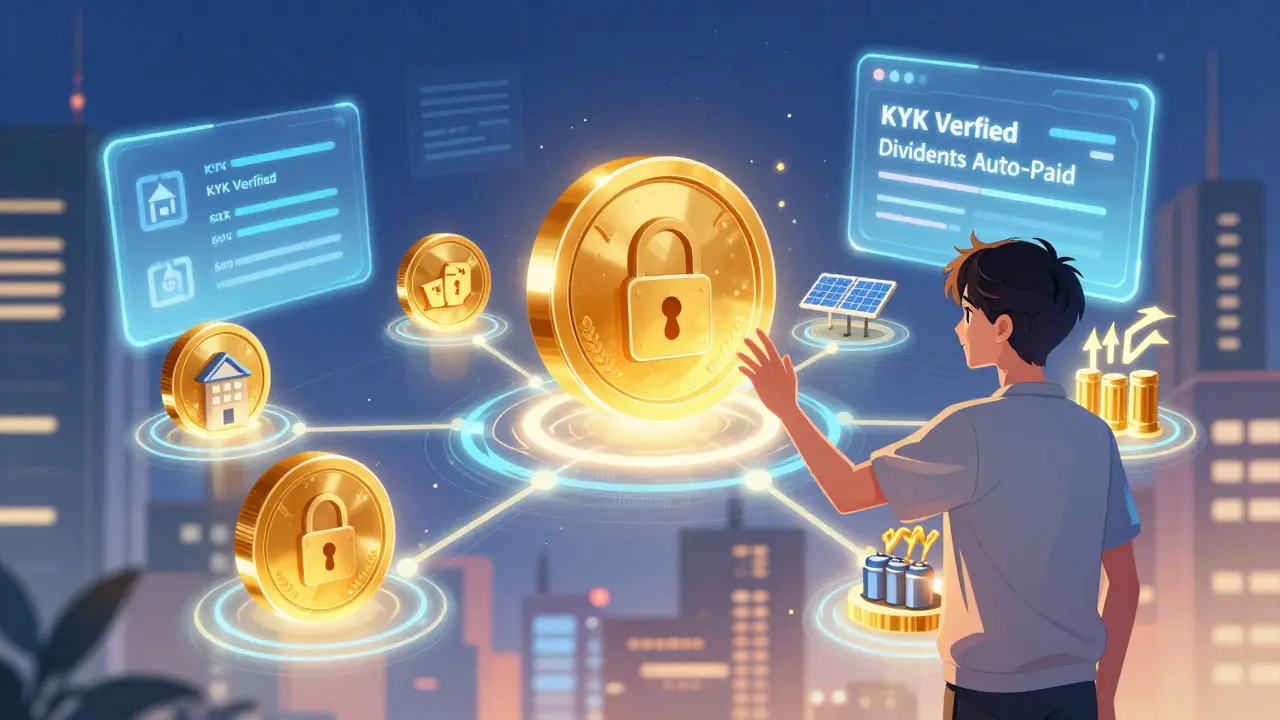
When people think of blockchain, they often picture Bitcoin or Ethereum - digital currencies traded for speculation. But there’s another side to blockchain that’s quietly changing how money and ownership work: security tokens. These aren’t just another crypto coin. They’re digital versions of real-world assets like stocks, bonds, or even rental properties - legally recognized, regulated, and backed by actual value.
What Exactly Is a Security Token?
A security token is a digital asset that represents ownership in something real. Think of it like owning a share of Apple stock, but instead of a paper certificate, you hold a token on a blockchain. This token gives you rights - like dividends, profit-sharing, or voting power - just like traditional securities. The difference? It’s faster, more transparent, and open to global investors. Unlike utility tokens (which give you access to a service, like a platform’s app or network), security tokens are tied to financial value. If you buy a security token representing a piece of a commercial building, you’re legally entitled to a portion of the rental income. That’s not speculation - that’s investment. The legal test used in the U.S. to decide if something is a security is called the Howey Test. If your token involves investing money in a common enterprise with the expectation of profit from others’ efforts, it’s a security. That’s why security tokens are treated like stocks or bonds under securities law - not like gambling chips.How Are Security Tokens Created?
Creating a security token is called tokenization. It starts with an asset - say, a $10 million apartment complex. Instead of selling the whole building to one investor, the owner divides ownership into 10,000 tokens, each worth $1,000. Each token is coded onto a blockchain, usually Ethereum, Polygon, or Stellar. Smart contracts handle the rules automatically:- Who can buy the tokens? (Only accredited investors, for example)
- When are dividends paid out? (Every quarter, automatically)
- Can tokens be transferred? (Only after KYC/AML checks pass)

Security Tokens vs. Utility Tokens vs. Cryptocurrencies
It’s easy to confuse these three. Here’s how they differ:| Feature | Security Token | Utility Token | Cryptocurrency |
|---|---|---|---|
| Represents ownership? | Yes - in real assets | No - access to service | No - standalone digital currency |
| Regulated? | Yes - securities laws apply | Usually not | Varies - Bitcoin often treated as commodity |
| Dividends or profits? | Yes - automated via smart contracts | No | No - price speculation only |
| Underlying asset? | Real-world (real estate, equity, debt) | Platform service or feature | None - native to blockchain |
| Example | Tokens for a share of a solar farm | Filecoin for storage access | Bitcoin, Ethereum |
Utility tokens are like prepaid credits. Cryptocurrencies are digital money. Security tokens? They’re digital shares.
Why Do Security Tokens Matter?
Traditional finance moves slowly. Buying a piece of a commercial building? You need lawyers, notaries, escrow agents, and weeks of paperwork. With security tokens, it’s done in minutes. Here’s what changes:- Fractional ownership - You don’t need $1 million to own part of a skyscraper. $100 buys you a slice.
- 24/7 trading - No more waiting for markets to open. Tokens trade anytime, anywhere.
- Global access - Investors from 50 countries can buy into a New Zealand property fund without crossing borders.
- Lower costs - No brokers, no clearinghouses, no paper filings. Automation cuts fees.
- Transparency - Every transaction is on the blockchain. No hidden fees. No secret records.
Imagine a small business in Wellington raising capital by selling security tokens tied to its future revenue. Investors get a percentage of monthly sales. The business gets funding without giving up control. Everyone wins. That’s not sci-fi - it’s happening now.
Challenges and Risks
Security tokens aren’t magic. They come with real hurdles.- Regulation varies - What’s legal in Singapore might be banned in Nigeria. Companies must navigate dozens of rules.
- Infrastructure is new - Not all wallets or exchanges support security tokens. Integration is still messy.
- Market liquidity - There aren’t many buyers yet. Selling your token might take weeks, not seconds.
- Asset risk - If the underlying property crashes, the token crashes too. It’s not crypto speculation - it’s real asset risk.
Also, not every token labeled "security" is legit. Some projects slap the word on anything to attract investors. Always check: Is it registered? Who’s the issuer? What asset backs it?
The Future of Security Tokens
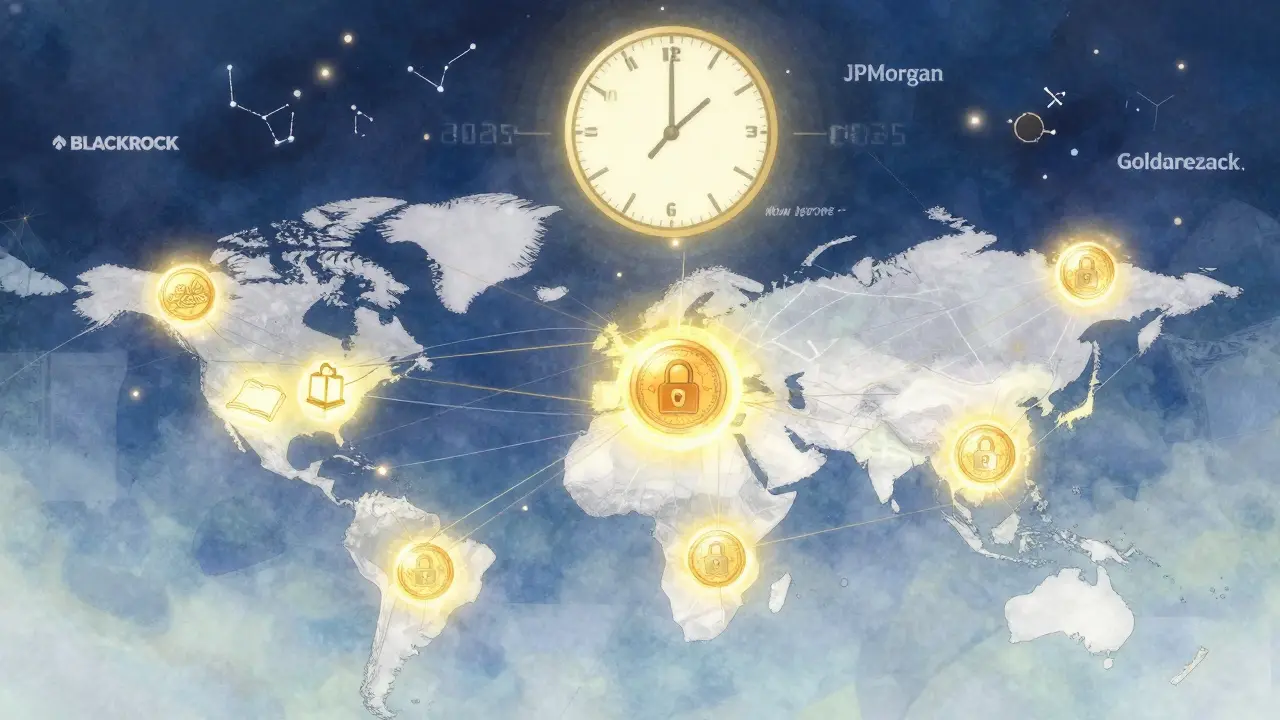
Big players are watching. BlackRock, JPMorgan, and Goldman Sachs have all filed for blockchain-based securities products. In 2025, the global security token market hit $18 billion - up from $2 billion in 2021. Regulators are catching up. The U.S. SEC has started approving STOs (Security Token Offerings). The EU’s MiCA law now clearly defines security tokens under its framework. Even central banks are exploring tokenized bonds. The endgame? A world where every asset - from a piece of farmland to a patent - can be divided into tokens and traded globally. Where small investors have the same access as hedge funds. Where ownership is programmable, transparent, and fair. It’s not about replacing stocks. It’s about upgrading them.Are security tokens the same as cryptocurrencies like Bitcoin?
No. Bitcoin is a digital currency designed as peer-to-peer money. Security tokens represent ownership in real assets - like shares in a company or a piece of real estate. Bitcoin’s value comes from supply and demand. Security tokens derive value from the asset they represent. Legally, Bitcoin is often treated as a commodity, while security tokens are regulated as securities under laws like the Howey Test.
Can anyone buy security tokens?
Not always. Many security tokens are only available to accredited investors - people with high income or net worth, as defined by regulators. Some platforms allow retail investors, but only after strict identity checks (KYC/AML). This is required by law to prevent fraud and money laundering. Always check the offering’s rules before investing.
What blockchains are used for security tokens?
Ethereum is the most common, thanks to its mature smart contract system. But platforms like Polygon, Stellar, and Kaia are also popular because they offer lower fees and faster transactions. Some tokens are even issued on private blockchains controlled by financial institutions. The choice depends on regulatory needs, cost, and scalability.
How are dividends paid out with security tokens?
Dividends are automated through smart contracts. Once the asset generates income - say, rent from a building - the smart contract calculates each token holder’s share and sends the payment directly to their digital wallet. No human intervention. No delays. No paperwork. It happens on a set date, every time.
Are security tokens safer than regular stocks?
They’re not inherently safer - but they offer more transparency. The blockchain records every transaction permanently, so fraud is harder. But if the underlying asset fails (like a building loses tenants), the token loses value. The safety comes from regulation: legal compliance, investor protections, and audit trails. That’s similar to traditional stocks. The difference is speed and accessibility.
Can I trade security tokens on Coinbase or Binance?
Some can, but not all. Mainstream exchanges like Coinbase and Binance mostly list cryptocurrencies and utility tokens. Security tokens require licensing and compliance. You’ll find them on regulated platforms like InvestaX (Singapore), Securitize (U.S.), or Maple (Canada). Always verify the exchange is legally authorized to trade securities in your country.
What’s the difference between an STO and an IPO?
An IPO (Initial Public Offering) sells company shares on a traditional stock exchange using paper certificates and brokers. An STO (Security Token Offering) sells digital tokens representing ownership on a blockchain. The legal rights are the same - but STOs are faster, cheaper, and open to global investors. STOs also automate compliance, while IPOs rely on manual processes.
Do security tokens have a future?
Yes - and it’s already here. By 2025, institutional investors managed over $18 billion in security tokens. Major banks and asset managers are building platforms. As regulations stabilize and technology improves, tokenized assets will become as common as online banking. Real estate, private equity, and debt instruments are the next big targets. The future of finance isn’t replacing old systems - it’s digitizing them.



Comments
Alan Enfield
February 20, 2026 AT 21:01 PMSecurity tokens are the real deal. No more gatekeeping with $1M minimums. I bought $500 worth of a solar farm token last year - got my quarterly payout like clockwork. No broker, no delay, just blockchain doing its thing.
It’s wild how this flips traditional finance on its head. You don’t need to be a hedge fund to own part of a building. That’s the democratization we’ve been talking about for decades - finally coded into existence.
Jennifer Riddalls
February 21, 2026 AT 04:55 AMLove this breakdown. Seriously. I used to think crypto was all gambling until I saw how security tokens actually tie to real assets. It’s not hype - it’s structure. Smart contracts handling dividends? Yes please. No more waiting 90 days for a check in the mail.
kieron reid
February 23, 2026 AT 03:09 AMYeah right. Another ‘revolution’ that’s just Wall Street with a blockchain sticker on it. Regulation? KYC? You call that innovation? It’s just old finance with a new UI. Don’t fall for the buzzwords.
Ian Plunkett
February 24, 2026 AT 21:15 PMLOL. This is the future? 😂 I invested in one of these ‘tokenized real estate’ things last year. Took 3 months to even get my wallet approved. Now I’m stuck holding a $2k token for a property in Nebraska that’s been vacant since 2022. Blockchain doesn’t fix bad assets.
Avantika Mann
February 26, 2026 AT 14:14 PMHi everyone! I’m from India and just started learning about this - it’s so exciting! I didn’t realize you could invest in foreign property with just $100. Could someone explain how KYC works across borders? I want to be sure it’s safe before I put in any money. Thanks for sharing this!
Sasha Wynnters
February 27, 2026 AT 22:27 PMThink about it - we’re not just digitizing assets. We’re digitizing trust. The blockchain doesn’t care who you are, what bank you use, or which country’s flag you salute. It just enforces the contract. No middlemen. No handshakes. Just math and logic.
This is the quiet collapse of the 20th-century financial cathedral. The vaults are empty. The clerks are obsolete. And the code? It’s the new priest.
Charrie VanVleet
March 1, 2026 AT 08:13 AMSo cool to see this taking off! 🙌 I’ve been watching STOs since 2020 and honestly - the progress is insane. From zero liquidity to actual trading platforms with real compliance? We’re living in the future.
Also, shoutout to platforms like Securitize - they’re making it actually usable for normal people. No need to be a crypto bro to get in. 💪
Scott McCrossan
March 3, 2026 AT 01:39 AMLet’s be real - this is just another way for rich guys to avoid taxes. You think a Singaporean platform is going to let some guy in Nigeria buy into a NY real estate token? Nah. It’s global access? More like global exclusion with a fancy UI.
And don’t get me started on ‘automated dividends.’ What if the building burns down? The smart contract still pays out? Bullshit.
Rajib Hossaim
March 4, 2026 AT 14:35 PMWhile the concept is compelling, I remain cautious due to regulatory fragmentation. Different jurisdictions enforce varying standards, and interoperability remains a challenge. A token compliant under MiFID II may not be recognized under India’s SEBI guidelines. Harmonization is essential before mass adoption.
Beth Erickson
March 6, 2026 AT 02:21 AMUSA invented the stock market. Now we’re letting some EU and Singaporean platform run the new version? Nah. If this is the future, I’d rather stick with NYSE. At least we know who’s in charge here.
Ruby Ababio-Fernandez
March 6, 2026 AT 10:12 AMTokenized assets? Sounds like a scam waiting to happen. People are already getting ripped off by crypto scams. This just gives them a new label. Stick to real stocks. Or cash. Or gold. Anything with a human behind it.
Jenn Estes
March 7, 2026 AT 18:11 PMWow. Another one of those ‘blockchain will save everything’ pieces. Did you even read the risks section? Liquidity issues? Asset risk? Regulatory patchwork? You glossed over all of it like it’s a feature.
Let me guess - you’re an investor in one of these tokens. Or maybe you work for a platform. Either way, I’m not buying the hype.
James Breithaupt
March 7, 2026 AT 21:03 PMAs someone who’s worked in fintech across 7 countries - this isn’t magic. It’s infrastructure evolution. The real shift isn’t the tech. It’s the mindset.
Back in 2018, we had to explain why blockchain wasn’t just Bitcoin. Now we’re explaining why security tokens aren’t just crypto. The learning curve is real - but the momentum? Unstoppable.
Also - yes, Ethereum dominates. But Polygon’s gas fees? Game changer for retail. Kaia’s speed? Perfect for micro-investments. It’s not one chain to rule them all. It’s a toolkit now.