

WaultSwap (BSC) sounds like it should be a solid option if you're trading crypto on Binance Smart Chain. It promises low fees, high staking rewards, and a clean interface. But here’s the truth: WaultSwap is not a reliable exchange. It’s a high-risk gamble wrapped in DeFi jargon. If you’re looking for a place to swap tokens safely, efficiently, or with real liquidity, this isn’t it.
What WaultSwap Actually Is
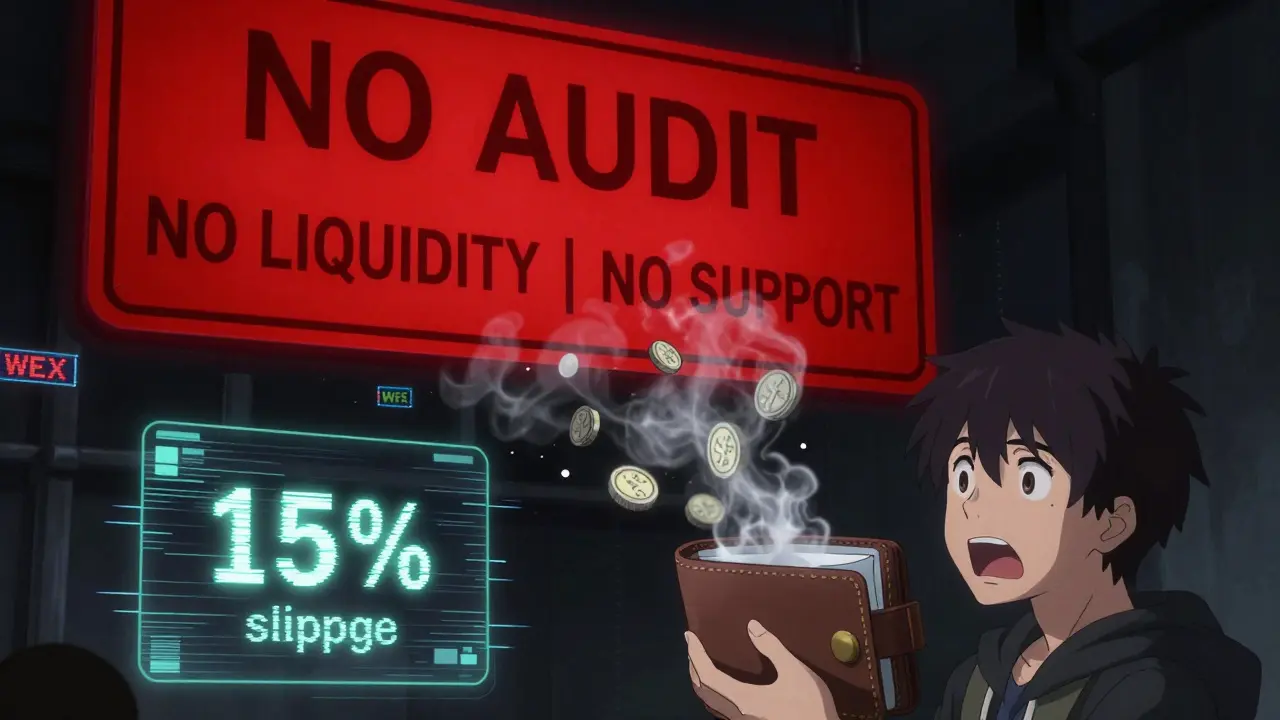
WaultSwap is a decentralized exchange (DEX) built on Binance Smart Chain (BSC). It uses an automated market maker (AMM) model - meaning there’s no order book. Instead, trades happen against liquidity pools funded by users. Its native token, WEX, is meant to be the governance token for the platform. But unlike major DEXs like PancakeSwap or Uniswap, WaultSwap doesn’t have real traction. It’s not listed on major DeFi dashboards. It doesn’t appear in liquidity aggregators. And its trading volume? CoinMarketCap explicitly labels it as “untracked.” That’s not a technical glitch. It’s a red flag.The platform claims to offer transaction fees as low as 0.17%, which sounds better than PancakeSwap’s 0.25% or Uniswap’s 0.30%. But here’s the catch: you’re paying that fee for almost nothing. There are only three active trading pairs on WaultSwap: WEX/BUSD, WEX/BNB, and WEX/ETH. Each has less than $5,000 in 24-hour volume. Compare that to PancakeSwap, which handles over $1.2 billion daily. If you try to swap even a small amount of BNB for WEX, you’ll likely get a slippage of 15% to 22%. That means you lose money just because the pool is too shallow.
High APY? More Like High Risk
WaultSwap’s biggest lure is its liquidity mining farms. Some offer APYs up to 187%. That sounds insane - until you look closer. Those yields aren’t sustainable. They exist because the liquidity is tiny. When a project has almost no users trading, it has to pay crazy rewards just to attract people to lock up their tokens. It’s a classic pump-and-dump setup. The moment the rewards drop or users leave, the price crashes.One user on Reddit reported sending 0.5 BNB to swap for WEX. The transaction went through. The gas fee was paid. But the tokens never arrived. Support was silent for 14 days. That’s not rare. According to SwapSpace’s support logs, they get about 37 tickets daily from WaultSwap users complaining about missing funds or failed swaps. Resolution time? Three days on average. That’s unacceptable for any financial service.
Security Claims Don’t Hold Up
Wault Finance says security is “top priority.” They claim smart contracts are audited. But they never say who did the audit, when, or where you can read it. No public audit report. No link. No transparency. Meanwhile, CoinGecko’s technical review from September 2025 notes WaultSwap’s “complete absence from major liquidity aggregators and DeFi dashboards” as a major red flag. If a project won’t even let independent analysts verify its safety, why should you trust it?And let’s talk about the contract address. You’ll find different addresses listed on CoinGecko, CoinMarketCap, and even WaultSwap’s own site. That’s not a typo. It’s a sign of poor management or worse - possible impersonation. Always verify contract addresses manually on BscScan. But even then, the code isn’t well-documented or publicly reviewed by independent developers.
Who Even Uses This?
The user base is shrinking. Telegram group members dropped from 4,892 in January 2025 to just 1,247 by October 2025. That’s a 74% decline in six months. There are zero verified reviews on Trustpilot. CoinGecko’s community section has 12 comments - nine of them negative. People are leaving because they lost money, got scammed, or couldn’t get help.There’s one group that still uses WaultSwap: early speculators who bought WEX when it was worth pennies. One user bragged on a forum about buying 10 million WEX for $50 in 2023. At today’s price, it’s worth $582. That’s a 1,064% return. Sounds great - until you realize that’s the exception. That person didn’t use WaultSwap to trade. They bought it on a low-volume listing and held. Most people who traded on the platform lost money.
Technical Problems You Can’t Ignore
Getting started isn’t easy. You need a Web3 wallet like MetaMask or Trust Wallet, configured with the correct BSC network settings. Even then, you’ll run into problems:- Failed transactions due to insufficient gas (38% of support cases)
- Slippage of 15.7% on average, even for small trades
- Missing token balances after confirmed transactions (22% of new users)
The documentation hasn’t been updated since March 2024. The last software update was February 2025 - and it fixed a UI glitch. No new features. No roadmap. No developer activity for over 90 days. That’s not a project in development. That’s a project abandoned.
Market Reality: WaultSwap Is a Ghost
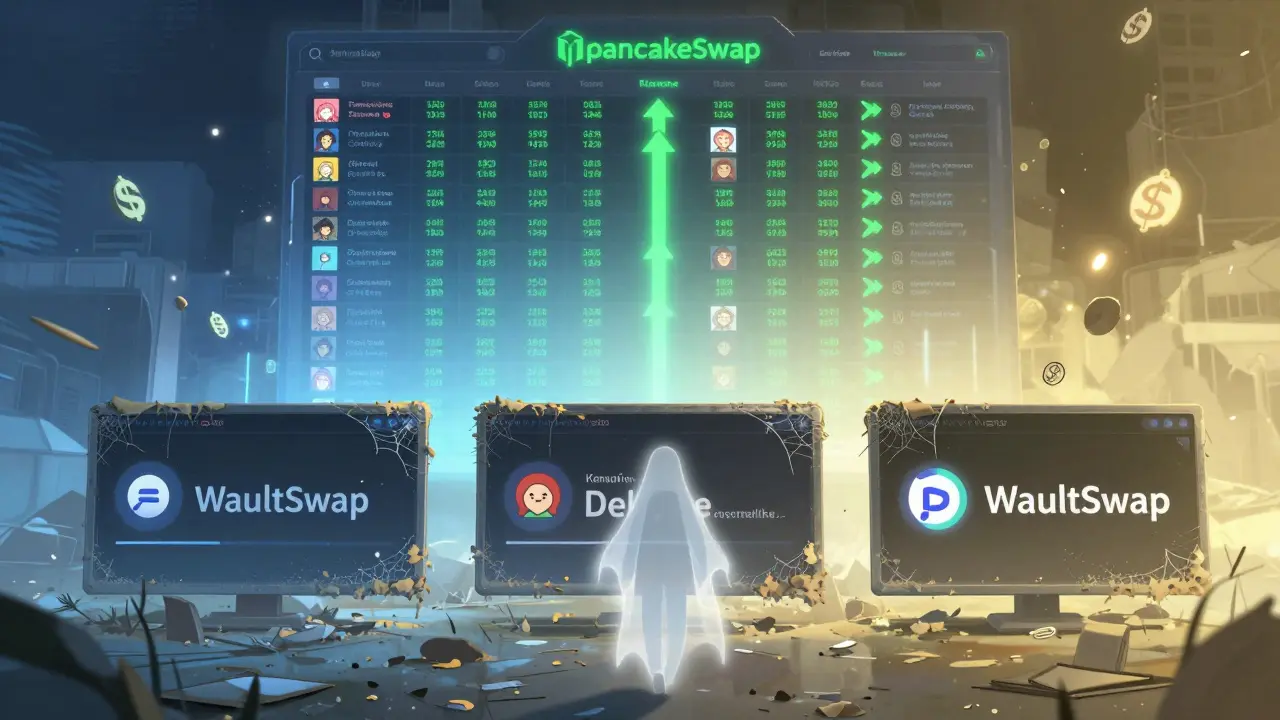
The global DEX market hit $41.7 billion in Q3 2025. BSC-based DEXs took 18.3% of that. PancakeSwap alone handled 72.4% of that volume. WaultSwap? Less than 0.1%. It processes about 127 transactions per day. PancakeSwap does over 3.2 million. The math doesn’t lie.WaultSwap also violates modern regulatory standards. It has no KYC or AML procedures. Under the EU’s MiCA regulations (effective since December 2024), this makes it non-compliant. While you don’t need a license to use it, it’s a liability if regulators crack down on DeFi platforms with zero oversight.
What Experts Say
Analysts are split - but mostly bearish. CoinDataFlow’s Michael Chen predicts WEX could hit $0.002277 by 2026. That’s a 200% jump. But CoinCodex’s senior analyst Sarah Kim says there’s a 90.69% chance WEX will crash to $0.00001875. Why? “Minimal developer activity, no ecosystem partnerships, and zero liquidity.” SwapSpace calls price projections “contradictory” and warns: “Do your own research.” That’s not advice. That’s a warning.Bottom Line: Don’t Use WaultSwap
WaultSwap isn’t broken. It was never built to last. It’s a low-effort project that survived on hype and high APYs - not real utility. If you’re a beginner, you’ll lose money. If you’re experienced, you’ll waste time and risk your capital.There are better options:
- PancakeSwap - the dominant BSC DEX with deep liquidity, 2,500+ trading pairs, and active development.
- Uniswap V3 - if you’re open to Ethereum or layer-2 solutions, it’s the gold standard.
- Biswap - another BSC DEX with real volume, better UI, and consistent updates.
WaultSwap’s only real use case is if you’re trying to flip a token that’s already pumped - and you’re okay with losing it all. But that’s gambling, not trading.
Is WaultSwap safe to use?
No, WaultSwap is not safe for regular use. While it claims to have audited contracts, no public audit reports are available. There are frequent reports of failed transactions, missing funds, and unresponsive support. The platform has minimal liquidity, making it vulnerable to manipulation and extreme slippage. It also lacks developer activity and regulatory compliance, which raises serious red flags.
Can I make money trading WEX on WaultSwap?
You might, but it’s extremely risky. A few early investors bought WEX when it was near zero and saw huge returns. But those are outliers. For most users, trading WEX results in losses due to slippage, low liquidity, and price manipulation. The high APYs on liquidity pools are unsustainable and often signal a rug-pull risk. If you’re not already holding WEX at near-zero cost, don’t buy it now.
Why does WaultSwap have such low trading volume?
WaultSwap has low volume because it lacks real utility, developer support, and community trust. It doesn’t integrate with major DeFi tools, has no institutional backing, and offers almost no trading pairs. Users have left in droves due to technical issues and poor support. Without liquidity or innovation, there’s no reason for traders to use it over established platforms like PancakeSwap.
What’s the difference between WaultSwap and PancakeSwap?
PancakeSwap is the dominant DEX on BSC with over 2,500 trading pairs, $1.2 billion in daily volume, and active development. WaultSwap has only three trading pairs, less than $5,000 in daily volume, and hasn’t updated its platform meaningfully in over a year. PancakeSwap has verified audits, strong community support, and integrates with major wallets and tools. WaultSwap has none of that.
Should I stake WEX in WaultSwap’s liquidity pools?
No. The APYs may look tempting - up to 187% - but they’re a trap. These high yields exist because the liquidity is dangerously thin. If you stake your tokens, you’re not earning rewards - you’re locking up capital in a project that could collapse overnight. You also risk impermanent loss and may not be able to withdraw your funds if the pool dries up. Stick to staking on platforms with proven liquidity and active development.
Is WaultSwap regulated?
No, WaultSwap operates without KYC or AML procedures. Under the EU’s MiCA regulations (effective December 2024), this makes it non-compliant for any service targeting European users. While it’s not illegal to use, it’s considered high-risk by compliance firms like Chainalysis. There’s no legal recourse if you lose funds.
What wallets work with WaultSwap?
WaultSwap works with Web3 wallets like MetaMask and Trust Wallet, as long as they’re configured for the Binance Smart Chain (BSC) network. You’ll need to manually add the BSC RPC (https://bsc-dataseed.binance.org/) and set the Chain ID to 56. However, even with the right wallet, you’ll still face issues like failed swaps and missing tokens due to the platform’s instability.
Has WaultSwap been hacked?
There’s no public record of a direct hack on WaultSwap’s smart contracts. But that doesn’t mean it’s safe. Many users report losing funds due to failed transactions, slippage errors, or contract misconfigurations - not because of a hack, but because the platform is poorly maintained. In DeFi, “not hacked” doesn’t mean “secure.” Lack of updates, poor documentation, and zero support make it vulnerable to user error and exploitation.
Next Steps: What to Do Instead
If you’re using WaultSwap right now, stop. Withdraw any remaining funds - but be prepared for slippage and delays. Move your assets to a more reliable DEX. If you’re looking to explore DeFi on BSC, start with PancakeSwap. It’s stable, well-documented, and has real volume. If you want higher yields, look into platforms like Biswap or ApeSwap - they’re still small, but they’re active and transparent.Remember: in crypto, the most profitable move isn’t chasing the highest APY. It’s avoiding the projects that vanish overnight.





Comments
Aman Kulshreshtha
March 25, 2026 AT 00:03 AMI've been using WaultSwap for a few months now, mostly to swap WEX for BUSD. Yeah, the slippage is wild sometimes, but I treat it like a lottery ticket. Bought in at $0.0003, now it's at $0.0005. Not rich, but not broke either. If you're not in it for the long game, don't touch it.
Leona Fowler
March 26, 2026 AT 12:20 PMThe lack of transparency around audits is terrifying. If a project won't publish its audit report, it's not a technical oversight - it's a red flag waving in your face. Stick to platforms that make security obvious, not optional.
Neil MacLeod
March 28, 2026 AT 01:00 AMWaultSwap is the crypto equivalent of a gas station convenience store that sells expired energy drinks and charges $8 for a bag of chips. You *can* buy something there, but you’re paying for the privilege of being scammed.
Misty Williams
March 28, 2026 AT 23:17 PMPeople who still use this are either delusional or actively trying to lose money. There’s no excuse for ignoring the red flags when they’re flashing like a Vegas strip. This isn’t DeFi - it’s a digital Ponzi with a website.
Anand Makawana
March 29, 2026 AT 13:50 PMThe liquidity depth metric is non-negotiable in DeFi. WaultSwap’s $5K volume across three pairs is statistically irrelevant. AMMs require sufficient liquidity to function as efficient price discovery mechanisms - this is a liquidity vacuum with a UI.
Mohammed Tahseen Shaikh
March 30, 2026 AT 23:50 PMYou people act like this is some kind of scandal. Bro, it's a fucking meme coin exchange with a Discord server and zero dev activity. If you didn't see this coming, you shouldn't be touching crypto at all. Stop pretending you're investors - you're just gambling with your wallet.
Sarah Terry
April 1, 2026 AT 18:45 PMI used to think high APYs meant opportunity. Then I lost $400 trying to stake WEX. Now I only use platforms with real volume. No APY is worth losing your capital over.
Shayne Cokerdem
April 1, 2026 AT 21:26 PMlol who even cares? crypto is just a game. if you wanna win, you gotta take risks. waultswap is like betting on a horse with no legs. but hey, if you're lucky, it might still run. 🤷♀️
aravindsai pandla
April 3, 2026 AT 01:42 AMI respect that you’re warning people, but I’ve been using WaultSwap since 2023. Yes, the interface is clunky. Yes, support is slow. But I’ve never lost funds. I just wait longer for transactions and always double-check contract addresses. It’s not perfect, but it’s not dead yet.
namrata singh
April 3, 2026 AT 21:03 PMI remember when WaultSwap had 10k members on Telegram. Now it’s barely 1k. It hurts to see something that once felt like a community turn into a ghost town. I still hold WEX because I believe in the team… but I don’t trade on it anymore. It’s just too risky.
Zion Banks
April 5, 2026 AT 01:29 AMThis whole review is a coordinated smear campaign. WaultSwap is being targeted because it’s a BSC-native project that doesn’t bow to Wall Street. The real reason it’s ‘untracked’? Because the big players don’t want retail to have alternatives. They’re scared of decentralized competition. Wake up.
Annette Gilbert
April 6, 2026 AT 10:35 AMOh wow, a project with *low volume* and *no audits*? How groundbreaking. I'm sure the 3 people still using it are thrilled. Maybe next you'll warn us about a website that uses Comic Sans and has a favicon of a crying cat.
John Alde
April 8, 2026 AT 03:05 AMI want to add something important: even if WaultSwap is a mess, the real lesson here isn’t about this one platform. It’s about how DeFi culture rewards hype over substance. People chase 187% APYs like they’re free money, ignoring liquidity depth, team activity, and audit transparency. That’s the systemic problem. Fix the mindset, not just the exchange.
manoj kumar
April 9, 2026 AT 05:12 AMYou call this a review? This is just a hate piece dressed up like journalism. I’ve made 300% on WEX over two years. You think I’m stupid? I know exactly what I’m doing. If you can’t handle risk, go buy ETFs and stop pretending you’re a crypto expert.
Alicia Speas
April 9, 2026 AT 14:39 PMIt’s sad because WaultSwap had potential. The idea of a BSC-native DEX with low fees was good. But without consistent updates, community engagement, or transparency, even the best concepts die. This isn’t just about one platform - it’s about how many projects get built, then abandoned. We need better incentives for long-term development.