
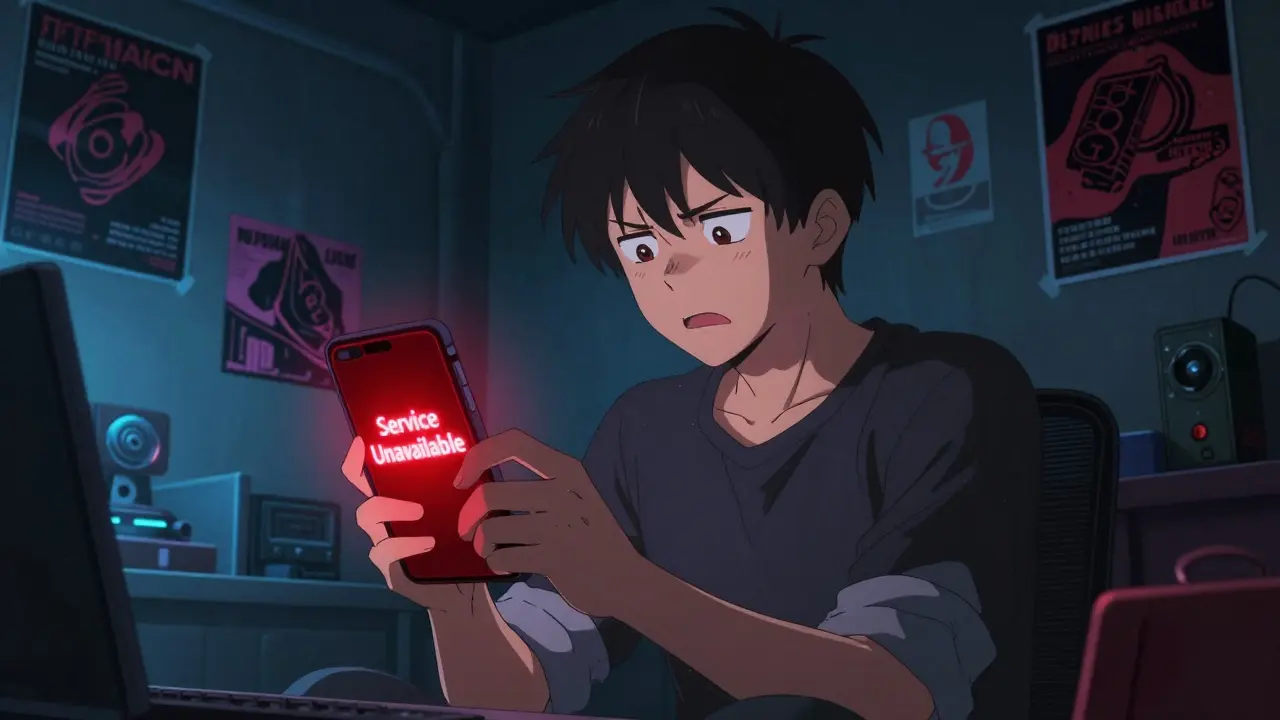
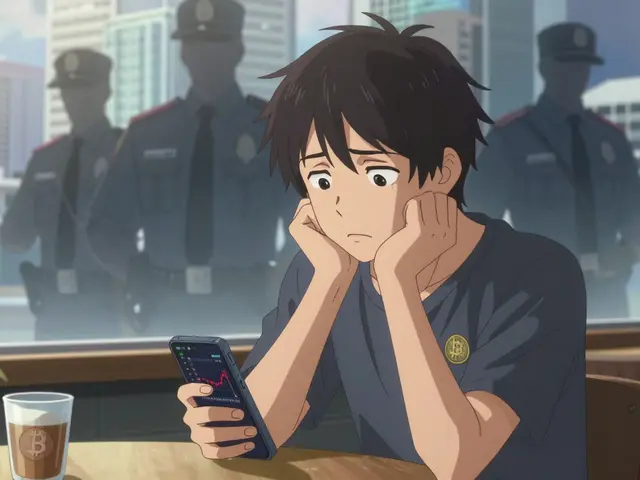
Imagine you finally decide to trade cryptocurrency. You hear great things about OKX, a major global exchange known for its Web3 wallet and high trading volume. You download the app, enter your details, and hit 'Register'. Then, a red screen pops up: 'Service Unavailable in Your Region.' Frustrating? Absolutely. But why does this happen?
It isn't personal. It's regulatory compliance. Like most major financial platforms, OKX operates under strict international laws that force it to block users from specific countries or limit features based on where you live. As of mid-2026, these rules are tighter than ever. If you're trying to figure out if you can use OKX, or why your account got flagged, you need to understand how these geographic fences work. This guide breaks down exactly who is blocked, who has limited access, and what you can actually do about it.
The Three Tiers of OKX Access Restrictions
Not all bans are created equal. OKX doesn't just have a simple 'yes' or 'no' list for every country. Instead, they use a three-tier system based on local laws, sanctions, and risk assessments. Understanding which tier you fall into explains whether you see a total ban, a partial menu, or full access.
Tier 1: Complete Service Bans
In these regions, you cannot create an account, deposit funds, or trade at all. The platform actively blocks IP addresses and rejects identity documents from these locations. This list includes:
- The United States: Due to complex SEC regulations and ongoing legal battles with other exchanges, OKX does not serve U.S. residents.
- Canada: While some exchanges operate here, OKX has chosen to restrict access entirely due to provincial licensing complexities.
- Singapore: A tricky one. The global OKX platform blocks Singaporean IPs. However, there is a separate, regulated entity called 'OKX Singapore' approved by the Monetary Authority of Singapore (MAS). You must sign up specifically through their local portal; using the main site will get you rejected.
- United Kingdom: Spot trading might be available in some contexts, but derivatives are strictly banned, and often the entire platform is inaccessible depending on current FCA rulings.
- Sanctioned Regions: Cuba, Iran, North Korea, Syria, Crimea, Donetsk, and Luhansk are blocked globally due to UN and OFAC sanctions.
- Other Restricted Nations: Malaysia, Bahamas, Bangladesh, Bolivia, and Malta also face complete bans.
Tier 2: Feature-Limited Access
In these countries, you can open an account and buy/sell basic cryptocurrencies (spot trading), but advanced tools are locked. You won't find futures, perpetual swaps, or margin trading.
- Australia: You can trade spot pairs, but leveraged products are prohibited under Australian Securities and Investments Commission (ASIC) guidelines.
- Brazil: Similar to Australia, derivatives are off-limits, though spot trading remains active.
- South Korea: Real-name banking systems allow spot trading, but leverage is heavily restricted.
- European Union (EU): Under the MiCA (Markets in Crypto-Assets) regulation, which became fully effective in late 2024, many EU users lost access to high-leverage derivatives while retaining spot trading capabilities.
Tier 3: Full Access
If you live in Japan, Switzerland, parts of Africa, Southeast Asia (excluding banned nations), or Latin America (outside of Bolivia/Malta restrictions), you likely have full access to all features, including futures and options, provided you pass KYC verification.
Why Does OKX Block Certain Countries?
You might wonder why a digital company needs to care about physical borders. The answer lies in liability. If OKX allowed users from sanctioned countries like Iran or North Korea to trade, the exchange could face billions in fines from the U.S. Treasury’s Office of Foreign Assets Control (OFAC).
Furthermore, consumer protection laws vary wildly. In the UK and Australia, regulators demand that exchanges prove they aren't offering risky leveraged products to retail investors without proper warnings. By disabling derivatives in those regions, OKX stays compliant with the Financial Conduct Authority (FCA) and ASIC. It’s a balancing act: keep the business running globally while avoiding lawsuits and shutdowns locally.
This strategy is more sophisticated than competitors like Binance, which faced massive fines for reactive compliance. According to Chainalysis analysts, OKX’s multi-entity approach-having separate legal shells for Europe, Singapore, and Japan-allows them to navigate these waters better, even if it confuses users.

How OKX Detects Your Location
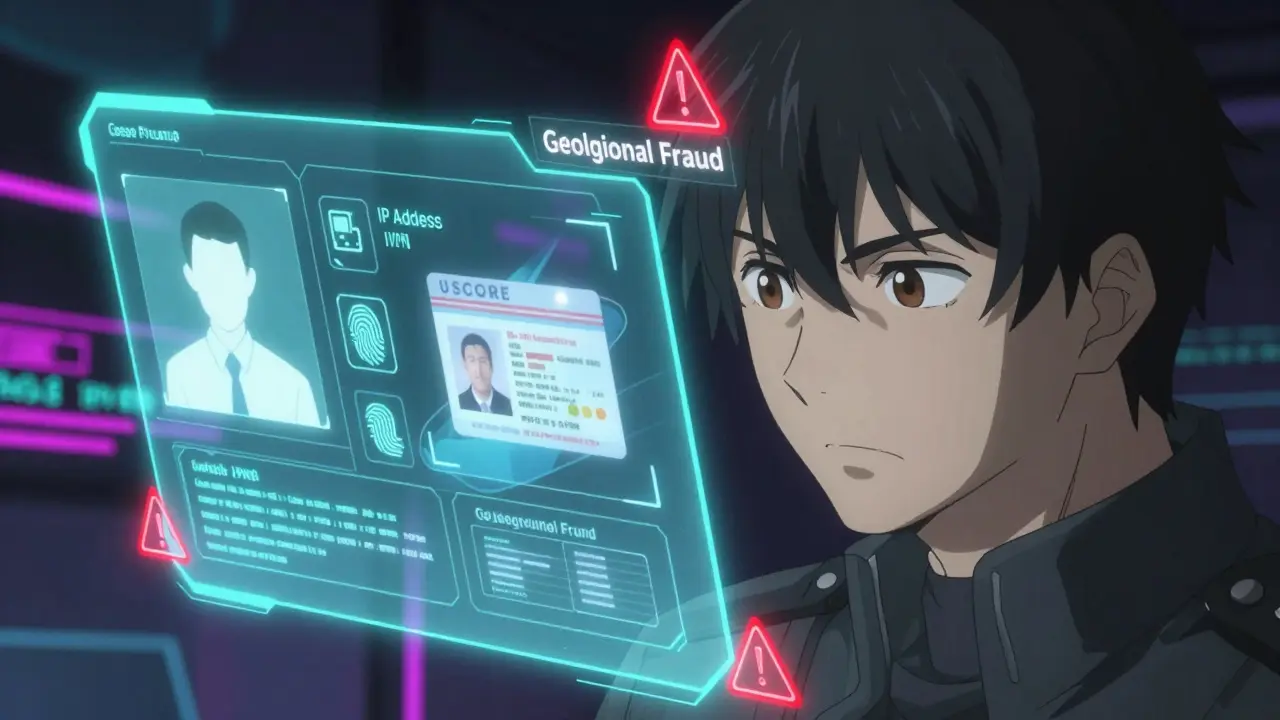
Thinking you can trick the system with a Virtual Private Network (VPN)? Think again. OKX employs a multi-layered detection system designed to catch geolocation fraud.
- IP Geolocation: When you connect, OKX checks your IP address against databases with over 99% accuracy. If your IP says 'New York' but your behavior suggests otherwise, flags go up.
- Device Fingerprinting: The app scans your device’s unique identifiers. If you’ve previously logged in from a permitted region and suddenly switch to a banned one, the system notices the inconsistency.
- KYC Document Verification: This is the biggest hurdle. To unlock core features, you must submit a government-issued ID (passport, driver’s license) and sometimes proof of address. These documents clearly state your residency. If your ID says 'Texas,' your account gets rejected immediately, regardless of your IP address.
In September 2025 alone, OKX reported closing over 14,000 accounts for 'geolocation fraud.' They don’t play games with this. If they suspect you’re bypassing restrictions, they freeze your assets and terminate your account. There is no appeal process for violating terms of service regarding jurisdiction.
Comparison: OKX vs. Other Major Exchanges
| Exchange | U.S. Access | Canada Access | Derivatives in EU/UK/Aus | Compliance Style |
|---|---|---|---|---|
| OKX | Banned | Banned | Limited/Banned | Multi-entity (Proactive) |
| Binance | Limited (Binance.US) | Limited | Varies by Region | Reactive (Post-fines) |
| Coinbase | Full Access | Full Access | Limited | Strictly Compliant |
| Kraken | Full Access | Limited | Available | Transparent |
As shown above, if you are in the U.S., Coinbase or Kraken are your best bets. If you are in Canada, you might find yourself shut out of both OKX and Binance, pushing you toward Coinbase or Kraken. For traders in Europe wanting derivatives, the landscape is shrinking rapidly due to MiCA, making OKX’s limited offerings a common frustration.
What Should You Do If You Are Blocked?
If you receive a 'Country Restriction' error, here is your realistic path forward. Please note: attempting to bypass these blocks violates OKX’s Terms of Service and risks losing your funds.
1. Verify Your Residency Status
Are you a citizen living abroad? Or a tourist visiting a restricted country? OKX generally determines eligibility based on your residency as proven by your ID, not your temporary location. If you live in Germany but are visiting New York, you can usually still use OKX, provided your IP matches your travel location temporarily. However, long-term mismatches trigger reviews.
2. Check for Local Entities
If you are in Singapore, Japan, or the EU, look for the specific regional website. For example, Singaporeans should not use okx.com; they should register via the MAS-regulated portal. Using the wrong entry point is the #1 reason for false rejections.
3. Consider Alternative Exchanges
If you are in a Tier 1 banned country (like the U.S. or Canada), stop trying to force OKX. Switch to a compliant local exchange. For U.S. users, Coinbase, Kraken, or Gemini offer secure, legal access. Trying to use a VPN to access OKX from Texas is a fast track to having your crypto frozen.
Future Outlook: Will Restrictions Ease?
The regulatory landscape is shifting. In late 2025, OKX announced plans to launch a U.S.-compliant entity, following discussions with regulators. While no timeline exists for 2026, industry experts predict that by Q2 2026, OKX may establish compliant operations in 35 previously restricted countries through local partnerships.
However, don’t expect the U.S. ban to lift soon. The SEC’s aggressive stance on crypto securities means any U.S. entry will be highly restricted, likely similar to Binance.US-offering only spot trading with limited coins. For now, patience is key. Keep an eye on official OKX announcements rather than Reddit rumors, which are often outdated or incorrect.
Can I use OKX in the United States?
No. OKX does not currently provide services to residents of the United States. This includes all 50 states and territories like Puerto Rico and Guam. Using a VPN to access the platform is a violation of their Terms of Service and can result in permanent account closure and loss of funds. U.S. residents should use compliant exchanges like Coinbase, Kraken, or Gemini.
Why am I blocked if I live in Singapore?
Singapore has strict regulations enforced by the Monetary Authority of Singapore (MAS). The global OKX platform blocks Singaporean IPs. However, OKX operates a separate, regulated entity for Singapore. You must register specifically through the OKX Singapore portal to comply with local laws. Attempting to use the main global site will result in rejection.
Does OKX work in Canada?
Currently, OKX restricts access for Canadian residents. This is due to complex provincial licensing requirements and regulatory uncertainty. Canadians looking for crypto trading options should consider platforms like Coinbase, Kraken, or local exchanges like NDAX or Coinberry that are fully registered with Canadian authorities.
Can I trade futures on OKX in the UK or Australia?
Generally, no. In both the United Kingdom and Australia, financial regulators prohibit crypto exchanges from offering leveraged derivatives (futures and perpetual swaps) to retail consumers. While you may be able to create an account and trade spot cryptocurrencies (buying and selling actual coins), the derivatives section will be hidden or disabled for users with verified IDs from these regions.
What happens if I try to bypass country restrictions with a VPN?
OKX uses advanced detection methods including IP geolocation, device fingerprinting, and mandatory KYC document verification. If you attempt to hide your location using a VPN, especially when submitting identification documents, your account will likely be flagged for 'geolocation fraud.' This leads to immediate account suspension, freezing of assets, and permanent termination. There is no recourse for this action.
Is OKX legal in the European Union?
Yes, but with limitations. Under the EU’s MiCA (Markets in Crypto-Assets) regulation, OKX operates legally but must restrict certain high-risk products. Most EU users can trade spot cryptocurrencies freely, but access to high-leverage derivatives is significantly reduced or removed to comply with consumer protection laws. Always check the specific terms for your country within the EU.


Comments
Mekz Wheoki
June 22, 2026 AT 20:38 PMOh, look at that. Another exchange playing hard to get because the regulators are breathing down their necks. It’s not like they’re trying to protect you from blowing up your account on 100x leverage or anything. Please.
Rob Aronson
June 22, 2026 AT 21:19 PMThe multi-entity structure is actually a sophisticated compliance architecture designed to mitigate jurisdictional risk exposure. While it creates friction for the end-user during onboarding, it ensures that OKX can maintain operational continuity in high-regulation environments like the EU under MiCA and Singapore under MAS oversight. Most retail traders don't understand that this 'bureaucracy' is what keeps the platform solvent against OFAC sanctions.
Fede Faith
June 24, 2026 AT 11:51 AMI know it feels super frustrating when you just want to trade, but honestly, reading the tier system really helps clarify things. If you're in the US, stop fighting it and just use Coinbase or Kraken. It saves you so much headache. For those of us in Tier 3 countries, we're lucky to have full access, so let's be grateful we can still play with derivatives while others wait for regulatory clarity.
Josh Dodson
June 25, 2026 AT 00:16 AMman i tried using a vpn last year and got banned instantly lol. dont do it. its not worth losing your stack. just find a local exchange that works where u r. its safer anyway.
Skm Shubham
June 25, 2026 AT 11:30 AMThe article fails to mention that the 'geolocation fraud' crackdown is essentially a revenue protection mechanism disguised as compliance. By freezing assets, they discourage arbitrageurs who might exploit price differences between restricted and unrestricted markets. It is a predatory practice masked by legal jargon. The real issue is that centralized exchanges are inherently flawed because they rely on trust rather than code. You should be moving to DEXs immediately if you value sovereignty over convenience.
Kumaran sowkarpet
June 26, 2026 AT 00:46 AMHey guys, good info here :). In India, we have our own struggles with crypto regulations changing all the time. But yes, KYC is strict everywhere now. I think people need to accept that anonymity is dead in crypto trading. Better to follow rules than lose money right? 😊
Kwon Bill
June 27, 2026 AT 07:40 AMAs someone who navigates cross-border digital assets frequently, the distinction between residency and citizenship is critical. Many expats assume their passport dictates their access, but tax residency and IP geolocation often override that. The Singapore example is particularly nuanced; the separation of the global entity from the MAS-regulated subsidiary is a common pattern in Asian fintech expansion. Understanding these legal shells is essential for anyone managing significant capital across jurisdictions.
Danna Charris
June 28, 2026 AT 14:03 PMIt is quite amusing how everyone complains about restrictions until they realize why they exist. Derivatives are gambling for the uneducated. If you cannot afford to lose your principal, you should not be trading futures regardless of which country you live in. The bans are a mercy, really.
Mauricio Contreras Loredo
June 28, 2026 AT 20:38 PMYeah, surprise surprise, another corporation bowing to the government. I guess freedom isn't free anymore. At least we have Coinbase to keep us poor and compliant. Thanks for nothing, OKX.
Suman Patil
June 29, 2026 AT 03:56 AMLet's keep the discussion positive though! The fact that OKX is adapting to MiCA shows they are serious about long-term sustainability. For those in Europe, spot trading is still very viable. We can learn from each other's experiences with different regional platforms. Sharing knowledge about local alternatives helps everyone stay safe and compliant. Let's build a community that respects regulations while maximizing opportunities!
sreeja boora
July 1, 2026 AT 02:20 AMThe regulatory framework must be respected by all citizens. Attempting to bypass national restrictions undermines the financial stability of the nation. Users should adhere strictly to the laws enacted by their respective governments to ensure proper taxation and consumer protection. Non-compliance is unacceptable.
John Doe
July 1, 2026 AT 10:57 AMI feel for everyone dealing with this red screen error. It is genuinely heartbreaking to see your chosen platform shut you out after you've built up trust in their interface. I remember when crypto felt wild and open, and now it feels like every door is locked behind a bureaucratic wall. It makes you wonder if the spirit of decentralization is truly alive or if we are just migrating from one set of gatekeepers to another. We need more transparency from these exchanges about when and if these bans will lift, because living in limbo is exhausting for everyday traders.