

Imagine trying to run a business where the rules change every few months, and the government might shut your power off without warning. That is the reality for anyone looking at Mining crypto in Iran is a high-risk, high-reward activity governed by a complex web of shifting regulations. As of March 2026, the landscape has evolved significantly from the early days of ambiguity. While the government officially permits mining, the path to compliance is narrow, and the penalties for stepping out of line are severe. If you are considering this route, you need to understand that legality does not equal stability.
Current Legal Status and Regulatory Authority
Back in 2018, the Iranian government recognized cryptocurrency mining as a legal industry. The goal was to monitor operations that had already proliferated despite unclear laws. However, things have tightened considerably since then. In January 2025, President Masoud Pezeshkian issued a directive that placed all cryptocurrency market regulations under the sole authority of the Central Bank of Iran the primary financial regulatory body in the country responsible for licensing crypto participants. This move meant that every individual, legal entity, and business involved in the sector must obtain a license from the Central Bank. They also have to conduct all rial transactions through designated accounts approved by the bank.
This shift was not just about paperwork. It was a response to a four-month nationwide ban on mining operations implemented during the summer of 2024. During that period, blackouts forced the government to reconsider its approach. They realized they needed a licensing regime specifically designed to limit energy consumption while still allowing the industry to exist. So, technically, it is legal. But you must operate within the strict boundaries set by the Central Bank and the Ministry of Industry, Mine and Trade.
Licensing Requirements and Compliance
Getting a license is not a simple form-filling exercise. The technical requirements for legal mining operations mandate that miners obtain licenses from the Ministry of Industry, Mine and Trade. You must adhere to electricity tariffs specifically set for mining operations, which are currently the highest among Iran's power-intensive industries. Furthermore, you can only utilize government-approved hardware. This means you cannot just import any ASIC miner you find on the global market. It has to pass specific compliance checks.
The licensing framework imposes strict energy consumption limits following the December 2024 nationwide power outages. Authorities blamed unauthorized Bitcoin mining operations for those blackouts. Tavanir, Iran's state-owned power provider, estimated that illegal miners were stealing approximately 2,000 megawatts of the national electricity supply at that time. To get your license, you need to provide proof of hardware compliance, energy consumption projections, and financial transparency reports. Experienced operators report that maintaining compliance requires daily monitoring of official communications from at least three government entities: the Ministry of Industry, the Central Bank, and Tavanir.
| Entity | Primary Responsibility | Enforcement Power |
|---|---|---|
| Central Bank of Iran | Licensing and oversight of all crypto participants | Can block transactions and revoke licenses |
| Ministry of Industry, Mine and Trade | Issuing mining operation licenses | Hardware approval and operational standards |
| Tavanir | Electricity distribution and tariff management | Power cut-offs and consumption monitoring |
The Electricity Cost Paradox
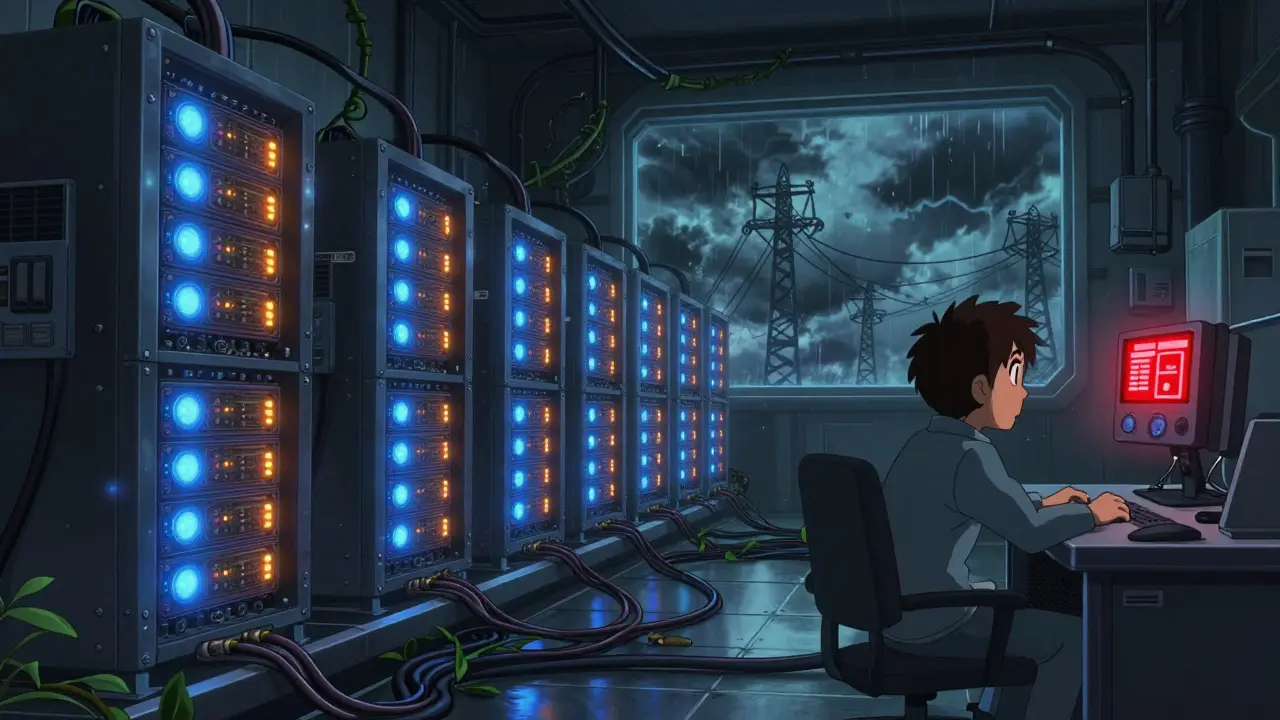
The core value proposition for Iran's regulated mining industry centers on leveraging the country's subsidized electricity rates. These are among the lowest globally, sitting at approximately $0.004 per kWh for industrial users. This cheap power previously enabled Iran to contribute 4.67% of global Bitcoin mining output in 2021. However, that number declined to 3.1% in 2022 due to recurring power outages. The government knows this cheap power is a magnet for miners, but it also knows the grid cannot handle the load.
This creates a paradox. On one hand, the state wants the revenue from mining. On the other, it fears the grid collapse. The solution has been to create a tiered system where legal miners pay higher tariffs than other industries but still benefit from subsidies compared to global rates. Despite these regulations, sophisticated workarounds persist. Some mining operators establish facilities within mosques and religious institutions that receive free electricity from the government. This allows them to circumvent the highest tariff structure imposed by Tavanir. If you are looking to mine legally, you cannot rely on these workarounds. You must pay the designated mining tariff, which is significantly higher than the residential rate.
The Shadow of State Involvement
You cannot discuss the mining environment in Iran without addressing the role of the state. The Islamic Revolutionary Guard Corps (IRGC) and entities under Supreme Leader Ali Khamenei have established significant mining operations since 2019-2020. There is a documented 175-megawatt Bitcoin farm in Rafsanjan, Kerman province. This facility operates as a joint venture between IRGC-linked enterprises and Chinese investors. These operations frequently ignore electricity bills entirely while drawing subsidized power.
This creates a dual-market reality. Legal miners face strict regulations, high tariffs, and constant monitoring. Politically connected entities operate with impunity. According to NCR-Iran's investigation of IRGC-linked facilities, state-affiliated mining operations reportedly control approximately 65% of Iran's total mining capacity. This makes the environment particularly unstable for foreign investors or private operators. You are competing against entities that have political protection and access to resources you do not.
Sanctions and Payment Restrictions
Beyond local laws, you must navigate the international sanctions landscape. The United States has imposed crippling sanctions on Iran's financial system. While cryptocurrency was initially seen as a way to bypass these, experts now argue it is unlikely to offer the regime an immediate avenue for evading them. In December 2024, the Central Bank issued a directive that effectively blocked all Iranian cryptocurrency to rial and vice versa payments through internet websites. This caused transaction failures across major domestic exchanges.
There was a partial reversal in January 2025 that began unblocking cryptomoney to fiat traders exchanges with their own government API. However, this restored limited functionality while enabling full user data collection by authorities. The February 2025 global ban on any and all cryptocurrency advertising in real life or online has generated widespread criticism. This ban makes it harder to market services or find partners. If you are a foreign investor, you need to be aware that your funds may be frozen if they touch the Iranian banking system, regardless of the legality of the mining operation itself.
Future Outlook and Digital Rial
Looking ahead, the trajectory appears to be heading toward complete state control of cryptocurrency activities. The Central Bank is developing a digital version of the Rial, described as the electronic version of common banknotes in Iran. This digital currency cannot be mined, and its supply will be regulated by the bank. The long-term goal seems to be replacing decentralized cryptocurrencies in official transactions with this state-controlled alternative.
Long-term viability assessments are deeply pessimistic among international analysts. Domestic industry reports suggest the mining sector could collapse entirely if summer 2025 brings power shortages comparable to previous years. The fundamental contradiction between Iran's need for cryptocurrency revenue and its inability to manage the energy demands of mining operations suggests continued regulatory instability. For now, the sector exists, but it is a sector under siege, constantly balancing on the edge of a complete ban.
Is cryptocurrency mining legal in Iran in 2026?
Yes, mining is legally permitted as of 2025, but it operates under strict regulatory oversight. You must obtain licenses from the Central Bank of Iran and the Ministry of Industry, Mine and Trade. Operating without a license is considered illegal and can result in severe penalties, including equipment confiscation.
Who regulates crypto mining in Iran?
The Central Bank of Iran serves as the sole regulatory authority following a 2025 directive. They work alongside the Ministry of Industry, Mine and Trade for licensing and Tavanir for electricity management. All participants must be licensed by the Central Bank.
What are the electricity costs for miners?
Legal miners must adhere to electricity tariffs specifically set for mining operations. These are the highest among Iran's power-intensive industries, though still subsidized compared to global rates. Industrial users pay approximately $0.004 per kWh, but mining tariffs are higher to discourage excessive consumption.
Can foreigners invest in Iranian mining?
Foreign investors can secure mining licenses through the Iranian government's explicit invitation, but it is highly risky. International sanctions complicate financial transactions, and the regulatory environment is unstable. State-affiliated entities often dominate the market.
What happens during power outages?
During power crises, the government has implemented bans on mining operations. Tavanir prioritizes residential and industrial consumers over mining operations during peak demand periods. Miners may face sudden shutdowns without notice during these times.





Comments
Andrew Midwood
March 26, 2026 AT 03:04 AMlooks like the hash rate is gonna dip agin if they pull the plug on the grid again. miners need to watch the kwh costs close or they gonna bleed profit. the central bank move is smart but kinda late for the early adopters who got locked in. havent seen a better setup for arbitrage since the 2017 boom. hope the new api endpoints work better than the old ones.
just wondering if the ASICs approved are still the antminer s19s or newer gen. the energy subsidy is the real kicker here for sure.
Shelley Dunbrook
March 26, 2026 AT 10:33 AMIt is amusing to watch enthusiasts discuss profitability in a jurisdiction that literally threatens power cuts as a regulatory tool. Your optimism regarding arbitrage opportunities seems misplaced given the geopolitical instability inherent in the region. One must consider the risk premium before suggesting this is a viable investment vehicle for the average participant.
Aman Kulshreshtha
March 27, 2026 AT 08:30 AMhonestly this situation is wild. people mining inside mosques for free power is some next level hustle i gotta admit. the whole grid blackout thing makes me nervous though. i guess when the lights go out you know what to expect.
kinda crazy how the IRGC has such a big chunk of the market.
kavya barikar
March 28, 2026 AT 04:44 AMThe regulatory framework is clear and strict. Compliance is mandatory for operation.
aravindsai pandla
March 29, 2026 AT 17:49 PMYour observation regarding the religious institutions highlights a significant loophole in the current enforcement strategy. It is essential to recognize that such practices undermine the official tariff structures established by Tavanir. Legal operators must remain vigilant to avoid association with unauthorized consumption methods.
namrata singh
March 30, 2026 AT 23:06 PMThe sheer drama of it all is almost too much to process. Imagine the tension when the power lines flicker and the machines go silent. It feels like a movie plot where the state is both the villain and the hero. The silence of the machines echoes the uncertainty of the future. One can almost hear the fear in the air when the inspectors arrive.
DarShawn Owens
March 31, 2026 AT 07:36 AMI totally get where you are coming from with the tension aspect. It must be really stressful for the people on the ground dealing with that uncertainty every single day. We should all appreciate the resilience it takes to operate under those conditions.
Andy Green
March 31, 2026 AT 11:01 AMMost of you are clearly missing the forest for the trees when discussing the efficacy of state-sanctioned mining operations. The notion that a centralized authority can regulate a decentralized technology is fundamentally flawed and naive. Only the politically connected entities will survive this charade while the rest of you waste your time.
Alicia Speas
April 1, 2026 AT 06:24 AMYour perspective is noted, though it is important to acknowledge the efforts being made to formalize the industry. There are legitimate pathways for compliance that many participants are successfully navigating. Constructive dialogue helps us understand the nuances of the regulatory environment better.
Justin Credible
April 2, 2026 AT 10:54 AMman this is a mess. the sanctions make it hard to move money out. i heard some guys got their funds frozen just for trying to cash out.
dont trust the banks one bit.
Mike Yobra
April 2, 2026 AT 14:33 PMOh, the tragedy of funds getting frozen in a sanctioned banking system. Truly a novel concept in the world of finance. I suppose one should expect nothing less when dealing with such institutions.
Jackie Crusenberry
April 3, 2026 AT 12:08 PMToo much trouble for the money.
Anna Lee
April 4, 2026 AT 16:04 PMI think there is still hope for the miners out there if they stay safe and follow the rules. The government wants the revenue so they wont shut it down completely. You just need to be careful with your hardware and make sure you have the right licenses.
It is really cool to see how the digital rial might change things in the future. Maybe we will see more stability if the central bank takes full control. I believe people can work through the electricity issues if they plan ahead.
The subsidies are still way better than what you pay in the US or Europe. You can make a profit even with the higher mining tariffs. Just dont try to cheat the system or you will get caught.
The IRGC stuff is scary but if you stay legit you should be fine. I know a lot of folks who are trying to navigate this legally. They say the process is hard but possible.
We should support the miners who are playing by the book. It is a tough spot but technology always finds a way. The future of crypto in Iran depends on how well they manage the grid.
Keep your heads up and stay compliant with the ministry guidelines. I hope everyone stays safe and keeps their rigs running.
Leona Fowler
April 5, 2026 AT 14:45 PMCaution is warranted given the volatility described in the article. Compliance is the only viable strategy for long-term sustainability.
Neil MacLeod
April 7, 2026 AT 13:31 PMThe labyrinthine bureaucracy surrounding these operations presents a formidable obstacle for the uninitiated. One must possess a keen eye for regulatory detail to avoid the pitfalls of confiscation.
vu phung
April 7, 2026 AT 19:04 PMExactly, the node validation and transaction throughput issues are compounded by the regulatory overhead. We need better API integrations to handle the compliance reporting.
Alice Clancy
April 8, 2026 AT 07:15 AMstupid sanctions keep them down :/ should be free market but no they want control.
Dominic Taylor
April 9, 2026 AT 07:36 AMThe market dynamics are heavily skewed by the sovereign intervention in the energy sector. Liquidity constraints remain a critical bottleneck for external investors.
Misty Williams
April 10, 2026 AT 11:17 AMIt is imperative that all participants adhere to the established legal frameworks without exception. Ethical conduct must be maintained regardless of the incentives provided by the state.