
Living in a country under heavy international sanctions creates a unique financial reality. For millions of people in Iran, a nation navigating complex geopolitical pressures, digital assets have become more than just speculative investments-they are a survival tool against inflation and a way to access the global economy. But is it actually legal to own or trade Bitcoin there? The short answer is yes, but with significant caveats that changed dramatically throughout 2025.
If you are an investor looking at the Iranian market, a miner considering setting up operations, or simply curious about how one of the world's largest energy producers handles digital currency, understanding the current regulatory framework is critical. The rules are strict, the oversight is intense, and the penalties for non-compliance are severe. Here is what you need to know about the legal status of cryptocurrencies in Iran as we move into 2026.
The Core Legal Framework: Who Controls Crypto?
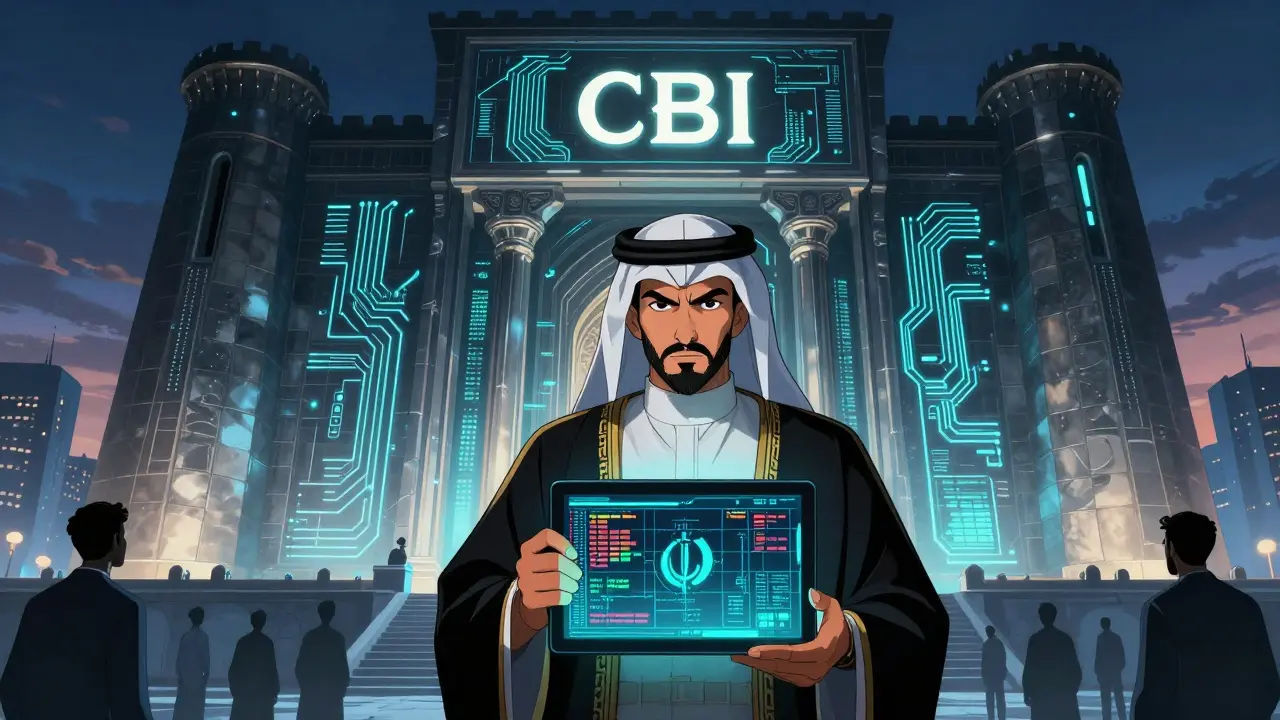
The landscape shifted significantly in early 2025. Previously, regulations were somewhat fragmented, but President Masoud Pezeshkian issued a decisive directive in January 2025. This order established the Central Bank of Iran (CBI), the primary monetary authority in the country as the sole regulator of the entire cryptocurrency ecosystem. No other government body has the final say on licensing, trading conditions, or oversight.
Governor Mohammadreza Farzin formally approved the 'Policy and Regulatory Framework for Cryptocurrencies' shortly after. This framework does not ban cryptocurrencies; instead, it brings them under a tight leash. The CBI now has direct, unrestricted access to all data, statistics, and records related to crypto activities. If you are trading, mining, or running an exchange, the central bank sees everything. This level of transparency was designed to combat money laundering and ensure that the state can track capital flows, especially given the pressure from international sanctions.
Mining Regulations: Legalization vs. Reality
Cryptocurrency mining in Iran has a complicated history. In 2019, the government legalized mining to curb unlicensed operations that were draining the national power grid. However, legalization did not mean deregulation. To mine legally today, you must obtain a license from the Ministry of Industry, Mine and Trade. You also need approval from the Ministry of Energy to connect to the grid.
Here is where it gets tricky for operators. Legal miners cannot use subsidized domestic electricity rates. Instead, they must pay tariffs pegged to export prices. These rates are significantly higher, making profitability a constant challenge unless you have highly efficient hardware. Furthermore, the government mandates the use of specific, approved mining equipment. You cannot just buy any ASIC miner from overseas and plug it in.
Despite these laws, enforcement remains aggressive. In August 2025, the Ministry of Energy launched a campaign encouraging citizens to report illegal mining farms. The results were stark: authorities dismantled approximately 100 unauthorized facilities and seized over 250,000 mining devices. Experts estimate that despite the 2019 legalization, around 95% of mining activity in Iran still operates illegally. Why? Because many small-scale miners cannot afford the high export-rate electricity costs or the bureaucratic hurdle of obtaining licenses. They operate in the shadows, risking confiscation and fines to keep their rigs running.
Trading and Exchanges: The Role of Nobitex
For everyday Iranians, buying and selling cryptocurrency is legal, provided it happens through licensed channels. The CBI requires all market participants-including individual traders, businesses, and exchanges-to hold valid licenses. Unlicensed peer-to-peer (P2P) platforms or informal brokerages operate in a gray area that regulators are increasingly cracking down on.
The dominant player in this space is Nobitex, Iran's largest cryptocurrency exchange platform. As of 2025, Nobitex handled the vast majority of domestic trading volume, accounting for roughly 87% of the market share in recent years. Other smaller exchanges exist, but they must adhere to strict Anti-Money Laundering (AML) and Know Your Customer (KYC) protocols. Brokers must conduct rial transactions transparently through designated accounts approved by the central bank. There is no anonymity in legal Iranian crypto trading.
| Activity | Legal Requirements | Risks of Non-Compliance |
|---|---|---|
| Mining | License from Ministry of Industry; Pay export-rate electricity; Use approved hardware | Seizure of equipment; Fines; Disconnection from power grid |
| Trading | Use CBI-licensed exchanges (e.g., Nobitex); Full KYC/AML compliance | Account freezing; Legal prosecution for money laundering |
| Holding Assets | Must be reported if part of business operations; Personal holdings monitored via exchange data | Tax evasion charges; Asset seizure if linked to illicit activities |

Taxation: The New Capital Gains Rule
A major development in late 2025 was the enactment of the Law on Taxation of Speculation and Profiteering in August 2025. This marked Iran’s first formal imposition of capital gains tax on cryptocurrency trading. Digital assets are now treated similarly to gold, real estate, and forex-assets considered speculative by the government.
This means that profits made from buying low and selling high are taxable. The phased implementation began in Q3 2025, requiring traders and businesses to report their gains. While exact tax brackets vary based on income levels and holding periods, the key takeaway is that the era of untaxed crypto profits in Iran is over. The government is keen to capture revenue from this growing sector, viewing it as a legitimate source of state income rather than just a shadow economy.
Geopolitical Pressures and Stablecoin Shifts
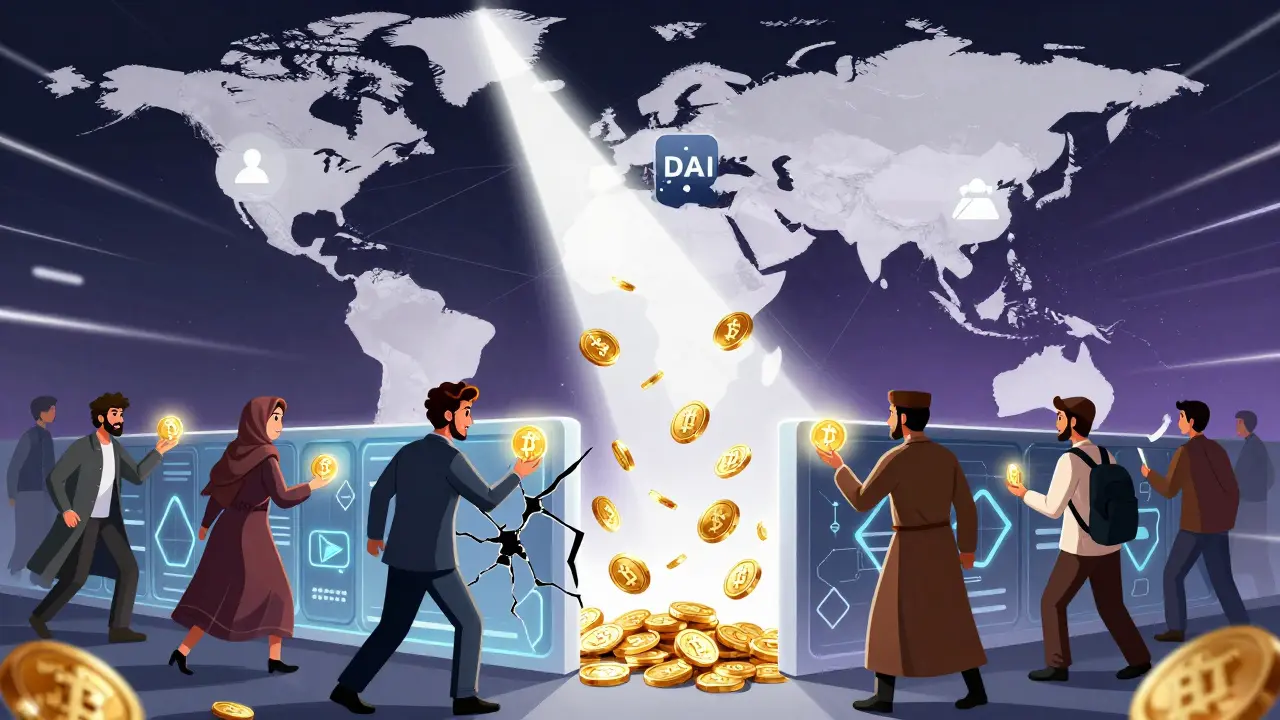
International sanctions play a huge role in how Iranians use crypto. While illicit transactions account for a tiny fraction (less than 1%) of total activity on Iranian exchanges, the broader ecosystem feels the squeeze. A prime example occurred in July 2025 when Tether, the issuer of USDT (Tether), froze addresses with Iranian exposure due to sanctions compliance.
This caused immediate panic. Iranian users held billions in USDT, their primary stablecoin for preserving value against the degrading rial. In response, domestic exchanges, influencers, and government-aligned channels urged users to offload USDT quickly. The community rapidly migrated to DAI (Dai), swapping tokens via the Polygon network to maintain liquidity without triggering Tether’s restrictions. This event highlighted both the vulnerability of relying on centralized stablecoins and the adaptability of the Iranian crypto community.
Furthermore, Iran has explored using cryptocurrency for international trade settlements to bypass sanctions. Reports indicate collaboration with Russia on a gold-backed stablecoin for cross-border payments. In May 2023, the government announced that companies could use crypto to pay for imports. These moves suggest that beyond retail usage, the state views crypto as a strategic tool for economic resilience.
Practical Implications for Users and Businesses
If you are operating within Iran, here is what you need to do to stay compliant:
- Verify Your Exchange: Only use platforms licensed by the CBI. Nobitex is the safest bet for most users. Avoid underground P2P markets unless you understand the legal risks.
- Keep Records: With the new capital gains tax, document every transaction. The CBI has access to exchange data, so discrepancies will be flagged.
- Miners: Get Licensed: If you are serious about mining, apply for a license through the Ministry of Industry. Factor in the high electricity costs before purchasing hardware. Do not attempt to hide your operation; the risk of losing expensive equipment is too high.
- Monitor Stablecoin Risks: Be aware that reliance on USDT carries geopolitical risk. Diversifying into decentralized stablecoins like DAI may offer more security against sudden freezes.
For foreign investors, the situation is murkier. While owning crypto is not banned, engaging in direct financial transactions with Iranian entities violates U.S. and EU sanctions. Most international exchanges block Iranian IP addresses and users. Therefore, the "legal" status in Iran does not translate to "accessible" from abroad. Cross-border crypto flows involving Iran are heavily scrutinized by global watchdogs like TRM Labs, which noted an 11% decline in total crypto flows between January and July 2025 compared to the previous year.
Future Outlook: Tightening Control
As we look toward 2026, the trend is clear: the Iranian government wants to harness the economic benefits of cryptocurrency while eliminating its unpredictability. Expect stricter enforcement of the capital gains tax, continued crackdowns on unlicensed mining, and deeper integration of crypto into state-controlled financial channels. The CBI will likely expand its oversight mechanisms, possibly introducing its own digital currency initiatives to compete with private assets.
For ordinary Iranians, crypto remains a vital hedge against inflation. Despite the regulatory hurdles and occasional shocks like the USDT freeze, the demand for digital assets shows no sign of fading. It is a tool for financial survival in an uncertain economy. However, that survival comes with the price of total transparency to the state. There is no privacy in Iranian crypto, only permissioned participation.
Is it legal to own Bitcoin in Iran?
Yes, owning Bitcoin and other cryptocurrencies is legal in Iran. However, all transactions must occur through Central Bank of Iran (CBI)-licensed exchanges, and owners must comply with strict KYC (Know Your Customer) and AML (Anti-Money Laundering) regulations. Personal holdings are monitored via exchange data.
Can I mine cryptocurrency in Iran without a license?
No, mining without a license is illegal and heavily enforced. In 2025, authorities seized over 250,000 unauthorized mining devices. Legal miners must obtain permits from the Ministry of Industry, Mine and Trade, pay high export-rate electricity tariffs, and use government-approved hardware.
What happened to USDT in Iran in 2025?
In July 2025, Tether froze addresses associated with Iranian users due to sanctions compliance. This forced a rapid migration of Iranian crypto holders from USDT to alternative stablecoins like DAI, primarily using the Polygon network to maintain liquidity and avoid asset freezes.
Are cryptocurrency profits taxed in Iran?
Yes. As of August 2025, the Law on Taxation of Speculation and Profiteering imposes a capital gains tax on cryptocurrency trading. Digital assets are treated similarly to gold and real estate, requiring traders to report profits and pay applicable taxes.
Which exchange is most popular in Iran?
Nobitex is the dominant cryptocurrency exchange in Iran, handling the majority of domestic trading volume. It is fully licensed by the Central Bank of Iran and complies with local AML and KYC regulations, making it the primary platform for legal crypto trading.





Comments
stalin brian
June 1, 2026 AT 03:32 AMhonestly this is wild to read about. i mean who woulda thought mining bitcoin in iran would be such a bureaucratic nightmare? the whole thing with the electricity tariffs being pegged to export prices is just insane for small guys trying to make a buck. its like they want you to fail unless you are some big corp with deep pockets. makes me wonder how many people are just risking it all anyway because they have no other choice
Edith Mair
June 2, 2026 AT 10:46 AMWait, so if I'm an American investor, can I even touch this market? The sanctions part is super confusing. It says owning crypto isn't banned there, but then it says engaging with Iranian entities violates US law. So basically, don't do it? That seems pretty clear cut for us over here.
Joshua Alcover
June 2, 2026 AT 19:40 PMThe geopolitical ramifications of this regulatory framework are profound and necessitate a rigorous examination of the intersection between sovereign monetary policy and decentralized financial instruments. The Central Bank of Iran's assertion of hegemony over the cryptocurrency ecosystem represents a paradigm shift in state-controlled digital asset management, effectively neutralizing the anonymity that previously characterized illicit capital flight mechanisms. Furthermore, the imposition of capital gains taxation on speculative assets underscores a broader strategic imperative to monetize shadow economies while simultaneously curbing unauthorized energy consumption through stringent licensing protocols for mining operations.
Barclay Chantel
June 4, 2026 AT 10:23 AMPah. Another country pretending to regulate crypto while running a sanctioned economy. The 'legal' status is a joke when half the miners are operating illegally because the costs are absurd. Typical government overreach mixed with incompetence. They seize 250k devices but still can't stop the black market. Pathetic.
kamal ifrani
June 4, 2026 AT 12:48 PMYou people are missing the point entirely. This isn't about 'innovation' or 'freedom'. It's about survival for ordinary Iranians who are watching their life savings evaporate due to inflation. Of course they use crypto. Of course the government tries to control it. It's basic economics under siege. But let's not pretend the West is any better with their own surveillance capitalism. At least here they admit they are tracking everything. In the US, they just steal your data quietly. Hypocrites.
Crystal Davis
June 5, 2026 AT 01:37 AMActually, the Tether freeze incident was a textbook example of centralized failure. Relying on USDT in a sanctioned environment is financial suicide. The migration to DAI via Polygon was smart, but it highlights the fragility of stablecoins dependent on offshore legal structures. Anyone holding significant assets in Iran should have known better than to trust a US-based issuer. It's not rocket science, it's basic risk assessment.
Rosie Morris
June 5, 2026 AT 15:39 PMomg this is so scary lol. like imagine having all your money frozen because of politics. i cant even imagine living with that kind of stress every day. poor people just trying to survive and the government is making it impossible. why does it always have to be so complicated??
Diana Morris
June 7, 2026 AT 12:29 PMWAKE UP PEOPLE. This is exactly what happens when you let governments control money. They tax you, they track you, they freeze your assets. Crypto was supposed to be the escape hatch but now even that is getting crushed by bureaucracy. Get off the grid before it is too late.
mark valmart
June 7, 2026 AT 19:20 PMI guess if you're in Iran you gotta do what you gotta do. Seems like Nobitex is the only real option left if you want to stay legal. Crazy that one exchange has 87% of the market. Feels kinda risky to put all your eggs in one basket but maybe that's just how it goes when the rules are this tight.
saradee dee
June 9, 2026 AT 13:05 PMOh my goodness, this is absolutely dramatic! I cannot believe the sheer amount of oversight involved here. It feels like everyone is watching everyone else all the time. The idea that the central bank sees everything is just terrifyingly intense. And the electricity costs for miners? That sounds like a huge burden for anyone trying to work hard and earn a living. It really shows how difficult life must be for people navigating these complex systems. I hope everyone stays safe and finds a way to keep their financial stability despite all these hurdles.
Sam Dashti
June 11, 2026 AT 02:33 AMSo, picture this: a miner in Tehran, sweating bullets, not because of the heat, but because the power bill is higher than his Bitcoin payout. It’s a high-stakes game of cat and mouse with the Ministry of Energy. You buy the ASIC, you plug it in, and suddenly-zap!-your rig is confiscated because you didn’t get the right stamp from the guy down the street. It’s like trying to run a speakeasy during Prohibition, but instead of gin, you’re hashing SHA-256. Wild times.
Miss Masquer
June 12, 2026 AT 11:17 AMThis situation really highlights the incredible resilience of communities facing economic hardship. When traditional banking systems become inaccessible due to international sanctions, people naturally seek alternative avenues to preserve their wealth. The shift from USDT to DAI demonstrates not just technical adaptability but also a collective effort to maintain liquidity and security within a constrained environment. It is fascinating to observe how digital tools can empower individuals to navigate complex geopolitical landscapes, allowing them to retain some degree of financial autonomy despite external pressures. We should recognize the ingenuity required to operate under such strict regulations.
Bill Gunn
June 12, 2026 AT 19:03 PMGreat breakdown of the current landscape! 📊 One thing to note for those considering mining: the hardware approval list is key. If you bring in unapproved rigs, you’re not just risking fines; you’re risking total loss of investment. Also, diversifying into decentralized stablecoins like DAI is a pro move given the Tether freeze scare. Stay compliant, stay safe! 💪🔒
Dana Rapoport
June 14, 2026 AT 06:07 AMThe philosophical implication here is the trade-off between privacy and survival. In a system where transparency is mandated by the state, anonymity becomes a luxury few can afford. It raises questions about the nature of freedom in a digital age. Are we willing to surrender our data for economic stability?
Hadleigh Edwards
June 15, 2026 AT 06:22 AMI think it is important to consider the broader context of global finance when looking at these specific regulations in Iran, because what happens in one country often sets a precedent for others, especially regarding how central banks view cryptocurrencies as either threats or tools for monetary policy, and seeing how Iran has moved towards a fully regulated, taxed, and monitored environment suggests that the era of the wild west in crypto is truly coming to an end everywhere, which means that investors need to be much more careful and diligent about compliance and record keeping than they were just a few years ago, otherwise they could find themselves in serious legal trouble very quickly.
Joe Clements
June 15, 2026 AT 19:31 PMIt's tough out there. I can only imagine the stress of knowing your assets could be frozen overnight. Glad to see there are some clear rules now, even if they are strict. At least people know what the boundaries are. Hope things stabilize for everyone involved.
lorna erni
June 17, 2026 AT 13:42 PMLet's get real here. The government wants control, period. Whether it's called 'regulation' or 'surveillance', the result is the same: they take a cut and watch your every move. Don't fall for the narrative that this is for 'security'. It's about power. If you're in Iran, play the game, but keep your eyes open. The moment they decide they need more revenue, they'll change the rules again.
Dianne Wright
June 17, 2026 AT 20:32 PMi knew all this already but thanks for repeating it. typical western media spin on iranian issues. they always focus on the drama and ignore the actual economic reality. boring article tbh
Craig Swanson
June 19, 2026 AT 06:09 AMLook, if you're going to operate in this space, you need to be disciplined. The risks are real. Seized equipment, frozen accounts, legal prosecution-it's not a game. Follow the CBI guidelines, use licensed exchanges like Nobitex, and document everything. If you can't handle the compliance, don't play. It's that simple. Protect yourself first.
Christina Pearce
June 20, 2026 AT 18:33 PMInteresting read. I'm curious about the long-term impact of the capital gains tax. Will it discourage trading or just push more activity underground? Seems like a tricky balance for the government to manage.