
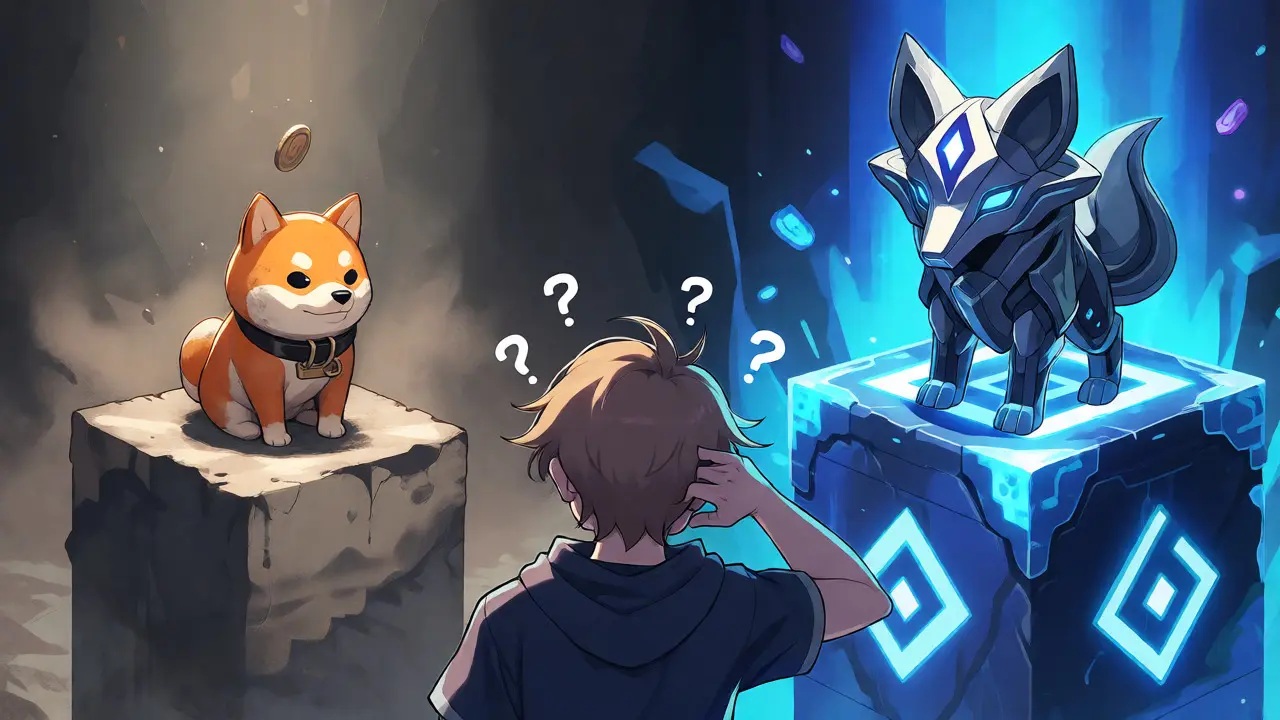
Have you seen a flashy graphic promising free Kuma Inu tokens and wondered if it’s the next big thing or just another trap? You’re not alone. The crypto space is flooded with "airdrop" announcements, but when you dig into the details of the KUMA event, things get murky fast. As of late September 2026, there is no confirmed, official airdrop program running for the Kuma Inu project itself. Instead, what you’re likely seeing is a mix of community speculation, confusion with a different project named Kuma, and potentially some opportunistic marketing.
The Name Game: Two Kumas, One Confusion
Here’s the biggest hurdle for anyone trying to track this down: name collision. There are two distinct entities using variations of "Kuma," and mixing them up leads to false hope.
First, there’s Kuma Inu (KUMA). This is a meme token that tried to pivot into DeFi (Decentralized Finance) with features like yield farming through its "Kuma Breeder" protocol. It’s heavily reliant on community hype. Second, there’s Kuma (formerly IDEX), a serious decentralized exchange platform that rebranded in early 2025 to align with the Berachain ecosystem. This second Kuma has an active reward system involving BGT (Berachain Gas Token). Many users see "Kuma rewards" and assume it applies to their Kuma Inu bags. It doesn’t.
| Feature | Kuma Inu (KUMA) | Kuma (Formerly IDEX) |
|---|---|---|
| Project Type | Meme Coin / DeFi Yield Farming | Hybrid Decentralized Exchange (DEX) |
| Reward System | Unconfirmed / Community Speculation | BGT Rewards via Trading Volume |
| Ecosystem | Independent / Small Community | Berachain Ecosystem |
| Status (Sept 2026) | Low Activity / Zero Volume | Active Trading Platform |
Is There Actually a Kuma Inu Airdrop?
Let’s cut to the chase. If you check the official channels for Kuma Inu-their website, Discord, or Twitter-you won’t find a verified snapshot date, eligibility criteria, or claim portal for a new token distribution. The project’s governance model claims to be decentralized, meaning holders vote on decisions. But without recent voting records announcing an airdrop, any "event" you hear about is likely unofficial.
Why does this matter? Because legitimate airdrops in 2025 and 2026 follow strict patterns. They have clear registration windows, specific smart contract addresses for claiming, and transparent allocation formulas. Look at other projects like Sidekick or Yei Finance; they announced dates months in advance. Kuma Inu hasn’t done that. The lack of concrete data suggests that either the airdrop is purely hypothetical, or it’s being used as a buzzword to drive engagement in a stagnant market.
Market Reality: Why Volume Matters
You can’t have a successful airdrop if nobody is trading the token. Recent data shows Kuma Inu hovering around $0.000000003235 USD with nearly zero 24-hour trading volume. That’s a red flag. An airdrop creates supply shock-suddenly thousands of people have tokens they didn’t buy. If liquidity is thin, those recipients will dump their free coins immediately, crashing the price further.
Consider this scenario: Imagine you receive 1 million KUMA tokens. Great, right? But if the entire market cap is tiny and daily volume is negligible, you might spend hours trying to sell your tokens only to move the price by pennies. This is why many experts warn against chasing low-volume meme coin airdrops. The "value" is often theoretical until real buyers step in.

The Berachain Connection: Where the Real Action Is
If you’re hearing about "Kuma rewards," you’re probably thinking of the DEX called Kuma. Since its rebrand in March 2025, this platform has integrated deeply with Berachain’s Proof-of-Liquidity mechanism. Users earn BGT by providing liquidity or trading perpetual futures. This is a tangible, ongoing incentive program, not a one-off giveaway.
For investors, this distinction is crucial. If you hold Kuma Inu, you don’t automatically qualify for these BGT rewards unless you actively trade on the Kuma DEX. And even then, the rewards go to traders, not passive token holders. Don’t let social media influencers blur these lines. Verify which "Kuma" they are talking about before you connect your wallet.
How to Spot Fake Airdrop Scams
Crypto scammers love ambiguity. When a project has low activity, they’ll post vague teasers like "Big announcement coming!" or "Airdrop soon!" to keep bots and hopefuls engaged. Here is how you protect yourself:
- Check the Official Contract Address: Never click a link from a random Telegram group. Go to CoinGecko or CoinMarketCap, find the verified contract address for Kuma Inu, and use that.
- Look for Governance Votes: Since Kuma Inu claims decentralized governance, an airdrop should theoretically require a community vote. Did one happen? If not, who authorized the drop?
- Beware of "Connect Wallet" Prompts: Legitimate airdrops usually ask you to sign a transaction to claim. Be wary of sites asking you to approve unlimited spending allowances for unknown contracts.
- Verify Social Media Handles: Scammers create fake accounts with similar names (e.g., @KumaInuOfficial_Airdrop). Always cross-reference with the main project account.

What Should You Do With Your KUMA Tokens?
If you already hold Kuma Inu, patience is your best tool right now. There’s no rush to sell unless you need cash, but don’t expect a sudden windfall from an unannounced airdrop. Keep an eye on the project’s Discord server. If the team starts discussing development updates or new partnerships, that’s a better signal than airdrop rumors.
On the flip side, if you were hoping to farm free tokens, you might want to look elsewhere. The current landscape favors projects with active ecosystems like Solana-based protocols or established Layer-2 networks. Chasing dead memes often results in gas fees outweighing potential gains.
Frequently Asked Questions
Is the Kuma Inu airdrop confirmed?
No, as of September 2026, there is no officially confirmed airdrop event specifically for the Kuma Inu (KUMA) token. Most reports confuse it with the separate Kuma DEX platform or stem from unverified community speculation.
What is the difference between Kuma Inu and Kuma DEX?
Kuma Inu is a meme coin with DeFi features focused on yield farming. Kuma (formerly IDEX) is a hybrid decentralized exchange that rebranded in 2025 and operates within the Berachain ecosystem, offering BGT rewards for traders.
Can I still earn rewards with Kuma Inu?
You can participate in the Kuma Breeder yield farming protocol if you hold KUMA tokens, but returns depend on market conditions and liquidity. There are no guaranteed passive income streams currently active due to low trading volume.
Why is Kuma Inu trading volume so low?
The token suffers from a lack of major exchange listings and limited marketing efforts. Without significant catalysts like new partnerships or confirmed utility updates, user interest and trading activity remain minimal.
Should I buy Kuma Inu expecting an airdrop?
Buying solely based on rumored airdrops is risky, especially for low-cap tokens. Without official confirmation, you risk holding an asset with declining value. Only invest what you can afford to lose.