Most crypto projects fail. Not because the technology is bad, but because the money doesn't work. You’ve probably seen it happen: a coin pumps to the moon on hype, then crashes 98% when the team unlocks their tokens or the inflation gets out of hand. The difference between a project that survives and one that dies is often its tokenomics.
Tokenomics isn’t just buzzword salad for whitepapers. It’s the economic engine of a blockchain. It dictates how many coins exist, who owns them, how they are used, and whether their value grows or shrinks over time. In 2025, data from CoinGecko showed that projects with well-designed tokenomics had a 63% higher survival rate during market downturns. That’s not luck; that’s math.
If you’re looking to invest, build, or just understand why your portfolio is bleeding, you need to look at real-world examples of good tokenomics. We aren’t talking about theoretical ideals here. We’re looking at live networks like Ethereum, Avalanche, and newer entrants like Hyperliquid that have proven their models work under pressure.
The Core Ingredients of Good Tokenomics
Before diving into specific coins, let’s break down what makes a model "good." According to Messari’s Tokenomics Grading System (v3.1, released April 2025), only 12% of the 25,000+ tokens on the market qualify as "robust." What separates these top performers from the rest?
- Transparent Supply Schedules: You should know exactly how many tokens will ever exist and when new ones enter circulation. No hidden minting functions.
- Clear Utility: The token must do something useful within its ecosystem, whether it pays for gas fees, secures the network, or grants governance rights.
- Sustainable Distribution: Early investors and teams shouldn’t hold such a large percentage that they can dump on retail users. A fair split usually means less than 15% for the team.
- Incentive Alignment: Holders and developers win together. If the protocol grows, the token value should reflect that growth through mechanisms like fee burns or staking rewards.
Projects that ignore these basics often face severe price destruction. For instance, in September 2024, a DeFi project with 70% of its supply allocated to the team saw its token lose 98% of its value within three months of unlock. That’s the danger of poor alignment.
Ethereum: The Deflationary Benchmark
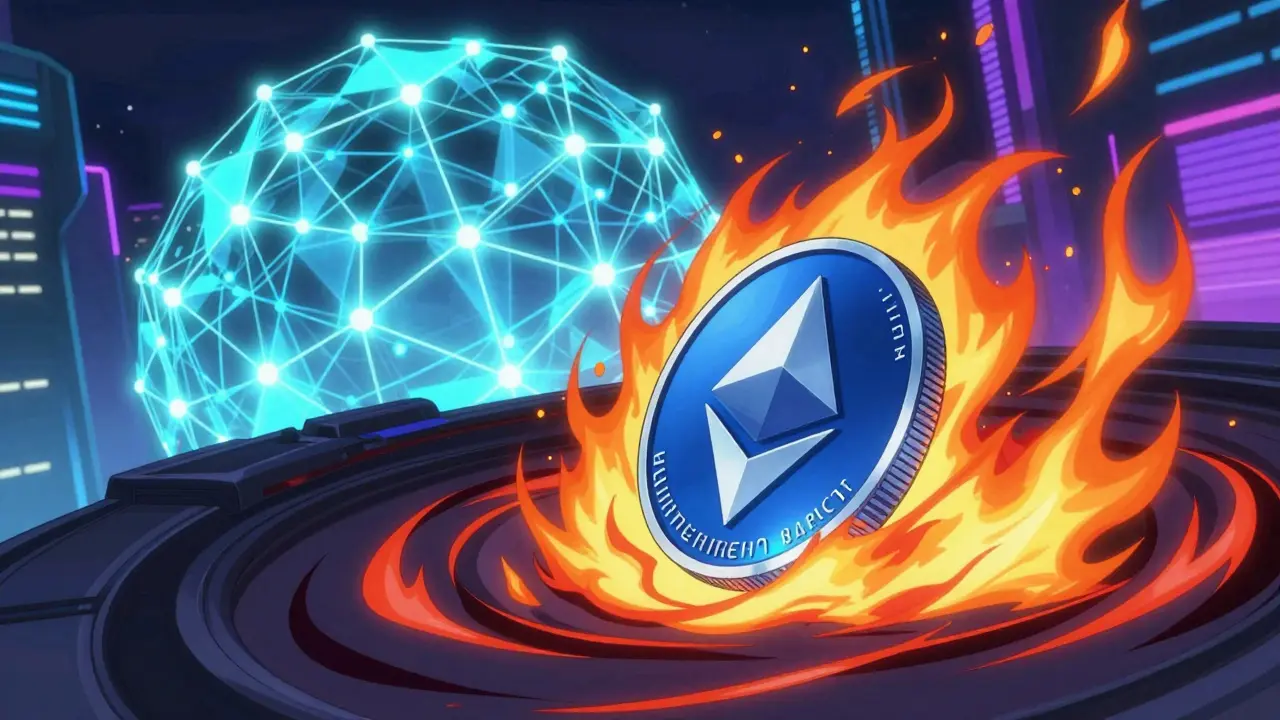
Ethereum is the world's second-largest cryptocurrency by market cap, known for its smart contract capabilities and evolving monetary policy. Also known as ETH, it transitioned from a purely inflationary asset to a potentially deflationary one through EIP-1559.Ethereum sets the gold standard for adaptive tokenomics. Before August 2021, ETH was strictly inflationary. Then came EIP-1559, a protocol upgrade that changed how transaction fees work. Instead of all fees going to miners (and now validators), a portion is "burned"-sent to a black hole address where it can never be spent.
This created a dynamic supply model. When network activity is high, more ETH is burned than is issued as block rewards. As of October 2025, Ethereum has burned 4,127,345 ETH, valued at approximately $12.8 billion. This isn’t just accounting magic; it creates genuine scarcity. CoinGecko gives Ethereum a Tokenomics Health Score of 92/100, citing its robust utility across 4,852 DeFi protocols. The key takeaway? Ethereum’s value accrual is tied directly to network usage. More people using the chain means more ETH destroyed, which supports the price.
Avalanche: Hard Caps and Triple Burns
Avalanche is a layer-1 blockchain platform designed for high throughput and low latency, featuring a unique consensus mechanism. The native token is AVAX.Avalanche takes a different approach: strict limits and aggressive burning. AVAX has a hard-capped maximum supply of 720 million tokens. Unlike Ethereum, which adjusts issuance based on demand, Avalanche relies on a predictable reduction in supply through its "triple-token burn" mechanism.
Here’s how it works:
- Gas Fees: A portion of transaction fees is burned.
- Subnet Creation: Deploying a custom subnet requires burning AVAX.
- Validator Staking: Certain staking requirements involve burning tokens.

Binance Coin: Predictable Quarterly Burns
Binance Coin is the native utility token of the Binance exchange and BNB Chain, widely used for trading fee discounts and ecosystem applications. The ticker symbol is BNB.Predictability matters. Binance Coin (BNB) started with a fixed supply of 200 million tokens. But instead of leaving it static, Binance introduced an automated quarterly burn mechanism. Every quarter, they buy back and destroy BNB worth 20% of Binance’s net profit, or until the total supply reaches 100 million.
As of July 15, 2025, Binance completed its 24th burn event, destroying 20,651,176 BNB tokens worth $10.3 billion. The total supply is now down to 128,793,227 tokens-a 35.6% reduction since launch. Users love this model because it’s transparent. On Reddit’s r/CryptoCurrency, a thread analyzing BNB burns received nearly 3,000 upvotes, with users praising the verifiability of the supply reduction. CoinGecko scores BNB at 85/100, highlighting that while it lacks some decentralization aspects, its economic model is incredibly disciplined.
Hyperliquid: Community-First Distribution
Hyperliquid is a high-performance decentralized perpetual exchange built on its own Layer 1 blockchain. The native token is HYPE.Old-school VC-funded tokens often suffer from massive sell pressure when early investors unlock their bags. Hyperliquid flipped this script. Launched with a 1 billion token cap, Hyperliquid allocated 76.3% (763 million tokens) to its user community via an airdrop in November 2024. Only 12% went to the team, and 11.7% to ecosystem development.
This structure avoids venture capital influence entirely. By giving the majority of tokens to active users, Hyperliquid ensured that the initial distribution was fair and widely held. This reduces the risk of a coordinated dump by a small group of insiders. Nic Carter of Castle Island Ventures pointed out in June 2025 that the industry is shifting toward "genuine utility loops," and Hyperliquid’s model aligns incentives perfectly: users who trade earn tokens, and those tokens secure the network.

Solana: High Throughput vs. Concentration Risks
Solana is a high-performance blockchain supporting smart contracts and decentralized applications, known for its speed and low costs. The native token is SOL.Solana offers a mixed bag. On one hand, it processes 65,000 transactions per second at a fraction of a cent ($0.00025), driving massive adoption. Cathie Wood of ARK Invest praised Solana’s organic usage loop, noting 1.2 billion monthly transactions in Q2 2025. However, its tokenomics face criticism for concentration risks.
As of Q2 2025, 42.7% of SOL supply is held by the foundation and early investors. Additionally, while inflation is decreasing from 8% to 1.5% over eight years, it currently sits at 5.1% annually. Critics argue this dilutes long-term holders. Despite this, Solana scores 80/100 on CoinGecko’s index due to its sheer volume of utility. The upcoming "SOL 2.0" upgrade, voted on in November 2025, aims to reduce inflation further and introduce fee burning, potentially addressing these concerns.
| Token | Max Supply | Burn Mechanism | Team Allocation | CoinGecko Score |
|---|---|---|---|---|
| Ethereum (ETH) | Uncapped (Dynamic) | EIP-1559 Fee Burn | N/A (Community) | 92/100 |
| Avalanche (AVAX) | 720 Million | Triple Burn (Gas/Subnets/Staking) | Low (Foundation-led) | 89/100 |
| Binance Coin (BNB) | Target: 100M | Quarterly Auto-Burn | Controlled by Exchange | 85/100 |
| Hyperliquid (HYPE) | 1 Billion | None (Yet) | 12% | N/A (New) |
| Solana (SOL) | 555 Million | Proposed in SOL 2.0 | High (Foundation/VCs) | 80/100 |
How to Evaluate Tokenomics Yourself
You don’t need to be a mathematician to spot red flags. Consensys Academy’s Tokenomics Evaluation Framework suggests focusing on three key areas before buying any token:
- Vesting Schedules: Look for minimum 12-month cliffs for team and investor tokens. If the team can sell immediately after launch, run.
- Burn Verification: Can you verify the burns on-chain? Only 42% of projects provide real-time burn tracking. Use tools like CryptoSlate’s Tokenomics Explorer to check.
- Utility Penetration: Does at least 30% of the token supply have active utility? If tokens are just sitting in wallets doing nothing, the price relies solely on speculation.
In 2025, 67% of institutional investors require independent tokenomics audits before allocating capital. This trend is moving down to retail. With SEC regulations requiring detailed disclosures in registration statements, transparency is no longer optional-it’s mandatory.
The Future: Restaking and Revenue Ties
The next evolution in tokenomics is sharing security and tying value directly to revenue. EigenLayer’s restaking model, launched in 2023, has enabled $23.7 billion in restaked ETH across 14 protocols as of October 2025. This allows assets to secure multiple networks simultaneously, creating a denser web of value accrual.
Similarly, Chainlink’s CCIP 2.0 update in September 2025 converts 10% of oracle fees into LINK burns. This projects an annual supply reduction of 18 million tokens. Gartner predicts that by 2027, 90% of new token launches will incorporate multiple deflationary mechanisms, up from just 37% in 2025. The era of "mint-to-infinity" tokens is ending. Survivors will be those that prove their worth through usage, not just promises.
What is considered "good" tokenomics?
Good tokenomics features transparent supply schedules, clear utility mechanisms, sustainable distribution (with low team allocation), and incentive alignment. Projects with these traits have shown 63% higher survival rates in market downturns according to 2024 data.
Why do token burns matter?
Burns reduce the circulating supply of a token, creating scarcity. When tied to network usage (like Ethereum’s EIP-1559 or BNB’s quarterly burns), they ensure that increased activity leads to potential price appreciation, aligning user behavior with token value.
Is Ethereum still inflationary?
Not necessarily. Since EIP-1559, Ethereum can become deflationary during periods of high network congestion when more ETH is burned in fees than is issued as block rewards. As of late 2025, it has burned over 4.1 million ETH.
What is the risk of high team allocation?
High team allocation (e.g., >15%) creates sell pressure risk. If the team unlocks tokens quickly, they may dump on the market, crashing the price. Hyperliquid avoided this by allocating only 12% to the team and 76% to the community.
How can I verify if a token has been burned?
Use blockchain explorers and specialized tools like CryptoSlate’s Tokenomics Explorer. Look for transactions sending tokens to "burn addresses" (often starting with 0x000...dead). Only 42% of projects offer real-time tracking, so manual verification is sometimes needed.