
Imagine finding a new cryptocurrency platform that promises low fees and quick trades. It sounds perfect, right? But then you try to find a detailed review, user testimonials, or even clear information about who runs it, and you hit a wall. That is exactly the situation with BladeSwap. If you are looking for a comprehensive breakdown of this exchange, you might be frustrated by how little reliable information exists online.
This isn't just about missing details; it's about risk. In the world of crypto, transparency is your best defense against scams and rug pulls. When an exchange operates in the shadows, you have to ask yourself: where is my money going? Is anyone watching over it? This review cuts through the noise to give you the honest truth about BladeSwap, its associated token, and whether it deserves a spot in your portfolio.
What Is BladeSwap?
BladeSwap is a decentralized cryptocurrency exchange (DEX) built on the Binance Smart Chain (BSC), primarily known for its native BLADE token and yield farming opportunities. Unlike centralized exchanges like Coinbase or Kraken, which act as intermediaries holding your funds, BladeSwap operates via smart contracts. This means you connect your own wallet, such as MetaMask, directly to the protocol.
The platform gained some traction during the peak of the DeFi (Decentralized Finance) boom, offering users the ability to swap tokens and provide liquidity to earn rewards. The core asset here is the BLADE token, which serves as the governance and utility coin for the ecosystem. However, unlike major DEXs like Uniswap or PancakeSwap, BladeSwap has struggled to maintain visibility and consistent development updates in recent years.
The Red Flags: Lack of Transparency
When evaluating any crypto project, especially one that handles your funds, transparency is non-negotiable. Here is what stands out when you dig into BladeSwap:
- No Clear Team Identity: Most reputable projects list their founders, developers, and advisors. BladeSwap’s leadership remains largely anonymous or unverified. Without knowing who is behind the code, accountability is impossible.
- Limited Audits: Security audits by firms like CertiK or Hacken are standard for trustworthy DEXs. There is no widely publicized, recent audit report for BladeSwap’s smart contracts. This leaves users exposed to potential vulnerabilities or exploits.
- Sparse Community Engagement: Active Telegram groups, Discord servers, and Twitter accounts are signs of a living project. BladeSwap’s social channels often show low engagement or repetitive bot-like activity, suggesting a lack of active community management.
If a project hides these basics, it’s not just suspicious-it’s dangerous. You need to know that someone is responsible for fixing bugs if they appear.
BLADE Token Performance and Predictions
Let’s talk numbers. The BLADE token has seen significant volatility since its inception. Price prediction sites like SwapSpace and MEXC Exchange have offered forecasts, but they vary wildly.
| Source | Predicted Price Range | Growth Outlook |
|---|---|---|
| SwapSpace / TradingBeast | $0.01215 - $0.01628 | Mixed/Contradictory |
| MEXC Exchange | $0.001195 | Conservative/Low Growth |
Notice the discrepancy? One source suggests a price above $0.01, while another predicts it will stay near $0.001. This contradiction highlights the lack of market consensus. More importantly, these predictions depend heavily on factors outside the token’s control, such as broader crypto market trends and regulatory changes. Without strong fundamentals driving demand, speculative price jumps are unlikely to last.
How BladeSwap Compares to Established Exchanges
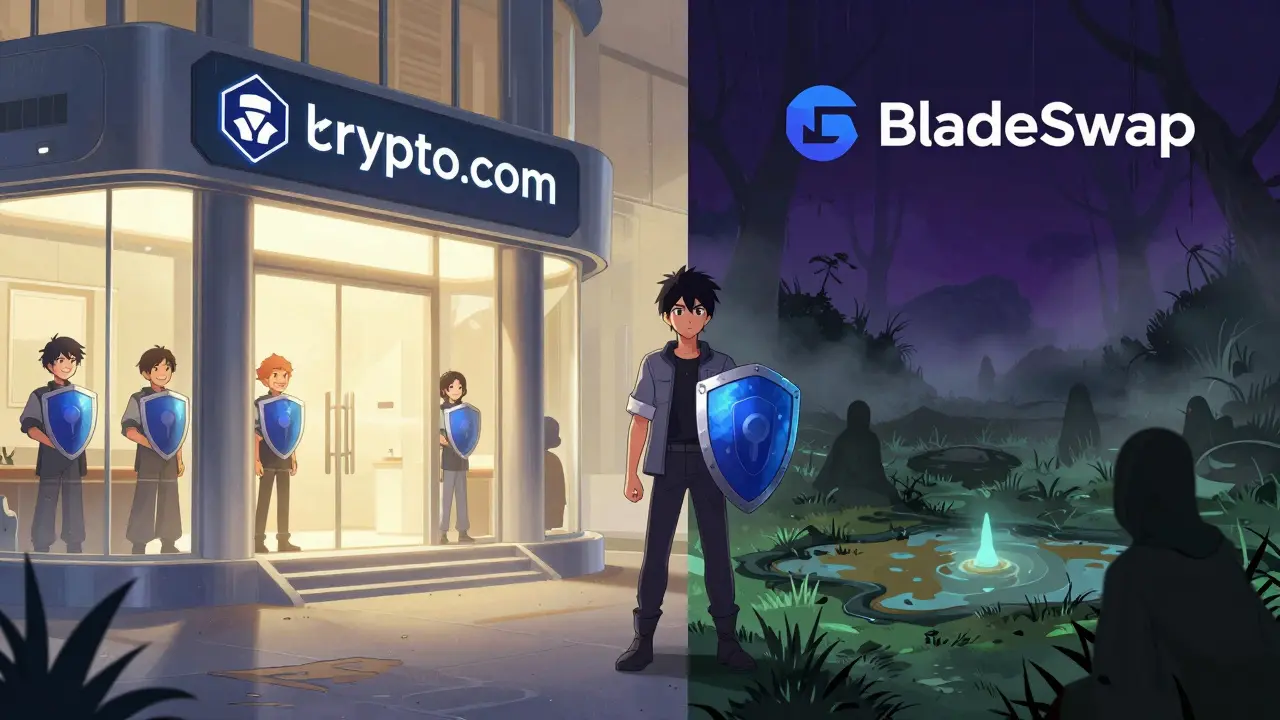
To understand why BladeSwap falls short, let’s compare it to industry standards. Consider established players like Kraken or Crypto.com.
- Kraken: Supports 410+ cryptocurrencies, offers margin trading, and has a proven track record of security with zero major breaches. They are regulated in multiple jurisdictions.
- Crypto.com: Known for low costs, robust security features, and a user-friendly interface backed by a large corporate structure.
- Bitpanda: A European-regulated exchange offering educational resources and intuitive tools for beginners.
Now look at BladeSwap. It lacks the regulatory compliance, customer support infrastructure, and security guarantees of these giants. While decentralized exchanges offer privacy, they also shift the burden of security entirely onto you. If you lose your private key or interact with a malicious contract, there is no help desk to call.
User Experience and Interface
Some user feedback on platforms like G2 mentions a "good user-friendly interface" and "speed and efficiency." On the surface, this sounds positive. However, take this with a grain of salt. Many small-scale DEXs clone popular interfaces from PancakeSwap or SushiSwap to appear legitimate. A pretty UI does not mean the backend is secure.
Furthermore, reviews note limited regional support. If you live in certain countries, you may find yourself blocked from accessing services or facing legal ambiguities. This regulatory gray area adds another layer of risk. Are you allowed to trade BLADE in your jurisdiction? If not, you could face tax complications or account freezes on connected wallets.
Security Risks You Must Consider
Security is the most critical aspect of any crypto investment. With BladeSwap, several red flags raise concerns:
- Smart Contract Risk: Since BladeSwap relies on automated code, any bug can lead to total loss of funds. Without verified audits, you are gambling on the code’s integrity.
- Liquidity Issues: Smaller DEXs often suffer from low liquidity. This means you might not be able to sell your tokens quickly without significantly dropping the price (slippage).
- Rug Pull Potential: Anonymous teams can withdraw all liquidity from the pool and disappear overnight. This is known as a "rug pull." While BladeSwap hasn’t been definitively labeled a scam, the lack of vesting schedules for team tokens makes this a real possibility.
Always remember: in DeFi, you are your own bank. If you don’t trust the foundation, don’t build on it.
Is BladeSwap Worth Your Money?
Here is the bottom line. If you are a seasoned DeFi veteran who understands how to audit smart contracts, monitor liquidity pools, and manage high-risk assets, you might see niche opportunities in smaller tokens like BLADE. However, for the average investor, BladeSwap presents more questions than answers.
The lack of transparent leadership, inconsistent price data, and absence of rigorous security audits make it a poor choice for storing significant capital. Instead of chasing uncertain gains on obscure platforms, consider sticking to regulated, well-established exchanges. The peace of mind is worth the slightly higher fees.
Your money is hard-earned. Don’t risk it on a platform that won’t even tell you who runs it.
Is BladeSwap a safe exchange?
BladeSwap carries higher-than-average risk due to its anonymous team, lack of recent security audits, and limited regulatory oversight. While it operates as a decentralized exchange, users bear full responsibility for their funds, making it less safe than established platforms like Kraken or Crypto.com.
What is the BLADE token used for?
The BLADE token is the native utility and governance coin for the BladeSwap ecosystem. It is used for voting on proposals, earning rewards through liquidity provision, and paying transaction fees within the platform.
Can I buy BLADE on Coinbase or Binance?
As of 2026, BLADE is not listed on major centralized exchanges like Coinbase or Binance. It is primarily traded on decentralized platforms and smaller venues like MEXC, which increases liquidity risk and makes buying/selling more difficult.
Why is there so little information about BladeSwap?
The scarcity of information likely stems from the project’s small scale, lack of marketing budget, and possibly reduced development activity. In crypto, projects that fail to communicate regularly often lose relevance or cease operations, leaving users with fragmented data.
Are there better alternatives to BladeSwap?
Yes. For decentralized trading, consider PancakeSwap or Uniswap, which have larger liquidity pools, verified audits, and active communities. For centralized trading, Kraken and Crypto.com offer superior security, customer support, and regulatory compliance.