
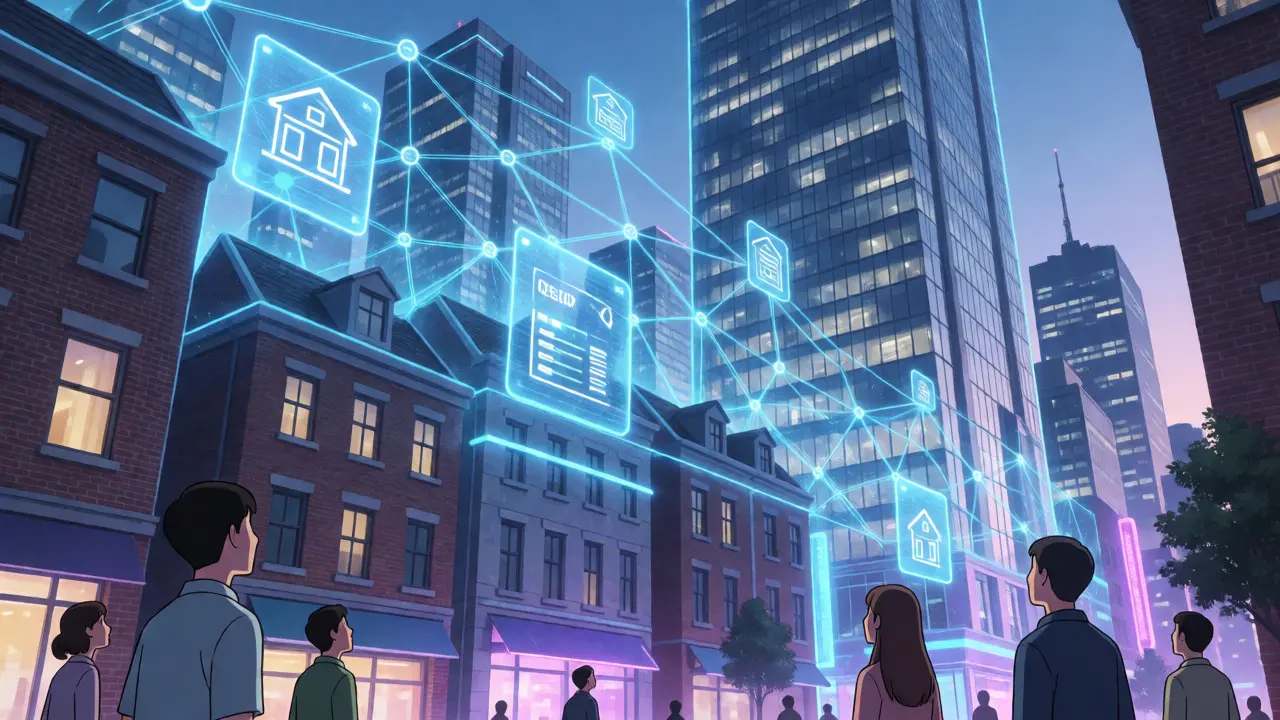
Imagine buying a commercial building in Wellington without waiting months for title searches, paying hefty fees to middlemen, or worrying about hidden liens. For decades, real estate has been the ultimate illiquid asset-slow, expensive, and opaque. But as of 2026, that narrative is shifting. Blockchain technology, once synonymous with volatile cryptocurrencies, has matured into a robust infrastructure for property transactions. It’s not just hype; it’s solving actual pain points like fraud, slow settlements, and high entry barriers.
If you’re an investor, developer, or even a homeowner wondering if this tech matters to your wallet, you’re asking the right question. The market for tokenized real estate assets crossed $4.3 billion in 2024, and projections suggest it will hit $19.4 billion by 2033. This isn't a distant future scenario-it's happening now. From Georgia’s government-led land registries to platforms like Lofty allowing $50 investments, blockchain is reshaping how we own, trade, and manage property. Let’s break down exactly how this works and why it might be the biggest shift in property since the mortgage.
The End of Paper Trails and Middlemen
Traditional property transactions are notoriously inefficient. They rely on paper deeds, centralized databases, and a army of intermediaries-title companies, escrow agents, lawyers, and brokers. Each step adds cost and time. A standard closing can take 30 to 60 days. Why? Because verifying ownership history manually is tedious and prone to human error.
Blockchain replaces this fragile chain of trust with cryptographic certainty. It acts as a decentralized, immutable digital ledger. Once a transaction is recorded, it cannot be altered without network consensus. This means property records become tamper-proof. No more forged deeds. No more "he said, she said" disputes over who owns what.
Consider the case of Georgia, which implemented a blockchain-based land registry years ago. The results were stark: registration times dropped from days to minutes, and costs fell by 90%. They processed 1.5 million titles with unprecedented accuracy. In New Zealand, while we haven’t gone fully public yet, private pilots are testing similar models to reduce friction in our complex conveyancing process.
Fractional Ownership via Tokenization
One of the most exciting benefits is accessibility. Historically, investing in prime commercial real estate required significant capital-often six figures. You couldn’t buy a slice of a skyscraper in Auckland or London unless you had deep pockets. Tokenization changes the game. It converts property equity into digital tokens, often using standards like ERC-20. These tokens represent fractional ownership.
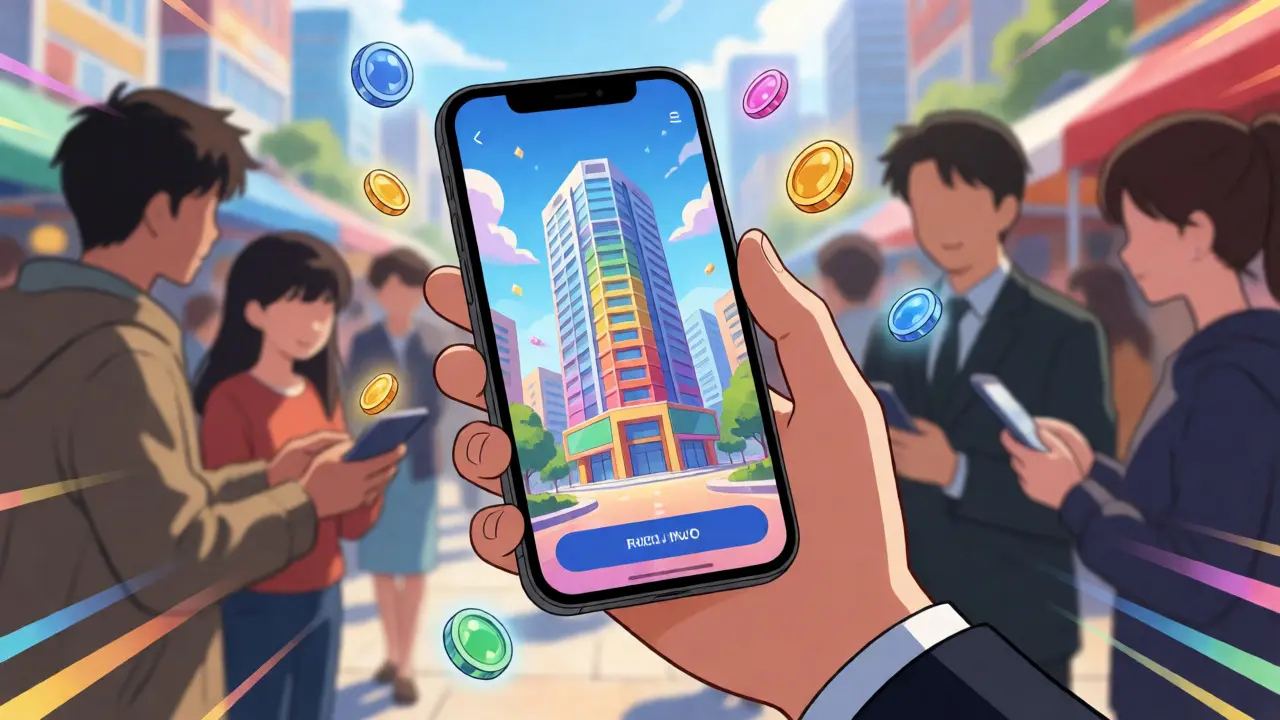
Platforms like Lofty allow investors to start with as little as $50. Instead of buying a whole apartment block, you buy tokens representing shares in it. You get a portion of the rental yield (averaging around 11% on some platforms) and potential capital appreciation. Crucially, these tokens can be traded 24/7 on secondary markets. This solves the liquidity problem. Want out? Sell your tokens instantly rather than listing the property and waiting months for a buyer.
| Feature | Traditional Investment | Blockchain Tokenization |
|---|---|---|
| Minimum Entry Cost | $5,000 - $10,000+ | As low as $50 |
| Liquidity | Low (Months to sell) | High (24/7 Trading) |
| Transparency | Opaque, manual checks | Real-time, immutable ledger |
| Settlement Time | 30-60 Days | Minutes to Hours |
| Intermediaries | Many (Agents, Lawyers, Banks) | Minimal (Smart Contracts) |
Smart Contracts Automate Trust
You’ve heard of smart contracts, but what do they actually do for property? Think of them as self-executing agreements with the terms directly written into code. When conditions are met, actions happen automatically. No need to chase payments or verify compliance manually.
In commercial leasing, this is revolutionary. J.P. Morgan’s Treasury Services team highlights how smart contracts automate rent collection. If a tenant misses a payment, the contract can trigger penalties or lock access automatically. Compliance checks happen in real-time. Deloitte identifies "smart leases" as a key use case, reducing disputes by enforcing terms strictly and transparently. For landlords, this means predictable cash flow. For tenants, it means clear rules without ambiguity.
Beyond leases, smart contracts handle the entire sale process. Escrow funds are released only when title transfer is confirmed on the blockchain. This eliminates the risk of one party backing out after the other has committed funds. It’s trustless execution-trust the code, not the person across the table.
Enhanced Security and Fraud Reduction
Property fraud is a massive issue globally. Fake identities, double-selling properties, and hidden liens cost billions annually. Traditional systems struggle because data is siloed. Different agencies hold different pieces of the puzzle, and syncing them is slow.
Blockchain creates a single source of truth. Every change to ownership, every lien, every encumbrance is timestamped and visible to authorized parties. This transparency makes fraud exponentially harder. A user on Reddit recently noted "zero title disputes" after switching to a blockchain-based registry. While usability issues remain (setting up digital wallets can be tricky), the security gains are undeniable. Trustpilot reviews for these registries average 4.7/5 for security, compared to lower scores for traditional methods.
For cross-border deals, this is particularly valuable. Verifying foreign property rights is notoriously difficult. Blockchain provides a standardized, verifiable record that transcends local bureaucratic quirks. It reduces the need for expensive legal due diligence in unfamiliar jurisdictions.
Challenges You Can’t Ignore
It’s not all sunshine and seamless transactions. Adoption faces real hurdles. Regulatory uncertainty is the big one. How does the SEC view tokenized real estate? Is it a security? The EU’s MiCA framework provided clarity in 2024, but global standards are still fragmented. In New Zealand, we’re watching closely as regulators catch up.
Technical literacy is another barrier. Older stakeholders may find digital wallets and private keys intimidating. If you lose your key, you could lose access to your asset. Then there’s scalability. Ethereum gas fees can eat into small-token profits, though Layer-2 solutions are mitigating this. And let’s be honest: smart contracts aren’t bug-free. Exploits, like those seen in broader DeFi, pose risks if code isn’t audited rigorously.
However, these challenges are shrinking. Interfaces are becoming user-friendly, hiding the complexity behind simple dashboards. Legal frameworks are evolving. The IMF advocates for global blockchain land registries to combat fraud, signaling institutional confidence.

Who Benefits Most?
Not everyone needs to jump on the bandwagon today. Here’s who stands to gain the most:
- Small Investors: Those locked out of prime markets by high minimums. Tokenization offers diversification for under $100.
- Commercial Landlords: Managing multiple leases becomes easier with automated smart contracts and real-time visibility.
- Cross-Border Buyers: International investors benefit from reduced friction and clearer title verification.
- Developers: Raising capital through token sales can be faster and cheaper than traditional bank loans or REIT structures.
Conversely, if you prefer hands-off investing with established tax treatments and no technical setup, traditional REITs might still suit you better. But the trend is clear: 85% of commercial real estate executives prioritize blockchain adoption for transparency gains. The industry is moving, whether individuals are ready or not.
Looking Ahead: What’s Next for 2026 and Beyond?
We are in a transition phase. By 2028, Deloitte predicts 30% of commercial real estate transactions will involve blockchain elements. We’re seeing integration with AI, too. Platforms like Lofty have introduced AI-driven valuation models to price tokens dynamically based on market data.
Dubai has already integrated blockchain for all property registries, cutting processing to under 10 minutes. This sets a benchmark. As interoperability improves-meaning different blockchains can talk to each other-the ecosystem will mature further. Quantum computing poses a long-term threat to encryption, but post-quantum cryptography is being developed.
For now, keep an eye on regulatory developments in your jurisdiction. Start small. Explore tokenized funds before buying direct property tokens. Understand the tax implications of holding digital assets. The technology is solid; the legal wrapper is catching up. Don’t fear the change, but respect the learning curve.
Is blockchain real estate safe from hacks?
The blockchain itself is highly secure due to cryptographic hashing and decentralization. However, the platforms and smart contracts built on top of it can have vulnerabilities. Reputable platforms undergo rigorous audits. Always choose providers with a strong track record and insurance policies for digital assets.
Do I need crypto knowledge to invest in tokenized property?
Not necessarily. Many modern platforms offer fiat-on-ramps, allowing you to buy tokens with credit cards or bank transfers. The underlying tech handles the crypto aspect. However, understanding basic concepts like wallets and private keys is helpful for long-term security.
How does taxation work for tokenized real estate?
Tax laws vary significantly by country. In many jurisdictions, tokenized property is treated similarly to traditional real estate for income tax (rental yields) but may differ for capital gains. Consult a tax professional familiar with digital assets, as reporting requirements can be complex.
Can I live in a property bought via blockchain?
Yes, but typically tokenization is used for investment purposes where ownership is fractional. If you buy 100% of the tokens for a residential unit, you usually get full ownership rights, including occupancy. Check the specific terms of the platform, as some focus solely on rental income distribution.
What happens if the platform hosting my tokens goes bankrupt?
This is a key risk. Unlike traditional deeds held by a government, tokens are often managed by a central entity. Look for platforms that separate custody from management or use decentralized custodians. Some newer regulations require platforms to hold client assets in segregated accounts.





Comments
Jess Emmerson
September 3, 2026 AT 15:48 PMInteresting read. I've been watching the tokenization space for a while now, and the liquidity argument is definitely the strongest point here. Most people don't realize how locked up their capital is in physical property until they actually try to sell it.
The Georgia example is solid proof of concept too. When you see registration times drop from days to minutes, that's not just efficiency; that's a fundamental shift in friction costs.
Christian Pasamonte
September 4, 2026 AT 11:19 AMThis article suffers from the typical tech-utopian blindness where every inefficiency in traditional systems is magically solved by distributed ledgers without addressing the human element or regulatory lag. You cite Georgia’s success but conveniently ignore that their legal system operates under completely different civil law traditions compared to common law jurisdictions like NZ or the US, making direct comparisons misleading at best. The claim about $50 entry points sounds great until you factor in the secondary market spread, platform fees, and the sheer volatility of crypto-linked assets which can wipe out those '11% yields' in a single bad quarter. Furthermore, the assumption that smart contracts eliminate disputes is laughable when code bugs are inevitable and legal recourse against an immutable ledger is practically non-existent for the average user who doesn't understand private key management. We are essentially replacing one set of middlemen (lawyers) with another set (tech providers and auditors), often at a higher total cost of ownership once you account for the technical debt and security audits required to prevent hacks. Until there is a standardized global framework that isn't fragmented by nationalistic regulatory whims, this remains a niche experiment for speculators rather than a mainstream solution for actual homeowners.
Courtney Parker
September 4, 2026 AT 11:57 AMWait, did you even check the sources? :/ The Georgia thing is old news. And honestly, who trusts a digital wallet with their life savings? 😒 Sounds like a scam waiting to happen. 🙄
Saket Kulkarni
September 5, 2026 AT 17:08 PMI respectfully disagree with the skepticism expressed above. The transition from paper to digital is inevitable and necessary for progress. While challenges exist, the benefits of transparency and speed are undeniable. It is important to approach this technology with an open mind and a willingness to learn. We must collaborate to build a better future for real estate transactions. :)
The philosophical implication of trustless systems is profound. It shifts power from institutions to individuals. This is a positive development for society as a whole.
Brittany Ross
September 6, 2026 AT 10:53 AMOmg yes!! 🤩 The idea of buying a piece of a building for $50 is so cool! 💸 I’ve always wanted to invest in real estate but never had enough money. This feels way more accessible. ❤️
Also, the part about no more hidden liens is huge. That stress alone would be worth switching over. 🏠✨
Jennifer Brosnan
September 6, 2026 AT 18:41 PMIt’s cute that you think this is about accessibility. It’s really about control. Who owns the platform hosting your tokens? If Lofty goes bankrupt, do you own the bricks or just a receipt? 🤔 Big Tech loves this because they get to tax every micro-transaction. Wake up sheeple. 👁️👄👁️
Finlay Samms
September 8, 2026 AT 13:46 PMFair point on the custody risk. That’s why segregated accounts and decentralized custodians are becoming standard requirements now. It’s a valid concern, but the industry is maturing fast. :)
Regarding the bankruptcy question, newer regulations in the EU and parts of the US are forcing platforms to hold client assets separately from operational funds. So while the risk isn’t zero, it’s significantly lower than holding cash in a bank during a crisis.
Rachel Leet
September 9, 2026 AT 08:40 AMYou’re all missing the deeper epistemological shift here. Property is a social construct, and blockchain merely reflects our collective agreement on value. But let’s be real: if you don’t understand the underlying cryptographic principles, you are essentially trusting a black box. That is intellectually lazy. True ownership requires understanding the mechanism, not just clicking 'buy'. Those who refuse to educate themselves will inevitably lose their assets to complexity. It’s Darwinian, really. 🧐
Dominic Jones
September 10, 2026 AT 21:05 PMThat’s a very interesting perspective, Rachel. However, we must consider the cognitive load placed on users. Not everyone needs to be a cryptographer to own a home.
Think of it like driving a car; you don’t need to know how the engine works internally to operate it safely. Similarly, good UX design hides the blockchain complexity behind simple interfaces. The goal is empowerment, not exclusion. We should aim to make these tools intuitive for everyone, regardless of their technical background. :)
Furthermore, education is ongoing. As adoption grows, resources become more abundant, lowering the barrier to entry over time.
Sheryl Nelsen Hutton
September 11, 2026 AT 05:58 AMThe interoperability aspect mentioned in the conclusion is arguably the most critical variable for long-term viability. Without seamless cross-chain communication, we risk creating siloed ecosystems that replicate the fragmentation problems of traditional banking. Additionally, the integration of AI-driven valuation models introduces a layer of algorithmic bias that regulators have yet to fully address. If the oracle feeding the smart contract data is flawed, the immutable record simply preserves the error forever. We must also consider the environmental impact of proof-of-work versus proof-of-stake mechanisms, although Ethereum’s merge has largely mitigated this concern for most enterprise applications. The true test will be whether institutional investors prioritize yield stability over the novelty of blockchain infrastructure. Currently, the data suggests a cautious optimism, but widespread retail adoption hinges on simplifying the on-ramp/off-ramp friction points that currently deter non-crypto-native users. Ultimately, the technology is sound, but the economic incentives must align perfectly to overcome inertia in such a conservative sector.
sri harni
September 12, 2026 AT 01:49 AMIn India, land records are still mostly paper based. It is very slow. Blockchain could help us a lot. Good post. 👍
Duncan Fisher
September 13, 2026 AT 01:00 AMAbsolutely agree with the sentiment about reducing friction. In the UK, conveyancing delays are a nightmare for buyers and sellers alike.
If blockchain can genuinely cut down that 30-60 day window to mere hours, the psychological relief alone would be massive. Plus, the reduction in fraud risks is something every homeowner should appreciate. It seems like a win-win if implemented correctly.
adam veikkanen
September 14, 2026 AT 18:40 PMWhat happens to the title deed if the internet goes down?
Rachel Aldaco
September 15, 2026 AT 09:21 AMOMG STOP IT WITH THE NEGATIVITY!!! 😱😱😱 People are trying to be hopeful here! Why does everything have to be so hard?? 😭😭😭 Just let us dream of cheap houses!!! 😡😡😡
Ted Thoroughgood
September 17, 2026 AT 02:51 AMDont worry bro its gonna be fine!! The tech is getting easier every day. You dont need to be a nerd to use it anymore. Just download the app and boom you own a house!! 🚀🚀🚀 Keep dreaming big!!
Sasha Wilde
September 18, 2026 AT 06:30 AMfacts. 📉📈 real estate is broken. blockchain fixes it. simple as that. no need to overcomplicate. 🧠💡
Ferdinand Friday
September 18, 2026 AT 23:15 PMThe narrative surrounding blockchain in real estate often oscillates between utopian hype and dystopian fear, yet the reality resides in the nuanced middle ground of incremental improvement. Consider the historical context: the mortgage itself was a revolutionary innovation that democratized homeownership by allowing leverage, much like tokenization aims to do today by allowing fractional access. However, unlike the mortgage, which introduced systemic risk through securitization, blockchain offers transparency as a primary feature. The challenge lies not in the technology itself, which is robust, but in the sociotechnical interface-the human habits, legal frameworks, and cultural expectations that surround property ownership. For instance, the emotional attachment to physical deeds and the ritualistic nature of closing ceremonies are deeply ingrained. Replacing these with cold, cryptographic verification requires a cultural shift that may take generations, not years. Moreover, the energy consumption debate, while less relevant post-Ethereum merge, still lingers in public perception, hindering adoption among environmentally conscious buyers. We must also acknowledge the potential for increased surveillance, as immutable ledgers create permanent trails of financial behavior, raising privacy concerns that traditional paper trails rarely posed. Ultimately, the success of blockchain in real estate will depend on its ability to integrate seamlessly into existing workflows without demanding that users fundamentally alter their relationship with property. It is not about replacing the home, but enhancing the transactional wrapper around it. The future is hybrid, blending the tangible security of brick and mortar with the digital efficiency of distributed ledgers. This synthesis offers the most promising path forward, balancing innovation with familiarity.