

Imagine trying to buy a cup of coffee with Bitcoin in Algiers today. You wouldn't just get a strange look; you'd likely be facing up to a year in prison and a fine that could wipe out your savings for the year. That is the stark reality for Algerians who want to touch digital assets right now. As of July 24, 2025, the country implemented Law No. 25-10, a comprehensive ban that criminalizes virtually every interaction with cryptocurrency. This isn't a gray area or a regulatory hurdle-it's a hard stop.
If you are an Algerian resident, a diaspora member sending money home, or an investor watching North African markets, understanding this legal landscape is critical. The question "how do Algerians access cryptocurrency exchanges?" no longer has a simple answer like "sign up on Binance." Instead, it becomes a question of risk management, underground workarounds, and severe legal consequences. Let's break down exactly what the law says, what happens if you break it, and what options remain for those determined to participate in the digital economy.
The New Legal Reality: Law No. 25-10 Explained
Before July 2025, Algeria had restrictions, but they were vague. Enforcement was lax, and a shadow market thrived. Then came Law No. 25-10. This legislation didn't just regulate crypto; it banned it entirely. The government defines cryptocurrencies as "virtual instruments used as means of exchange via a computer system, without support from a central bank." The key phrase here is "strictly prohibited."
This ban covers the entire lifecycle of a digital asset. It is illegal to:
- Purchase or sell any cryptocurrency (Bitcoin, Ethereum, Tether, etc.).
- Hold or store digital currencies in wallets.
- Mine cryptocurrencies within Algerian borders.
- Operate platforms that facilitate exchange or storage.
- Advertise or promote crypto services, even educationally.
The scope is incredibly broad. It’s not just about trading on an app. If you run a small service that converts local dinars into USDT for clients, you are breaking the law. If you host a podcast discussing blockchain trends, you might technically fall under the prohibition against "promotional activities." The state aims to maintain total control over the national financial system, citing concerns about money laundering, terrorism financing, and the volatility of unregulated assets.
Penalties: What Happens If You Get Caught?
Don't mistake this for a slap-on-the-wrist regulation. The penalties under Law No. 25-10 are severe and designed to deter participation through fear. For individuals found violating the ban, the punishment includes imprisonment ranging from two months to one year. Alongside jail time, fines range from 200,000 to 1,000,000 Algerian dinars. To put that in perspective, at current exchange rates, that’s roughly $1,540 to $7,700 USD. For many Algerians, that’s a significant portion of annual income.
For more serious violations, or if authorities deem the activity linked to organized crime, fines can escalate to 2 million dinars (approximately $14,700). Repeat offenders face doubled penalties. Crucially, both imprisonment and fines can be applied simultaneously. The government has also enhanced its digital monitoring capabilities. Agencies are actively scanning for suspicious online activity, making detection more likely than in previous years when enforcement was sporadic.
| Violation Type | Imprisonment | Fine Range (DZD) | Fine Range (USD Approx.) |
|---|---|---|---|
| Standard Individual Violation | 2 months - 1 year | 200,000 - 1,000,000 | $1,540 - $7,700 |
| Serious/Organized Activity | Up to 1 year+ | Up to 2,000,000 | Up to $14,700 |
| Repeat Offense | Doubled | Doubled | Doubled |
Can You Still Access Exchanges? The Technical Workarounds
So, how do Algerians access cryptocurrency exchanges if the law forbids it? Technically, you still can. The internet doesn't respect national borders, and major global exchanges like Binance, Kraken, or Coinbase do not automatically block IP addresses from Algeria due to technical limitations or business decisions. However, accessing them is now an act of civil disobedience.
Most Algerians who continue to trade use Virtual Private Networks (VPNs) to mask their location. By routing their connection through a server in France, Turkey, or the UAE, they appear to the exchange as users from countries where crypto is legal. This allows them to create accounts, verify identities (KYC), and execute trades. But remember: while the exchange sees a French user, the Algerian law applies to the citizen regardless of their digital disguise.
Another popular method is Peer-to-Peer (P2P) Trading. Platforms like Binance P2P or LocalBitcoins allow users to transact directly with each other. An Algerian buyer might transfer funds via a local bank transfer or mobile payment to a seller, who then releases the crypto. Because these transactions often happen off-chain initially, they can be harder for regulators to track than direct fiat deposits. However, the new law explicitly prohibits the "use" of virtual currencies, meaning even holding the resulting Bitcoin in your wallet is technically a violation.
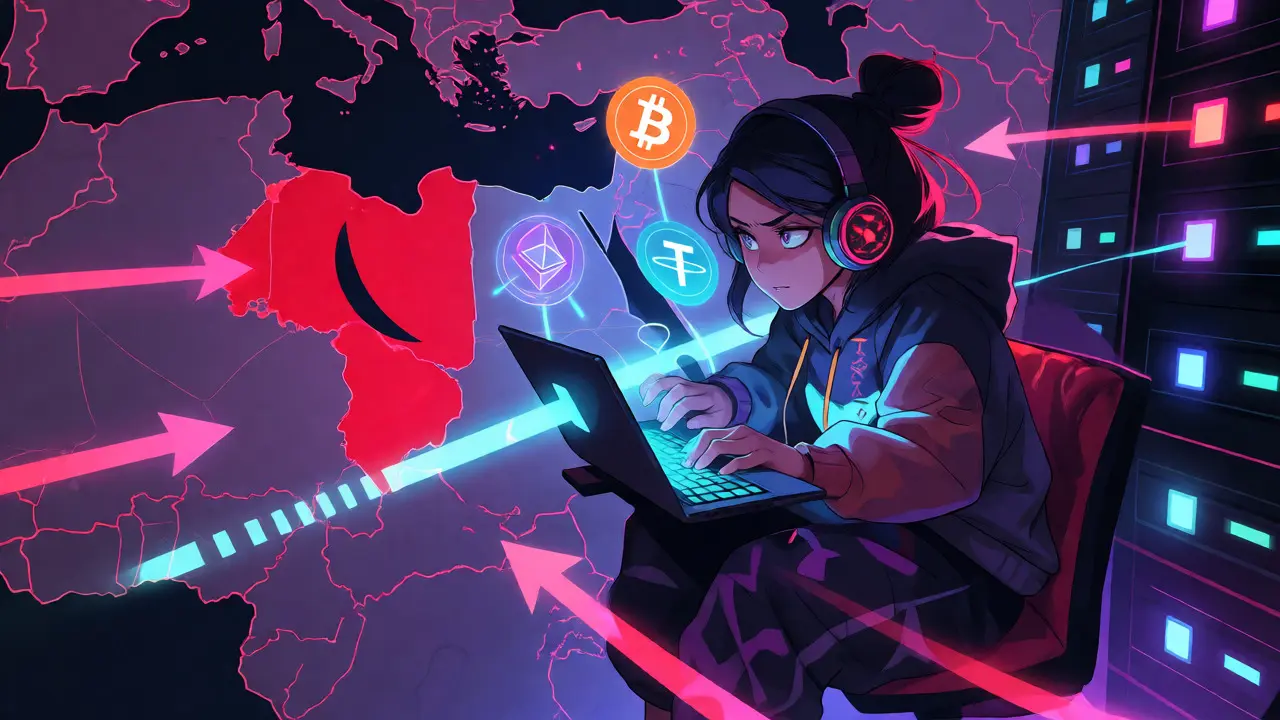
The Rise of Decentralized Finance (DeFi) and Non-Custodial Wallets
For those wary of centralized exchanges keeping records of their identity, Decentralized Exchanges (DEXs) offer another layer of complexity. Using non-custodial wallets like MetaMask or Trust Wallet, users can swap tokens directly on blockchain networks without submitting ID documents to a company. You connect your wallet to a DEX like Uniswap or PancakeSwap, and the transaction occurs on-chain.
This method removes the middleman, but it doesn't remove the legal risk. The Algerian government’s stance is clear: holding the asset is illegal. Whether you hold it on Binance or in your own MetaMask wallet, possession constitutes a violation. Furthermore, funding these wallets requires moving value from the traditional banking system into the crypto ecosystem. Since banks are prohibited from facilitating crypto transactions, users often rely on third-party intermediaries or informal hawala-style networks to bridge the gap between Algerian Dinars (DZD) and stablecoins like USDT.
Impact on the Local Blockchain Community
The human cost of this ban is significant. Before July 2025, Algeria was ranked among the top five fastest-growing crypto markets in the MENA region by Chainalysis. There was a vibrant community of developers, traders, and enthusiasts. Now, observers describe a "blockchain talent exodus." Many skilled professionals have left the country or stopped working in the sector entirely to avoid legal trouble.
Educational discussions have also been chilled. Universities and tech hubs that once hosted blockchain workshops are now cautious. Advertising crypto services is forbidden, which means startups cannot legally market themselves. This isolation risks leaving Algeria behind in the global fintech revolution. While neighbors like Morocco are exploring regulated frameworks, Algeria has chosen isolationism, prioritizing monetary sovereignty over innovation.

Practical Tips for Algerians Navigating the Ban
If you are determined to engage with crypto despite the risks, here are some practical considerations based on current enforcement patterns:
- Use Reputable VPNs: Ensure your VPN provider does not log your activity. A leak could reveal your true location to both the exchange and potentially to surveillance agencies.
- Avoid Direct Bank Transfers to Crypto Entities: Algerian banks will freeze accounts that show frequent transfers to known crypto merchants. Use cash or informal channels for fiat-to-crypto swaps.
- Keep Holdings Small: Large balances attract attention. Smaller, frequent transactions are less likely to trigger automated alerts than one massive purchase.
- Understand KYC Risks: If you use a centralized exchange, your passport and selfie are stored on their servers. If Algerian authorities request data cooperation, your identity is exposed.
- Consider Stablecoins: Volatility adds risk. Holding USDT or USDC minimizes price fluctuation risk while you navigate the legal uncertainty.
Future Outlook: Will the Ban Last?
As of late 2026, there are no signs of immediate relaxation. The government remains firm on its position, aligning itself with nations like China that prioritize state control over decentralized finance. Critics argue this stifles economic opportunity, especially given Algeria's young, tech-savvy population. However, the state views the stability of the Dinar and control over capital flows as paramount.
For now, the answer to "how do Algerians access cryptocurrency exchanges?" remains: illegally, carefully, and at great personal risk. The trend suggests that until the political climate shifts or regional pressure mounts, the ban will stand. Those who choose to participate must weigh the potential gains against the very real possibility of fines and imprisonment.
Is it completely illegal to own Bitcoin in Algeria?
Yes. Under Law No. 25-10, enacted in July 2025, the purchase, sale, use, and holding of virtual currencies are strictly prohibited. Owning Bitcoin or any other cryptocurrency is a criminal offense subject to fines and imprisonment.
What are the penalties for trading crypto in Algeria?
Violators face imprisonment from two months to one year and fines ranging from 200,000 to 1,000,000 Algerian dinars ($1,540-$7,700). Serious cases can incur fines up to 2 million dinars. Penalties may double for repeat offenses.
Can Algerians use international exchanges like Binance?
Technically, yes, using a VPN to mask their location. However, doing so violates Algerian law. While the exchange may allow access, the user remains liable for criminal prosecution under domestic law.
Does mining cryptocurrency count as a violation?
Yes. Law No. 25-10 explicitly prohibits the creation and mining of digital currencies. Operating mining rigs within Algeria is illegal and subject to the same penalties as trading.
Why did Algeria ban cryptocurrency?
The government cites national security, financial stability, and concerns over money laundering and terrorism financing. They aim to maintain strict control over the national currency and prevent capital flight associated with volatile digital assets.