
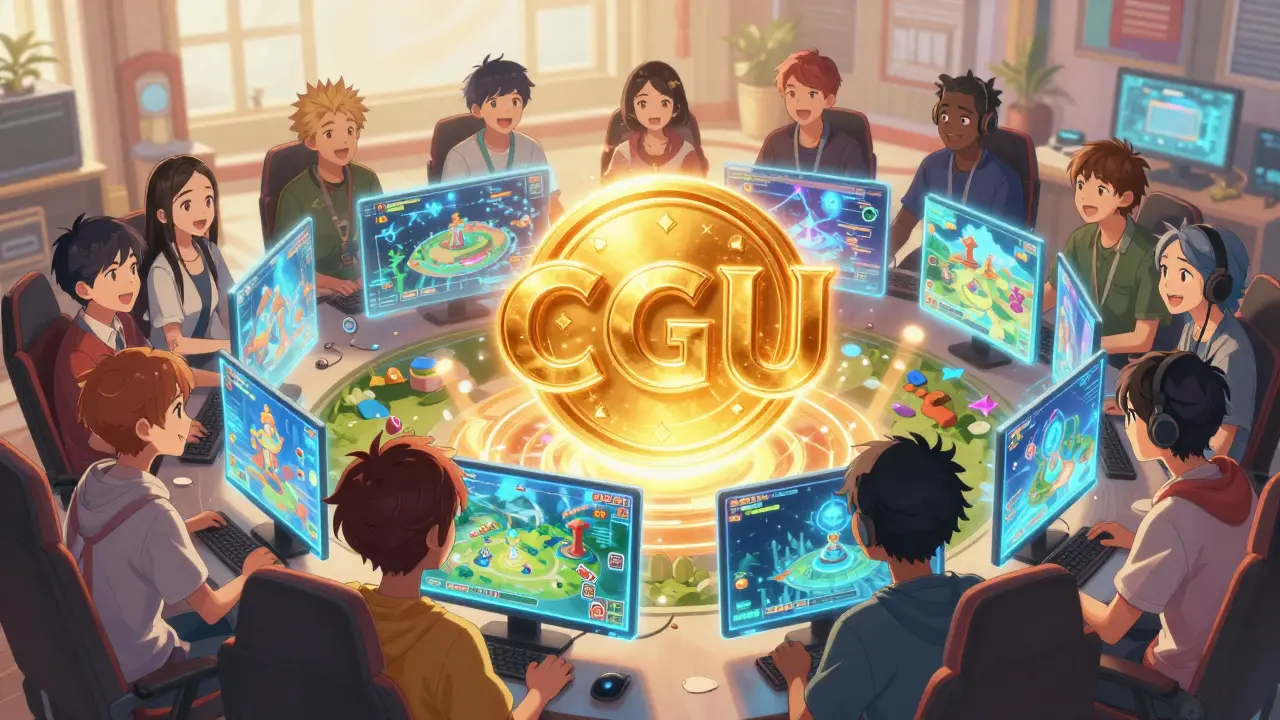
If you've stumbled across Crypto Global United and are wondering if it's the next big thing in gaming, you might want to buckle up. In the wild west of crypto, not every project with a professional-sounding name is a goldmine. Crypto Global United, known by its ticker CGU, is a utility token designed for a play-to-earn (P2E) gaming ecosystem. On paper, it sounds like a dream: helping people in developing nations earn a living by playing games. But when you look at the actual data, the reality is a bit more sobering.
The Core Idea: Gaming for a Living
At its heart, CGU was launched in October 2021 to bridge the gap between low-income players and the high barrier to entry in blockchain gaming. Most P2E games require you to buy expensive NFTs before you can even start earning. CGU tried to solve this by using a guild model. Essentially, the organization would buy the necessary NFTs and share them with players, acting as a sort of venture capital firm for gamers.
The project doesn't just stop at providing assets; it also claims to offer education and training. The goal is to turn casual gaming into a professional skill set, using e-sport tournaments to help players move from basic quests to high-earning competitive play. If it worked, it would be a powerful tool for economic mobility. However, there is a massive difference between what a whitepaper promises and what actually happens on the blockchain.
Technical Breakdown and Tokenomics
Technically, CGU is a BEP-20 token. This means it runs on the Binance Smart Chain (also known as BSC), which is a popular choice for smaller projects because it's faster and cheaper than Ethereum. To actually hold or trade CGU, you can't just use a standard exchange; you have to use a Web3 wallet like MetaMask or TrustWallet and manually paste the contract address (0x183a0f60c8c4b9d3527f7c2a7b681f339b7b480a) to see your balance.
The token's utility is tied to the DAO (Decentralized Autonomous Organization). In theory, holding CGU gives you voting rights over how the guild is run and a share in the assets the DAO owns. Players earn tokens by hitting milestones or finishing educational courses. While this sounds great, the actual market activity tells a different story. Let's look at how CGU stacks up against the giants of the gaming world.
| Feature | Crypto Global United (CGU) | Axie Infinity (AXS) | The Sandbox (SAND) |
|---|---|---|---|
| Daily Volume | ~$103 (extremely low) | $120M+ | Millions of USD |
| Exchange Access | DEX Only (PancakeSwap) | Major Centralized Exchanges | Major Centralized Exchanges |
| Market Rank | #6000+ (Approx) | Top 200 | Top 300 |
| Dev Activity | Dormant since 2021 | Constant Updates | Constant Updates |
The Red Flags: Why You Should Be Cautious
If you're thinking about investing, you need to know about the liquidity trap. Liquidity is basically how easy it is to trade a coin without moving the price. CGU has almost zero liquidity. In late 2023, records showed a 24-hour trading volume of only about $103. For a global project, that is an alarmingly small number. When liquidity is this low, you run into "slippage." This means if you try to sell a significant amount of CGU, the price will crash instantly, and you might only get a fraction of what the "market price" says you have.
Then there's the issue of the team. The founders of CGU are anonymous. In the crypto world, anonymity isn't always a crime, but combined with a lack of third-party security audits, it's a risk. The security firm CertiK previously flagged the project as high-risk. They pointed out the lack of verifiable team info and the minimal activity in the smart contracts. When the people running the money are invisible and the security experts are waving red flags, the risk level skyrockets.
Community Sentiment and Real-World Experience
Checking social media is usually a good way to gauge a project's health, but for CGU, the signs are bleak. On platforms like Reddit, most mentions are from 2021, and many of those are users complaining that they can't sell their tokens due to massive slippage or suspected hidden taxes in the contract. If you look at X (formerly Twitter), the activity is mostly driven by bots rather than actual gamers talking about their earnings.
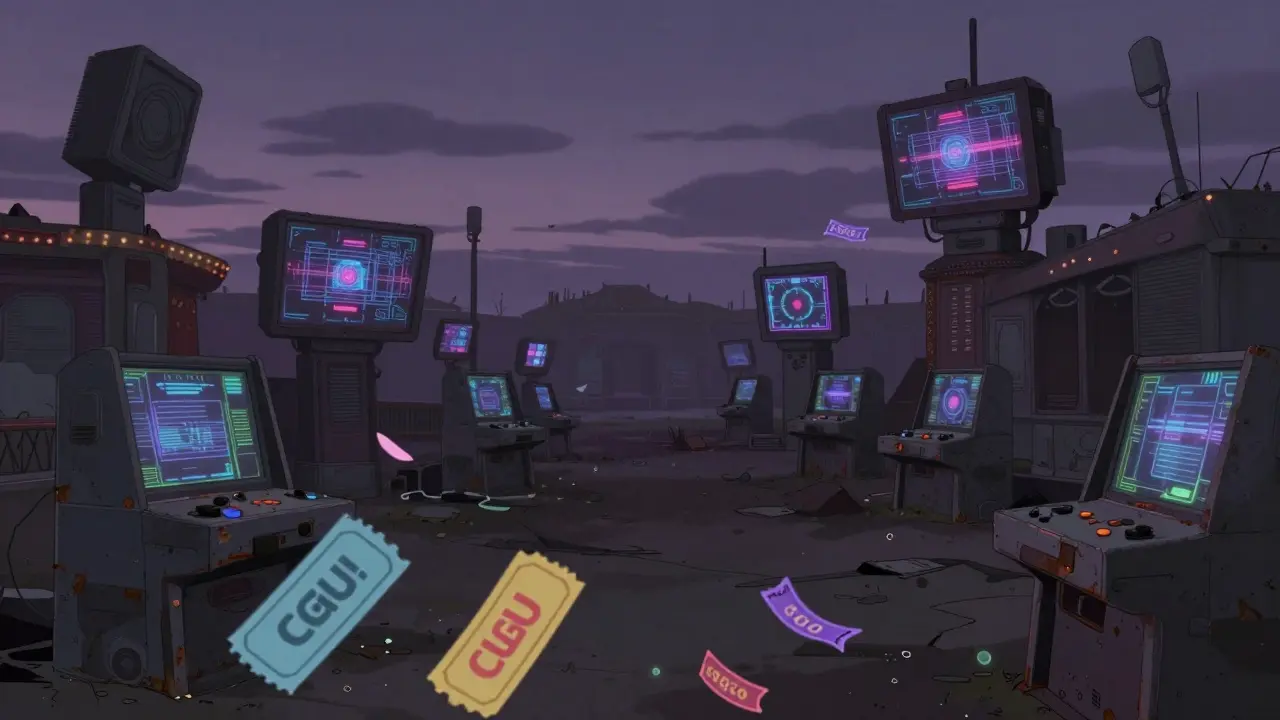
Many users who tried to follow the "beginner quests" reported earning small amounts of CGU, but because there is no liquid market to sell those tokens, those earnings are essentially theoretical. It's like winning a million tickets to a carnival that has already closed down. You have the tickets, but there's nowhere to spend them.
Is CGU Dead or Just Sleeping?
To determine if a project is still alive, developers look at the GitHub repository-this is where the actual code is written. For CGU, the last significant code update happened in December 2021. Their official social media channels went silent around the same time. In the fast-moving world of blockchain, a project that hasn't updated its code in years isn't "sleeping"; it's usually abandoned.
The original roadmap promised a proprietary gaming platform by early 2022. That never happened. Most industry analysts, including those from Coin Bureau, categorize CGU as non-viable. They've seen this pattern before: a project launches during a hype cycle (like the 2021 P2E boom), attracts some initial interest, and then vanishes when the founders realize the ecosystem isn't sustainable.
Final Verdict: Should You Buy CGU?
If you're looking for a safe investment or a way to actually earn money through gaming, CGU is not the place. The combination of zero development activity, extreme liquidity issues, and high-risk security ratings makes it a gamble with very poor odds. For those who already hold the token, the struggle to find a buyer on PancakeSwap without losing 95% of the value to slippage is a harsh reality.
If you're interested in P2E, it's better to stick with projects that have transparent teams, active development, and high trading volumes. The blockchain gaming space is huge, but it's littered with the ghosts of projects like CGU that promised the world and delivered very little.
What exactly is Crypto Global United (CGU)?
CGU is a utility token on the Binance Smart Chain (BSC) designed to support a play-to-earn (P2E) gaming guild. Its goal was to provide players in developing countries with the NFTs and training needed to earn income from blockchain games.
Can I sell my CGU tokens easily?
No. CGU suffers from extremely low liquidity. Most users report that it is nearly impossible to sell significant amounts of the token without facing massive slippage, meaning you would receive far less than the market price.
Is CGU a safe investment?
Based on security audits from firms like CertiK and the lack of development activity since 2021, CGU is considered a high-risk asset. It shows many signs of being an abandoned project.
Where can I trade CGU?
CGU is not listed on major centralized exchanges. It is primarily traded on decentralized exchanges (DEX) like PancakeSwap (v2) using a BSC-compatible wallet.
Who are the founders of Crypto Global United?
The founders of the project are anonymous. There are no verified names or professional backgrounds listed in their official documentation or on major tracking sites like CoinMarketCap.




Comments
Aaron Zeiler
April 26, 2026 AT 01:54 AMbasically a textbook rug pull though they might just be incompetent developers instead of scammers lol
Gabrielle Danis
April 26, 2026 AT 05:46 AMThe lack of a third-party audit is the most glaring red flag here. In the current decentralized finance landscape, any project that ignores a security audit is effectively inviting catastrophic failure or theft.
its me
April 27, 2026 AT 07:49 AMIt is truly fascinating how people crave these digital shortcuts to wealth. We see the same cycle of greed and disappointment over and over, and yet the human ego insists that this time it will be different. It is almost poetic in its futility that someone would believe a project with anonymous founders could actually empower the poor.
Carli Bates
April 27, 2026 AT 22:22 PMoh look another revolutionary project that just happens to have zero liquidity and a ghost town for a dev team what a shocker
Rachel S
April 28, 2026 AT 06:35 AMThis is absolutely devastating! 😱 The thought of people in developing nations losing their hopes to such a transparently failed project is just heartbreaking. It is truly a tragedy of the highest order! 😭
Ipsita Seal
April 28, 2026 AT 08:21 AMtoo long didnt read looks like a scam
Jan Conrad
April 29, 2026 AT 14:02 PMI'm curious if anyone here has actually tried to interact with the DAO. If the tokens are essentially worthless due to slippage, then the governance mechanism is completely broken because the 'voting power' has no real-world economic weight. It's a closed loop of nothingness.
Abhishek Verma
April 30, 2026 AT 11:00 AMImagine actually thinking you're 'investing' in a token that trades $100 a day. Pure genius right there.
Kathleen Warren
April 30, 2026 AT 23:19 PMIt's really sad for the people who put their trust in this. If you're feeling lost or stuck with these tokens, just remember that learning from these mistakes is how we all get better at this. Be kind to yourself.
Barbara Jones
May 2, 2026 AT 00:57 AMi feel bad for anyone who still holds this stuff... hope they can get some of their money back even tho its probablly too late
Janis Naglis
May 2, 2026 AT 02:01 AMWhile the liquidity provision is obviously non-existent!!!, we can still leverage this as a teachable moment for risk-mitigation strategies!!! Always check the TVL and the smart contract's minting functions before deploying any capital!!!
Brendan Thraxton
May 3, 2026 AT 09:58 AMplenty of better gems out there if you just do the research first dont let this one sour you on the whole p2e space
Rushell Perry
May 4, 2026 AT 15:25 PMlets just focus on the lessons learned here we can all move forward by being more careful with our entries into these new guilds