
For years, Bitcoin was just for saving. You bought it, you held it, and you waited for the price to go up. It was digital gold, nothing more. But on September 1, 2025, everything changed. The launch of the BRC-20 protocol with integrated Ethereum Virtual Machine (EVM) functionality directly on Bitcoin's base layer turned Bitcoin into a programmable financial platform. Suddenly, you could run decentralized apps and use DeFi protocols right on the Bitcoin network. Out of this shift came a new player: BRC20.com, and its native coin, the .COM token.
If you’ve seen the ticker ".COM" popping up in your feed or heard friends talking about "Bitcoin utility," you’re probably wondering what it actually does. Unlike most tokens that are just memes or speculation vehicles, .COM is designed to be the fuel for the entire BRC20.com ecosystem. It’s not just a coin; it’s a key that unlocks staking, cross-chain bridging, and access to new token launches on Bitcoin.
The Shift from Store of Value to Smart Contracts
To understand why .COM matters, you have to look at what happened to Bitcoin in late 2025. Before the upgrade, if you wanted to use Bitcoin in a decentralized finance (DeFi) app, you had to wrap it. You’d lock your BTC in a smart contract on Ethereum or Solana to get a "wrapped" version. This was risky. If the bridge got hacked, your money was gone. It was also slow and expensive.
The BRC-20 protocol change fixed this by embedding EVM compatibility directly into Bitcoin. This means developers can write code for Bitcoin just like they do for Ethereum. For users, this is huge. You don’t need to move your assets off-chain to use them. The .COM token sits at the center of this new reality. It powers the platform that makes these complex transactions easy for regular people.
| Feature | Pre-September 2025 (Legacy Bitcoin) | Post-Upgrade (BRC-20 / EVM Enabled) |
|---|---|---|
| Primary Use Case | Store of value, peer-to-peer payments | Store of value, DeFi, dApps, NFTs |
| Smart Contracts | Limited, required Layer-2 solutions | Native EVM support on base layer |
| Cross-Chain Access | Required wrapped assets (WBTC) and bridges | Native interoperability via platforms like BRC20.com |
| Token Standards | Ordinals (NFTs only), no fungible tokens | BRC-20 (fungible tokens), JSON-based inscriptions |
| User Experience | Complex for non-coders | Simplified via mobile wallets and UI tools |
How the .COM Token Works
The .COM token is a utility token. That means you don’t hold it just because you think the price will moon. You hold it because you want to use the services provided by the BRC20.com platform. Think of it like gas fees on Ethereum, but with added benefits. When you stake .COM, you aren’t just locking up coins; you’re helping secure the network and earning rewards from the platform’s revenue.
Here is how the mechanics work under the hood. BRC-20 tokens are created using Ordinal inscriptions. Instead of writing a complex Solidity smart contract, developers create a JSON file. This file defines the token’s rules: how many exist, who can mint them, and what their ticker symbol is. This data is then inscribed onto individual satoshis-the smallest unit of Bitcoin.
The process has two steps:
- Deploy: The creator broadcasts the blueprint (the JSON inscription) to the Bitcoin network.
- Mint: Users send transactions with their own JSON requests to mint tokens, adhering to the limits set in the deploy phase.
Key Features of the BRC20.com Ecosystem
Why should you care about .COM specifically? Because the platform offers features that were previously impossible or very difficult on Bitcoin. Here are the main utilities driving demand for the token:
- Gasless Staking: Most staking processes require you to pay transaction fees every time you interact with the protocol. BRC20.com uses a gasless solution for .COM holders. You can farm rewards without worrying about high Bitcoin network fees eating into your profits.
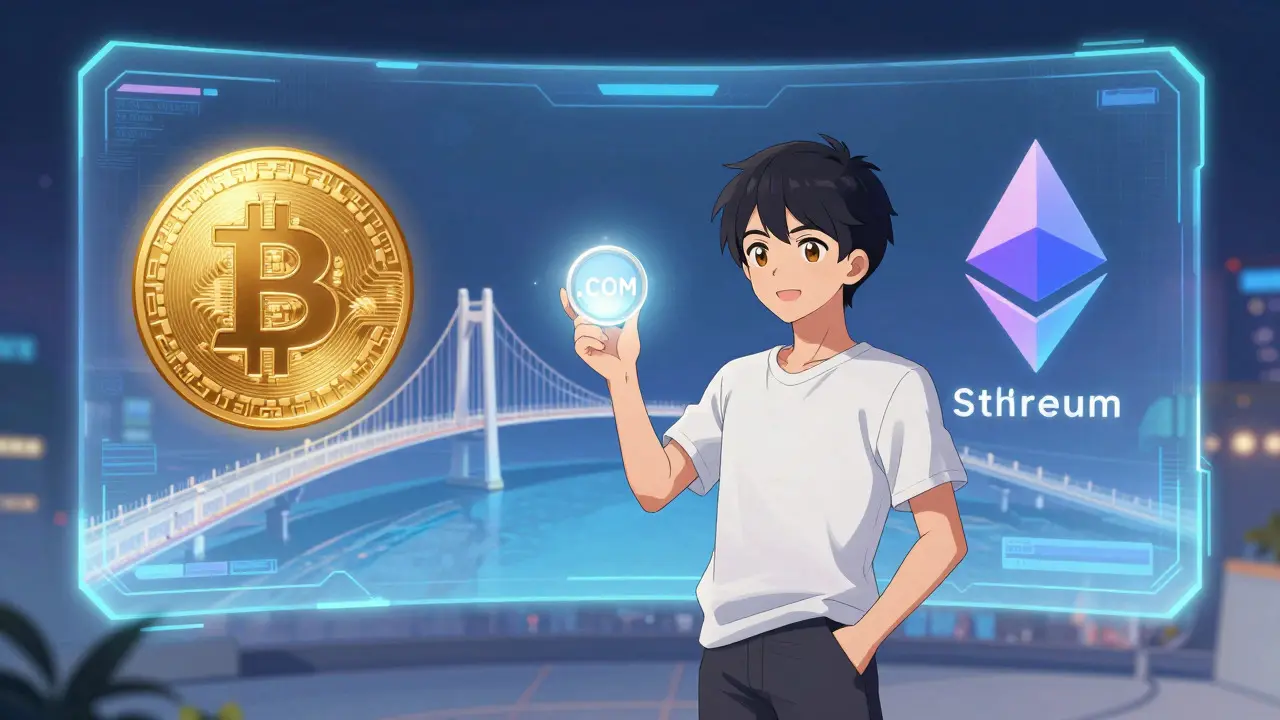
- Cross-Chain Bridge: One of the biggest pain points in crypto is moving assets between chains. The .COM-powered bridge allows you to move value between Bitcoin and other networks (like Ethereum or Solana) without relying on third-party wrapped assets. This reduces counterparty risk significantly.
- Bitcoin Initial Farming Offerings (IFOs): Want to get in early on new BRC-20 tokens? BRC20.com hosts IFOs, giving .COM holders priority access to new projects. This is similar to IDOs on Ethereum but happens natively on Bitcoin.
- Discovery Tools: Finding good tokens in the BRC-20 space is hard. There are thousands of low-quality mints. The platform’s API scans the network to identify trending mints and popular tokens, saving you hours of research.
Security and Risks: What You Need to Know
Let’s talk about safety. The biggest advantage of BRC-20 tokens is that they live on Bitcoin. Bitcoin is the most secure blockchain in existence. It has a massive hash rate, a decentralized miner network, and a proven track record of never being hacked at the consensus level. When you hold .COM, your asset is secured by the same proof-of-work mechanism that protects billions of dollars in BTC.
However, "experimental" is the keyword here. While the underlying chain is secure, the applications built on top of it are newer. The BRC-20 standard relies on indexers-off-chain software that reads the ordinal inscriptions and updates balances. If an indexer fails or is manipulated, your balance might show incorrectly until it’s fixed. Also, while the protocol itself is robust, the smart contracts governing specific IFOs or bridges can still have bugs. Always check audits before depositing large amounts.
Another risk is liquidity. BRC-20 tokens are not as liquid as ERC-20 tokens on Ethereum. Selling large amounts of .COM might take longer or result in slippage if there isn’t enough depth in the order books. Keep this in mind if you plan to trade heavily.
How to Get Started with .COM
If you want to try out the ecosystem, here is a practical guide. You don’t need a computer science degree, but you do need to set up the right tools.
- Get a Compatible Wallet: You need a wallet that supports Ordinals and BRC-20 tokens. Popular choices include Xverse, UniSat, or the native mobile wallet offered by BRC20.com. Make sure you back up your seed phrase offline.
- Fund Your Wallet: Send some Bitcoin (BTC) to your wallet address. You’ll need BTC to pay for transaction fees when minting or swapping tokens.
- Connect to BRC20.com: Visit the official platform and connect your wallet. Look for the verified domain to avoid phishing sites.
- Buy or Stake .COM: You can usually buy .COM through the platform’s marketplace or swap feature. Once you have some, consider staking them to start earning rewards and unlocking access to IFOs.
- Explore the Marketplace: Use the discovery tools to see which new BRC-20 tokens are gaining traction. Remember, higher potential reward often comes with higher risk.
The Future of Bitcoin-Based Tokens
The introduction of EVM functionality to Bitcoin is what many analysts call a "momentous upgrade." It positions Bitcoin as a direct competitor to Ethereum in the smart contract space. As more developers build on this infrastructure, the demand for utility tokens like .COM is likely to grow. These tokens become the economic engine that incentivizes participation, security, and innovation within the ecosystem.
We are still in the early stages. The technology is maturing, and user interfaces are becoming friendlier. If you believe in the long-term vision of Bitcoin evolving beyond just a store of value, keeping an eye on tokens that provide real utility-like .COM-is a smart move. Just remember to do your own research, start small, and never invest more than you can afford to lose.
Is .COM the same as Bitcoin?
No. Bitcoin (BTC) is the native currency of the Bitcoin network. .COM is a separate utility token built on top of the Bitcoin blockchain using the BRC-20 protocol. While they share the same security layer, they serve different purposes.
What is the BRC-20 protocol?
BRC-20 is a token standard that allows for the creation of fungible tokens on Bitcoin. It uses ordinal inscriptions to embed JSON data defining token properties directly onto satoshis, enabling tokenization without traditional smart contracts.
Do I need Ethereum to use .COM?
No. .COM operates entirely on the Bitcoin network. However, thanks to the cross-chain bridge features of the BRC20.com platform, you can interact with other networks without leaving the Bitcoin ecosystem.
Is staking .COM safe?
Staking .COM is generally safe because it runs on the secure Bitcoin blockchain. However, as with all DeFi protocols, there are risks associated with smart contract bugs or platform-specific issues. Always review audit reports and start with small amounts.
When did BRC-20 with EVM support launch?
The significant upgrade that embedded EVM functionality into the BRC-20 protocol on Bitcoin occurred on September 1, 2025, marking a major shift in Bitcoin's capabilities.