
DragonEx Review: What You Need to Know About This Crypto Exchange
DragonEx, a centralized cryptocurrency exchange that launched in 2018, offers trading for hundreds of coins with low fees and a simple interface. Also known as Dragon Exchange, it was once popular among traders looking for altcoin access without complex KYC. But things have changed. While DragonEx still lists obscure tokens and runs occasional airdrops, its reputation has taken hits over security concerns and sudden delistings.
Many users who tried DragonEx in 2022-2023 remember it for fast withdrawals and low trading fees—sometimes under 0.1%. But others report accounts frozen without warning, customer support that rarely replies, and tokens disappearing from wallets after platform updates. Unlike bigger exchanges like Binance or KuCoin, DragonEx doesn’t publish regular audits or hold cold storage proofs. That’s a red flag if you’re putting in more than pocket change.
It’s not all bad. If you’re trading small amounts of niche coins like $MOVR or $HERO that aren’t on major platforms, DragonEx might still be one of the few places you can buy them. Its referral program pays out in native tokens, and the interface is clean for beginners. But if you care about safety, transparency, or long-term access to your funds, you should compare it with alternatives like MEXC or Gate.io—exchanges that have proven track records and clearer compliance.
What you’ll find below are real user experiences, technical breakdowns of its fee structure, and analysis of why some traders still use DragonEx despite the risks. We’ve pulled from posts covering similar exchanges like Nomiswap, ZYX Swap, and GateHub to show you what separates a risky platform from one you can trust.
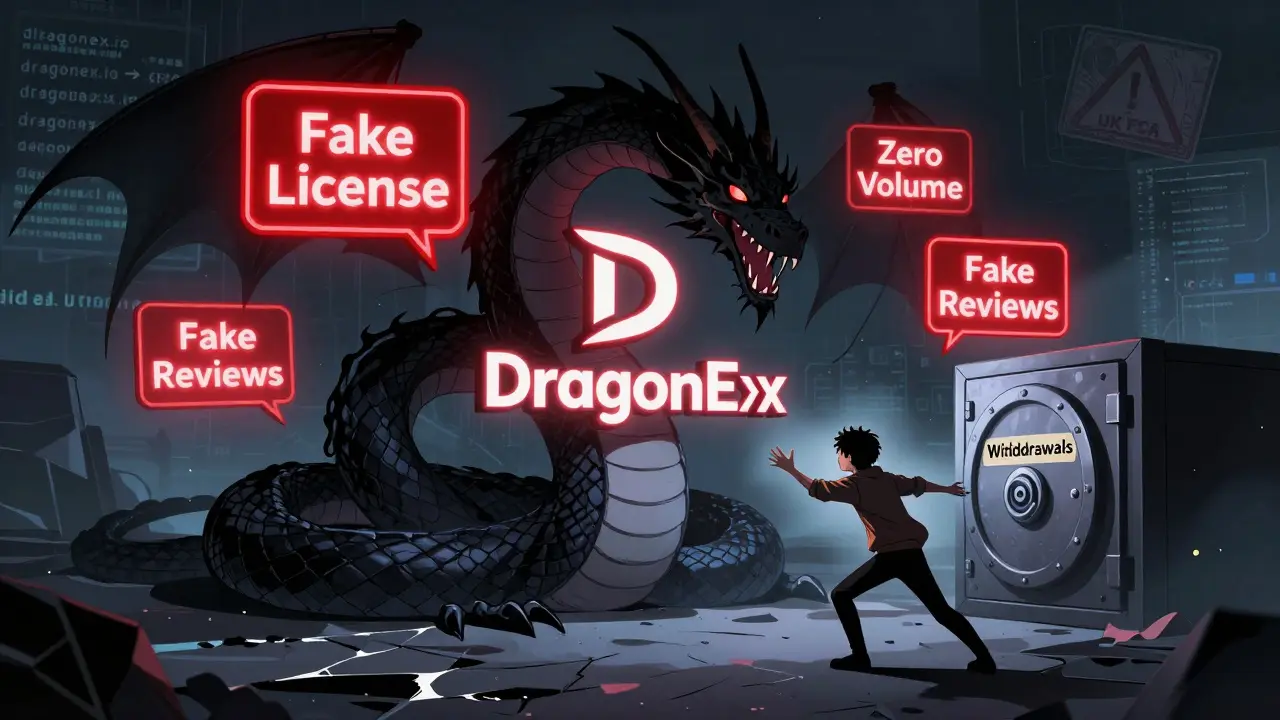
DragonEx Crypto Exchange Review: Red Flags and Scam Warning
DragonEx is a fraudulent crypto exchange with fake licensing, zero trading volume, and confirmed scam reports. Learn why you should avoid it and which safe alternatives to use instead.