

You want to park your digital assets somewhere safe. You don't want a sketchy exchange that might vanish overnight. You want the ironclad reputation of a Swiss bank. But here is the catch: you can’t just walk into UBS or Credit Suisse and ask for a Bitcoin wallet like it’s 2013. The landscape has shifted dramatically since those early days. Today, accessing **Swiss bank cryptocurrency services** means navigating a specific ecosystem of specialized institutions, strict regulatory hurdles, and distinct eligibility criteria.
If you are an institutional investor or a high-net-worth individual, Switzerland remains the gold standard for crypto custody. If you are a retail trader with a few thousand dollars, the doors might be closed tighter than you think. Let’s break down exactly how this works, who runs the show, and what restrictions you actually face in 2026.
How the Swiss Regulatory Framework Actually Works
To understand why Swiss banks handle crypto differently, you have to look at the rules they play by. Unlike countries that scrambled to write new laws for blockchain, Switzerland took a smarter path over five years ago. They adopted a technology-neutral approach. This means existing financial market legislation applies to digital assets without needing entirely new legal codes.
The Financial Market Supervisory Authority (FINMA) is the boss here. They don’t ban crypto; they regulate it under existing frameworks for securities, payments, and anti-money laundering (AML). For a bank to offer crypto services, it must comply with these stringent standards. This creates a "safe harbor" environment. When you deposit funds with a licensed Swiss crypto bank, you are protected by the same rigorous oversight that protects traditional banking deposits, albeit with different insurance structures.
This regulatory clarity is the main reason institutions flock to Zurich. In contrast, US regulators spent years issuing vague statements about safety and soundness. By the time other jurisdictions caught up, Swiss banks had already built mature, compliant infrastructures. This head start allows them to offer services like lending and staking that remain legally gray areas elsewhere.
Who Are the Major Players?
You won’t find crypto desks at every corner branch. Instead, a handful of specialized banks dominate the space. These aren’t startups; they are fully licensed banking institutions.
- Sygnum Bank: Often cited as the first full-service digital asset bank globally. They focus heavily on institutional clients, offering custody, trading, and lending. Their expansion into newer tokens like SUI shows their agility.
- Amina Bank: Known for bridging traditional finance with Web3. They were the first regulated bank to support the Sui blockchain, catering to both individuals and corporations.
- Bitcoin Suisse: A veteran in the space, famous for its proprietary vault solution. They cater primarily to professional investors and offer deep liquidity via FIX and REST APIs.
- Swissquote: One of the largest online banks in Europe, they offer a more accessible entry point for some retail clients while maintaining institutional-grade security.
These entities form the core of the Swiss crypto banking sector. They do not operate in isolation; they integrate with traditional clearing systems and offer omnichannel experiences, meaning you can manage fiat and crypto from a single dashboard.
| Bank Name | Primary Focus | Custody Solution | Key Feature |
|---|---|---|---|
| Sygnum Bank | Institutional & HNWI | Integrated Banking Platform | First full-service digital asset bank; supports lending against crypto collateral |
| Amina Bank | Individuals & Corporates | Regulated Custodial Services | Early adopter of Sui blockchain; offers stablecoin rewards (EURC/USDC) |
| Bitcoin Suisse | Professional Investors | Bitcoin Suisse Vault | Physical + cryptographic security; keys never leave Switzerland; EMP protection |
| Swissquote | Retail & Professional | Online Trading Platform | High accessibility; broad range of tradable assets including ETFs and stocks |
The Reality of Custody Security
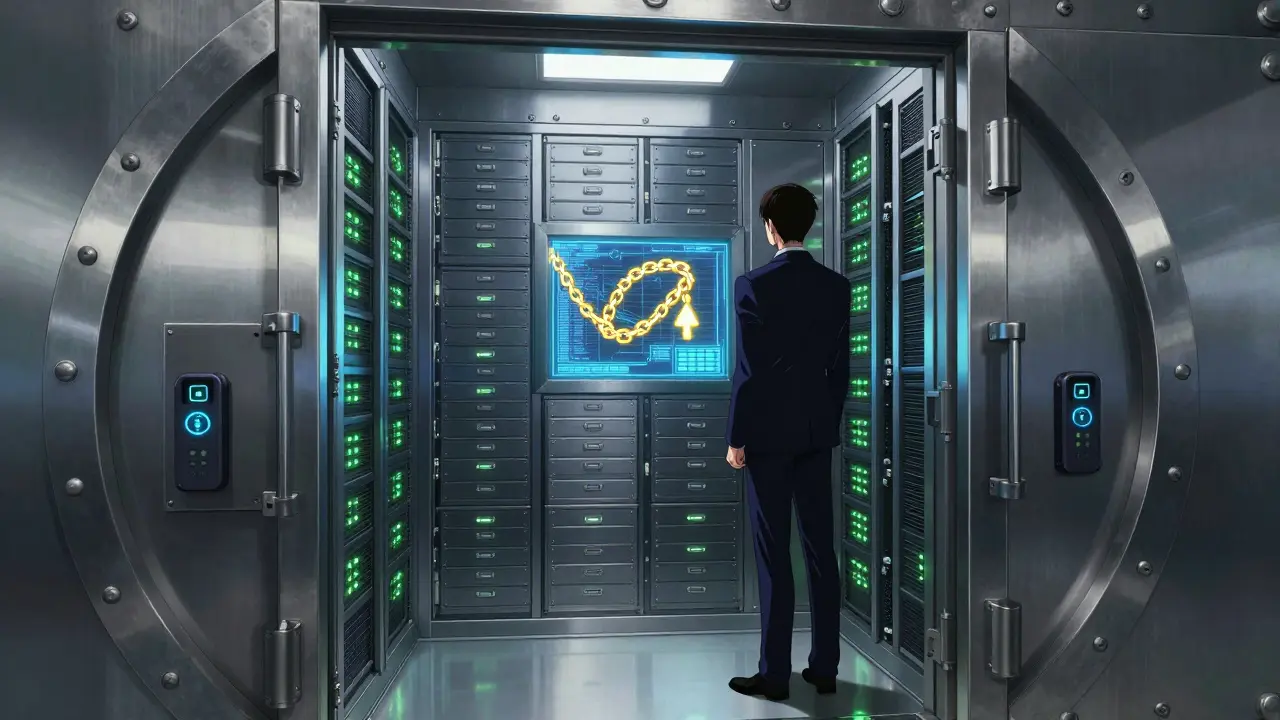
Custody is the bedrock of trust. If you hold your own keys, you bear all the risk. If you use an exchange, you hope they don’t get hacked. Swiss banks solve this with institutional-grade infrastructure.
Take Bitcoin Suisse’s Vault as an example. It isn’t just software. It combines cryptographic security with physical safeguards. Private keys are stored in cold storage solutions that are air-gapped from the internet. More importantly, these keys never leave Swiss soil. The facility includes redundant backup systems designed to withstand cyberattacks, hardware failures, and even electromagnetic pulse (EMP) interference. This level of detail matters when you are managing millions in assets.
Sygnum and Amina employ similar predictive threat assessment models. They don’t just react to hacks; they anticipate vectors. Their teams monitor network activity 24/7 to detect unauthorized payment attempts. For staking services, which involve locking up assets to secure networks, these banks ensure that the validator nodes are operated securely, protecting your principal while earning yields on blockchains like Ethereum, Solana, and Polkadot.
Restrictions: Who Can Actually Use These Services?
Here is where many people hit a wall. Despite the hype, Swiss crypto banking is not open to everyone. The restrictions are real and enforced strictly due to FINMA’s AML and Know Your Customer (KYC) requirements.
- Accredited vs. Retail Clients: Most top-tier services, especially those involving lending, margin trading, or complex derivatives, are reserved for "professional clients." To qualify, you often need significant net worth or transaction volume. Retail accounts exist but come with limited features. For instance, you might be able to buy Bitcoin on Swissquote, but you cannot leverage trade it unless you prove professional status.
- Geographic Limitations: While Swiss banks serve international clients, certain products are restricted based on your tax residency. If you are a US person, for example, you may face additional reporting burdens (FATCA) that make some banks hesitant to onboard you for specific crypto products.
- Asset Eligibility: Not every token is welcome. Banks only list assets that pass strict compliance checks. Altcoins with unclear utility or poor governance structures are often excluded. This is why you see major banks supporting ETH, SOL, and DOT, but rarely obscure meme coins.
- Minimum Deposits: Institutional custody solutions often require minimum balances ranging from $100,000 to $1 million. If you have less, you might be directed to a simpler trading account rather than a dedicated custody service.
These restrictions protect the bank’s license. A single compliance failure can cost them billions. So, expect thorough background checks, source-of-funds verification, and ongoing monitoring.

Beyond Storage: Lending, Staking, and Governance
Custody is just the starting point. The real value proposition of Swiss banks lies in the active management of your assets.
Lending: You can use your crypto holdings as collateral for fiat loans. This allows you to access liquidity without selling your assets and triggering capital gains taxes. Sygnum Bank expanded this capability significantly in 2025, allowing borrowers to pledge tokens like SUI for loans. Interest rates are competitive, often tied to LIBOR or EURIBOR plus a spread.
Staking: Proof-of-Stake blockchains require validators. Swiss banks act as these validators or partner with reputable ones. When you stake through Amina or Bitcoin Suisse, you earn rewards (e.g., 4-8% APY depending on the chain) while the bank handles the technical complexity and slashing risks. This turns idle assets into income-generating instruments.
Governance Participation: Many modern blockchains allow token holders to vote on protocol upgrades. Through platforms like Bitcoin Suisse, clients can participate in governance votes for assets like Polkadot (DOT) or Cosmos (ATOM). This ensures your voice is heard in the evolution of the networks you invest in, something most exchanges ignore.
Market Impact and Future Outlook
The demand for these regulated services is surging. When Sygnum and Amina announced support for the SUI token in August 2025, the market reacted instantly. Trading volume doubled to 36.45 million tokens, and the price stabilized above key support levels. This wasn’t just retail FOMO; it was institutional money flowing in because it knew the custody was safe.
By 2026, the trend is clear: integration. Banks are no longer siloed crypto desks. They are embedding digital assets into wealth management portfolios. Expect to see more personalized products driven by data analytics, helping clients balance risk between traditional equities and digital tokens. International partnerships are also expanding, allowing cross-border flows of regulated crypto assets.
However, vigilance remains key. Cyber threats evolve daily. Swiss banks continue to invest heavily in cybersecurity, ensuring that their infrastructure stays ahead of bad actors. For users, this means peace of mind, but it also means relying on the bank’s expertise. You are outsourcing security, so choose your provider wisely.
Can any individual open a crypto account with a Swiss bank?
Not necessarily. While banks like Swissquote offer retail accounts, advanced services such as lending, margin trading, and institutional custody are typically restricted to professional clients. You usually need to meet minimum net worth or transaction volume thresholds to access these features. Always check the specific KYC and accreditation requirements of the bank before applying.
Is my crypto insured if a Swiss bank gets hacked?
Crypto assets are generally not covered by standard deposit insurance schemes like ESIC (which covers up to CHF 100,000 for cash deposits). However, reputable Swiss banks carry specialized cyber insurance policies and maintain robust internal reserves to cover losses. Additionally, their multi-signature and cold-storage custody solutions drastically reduce the likelihood of successful hacks. Always review the bank’s specific liability terms and insurance coverage details.
What cryptocurrencies can I hold in a Swiss bank custody account?
Banks curate their lists carefully. You will typically find major assets like Bitcoin (BTC), Ethereum (ETH), Solana (SOL), and stablecoins like USDC and EURC. Newer assets like SUI are being added as regulations clarify. Obscure altcoins or meme coins are rarely supported due to compliance risks. Check each bank’s current whitepaper for the exact list of supported protocols.
How does Swiss crypto regulation compare to the US?
Switzerland has a clearer, technology-neutral framework established by FINMA, allowing banks to offer comprehensive services like lending and staking under existing laws. The US regulatory environment has been more fragmented, with agencies like the SEC and CFPB issuing conflicting guidance. This makes Switzerland a more predictable jurisdiction for institutional crypto banking, though US banks are slowly catching up with stricter "safe and sound" guidelines.
Are there fees for using Swiss bank crypto custody services?
Yes. Fees vary by institution and service type. Custody fees are often charged as an annual percentage of Assets Under Management (AUM), typically ranging from 0.1% to 0.5%. Trading involves spreads or commissions. Staking rewards may be partially retained by the bank as a service fee. Transparent fee schedules are provided upon account opening, but they are generally higher than unregulated exchanges due to the cost of compliance and security.





Comments
Sylvia Mossman
June 4, 2026 AT 12:08 PManother day another article telling us how great swiss banks are while they charge you an arm and a leg to sit on your coins like a digital dragon 🐉
Greg Lewis
June 4, 2026 AT 14:03 PMlook i dont care about the fancy words in this post what matters is who really controls the keys and if you think some guy in zurich is looking out for you better think again because history shows elites always protect themselves first not the little people holding bags
the whole concept of trust in centralized custody is a lie we tell ourselves to feel safe while our wealth gets siphoned off by fees and regulatory capture its all part of the grand design to keep us dependent on institutions that could vanish or freeze assets at any moment just ask anyone who had issues with tge or ftx back in the day but now its legal so its fine right? no its not fine its just slower theft
Steven Jacobowitz
June 6, 2026 AT 10:53 AMyou are missing the point here steven jacobowitz style analysis incoming
the regulatory framework in switzerland is actually quite robust compared to the chaos in the us where sec lawyers are trying to sue innovation into oblivion finma has created a clear path for banks to operate which reduces counterparty risk significantly for institutional players yes the fees are high but you are paying for compliance and security infrastructure that takes years to build properly
i have worked with several custodians and sygnun and amina have shown real diligence in their kyc processes which might be annoying for retail users but it protects the integrity of the system overall
Lee Paige
June 7, 2026 AT 14:06 PMlet us not forget that these banks are still beholden to globalist agendas and fatca reporting requirements meaning your privacy is non-existent regardless of how secure their cold storage vaults are from electromagnetic pulses
the idea that american citizens can safely store crypto in europe without irs scrutiny is laughable given the data sharing agreements in place furthermore why should we trust foreign entities with our financial sovereignty when domestic solutions exist albeit less polished
this narrative pushes decentralization under the guise of safety which is exactly what the establishment wants you to believe so you stop fighting for true self-custody
Caitlin Donahue
June 8, 2026 AT 14:23 PMim just confused why everyone is so mad about fees
if u want top tier security u gotta pay for it right? cant expect bank grade protection for free lol
also typo alert: 'sygnum' not 'sygnun' steven 😅
Karthikeyan S
June 9, 2026 AT 20:53 PMu guys are all so naive thinking these banks wont fail when the next crash hits
they are leveraging your assets behind the scenes probably lending them out to hedge funds who then lose it all
classic toxic analyst perspective here but look at the numbers staking rewards are too good to be true without hidden risks
emoji time 📉💀
Alexis Abster
June 10, 2026 AT 17:10 PMoh my gosh karthikeyan please calm down
there is nothing wrong with using professional services if you have the means to do so
not everyone has the technical expertise to manage multi-sig wallets or worry about seed phrase backups
it is wonderful that options like this exist for people who want peace of mind
we should celebrate progress not tear it down with conspiracy theories
imagine a world where finance is accessible and safe for everyone
that is what this industry strives for even if it is imperfect right now
lets stay positive and supportive of those trying to navigate this complex landscape
your energy is very draining today honestly
Dinesh Pattigilli
June 12, 2026 AT 00:27 AMtypical plebian response alexis
only the elite understand the true value of institutional custody
retail traders will never grasp the nuance of finma regulations
they just want quick gains and end up getting rugged
swissquote is for the masses but sygnum is for the chosen few
do not insult my intelligence with your optimism
the market punishes the weak and rewards the informed
get educated or get liquidated
simple as that
no need for further discussion from unqualified participants
Yogendra Dwivedi
June 13, 2026 AT 07:09 AMi think dinesh is being a bit harsh there
education is important but so is accessibility
perhaps we can find a middle ground where retail investors learn gradually
swiss banks offer a good starting point for understanding regulated environments
it is not about being elite or plebian
it is about making informed choices based on individual circumstances
everyone deserves a fair chance to participate in this new economy
let us encourage learning rather than judgment
thank you for sharing your perspective though
Madhu Menon
June 14, 2026 AT 15:43 PMin the grand scheme of things money is merely a construct of collective belief
whether held in swiss vaults or on a ledger the essence remains unchanged
we seek security in forms that comfort our minds
yet true freedom lies in understanding the nature of value itself
🧘♂️