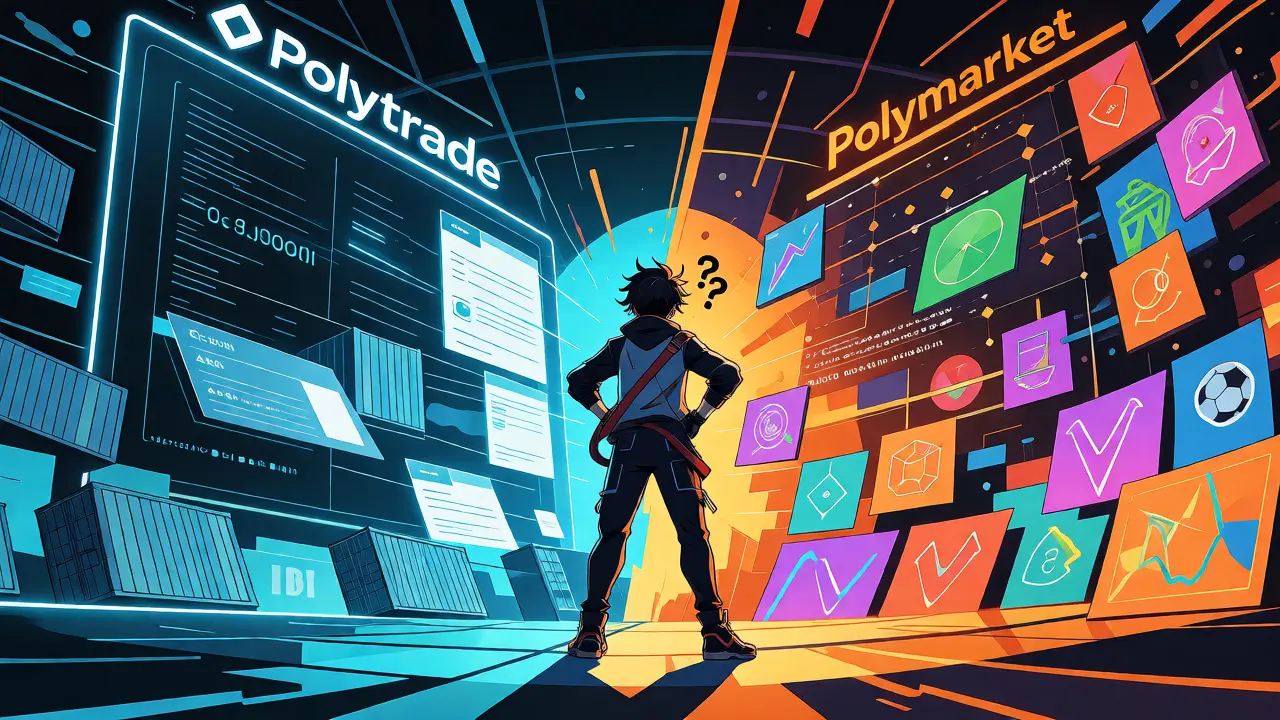
Everyone loves free money, right? Especially when it comes in the form of cryptocurrency tokens. But let's be real for a second-most "airdrop" headlines are just noise. You click, you read, and you find out the project is either vaporware or the eligibility criteria are so strict you need a PhD to qualify. So, what’s the deal with Polytrade? Is there actually a community airdrop happening, or is this another case of mistaken identity?
If you’ve been scrolling through Twitter or Telegram groups lately, you might have seen whispers about Polytrade giving away tokens. Maybe you’re confused because you keep hearing about Polymarket (the prediction market platform) and thinking they’re the same thing. They aren’t. Polytrade is a different beast entirely, focused on trade finance, not sports betting or election predictions. The confusion is understandable, but it’s costing people time and potentially missing out on legitimate opportunities if they don’t dig deeper.
Here’s the straight talk: As of late October 2026, official confirmation regarding a specific, immediate "Community Airdrop" distribution event from Polytrade requires careful verification. Unlike some projects that drop tokens randomly to anyone who held their wallet at a snapshot date, Polytrade operates in the niche world of trade finance. This means their reward structures often tie into actual usage of their platform rather than just passive holding. Let’s break down what we know, how to verify it, and what steps you should take if you want to be part of whatever comes next.
Distinguishing Polytrade from Polymarket
This is the biggest hurdle for most newcomers. Search engines and social media algorithms love to blur these two names together. Polymarket is a decentralized prediction market where you bet on outcomes of real-world events. It has no native token currently, despite endless speculation. On the other hand, Polytrade is a platform designed to streamline international trade finance using blockchain technology. It helps small and medium-sized enterprises access funding by digitizing invoices and trade documents.
Why does this matter for your airdrop hunt? Because the incentives are completely different. Prediction markets might reward users for volume or liquidity provision. Trade finance platforms like Polytrade typically reward users for bringing real-world assets onto the chain or for providing liquidity to specific financing pools. If you’re expecting a simple "hold-and-get" model similar to early DeFi days, you might be disappointed. Polytrade’s ecosystem is more utility-driven. The value proposition isn't just speculation; it's solving a multi-trillion dollar inefficiency in global trade.
| Feature | Polytrade | Polymarket |
|---|---|---|
| Primary Function | Trade Finance & Invoice Factoring | Prediction Markets |
| Token Status | Native utility token exists | No native token yet |
| Airdrop Focus | User activity, asset digitization | N/A (Speculative) |
| Target Audience | SMEs, Traders, Investors | Retail Bettors, Speculators |
How Polytrade Rewards Work
So, if there isn't a massive, one-time giveaway dropping millions of tokens into random wallets, how do you actually earn? Polytrade leans heavily into what many call "Proof of Participation" or activity-based rewards. In the trade finance sector, trust and verification are everything. Therefore, the protocol tends to reward actions that add legitimacy to the network.
Think about it this way: If I upload a fake invoice to the blockchain, I’m adding noise. If I upload a verified, legally binding invoice that gets financed, I’m adding value. Polytrade’s economic model aims to capture that value. Users who connect their wallets, participate in governance votes, or stake tokens in liquidity pools often see returns. These aren't always labeled "airdrops" in the traditional sense, but they function similarly-you get tokens for doing something useful.
One common mechanism involves staking. By locking up your POLYTRADE tokens (or whichever native ticker they use), you help secure the liquidity needed for traders to get paid quickly. In return, you earn yield. Sometimes, this yield comes from newly minted tokens, which feels exactly like an airdrop if you weren't expecting it. Another avenue is referral programs. Since trade finance relies on networks, bringing new businesses or investors to the platform can trigger bonus payouts. Keep an eye on their official Discord or Telegram channels, as these smaller, targeted distributions often happen quietly before being announced publicly.

Verifying Legitimate Announcements
The crypto space is rife with scams. Fake airdrops are one of the oldest tricks in the book. Scammers create a website that looks 95% like the real thing, ask you to connect your wallet, and then drain your funds under the guise of "claiming" your free tokens. How do you ensure you’re looking at the real Polytrade info?
- Check the Contract Address: Never trust a link alone. Go to Etherscan (or the relevant block explorer) and look up the official contract address listed on Polytrade’s official documentation. Compare it to what’s on the claim page.
- Official Social Handles: Verify that the announcement came from the blue-checkmark Twitter/X account or the pinned post in the official Telegram group. Random influencers shilling a "limited time offer" are usually selling you something else.
- Never Share Your Seed Phrase: No legitimate airdrop ever asks for your 12- or 24-word seed phrase. Only private keys for signing transactions are required, and even then, only within the dApp interface.
In 2026, phishing sites are sophisticated. They clone the UI perfectly. The difference is often in the URL spelling or the domain extension. Always type the URL manually if you’re unsure. If an airdrop seems too good to be true-like $5,000 worth of tokens for just clicking a button-it probably is. Real airdrops in professional sectors like trade finance reflect the underlying business value, not lottery-style jackpots.
Strategies to Maximize Potential Rewards
If you believe in the Polytrade thesis-that blockchain will revolutionize supply chain finance-don’t just wait around. Position yourself to benefit regardless of whether a massive public airdrop happens tomorrow or next year. Here’s a practical approach for someone living in a tech-forward hub like Wellington, New Zealand, where regulatory clarity is improving.
- Engage Early: Join their community forums now. Ask questions. Participate in polls. Many projects allocate points based on community engagement history. Being an active voice matters.
- Provide Liquidity: If the platform allows it, consider providing stablecoin liquidity. This generates fees and often qualifies you for additional token emissions. It’s low-risk compared to volatile altcoins.
- Monitor Governance: Polytrade likely uses a DAO structure for decision-making. Voting on proposals can sometimes yield rewards. Plus, you gain insight into future roadmap items, including potential token unlocks.
- Diversify Your Wallet: Don’t put all your eggs in one basket. Keep a portion of your portfolio in established assets while experimenting with newer protocols like Polytrade. This protects you if the hype cycle cools off.
Remember, the goal isn't just to catch a single windfall. It’s to understand the ecosystem well enough to profit from its growth over time. Airdrops are a nice bonus, but sustainable yields come from understanding the product.
The Future of Trade Finance Tokens
We are moving past the era of purely speculative crypto. Institutional interest in tokenized real-world assets (RWAs) is exploding. Polytrade sits squarely in this category. Major banks and fintech companies are exploring how to tokenize invoices to reduce friction in cross-border payments. This institutional backing changes the nature of airdrops. Instead of retail-only giveaways, we might see partnerships with financial institutions offering tokens to corporate clients first.
This shift means individual retail investors need to be smarter. You’re competing with algorithms and professional desks. However, your advantage is agility. You can jump into new pools or vote on proposals faster than a bank compliance team can process paperwork. Stay agile, stay informed, and don’t let FOMO drive your decisions.
Is Polytrade the same as Polymarket?
No, they are distinct projects. Polytrade focuses on trade finance and invoice factoring using blockchain, while Polymarket is a decentralized prediction market platform. They serve different user bases and have different tokenomics.
Has Polytrade confirmed a community airdrop for 2026?
As of October 2026, there is no widely publicized, singular "massive" airdrop event comparable to Uniswap or Arbitrum. Rewards are typically distributed through ongoing mechanisms like staking, liquidity provision, and governance participation. Always check official channels for specific campaign updates.
What risks should I watch out for with Polytrade airdrops?
The primary risks are phishing scams and smart contract vulnerabilities. Ensure you interact only with the official contract addresses listed on Polytrade’s documentation. Never share your seed phrase, and be wary of unofficial websites claiming to offer exclusive claims.
How can I increase my chances of receiving Polytrade rewards?
Active participation is key. Connect your wallet, engage in community discussions, provide liquidity if you have capital, and vote on governance proposals. Consistent activity over months is often rewarded more heavily than one-time interactions.
Where can I find official Polytrade announcements?
Stick to the official Polytrade website, their verified X (Twitter) account, and their official Discord or Telegram servers. Avoid relying solely on third-party news aggregators, as they may contain outdated or incorrect information regarding token distributions.