
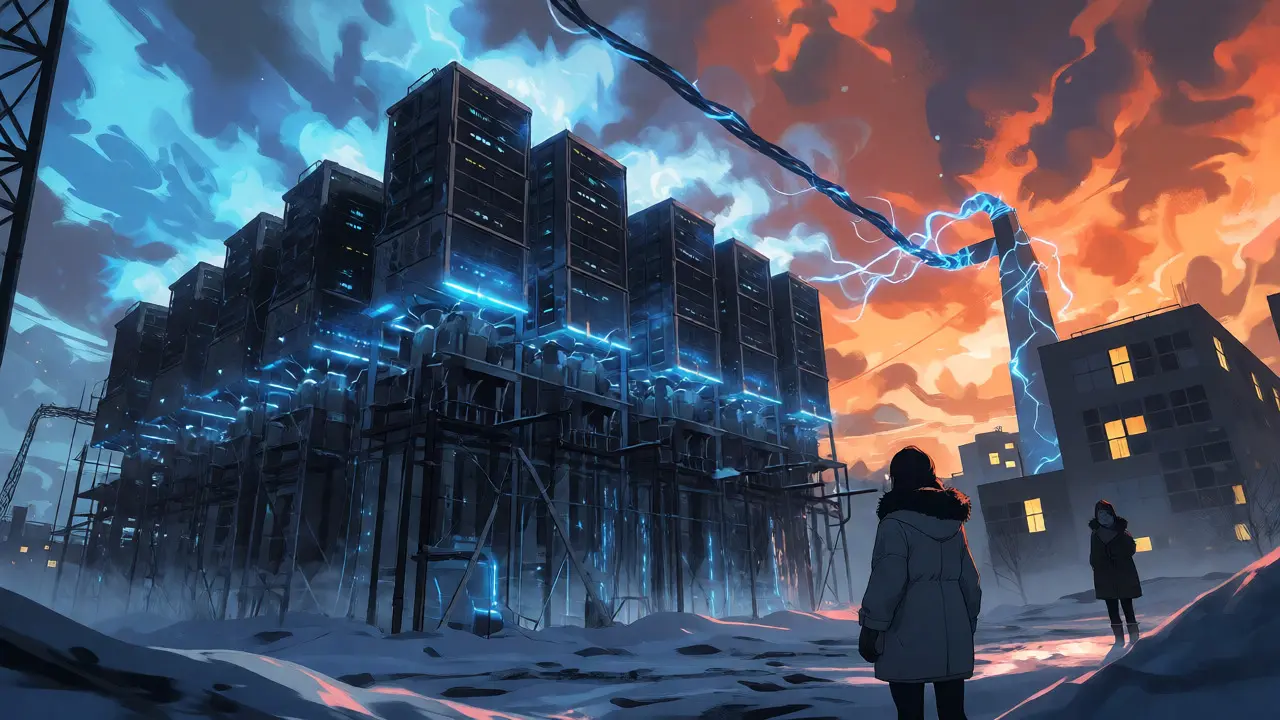
Imagine turning off the lights in your hospital because a server farm next door decided to mine Bitcoin. That’s not a hypothetical scenario; it’s exactly what happened in Kazakhstan, where the rapid explosion of crypto mining operations collided violently with an aging national power grid. For years, the country was the darling of the global mining community, offering cheap electricity and lax oversight. But when the lights started flickering in residential neighborhoods and industrial plants faced blackouts, the government pulled the plug-literally and figuratively.
If you’re tracking the shift from wild-west expansion to strict state control, this article breaks down exactly how Kazakhstan went from hosting nearly half the world’s hash rate to enforcing some of the toughest regulations on Earth. We’ll look at the specific restrictions, the crackdown on illegal miners, and what this means for legitimate operators today.
The Boom Before the Blackout
To understand the restrictions, you have to understand the boom. In 2019, when China began tightening its grip on crypto activities, miners looked north. Kazakhstan seemed like paradise: abundant coal-fired power, low costs, and minimal red tape. By 2021, the country had surged to become the second-largest hub for Bitcoin mining globally, trailing only the United States.
But this growth wasn’t managed; it was chaotic. Thousands of unlicensed rigs popped up in basements, warehouses, and even repurposed factories. They drew power indiscriminately, often bypassing meters or bribing utility workers. The result? A severe energy deficit. During winter peaks, the grid couldn’t handle the load. Hospitals reported voltage drops, and factories halted production. The public anger boiled over into protests, forcing President Tokayev to declare a state of emergency in January 2022. This wasn’t just about politics; it was about keeping the lights on.
Key Regulatory Changes You Need to Know
The government didn’t just ban mining. Instead, they created a complex framework designed to keep the industry alive but under tight supervision. If you want to operate legally in Kazakhstan now, you need to navigate several layers of bureaucracy.
First, licensing is mandatory. As of 2025, the Ministry of Digital Development, Innovation and Aerospace Industry (MDDIAI) has issued only 84 licenses to major players. Small-scale miners are effectively pushed out unless they join accredited pools. Speaking of pools, only five entities are currently accredited to aggregate mining power.
Second, there’s the issue of where you sell your coins. The government wants visibility on capital flows. Miners are required to sell 75% of their mined assets through platforms registered within the Astana International Financial Centre (AIFC). This rule, tightened from 50% in 2024, ensures that cryptocurrency earnings enter the formal banking system rather than disappearing into offshore accounts or cash markets.
Third, taxes and fees have climbed. There’s a specific tax on electricity consumption for miners, distinct from standard rates. Plus, a 15% tax applies to mining profits. These measures aim to make mining pay for the infrastructure strain it causes.
The Crackdown on Illegal Mining
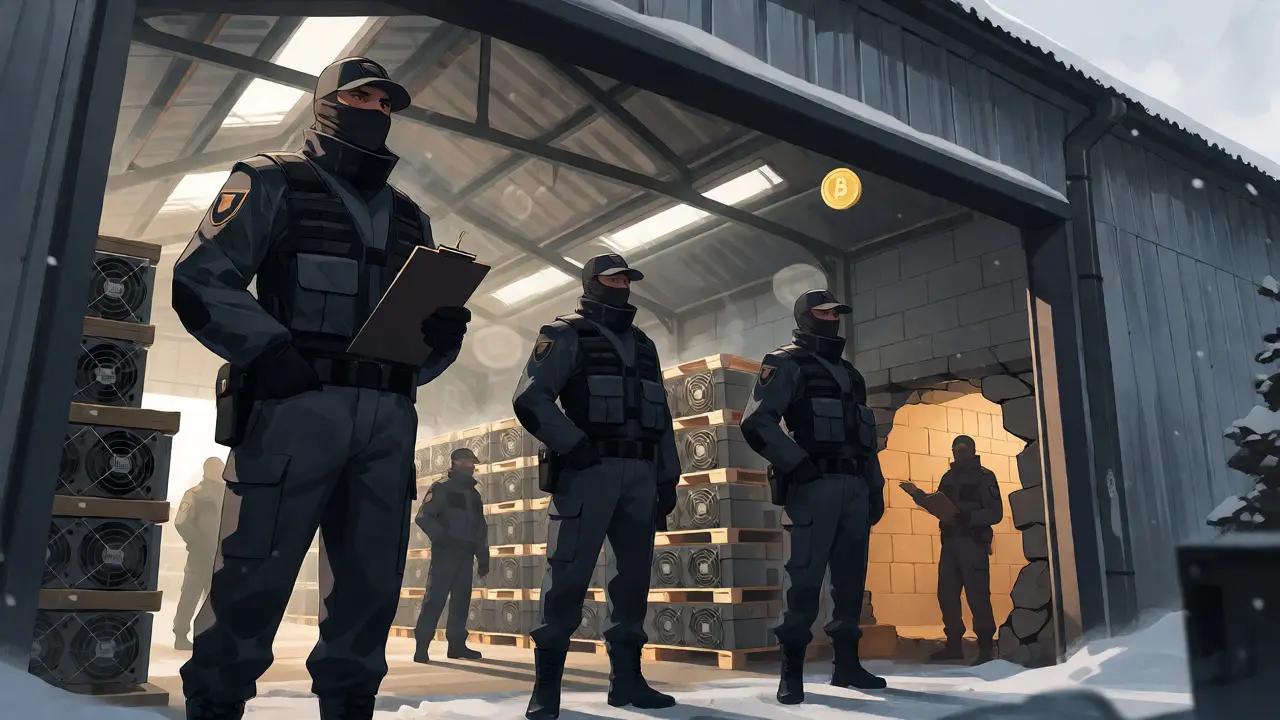
Legal miners follow the rules, but illegal ones create the real headaches. The enforcement arm here involves the Financial Monitoring Agency (FMA) and the National Security Committee (KNB). Their job? Hunt down rigs that don’t appear on official registries.
A prime example occurred in August 2025 in East Kazakhstan Oblast. Authorities dismantled a massive illegal operation consuming over 50 megawatt-hours of electricity. To put that in perspective, that single hidden network used enough power to supply a city of 50,000 to 70,000 people. The investigation revealed a sophisticated scheme involving corrupt utility employees who diverted electricity meant for residents and social facilities directly to mining farms for two years. The financial damage? Approximately $16 million (9 billion tenge).
This isn’t an isolated incident. By 2024, authorities had closed 36 unregulated exchanges and confiscated 4,000 mining devices. Raids have led to the seizure of luxury apartments in the capital and high-end vehicles bought with illicit mining profits. The message is clear: if you hide your rigs, you risk losing everything.
How the New Rules Work: A Quick Breakdown
Navigating these regulations requires attention to detail. Here’s a simplified view of the current operational landscape for licensed miners:
- Licensing: Only 84 companies hold full licenses. New applicants face rigorous scrutiny regarding environmental impact and grid stability contributions.
- Electricity Purchases: Miners must buy power through a state-run platform operated by the Ministry of Energy. Transactions are capped at one megawatt-hour per purchase to prevent hoarding and ensure fair distribution.
- Sales Mandate: 75% of mined crypto must be sold via AIFC-registered platforms. This creates a paper trail for anti-money laundering (AML) compliance.
- Registration: All equipment must be registered with the National Association of Blockchain and Data Center Industry. Unregistered machines are subject to immediate confiscation.
These steps might seem cumbersome, but they serve a purpose. They transform mining from a shadow economy activity into a regulated industrial sector. For investors, this reduces the risk of sudden shutdowns, provided you stay compliant.

The Future: Renewable Energy and State Control
Is the era of easy money over? Mostly, yes. But Kazakhstan hasn’t given up on becoming a tech hub. The strategy has shifted toward sustainability. Energy Minister representatives have proposed programs where foreign investors fund thermal power upgrades. In return, 30% of the new capacity goes to crypto miners, while 70% feeds the national grid. This "70/30" model aims to balance economic benefits with public needs.
There’s also a push toward renewables. Solar and wind projects are being fast-tracked to support mining without exacerbating carbon emissions. Deputy Governor Berik Sholpankulov of the National Bank has emphasized that digital asset regulation must align with broader financial infrastructure goals. The goal isn’t to kill mining, but to integrate it into the modern economy as a controlled utility consumer.
Legislators are also debating further controls. Some proposals suggest mandating that miners store portions of their assets on registered exchanges, increasing liquidity and oversight. Others call for decriminalizing crypto trading for users of licensed platforms, encouraging more citizens to participate in the digital economy safely.
What This Means for You
If you’re a miner looking at Kazakhstan, the days of setting up a rig in a garage and hoping no one notices are gone. The barrier to entry is higher, requiring significant capital for licensing, compliance, and renewable energy sourcing. However, the stability is better. Licensed operators benefit from predictable policies and protection against arbitrary shutdowns.
For traders and investors, the AIFC mandate changes market dynamics. It centralizes liquidity and may reduce volatility caused by underground selling. It also signals that Kazakhstan intends to remain a key player in the global blockchain ecosystem, albeit a much quieter, more disciplined one.
| Feature | Pre-2022 (Boom Era) | Current Status (2025-2026) |
|---|---|---|
| Licensing | Minimal/None for small ops | Mandatory for all; 84 licenses issued |
| Crypto Sales | Free market / OTC | 75% must go through AIFC platforms |
| Electricity Access | Open access / Bribes common | State-run platform; MW limits apply |
| Enforcement | Lax / Rare raids | Aggressive; KNB & FMA coordinated raids |
| Taxation | Low / Ambiguous | 15% profit tax + electricity surcharge |
Is crypto mining still legal in Kazakhstan?
Yes, but it is highly regulated. You must obtain a license from the Ministry of Digital Development and register your equipment. Operating without a license risks confiscation of hardware and fines.
Why did Kazakhstan restrict crypto mining?
The primary reason was the energy crisis. Unregulated mining placed excessive strain on the national power grid, causing blackouts in residential areas and hospitals during peak demand periods.
What is the AIFC requirement for miners?
Licensed miners are required to sell 75% of their mined cryptocurrency through platforms registered with the Astana International Financial Centre (AIFC). This ensures transparency and integrates crypto earnings into the formal financial system.
Can I mine Bitcoin at home in Kazakhstan now?
It is difficult. Home miners typically fall under stricter monitoring or are forced to join accredited pools. The regulatory focus is on large, licensed industrial operations, making small-scale home mining less economically viable due to compliance costs.
What happens if I get caught mining illegally?
Consequences include confiscation of mining devices, heavy fines, and potential criminal prosecution for theft of electricity or money laundering violations. Recent raids have also seized assets purchased with illegal mining profits.