
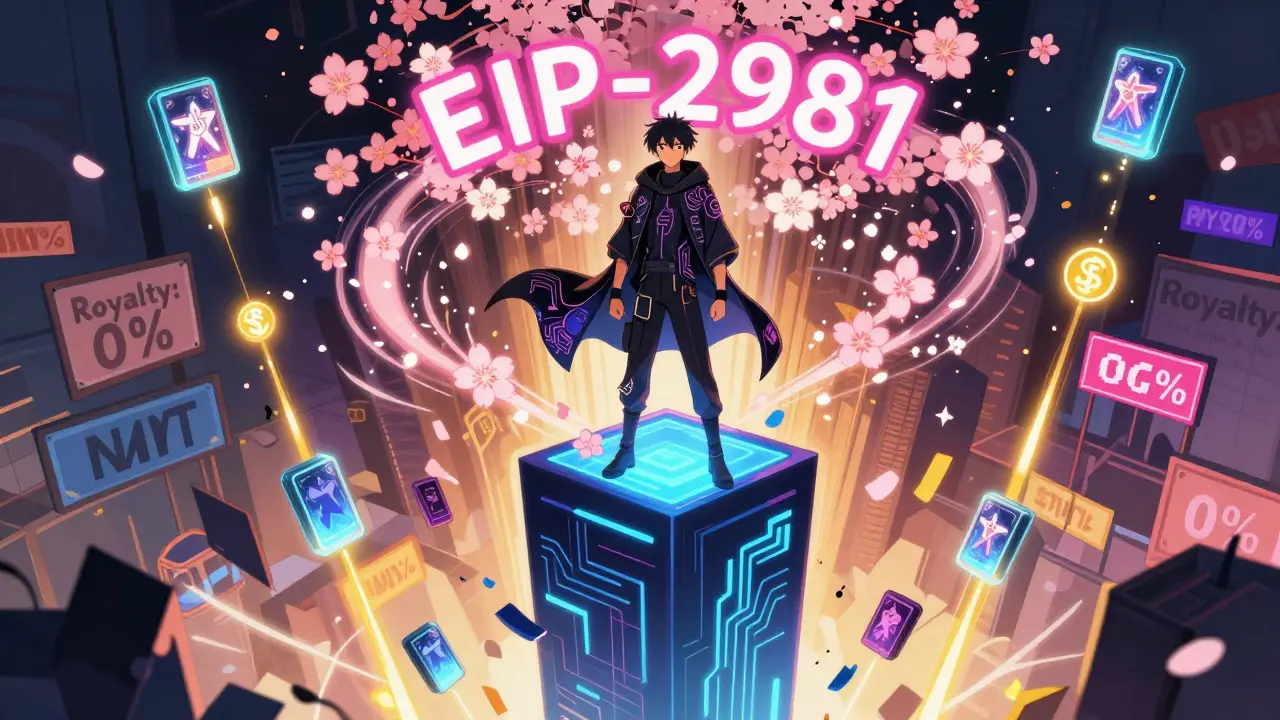
NFT royalties are meant to give creators a fair share every time their digital art, music, or collectible sells again. But in practice, too many marketplaces ignore them. That’s where on-chain enforcement comes in - it’s not just a nice feature, it’s the only way to make sure creators actually get paid.
What On-Chain Royalty Enforcement Really Means
When you mint an NFT, you can set a royalty percentage - say, 10% - that should go to you every time someone resells it. That sounds simple. But until recently, there was no universal rule forcing marketplaces to follow it. Some platforms like OpenSea honored creator royalties. Others, like Blur, let buyers set royalties to zero. That meant artists could earn nothing from secondary sales, even if they built their entire business around NFTs. On-chain enforcement changes that. It means the royalty payment is coded directly into the NFT’s smart contract. No middleman. No opt-out. When the NFT is sold, the blockchain automatically calculates and sends the royalty to the creator’s wallet. It doesn’t matter if the sale happens on OpenSea, LooksRare, or a brand-new marketplace - if the smart contract says 10% goes to the artist, that’s what happens. This isn’t magic. It’s built on standards like EIP-2981, introduced in 2020 and widely adopted by 2023. EIP-2981 lets creators define royalty amounts and recipient addresses right inside the NFT’s metadata. It works with both ERC-721 and ERC-1155 tokens. The key? The royalty logic lives on the blockchain, not in a marketplace’s database. That’s what makes it unstoppable.How EIP-2981 Makes Royalties Work Across Platforms
Before EIP-2981, every marketplace had its own way of handling royalties. Some read metadata. Some ignored it. Some even pretended royalties didn’t exist. That created chaos. An artist’s NFT might earn royalties on OpenSea but zero on Blur. Buyers had no way to know if they were paying the creator or stealing from them. EIP-2981 fixed that by creating a single, open standard. Any wallet, exchange, or marketplace that supports it can read the royalty information directly from the NFT’s contract. It doesn’t need special permissions. It doesn’t need a whitelist. It just asks: “What’s the royalty amount? Who gets paid?” and the blockchain answers. For creators, this means you don’t have to sign up with 10 different platforms to get paid. You set your royalty once - on the blockchain - and it travels with your NFT everywhere. That’s interoperability. That’s the whole point of Web3. But here’s the catch: EIP-2981 only defines how to report royalties. It doesn’t force anyone to pay them. That’s where enforcement mechanisms come in.Blocklists vs. Allowlists: The Two Ways to Force Compliance
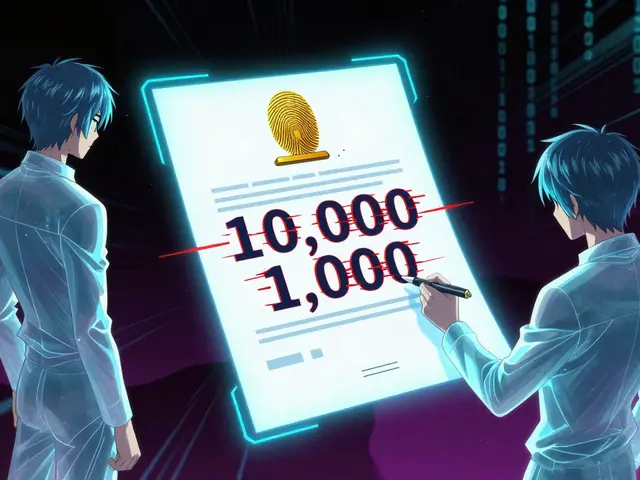
If a marketplace refuses to pay royalties, how do you stop it? There are two main strategies: blocklists and allowlists. Blocklists work like a firewall. They keep track of known royalty-avoiding marketplaces - like Blur - and block any NFT transfer that tries to go through them. If your NFT is on a blocklist, you can’t sell it on Blur. The transaction fails. Simple. Effective. But here’s the problem: bad actors keep building new marketplaces. Every week, someone deploys a new contract that ignores royalties. Creators have to constantly scan the blockchain, identify new violators, and update their blocklists. It’s a never-ending game of whack-a-mole. Allowlists are the opposite. Instead of blocking bad actors, you only allow trusted platforms to handle your NFTs. You pick which marketplaces can transfer your NFT. If it’s not on your list, the transfer is denied. This gives you total control. But it also kills flexibility. Buyers can’t trade your NFT on any new platform without your permission. And if you forget to update your allowlist, your NFT becomes locked. Worse, allowlists don’t stop people from cheating. A buyer could buy your NFT for $0 on an approved marketplace, then pay the seller $10,000 in ETH outside the system. The royalty is paid - technically - but you never see a cent. The system is broken.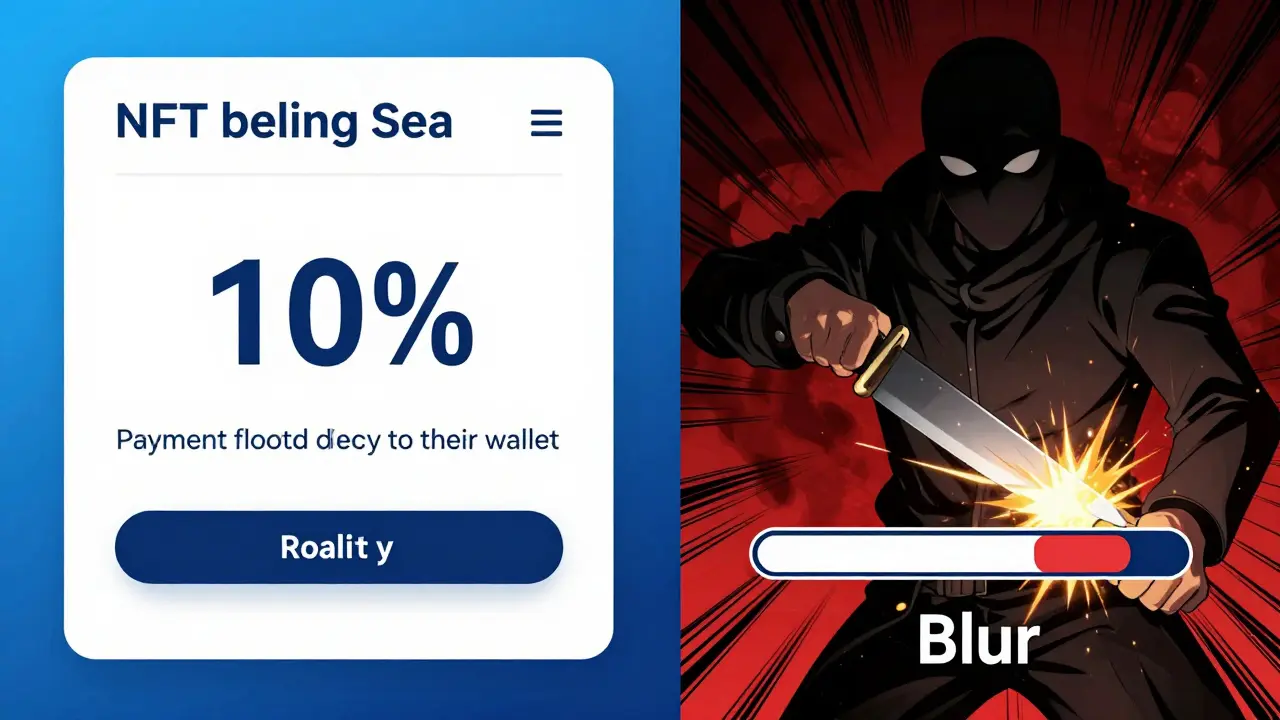
Why Cross-Chain Royalties Are Still a Mess
Most NFTs live on Ethereum. But people are moving them to Solana, Polygon, Arbitrum, and even Bitcoin Layer 2s. The problem? Each chain has its own NFT standard. Solana doesn’t use EIP-2981. Polygon might support it, but only if the bridge preserves the metadata. When an NFT moves from Ethereum to another chain, the royalty data often gets lost. The new chain doesn’t know who the creator is, or what percentage they’re owed. The result? Zero royalties. Even if the original NFT had perfect on-chain enforcement, the moment it crosses chains, it’s vulnerable. Some projects are trying to fix this. Cross-chain bridges now include royalty translation layers. Others are building native royalty support into their chains. But there’s no universal solution yet. Until every major blockchain agrees on a common royalty standard, creators will keep losing money when their NFTs leave Ethereum.Platforms That Are Actually Enforcing Royalties
Not all marketplaces are the same. Some are fighting for creators. Others are betting on short-term trading volume. OpenSea, the biggest NFT platform, now uses on-chain royalty enforcement. It blocks transfers to known royalty-avoiding marketplaces. It also supports EIP-2981 and shows royalty percentages upfront. If you’re a creator, OpenSea is one of the safest places to list your work. Blur, on the other hand, made headlines by making royalties optional. Buyers can set royalty percentages to zero. In July 2023, Nansen data showed Ethereum-based NFT royalties hit a two-year low - largely because Blur’s model spread fast. Traders loved it. Creators lost millions. Then there’s Enjin, which launched a blockchain in January 2024 with royalties baked into the protocol itself. Every NFT on Enjin’s chain automatically pays royalties - no exceptions. No blocklists. No allowlists. Just code. It’s the closest thing to a foolproof system we have. The RARI Foundation also built an EVM-compatible chain with native royalty enforcement. Their goal? Make royalty payments as reliable as gas fees. If you mint on their chain, your royalties are guaranteed - no matter where the NFT ends up.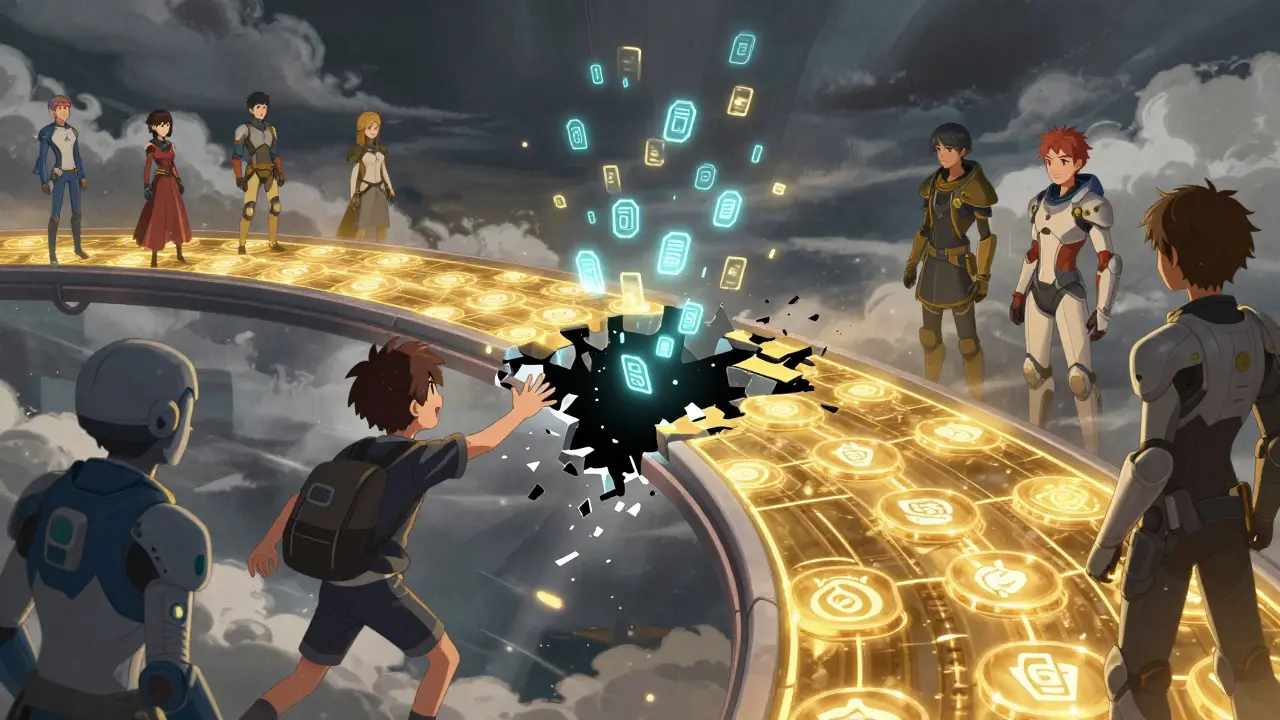

Comments
Sammy Tam
December 16, 2025 AT 12:49 PMLove how this breaks down the real issue - royalties aren't just nice to have, they're the whole damn point of Web3. I've seen artists burn out because platforms like Blur just laugh at their contracts. On-chain enforcement isn't tech magic, it's justice with gas fees.
Kelsey Stephens
December 17, 2025 AT 22:57 PMFinally, someone gets it. I used to think royalties were just a suggestion until I saw my friend’s NFT collection get stripped bare on a secondary market. Now I only mint on chains that enforce it. No compromises.
Timothy Slazyk
December 19, 2025 AT 11:40 AMLet’s be honest - EIP-2981 is just the first step. The real problem is that blockchain is still a Wild West where power lies with the biggest buyers, not the creators. We need legal recognition of smart contracts as binding agreements, not just technical standards. Until then, we’re just rearranging deck chairs on the Titanic.
It’s not about coding better - it’s about shifting the entire economic paradigm. Royalties should be as non-negotiable as oxygen in a space suit. Not optional. Not negotiable. Just… there.
And yes, cross-chain is a nightmare. Solana’s metadata model is a joke. If your royalty vanishes when you bridge, you didn’t build a decentralized system - you built a fragmented illusion.
The Enjin model? That’s the blueprint. Baked-in, immutable, unavoidable. Why are we still debating this? Why aren’t all new chains adopting this as standard from day one?
Creators aren’t asking for handouts. They’re asking for basic dignity. If you’re building a platform that ignores royalties, you’re not a marketplace - you’re a parasite.
Elvis Lam
December 20, 2025 AT 06:36 AMBlocklists are a band-aid. Allowlists are a cage. The only real solution is protocol-level enforcement - like Enjin or RARI. If the chain doesn’t pay, the transaction doesn’t execute. Period. No exceptions. No loopholes. Stop pretending marketplaces are neutral.
Patricia Amarante
December 21, 2025 AT 12:00 PMMy cousin is a digital painter and she cried when she found out her art sold 30 times and she got $0. This isn’t tech talk - it’s survival.
Bradley Cassidy
December 23, 2025 AT 01:02 AMbro i just minted my first collection and i thought royalties were automatic 😭 turns out nope. had to hire a dev to slap EIP-2981 on it. worth every penny. if you're not doing this, you're leaving money on the table and letting scammers win.
Sean Kerr
December 24, 2025 AT 09:12 AMYESSSS!! 🙌 I’ve been screaming this for months - if your NFT doesn’t carry its own royalty, it’s just a JPEG with a fancy URL. No wonder people think Web3 is a scam. We’re letting the wolves run the sheep pen.
Enjin’s model? That’s the future. No drama. No politics. Just code that says ‘pay the artist’ - and it does. No questions asked. 🤝
Jonny Cena
December 25, 2025 AT 17:34 PMFor creators who aren’t coders: use Zora or Foundation. They handle all the EIP-2981 stuff for you. You focus on making art. Let them handle the blockchain legalese. Don’t let technical barriers silence your voice.
Madhavi Shyam
December 26, 2025 AT 17:25 PMPer EIP-2981, royalty metadata must be encoded in the tokenURI’s JSON schema under the 'royalties' key with 'amount' (uint96) and 'recipient' (address). Without this, even compliant marketplaces will default to 0%. This is non-negotiable for interoperability.
Mark Cook
December 26, 2025 AT 20:41 PMWait… so you’re saying we should force people to pay artists? 😳 What about buyer freedom? What if I don’t want to fund some guy’s crypto art? 🤔
Tom Joyner
December 26, 2025 AT 23:55 PMHow quaint. You assume creators deserve compensation. The market determines value - not some outdated notion of ‘fair share.’ If your art doesn’t sell with royalties, it’s not valuable. End of story.
Abby Daguindal
December 28, 2025 AT 10:34 AMYou’re all missing the point. If you need royalties to survive, you’re not an artist - you’re a vendor. Real creators make art for art’s sake. The money is just noise.
Jack Daniels
December 30, 2025 AT 00:12 AMI just bought a Bored Ape for $500 on Blur… and I didn’t pay the royalty. And you know what? I feel fine. Like, really fine. Like I just won the game. 😌
Rebecca Kotnik
December 30, 2025 AT 16:55 PMThere is a profound philosophical tension here between the decentralization ethos of Web3 and the centralized imposition of economic entitlement. On one hand, we champion permissionless innovation - yet we simultaneously demand that all participants adhere to a pre-agreed, immutable compensation structure. Is this not a contradiction? If the blockchain is truly open, must it not also be open to the possibility that value may be redistributed in ways unforeseen by the original creator? The very mechanism that seeks to protect creators may, in fact, constrain the emergent nature of digital culture. Perhaps the solution lies not in enforcement, but in redefining value itself - not as a fixed percentage, but as a dynamic, community-recognized tribute.
Consider: what if the artist’s true reward is not monetary, but the recognition that their work moved others to participate in its lifecycle? What if the blockchain, in its neutrality, reveals that royalties are not a right - but a social contract, one that should be honored voluntarily, not enforced mechanically?
And yet… I acknowledge the pain. I have watched talented individuals abandon their craft because the system failed them. So while I question the metaphysics, I do not dismiss the suffering. Perhaps the answer lies in layered systems: protocol-level defaults, with opt-in community governance for exceptions. A middle path - not enforcement, but invitation.
This is not merely a technical problem. It is a moral one. And morality cannot be coded. It must be chosen.
Samantha West
January 1, 2026 AT 06:18 AMLet me ask you something - if a painter spends 6 months on a mural, and someone paints over it to sell it as their own, we call that theft. But when a digital artist creates an NFT and someone resells it without paying them - that’s ‘market efficiency’? That’s not capitalism. That’s cannibalism. And you’re all just sitting here debating semantics while creators starve.
Stop pretending this is about ‘buyer freedom.’ It’s about power. The people who control the marketplaces control the money. And they’re not interested in fairness - they’re interested in volume. That’s why Blur exists. That’s why royalties are optional. That’s why your art gets stolen and you get silence.
On-chain enforcement isn’t about control. It’s about survival. It’s about saying: ‘I made this. I own this. And I deserve to benefit from it - no matter who tries to erase me.’
If you think this is too much, ask yourself: would you let someone sell your house every time someone moved in? Would you let them keep all the rent? No. So why are we letting them do it with art?
This isn’t tech. This is justice. And justice doesn’t negotiate.
Jesse Messiah
January 2, 2026 AT 09:09 AMjust wanted to say thank you for writing this. my sister is a musician and she just dropped her first nft album - and now she’s actually making money every time it trades. i cried reading this. we need more people like you. 💙
SeTSUnA Kevin
January 2, 2026 AT 11:42 AMIncorrect. EIP-2981 does not enforce royalties - it standardizes metadata. Enforcement requires platform compliance. The distinction is fundamental. Misconceptions like this undermine technical literacy.