

When you think about trading crypto in Asia, you might picture Hong Kong or Singapore. But in 2026, Taiwan has quietly become one of the most carefully regulated crypto markets in the region - and it’s all thanks to the Financial Supervisory Commission (FSC). If you’re running or using a crypto exchange in Taiwan, you’re not just dealing with rules. You’re navigating a system built to stop fraud, protect users, and keep Taiwan’s financial reputation intact.
What the FSC Actually Controls
The FSC doesn’t treat Bitcoin or Ethereum like money. They call them "virtual commodities." That’s not just semantics - it changes everything. Because they’re not legal tender, they don’t get the same rules as dollars or euros. Instead, the FSC created a separate track for them: Virtual Asset Service Providers (VASPs). Any exchange, wallet provider, or trading platform that handles crypto in Taiwan must register as a VASP. No exceptions. Not even if you’re based overseas but serve Taiwanese users. This rule became mandatory in July 2024. Before that, some exchanges operated in gray zones. Now, if you’re not registered with the FSC, you’re breaking the law. And the penalties aren’t just fines. They include jail time. The Taiwanese Ministry of Justice made it clear: using crypto to launder money or scam people is now a criminal offense, not just a regulatory slip-up.The Eight Rules Every Exchange Must Follow
In September 2023, after the FTX collapse shook global markets and exposed local fraud cases in Taiwan, the FSC dropped its first major set of guidelines for VASPs. These aren’t laws yet - but everyone treats them like they are. Here’s what exchanges actually have to do:- Whitepapers for every new token: If you’re listing a new coin, you need to publish a full whitepaper on your site. No vague marketing fluff. Real tech specs, team info, and use cases.
- Keep customer funds separate: Your hot wallets and cold wallets can’t mix with company money. Every customer’s crypto must be locked in its own trust account. Mixing funds = violation.
- Secure your systems: The FSC demands cybersecurity standards matching those of banks. Two-factor authentication, regular penetration tests, and offline storage for 90% of assets aren’t optional.
- Transparent trading: No hidden fees. No manipulated order books. All trades must be recorded and available for audit.
- Internal audits: Exchanges need independent auditors checking their books at least once a year. The FSC can demand these reports anytime.
- Public disclosures: You must publish your AML policies, risk warnings, and contact info clearly on your website. No buried links.
- Operational controls: You need documented processes for everything - from customer onboarding to withdrawal limits and emergency shutdowns.
- Foreign operators aren’t exempt: If your exchange has Taiwanese users, even if you’re based in Canada or Japan, you still need FSC registration.
Security Tokens? Only for the Elite
Not all crypto is treated the same. If a token acts like a stock - meaning it promises profits based on someone else’s work - the FSC treats it as a security. And that triggers the Securities and Exchange Act. Only licensed securities dealers can trade these, and they must go through the Taipei Exchange (TPEx). The bar is high. To date, only one security token has been officially approved in Taiwan. That’s not because there’s no demand. It’s because the paperwork, legal reviews, and ongoing reporting are so heavy that most projects just walk away.
Crypto ETFs Are Here - But Not for Everyone
You might’ve heard about Bitcoin ETFs in the U.S. Taiwan didn’t copy that exactly. Instead, in late 2024, the FSC and the Securities Business Association agreed on five key rules to let professional investors access foreign crypto ETFs. Who qualifies? People with over NT$10 million in liquid assets or those with at least three years of investment experience in derivatives or hedge funds. Retail traders? Still locked out. The FSC isn’t against crypto ETFs - they just want to make sure only people who can afford to lose money get in.The Industry Is Playing Along
You’d expect exchanges to fight back. But in Taiwan, they didn’t. Instead, 24 major crypto firms - including local giants like BitMEX’s regional partners and Binance’s compliant arm - formed the Taiwan Virtual Asset Service Provider Association. This isn’t a lobbying group. It’s a compliance cooperative. They meet monthly with FSC officials, share best practices, and even help draft guidelines. Why? Because they know regulation means legitimacy. And legitimacy means institutional money will eventually come in.What’s Coming Next?
The FSC isn’t done. A draft comprehensive cryptocurrency law is expected around June or July 2025. Right now, they’re still in the feasibility study phase. But industry insiders say the direction is clear: more detailed rules on custody, clearer definitions of what counts as a security, and possibly even a licensing system similar to Japan’s. One thing’s certain - the FSC watches global moves closely. When the U.S. approved spot Bitcoin ETFs in January 2024, Taiwan didn’t rush. They waited. Then they adapted.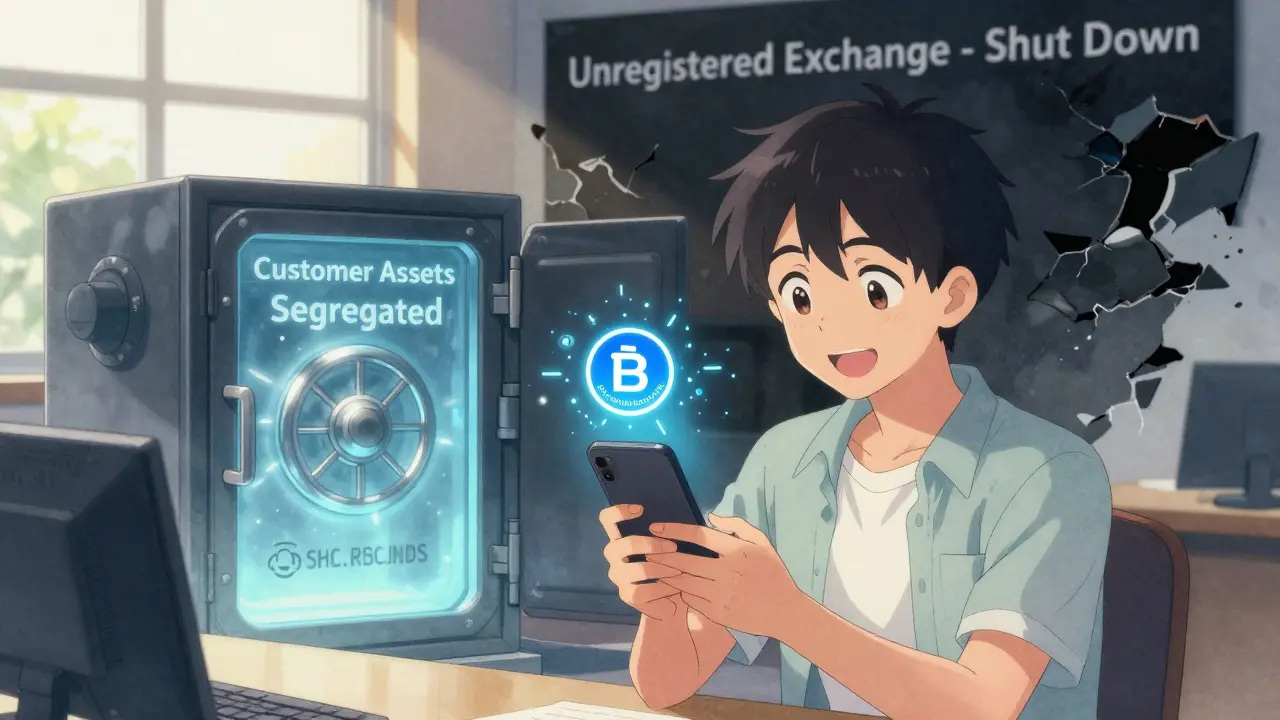
Why This Matters for You
If you’re an exchange operator in Taiwan: registration isn’t optional. It’s your license to operate. The cost? Higher than before. You’ll need legal teams, cybersecurity experts, and auditors. But you’ll also get something rare: trust. Banks are starting to open accounts for compliant VASPs. Payment processors are returning. And foreign investors are taking Taiwan seriously again. If you’re a trader: you’re safer now. Your funds are segregated. Your exchange has to tell you what it’s doing. If something goes wrong, there’s a regulator watching - not just a Telegram group full of rumors. And if you’re thinking of launching a crypto project? Don’t try to bypass Taiwan’s rules. Build into them. The FSC doesn’t want to kill innovation. They want to make sure it doesn’t kill people.Compliance Checklist for Exchanges (2026)
- ✅ Registered with FSC as a VASP
- ✅ AML/CFT program in place with staff training
- ✅ Customer assets segregated from company funds
- ✅ Cold storage for at least 90% of digital assets
- ✅ Annual independent audit completed
- ✅ Publicly accessible whitepapers for all listed tokens
- ✅ Transparent fee structure and trade logs
- ✅ Cybersecurity audit by FSC-approved firm
- ✅ Reporting system for suspicious transactions
Do foreign crypto exchanges need to register with Taiwan’s FSC?
Yes. If a foreign exchange serves Taiwanese users - even just a few - it must register with the FSC as a Virtual Asset Service Provider (VASP). The FSC’s jurisdiction is based on user location, not company headquarters. This means platforms based in the U.S., Singapore, or elsewhere still need to comply if they have Taiwanese customers.
Can I trade Bitcoin ETFs in Taiwan as a regular investor?
Not directly. Taiwan currently only allows professional investors - those with over NT$10 million in liquid assets or three years of derivatives trading experience - to access foreign crypto ETFs. Retail investors can’t buy them yet. The FSC is monitoring global markets but hasn’t approved domestic crypto ETFs for public trading.
What happens if an exchange doesn’t register with the FSC?
Unregistered exchanges face criminal charges. The FSC can shut them down, freeze assets, and refer operators to the Ministry of Justice. Individuals involved can receive custodial sentences - not just fines - under Taiwan’s new anti-fraud laws passed in 2024. Many unregistered platforms have already been removed from app stores and payment networks in Taiwan.
Are all cryptocurrencies regulated the same way in Taiwan?
No. The FSC distinguishes between virtual commodities (like Bitcoin and Ethereum) and security tokens. Virtual commodities fall under VASP rules. Security tokens - those promising profit based on a project’s success - are treated like stocks and must be traded only through licensed securities dealers on the Taipei Exchange. Only one security token has been approved so far.
How often do exchanges need to report to the FSC?
Exchanges must submit quarterly reports on transaction volumes, AML activity, and asset holdings. Annual audits by third-party firms are mandatory. The FSC can also request ad-hoc reports if suspicious activity is detected. Failure to report on time can lead to suspension of operations.
Is staking or yield farming allowed under FSC rules?
Staking and yield farming are in a gray zone. The FSC hasn’t issued specific rules yet, but if these activities involve offering returns tied to a project’s performance, they may be classified as unregistered securities. Exchanges offering them must consult legal counsel and may need to apply for securities licensing. Many have paused these features until clearer guidance arrives.
Can I use a Taiwanese crypto exchange if I live outside Taiwan?
Yes, if the exchange is FSC-registered and you’re not a Taiwanese resident. However, some exchanges restrict access to non-residents to simplify compliance. Always check the platform’s terms - and be aware that your local jurisdiction may have its own rules about using foreign crypto services.
What’s the difference between VASP registration and a full license?
Currently, VASP registration is the minimum legal requirement to operate. It’s not a full license like a bank. But the FSC is moving toward a tiered licensing system, expected to be introduced in 2025. The registration gives you legal status. The future license will define your permitted activities - like trading, custody, or token issuance.
Are NFTs regulated in Taiwan?
NFTs are not specifically regulated unless they represent securities or are used in financial schemes. If an NFT grants ownership rights, profit-sharing, or voting power, it may be classified as a security token and fall under stricter rules. Most NFT marketplaces in Taiwan operate under the same VASP registration as crypto exchanges.
How does Taiwan’s crypto regulation compare to Japan or South Korea?
Taiwan’s approach is a hybrid. Like Japan, it requires registration and strict AML rules. Like South Korea, it enforces user protection and transparency. But unlike Japan, it doesn’t yet have a full licensing system. Unlike South Korea, it doesn’t ban leverage trading outright. The FSC is deliberately avoiding extremes - aiming for a middle path that encourages innovation without sacrificing safety.




Comments
Jeremy Lim
February 15, 2026 AT 10:29 AMSo Taiwan’s just making crypto boring now? 🤡
John Doyle
February 16, 2026 AT 11:42 AMThis is actually kind of inspiring. Most countries are either ignoring crypto or banning it. Taiwan’s building something real - structured, safe, and smart. If this works, it could be the blueprint for the rest of the world. No hype, no chaos. Just solid rules. 👏
Elijah Young
February 16, 2026 AT 14:11 PMRegistration is mandatory? That’s a good start. But I wonder how many exchanges are still operating under the radar. The FSC can’t monitor every wallet. And what about decentralized platforms? The system’s only as strong as its weakest link.
Gaurav Mathur
February 18, 2026 AT 04:39 AMThey say they want to stop fraud but this is just a trap. The government is using this to track everyone. Soon they’ll freeze your wallet if you buy too much Bitcoin. They’re scared of real money. This isn’t regulation. It’s control.
Crystal McCoun
February 20, 2026 AT 02:16 AMIt’s so refreshing to see a regulator actually care about user safety. Most places treat crypto like a free-for-all. Taiwan’s saying: ‘We’ll protect you, but you have to play by the rules.’ And honestly? That’s fair. If you’re building something long-term, this is the way to do it.
Beth Trittschuh
February 20, 2026 AT 07:25 AMI keep thinking about the irony here - we built blockchain to escape centralized control… and now the most effective system is run by a government agency. Maybe the real revolution isn’t in code. Maybe it’s in trust. And Taiwan just gave us a new definition of it.
Benjamin Andrew
February 21, 2026 AT 09:48 AMLet’s be honest: this is performative compliance. The FSC is just trying to look good to the IMF and the OECD. The real players? They’re still using offshore entities, shell companies, and unregistered wallets. This entire framework is theater. A very expensive, very bureaucratic theater.
Donna Patters
February 22, 2026 AT 22:20 PMOnly NT$10 million to trade ETFs? How quaint. The average person is left to gamble on unregulated platforms while the elite sip champagne in their institutional vaults. This isn’t protection - it’s class segregation dressed up as financial wisdom.
Michelle Cochran
February 24, 2026 AT 20:31 PMThey say they’re not against innovation. But if innovation means people can earn without permission? Then yes - they are against it. This isn’t regulation. It’s a velvet cage. You can move inside it. But you can’t escape it. And that’s the real danger.
Peggi shabaaz
February 25, 2026 AT 20:35 PMHonestly I’m just glad someone’s trying to make this less chaotic. I’ve seen too many people lose everything because exchanges just vanished overnight. If this means I can sleep at night? I’ll take the paperwork.
Kaz Selbie
February 27, 2026 AT 05:11 AMOh wow. So now we’re supposed to be impressed because a government made crypto less fun? What a win. Next they’ll require a background check to buy Dogecoin. Congratulations, Taiwan - you just turned the future into a compliance seminar.
Robbi Hess
February 27, 2026 AT 08:19 AMLet me get this straight - you need a whitepaper for every coin, annual audits, and cold storage for 90% of assets? That’s not regulation. That’s a startup death sentence. The small players are gone. Only billionaires and hedge funds get to play now. This isn’t innovation. It’s consolidation.
Keturah Hudson
March 1, 2026 AT 03:23 AMAs someone who’s lived in both Taiwan and the U.S., I can say this: Taiwan’s approach feels… culturally aligned. It’s not about control. It’s about harmony. They don’t want crypto to be wild. They want it to be responsible. And honestly? That’s a rare kind of wisdom.
Ace Crystal
March 1, 2026 AT 13:40 PMThis is the future. No more shady ICOs. No more rug pulls. Just clear rules, real audits, and real accountability. If you’re building something legit - this is your playground. If you’re here to scam? You’re already out. Welcome to the new crypto era.
Brittany Meadows
March 2, 2026 AT 02:34 AMStaking is in a ‘gray zone’? 😂 So what happens when the FSC wakes up tomorrow and says ‘oops, that’s a security now’? You’re gonna have 10,000 people with frozen wallets and no recourse. This isn’t regulation. It’s a game of ‘guess what I’m thinking.’ And we’re all just pawns.