

Remember the days when joining a Twitter account and liking a post was enough to get free crypto? That was the reality in 2021. The FEAR token is a cryptocurrency associated with a Play-to-Earn gaming ecosystem that conducted its primary distribution via a CoinMarketCap partnership in September 2021. If you are searching for details on how to claim the FEAR token airdrop today, the short answer might disappoint you: the main event is over. However, understanding what happened, why it matters, and where the token stands in 2026 provides crucial context for anyone interested in the history of gaming crypto or looking for similar opportunities.
The Core Problem: Is the FEAR Airdrop Still Active?
You likely clicked this title because you heard about FEAR and want your share. Here is the hard truth. The massive, widely publicized CoinMarketCap airdrop campaign for FEAR concluded on September 24, 2021. Unlike modern airdrops that run for months with complex point systems, this was a time-bound promotional event. If you did not participate then, you missed the boat on the initial distribution. There have been no major subsequent airdrop announcements from the project team in 2025 or 2026. This means there is no active registration page, no new snapshot dates, and no "claim" button waiting for you on the official site right now.
This distinction is vital. In the crypto world, "airdrop" can mean two things: a one-time historical distribution (like FEAR’s) or an ongoing reward mechanism. FEAR belongs to the former category. Knowing this saves you hours of hunting for broken links or falling victim to scam sites pretending to offer "late claims."
How the Original Distribution Worked
To understand the value of what was distributed, we need to look at the mechanics. The project partnered with CoinMarketCap, a leading cryptocurrency data aggregator, to leverage its user base of over 100 million monthly active users. This partnership allowed FEAR to reach a massive audience without requiring users to navigate complex blockchain wallets immediately.
The process was surprisingly simple compared to today's standards:
- Social Media Engagement: Participants had to maintain active accounts on both Twitter and Telegram. This was the standard "growth hack" of 2021-trading attention for tokens.
- Platform Integration: Users logged into their existing CoinMarketCap accounts. There was no need to connect a MetaMask wallet initially, lowering the barrier to entry significantly.
- Click-to-Join: After accessing the official registration link, users simply clicked "Join This Airdrop."
The distribution itself had two phases. First, the project released 2,000 Play2Earn NFT Airdrop tickets. Each ticket held a value equivalent to 25 FEAR tokens. Later, they expanded the scope, distributing 20,000 $FEAR tokens to over 500 winners. This approach focused on broad awareness rather than rewarding deep protocol usage, which contrasts sharply with modern strategies like those used by EigenLayer, which rewards verifiable blockchain activity such as restaking.
Current Value and Price Analysis (2026 Context)
If you managed to secure FEAR tokens during the 2021 drop, you might be wondering about their current worth. As of August 2026, the market dynamics for FEAR reflect a mature, low-volatility asset within the gaming sector. The token has not seen the explosive growth of Layer 1 blockchains or major DeFi protocols.
Here is the breakdown of the pricing landscape:
| Metric | Value / Range |
|---|---|
| Current Market Price (Aug 2026) | $0.008443 |
| 2025 Average Price Range | $0.006654 - $0.008444 |
| Potential Highs (2025-2026) | $0.008583 - $0.009288 |
| Potential Lows (2025-2026) | $0.003659 - $0.004897 |
| Long-term Projection (2028 High) | $0.01123 |
| Projected ROI (from current levels) | ~16% |
These numbers tell a specific story. FEAR is positioned as a stable, albeit modest, performer. It does not carry the high risk/high reward profile of newer meme coins or unproven Layer 2 networks. For holders, this means capital preservation rather than life-changing gains. For potential buyers, the upside is limited to single-digit percentage increases over the next few years, assuming the project maintains its current development pace.
Why FEAR Doesn't Appear in Modern Airdrop Lists
You won't find FEAR on the "Top Airdrops of 2025" lists alongside projects like LayerZero Phase 2 or Scroll Network. This absence isn't necessarily a sign of failure, but rather a reflection of industry evolution. The crypto landscape has shifted dramatically since 2021.
In 2021, the goal was user acquisition at all costs. Social media follows were currency. Today, projects prioritize quality over quantity. Modern airdrops use sophisticated mechanisms:
- Wallet Snapshots: Projects analyze your transaction history to see if you are a genuine user or a farmer.
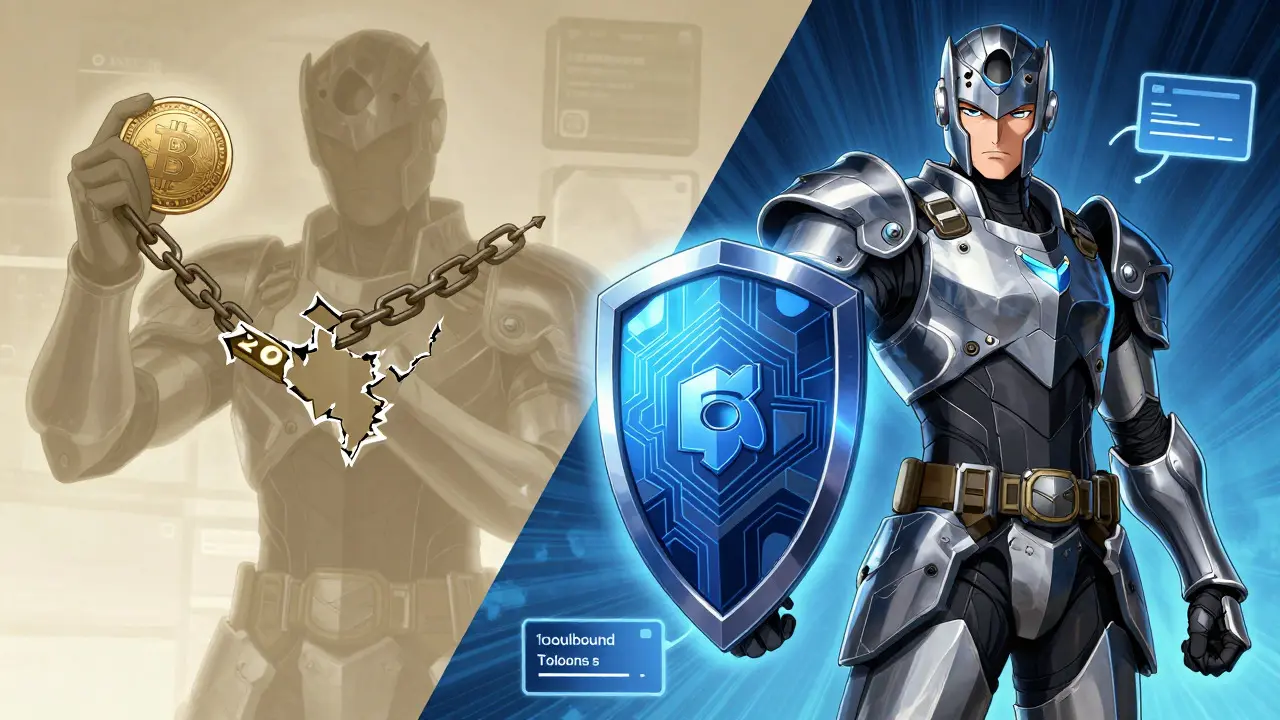
- Soulbound Tokens (SBTs): These non-transferable tokens verify your identity and reputation, preventing sybil attacks (one person creating thousands of fake accounts).
- Multi-Network Activity: You are often required to interact with multiple ecosystems, not just one platform.
FEAR’s original strategy relied on the simplicity of social engagement. While effective for its time, it lacks the depth required for today's competitive airdrop scene. Furthermore, the regulatory environment has tightened. Current distributions often require Know Your Customer (KYC) procedures and geographic restrictions, hurdles that FEAR bypassed in its early days. This regulatory gap makes reviving the old model difficult.
The Play-to-Earn Context
FEAR emerged during the golden age of Play-to-Earn (P2E) gaming. Alongside giants like Axie Infinity and The Sandbox, it tried to capture the imagination of gamers willing to trade time for tokens. The sector attracted billions in investment during the 2021 bull market.
However, sustainability became the killer problem. Many P2E projects failed to retain users once the speculative hype faded. FEAR appears to have faced similar challenges. Its reduced visibility in major tracking platforms suggests a pivot away from aggressive marketing or a dormancy in active development. In 2025, successful gaming tokens require proven user bases, sustainable tokenomics, and actual gameplay fun-not just token incentives. FEAR’s modest price stability indicates it has survived, but it hasn't thrived in the way early adopters hoped.
Should You Buy FEAR Now?
Since the airdrop is closed, your only option is buying on the open market. Is it a good idea? Consider these factors:
- Low Volatility: If you want safe, slow growth, FEAR fits the bill. If you want moonshots, look elsewhere.
- Limited Catalysts: Without new airdrops or major partnerships announced for 2026, there is little news to drive price spikes.
- Opportunity Cost: Capital tied up in FEAR could potentially earn higher returns in emerging DeFi protocols or established Layer 1 assets.
For most investors, FEAR serves better as a small speculative position rather than a core holding. It represents a piece of crypto history more than a future powerhouse.
Avoiding Scams: What to Watch Out For
Because people still search for "FEAR airdrop," scammers are active. They create fake websites claiming that "late registrations are now open" or that "bonus tokens are available." Remember these rules:
- No Official Claim Page: The original CoinMarketCap integration is gone. Any new URL asking for your private key is a scam.
- Check Dates: The main distribution ended in 2021. Be skeptical of any news dated after 2022 claiming a major new drop unless verified by multiple reputable sources.
- Verify Contracts: Always check the official contract address on trusted aggregators before buying. Fake tokens with the same name are common.
Conclusion: Moving Forward
The FEAR token airdrop was a product of its time-a simpler era of crypto where social media buzz equated to value. While the opportunity to claim free tokens has passed, the token remains tradable with modest growth projections. For the average user in 2026, the lesson is clear: stay updated on current airdrop trends like EigenLayer or Scroll, where the barriers to entry are higher but the potential rewards are also greater. Don't chase ghosts; focus on active ecosystems.
Is the FEAR token airdrop still available in 2026?
No, the primary FEAR token airdrop through CoinMarketCap concluded on September 24, 2021. There are no active official airdrop campaigns for FEAR in 2026. Any website claiming otherwise is likely a scam.
How much is 1 FEAR token worth today?
As of August 2026, the current market price of FEAR is approximately $0.008443. Prices fluctuate daily, with recent ranges between $0.0066 and $0.0092.
What were the requirements for the original FEAR airdrop?
Participants needed active Twitter and Telegram accounts. They had to log into their CoinMarketCap accounts and click "Join This Airdrop" on the official partner page. No complex wallet interactions were required initially.
Is FEAR token a good investment for 2026?
FEAR is considered a low-volatility asset with modest growth potential. Projections suggest a maximum ROI of around 16% by 2028. It is suitable for conservative speculation but lacks the high-growth catalysts of newer crypto projects.
Why isn't FEAR listed in top airdrop guides for 2025/2026?
FEAR's distribution model was based on 2021-era social media engagement. Modern airdrops require deeper blockchain interaction, such as staking or using Layer 2 networks. FEAR has not launched significant new distribution campaigns recently, reducing its relevance in current airdrop hunting communities.
Did FEAR distribute NFTs along with tokens?
Yes, the initial phase included 2,000 Play2Earn NFT Airdrop tickets. Each ticket was valued at 25 FEAR tokens. These were part of the broader effort to build a gaming community.


Comments
Ethan Yuwono
August 12, 2026 AT 07:09 AMreading this makes me realize how much the space has changed since 2021 it feels like a different era entirely back then we were just happy to get any tokens at all now everything is so calculated and complex i miss the simplicity even if it was naive
Ed Wallace
August 12, 2026 AT 08:49 AMthe irony of calling it FEAR while people are terrified of missing out on free money is not lost on me 🤡 but seriously this article nails why those days are gone social engagement was never a sustainable metric for value creation it was just vanity metrics dressed up as utility
Emma Smith
August 14, 2026 AT 01:49 AMyou guys are sleeping on the real narrative here its not about the token price its about the soulbound identity layer that could have been built on top of those early interactions if they had just integrated SBTs from day one instead of relying on weak sybil resistance mechanisms we would be looking at a completely different ecosystem today
Carl Michaud
August 14, 2026 AT 07:09 AMobviously the whole CoinMarketCap partnership was a coordinated pump-and-dump scheme designed to offload bags onto retail users who didn't understand tokenomics the fact that it's trading at pennies now proves the initial valuation was artificial inflation driven by venture capital interests seeking liquidity events rather than genuine adoption metrics
Matt Kay
August 14, 2026 AT 11:28 AMboring stuff. waste of time reading this.
Dave Kjendal
August 15, 2026 AT 18:24 PMpeople still chasing ghosts in 2026 honestly you need to wake up the market moves fast and holding onto nostalgia for dead projects is a surefire way to lose money focus on what's actually generating revenue right now not what happened four years ago
Kat Bennett
August 15, 2026 AT 20:30 PMi found this analysis incredibly thorough and helpful because it really breaks down the timeline without trying to sell you something new which is refreshing in a space full of hype machines i appreciate the honesty about the missed opportunities because sometimes acknowledging loss is the first step toward better decision making in future cycles where transparency matters more than quick gains
Candice Cornett
August 17, 2026 AT 14:02 PMeveryone complains about KYC but that's exactly what saved other projects from becoming worthless dustbins of sybil attacks the lack of regulatory compliance here shows pure negligence by the founders who cared more about short-term growth hacks than long-term viability so don't blame the regulators blame the lazy developers
Lance Jantz
August 18, 2026 AT 09:22 AMah yes the golden age of crypto when everyone believed twitter likes equated to financial security 😂 what a beautiful delusion it was watching these charts now is like watching a slow-motion car crash that already happened but somehow the passengers are still arguing about who drove better
Marcia Albert
August 19, 2026 AT 19:27 PMjust vibing with the idea that some tokens are meant to be museum pieces rather than portfolio staples there's something poetic about a digital artifact that reminds us how wild the early days were even if it doesn't make you rich anymore
Prudence Flemming
August 21, 2026 AT 13:31 PMtokenomics matter more than marketing buzzwords always have always will the shift from social farming to verifiable usage is inevitable because blockchain is fundamentally about trustless verification not follower counts anyone ignoring this trend is flying blind into a wall
Joshua Hofford
August 21, 2026 AT 22:29 PMit's amazing to see how far we've come in terms of project sustainability even though FEAR didn't make the cut it paved the way for better standards in the industry every failed experiment teaches us something valuable about user retention and economic design so let's celebrate the lessons learned rather than mourning the missed profits
Earl Kott65
August 22, 2026 AT 04:59 AMOMG I literally clicked hoping for a miracle claim link 💔 but hey at least we got this deep dive into why it's over! It's kind of tragic but also hilarious how we used to think liking tweets made us millionaires 🙃 Stay strong fam, the next big thing is out there waiting for us to grind properly!
Billy Cunningham
August 23, 2026 AT 00:14 AMdead project. stop talking about it.