
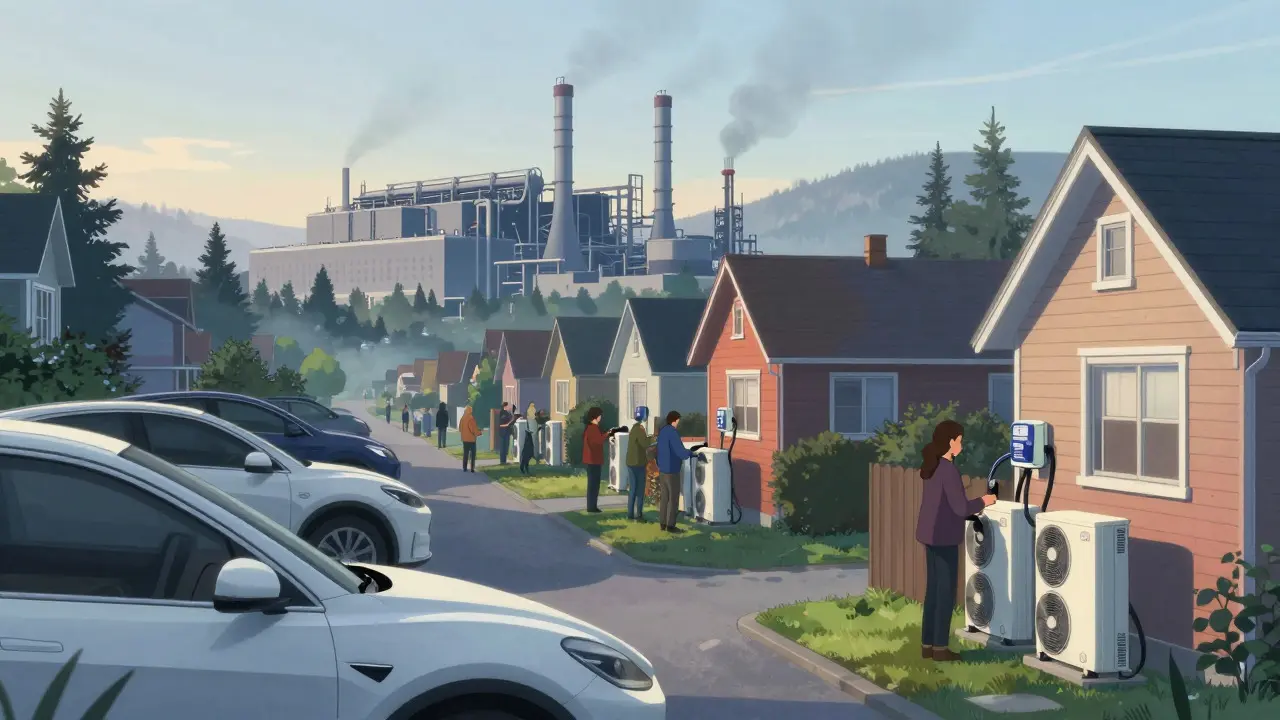
Imagine needing power for your electric car or heat pump, only to find out that a data center in the next town is hogging the grid. That was the reality facing British Columbia residents in early 2022. The province made a bold move by suspending new electricity connections for cryptocurrency miningthe process of validating transactions on a blockchain network using high-power computing equipment. This wasn't just a temporary pause; it became one of the most significant regulatory shifts in North America's digital asset landscape.
As of August 2026, you might be wondering if these rules are still in place. The short answer is yes, but with some important nuances regarding the timeline and legal battles that shaped the final policy. If you are an investor, miner, or resident curious about where your electricity goes, understanding the framework behind British Columbiaa Canadian province known for its hydroelectric power generation and environmental policies's approach is crucial.
The Core Restriction: What Actually Happened?
The story starts in December 2022. BC Hydrothe primary electrical utility provider in British Columbia, generating over 90% of its power from hydroelectric sources, the province's main power supplier, hit the brakes. They stopped accepting new connection requests from crypto miners. Why? Demand had skyrocketed. Miners were asking for massive chunks of the grid-specifically, 21 projects requested a combined 1,403 megawatts of capacity. To put that in perspective, that amount of energy is enough to power roughly 570,000 homes or charge 2.1 million electric vehicles every year.
The government didn't leave this to chance. Minister Josie Osborne, leading the Ministry of Energy, Mines and Low Carbon Innovation, pushed for a structured suspension. Initially set for 18 months, this freeze was extended in Spring 2024 to 36 months. This extension meant the restriction period officially runs until December 2025. However, because permanent policy development is ongoing, the practical effect remains that new large-scale mining operations cannot easily plug into the grid without navigating complex provincial approvals.
Why Did the Government Step In?
You might ask: why fight against profitable businesses? The argument from Victoria (the provincial capital) centers on public interest and climate goals. Cryptocurrency mining consumes huge amounts of electricity to run and cool banks of high-powered computers 24/7/365. But here’s the catch: it creates very few local jobs compared to other industrial uses of that same power.
Provincial officials argued that this electricity would be better used for:
- Residents switching to electric vehicles (EVs).
- Homeowners installing heat pumps to replace gas furnaces.
- Businesses undertaking electrification projects that support CleanBC climate goals.
CleanBC is the province’s roadmap to reduce greenhouse gas emissions. By prioritizing electrification over mining, the government aimed to secure long-term economic benefits and lower carbon footprints, rather than letting transient mining profits dictate energy allocation.
The Legal Battle: Conifex vs. The Province
Not everyone agreed. The most high-profile challenge came from Conifex Timbera forestry company operating Bitcoin mining colocation facilities for Greenidge Generation. This forestry company operated Bitcoin mining colocation facilities for Greenidge Generation. They wanted to consume approximately 2.5 million megawatt-hours of electricity annually-a staggering amount, nearly half the output of British Columbia’s new Site C dam.
Conifex took the province to court, arguing that their right to buy power was being unfairly restricted. The case went through two major levels:
- B.C. Supreme Court (Early 2024): Ruled in favor of the province, stating the policy was reasonable.
- British Columbia Court of Appeal: Upheld the lower court’s decision, emphasizing that BC Hydro has the priority to act in the public interest.
The courts confirmed that preserving electricity supply to prevent higher consumer rates justified limiting access for Bitcoin miners. This legal victory solidified the provincial government’s authority to regulate who gets power and how much they get.
Vancouver’s 'Bitcoin-Friendly' Motion: A Red Herring?
Here’s where things get confusing for many people. Vancouver City Council passed a motion introduced by Mayor Ken Sim to position the city as a 'bitcoin-friendly city.' It sounds like the city wants miners, right? Not exactly.
Municipalities in British Columbia don’t control electricity distribution. That power belongs to the province and BC Hydro. So, while Vancouver may welcome the financial ecosystem around Bitcoin (exchanges, tech firms, etc.), it cannot override the provincial jurisdiction over the actual physical grid. The city’s motion was more about signaling openness to the broader industry rather than guaranteeing cheap power for mining rigs.
How BC Compares to Other Provinces
To understand the severity of BC’s stance, look at the rest of Canada. Most provinces have tightened the screws on mining, but BC is among the strictest.
| Province | Status / Action | Key Detail |
|---|---|---|
| British Columbia | Suspension/Restriction | 36-month suspension extended to Dec 2025; strict regulation via Bill 24. |
| Manitoba | Suspension | New electricity connections for mining suspended in 2022. |
| Quebec | Rate Caps | Hydro Quebec raised rates and capped allocations for crypto ops. |
| New Brunswick | Moratorium | Issued moratorium on large-scale electricity requests from miners. |
| Alberta | Open/Deregulated | Deregulated market makes it a haven for miners seeking operational freedom. |
Alberta stands out as the exception. With a deregulated energy market, it attracts miners looking for flexibility. If you’re planning a mining operation in Canada, Alberta is often the go-to, whereas BC requires careful navigation of provincial rules.

The Path Forward: Permanent Policy Development
The current suspension isn't forever, but the end date doesn't mean an immediate flood of miners. The Ministry of Energy conducted extensive stakeholder engagement in summer and fall 2023. Over 400 groups-including First Nations, municipalities, utilities, and mining companies-participated in online discussions to shape permanent policy.
In Spring 2024, the Ministry amended the Utilities Commission Act. This gave the provincial Cabinet the authority to create regulations specifically for cryptocurrency mining electricity service. This bypasses the standard BC Utilities Commission process, giving the government tighter control.
So, what does this mean for you in 2026?
- For Miners: Don't assume the door is open. Check the latest provincial guidelines. The focus will likely remain on ensuring mining doesn't crowd out residential electrification.
- For Residents: Your rate stability is protected by these rules. The priority remains on keeping power affordable for EVs and home heating.
- For Investors: Look beyond BC if you need guaranteed, low-cost power for large-scale operations. Alberta or international jurisdictions might offer more predictability.
The global context also matters. With Bitcoin prices hitting new highs (reaching $107,000 in recent peaks), mining profitability is up. This increases pressure on grids worldwide. British Columbia maintains its position that unrestricted mining could erode the available energy needed for strategic CleanBC goals. The province is betting that long-term economic health comes from clean industrial growth, not just short-term mining revenue.
Frequently Asked Questions
Are cryptocurrency mining restrictions in British Columbia permanent?
Not yet. The initial suspension was extended to 36 months, expiring in December 2025. However, the government is developing a permanent policy framework through the amended Utilities Commission Act. Until new regulations are finalized, the restrictive environment largely remains in effect.
Can I mine Bitcoin in Vancouver if the city is 'bitcoin-friendly'?
You can operate a business there, but getting cheap, unlimited power is difficult. Vancouver's motion signals openness to the industry, but electricity regulation is under provincial jurisdiction via BC Hydro. Large-scale miners face the same provincial restrictions as those in other parts of BC.
Why did the Conifex Timber lawsuit matter?
It tested the legal limits of provincial power. The courts ruled in favor of the province, confirming that BC Hydro can prioritize public interest (like keeping rates low for residents) over individual commercial contracts for electricity. This gave the government strong legal backing for future restrictions.
Which Canadian province is best for crypto mining in 2026?
Alberta is generally considered the most favorable due to its deregulated energy market. Other provinces like Manitoba, Quebec, and New Brunswick have implemented suspensions or caps similar to British Columbia.
How much electricity do crypto miners use in BC?
At the peak of the restriction, 21 projects had requested 1,403 megawatts of capacity. This is equivalent to the annual energy consumption of approximately 570,000 homes or 2.1 million electric vehicles.





Comments
Matt Reckdenwald
August 25, 2026 AT 15:47 PMIt is genuinely heart-wrenching to see a community forced to choose between their digital dreams and the warmth of their homes. The grid is not just wires; it is the nervous system of our daily survival, and when one part starts screaming for power, the whole body feels the pain. I remember reading about the early days of this crisis, and it felt like watching a slow-motion car crash where everyone knew the brakes were failing but no one wanted to admit it. The idea that we could simply 'pause' something as volatile as crypto mining was always going to be a band-aid on a bullet wound. Now, years later, we are still picking at the scab, wondering if the infection has spread or if we finally stopped the bleeding. It makes you wonder if we ever truly listened to the quiet voices in the room who were just trying to keep their lights on. The drama of the legal battles was almost cinematic in its absurdity, like a Shakespearean tragedy written by accountants. We are all just pawns in a larger game of energy politics that few people fully understand. But somewhere in the noise, there is a hope that we learned something about prioritizing human comfort over speculative profit. Let us hope that the next chapter is written with more empathy and less ego.
Aaliyah Simpson
August 27, 2026 AT 02:21 AMOh, you mean the government didn't actually ban it, they just made it so expensive and bureaucratic that only the really evil guys can afford to do it? Classic move. They call it 'regulation' but let's be real, it's just a way to kill off the small miners while the big corporations buy up the land cheap. And don't get me started on the 'public interest' argument. That's what they say every time they want to take your money. First it's taxes, now it's electricity rates. Next thing you know, they'll be taxing the air you breathe because some data center needs to cool down its servers. The fact that Vancouver thinks it's 'bitcoin-friendly' is the biggest joke of the century. You can't be friendly to a business that you're actively trying to strangle. It's like saying you love dogs but keeping them in a cage in the basement. Everyone pretends to care about the environment, but really they just want control. And control always smells like corruption to me. Wake up, sheeple. The grid isn't full, the politicians just don't want you to have cheap power. They want you dependent on their precious hydroelectric monopoly. It's all a setup. A beautiful, green-washed setup.
Paul Needham
August 27, 2026 AT 11:11 AMSure, let's pretend the miners are the bad guys here. Because clearly, the problem was never that they used too much power, but that they used it without asking nicely enough. I bet if they had sent a nice letter to BC Hydro, everything would have been fine. Oh wait, they did send requests, and got ignored. Typical. The real issue is that the province is too lazy to manage its own resources properly, so they blame the first group of people who ask for a bigger slice of the pie. It's not about EVs or heat pumps, it's about maintaining the status quo. If you look at the numbers, the 1,400 MW request wasn't even a drop in the bucket compared to what the industrial sector uses. But sure, let's panic about Bitcoin instead of looking at the actual waste in the manufacturing sector. It's easier to pick a fight with tech bros than with steel mills. And don't get me started on the courts. Of course the courts sided with the state. Who else would they side with? The guy with the lawsuit or the guy with the tax revenue? It's not a surprise, it's a foregone conclusion dressed up in judicial robes. Just another day in the life of a regulated society.
Jillian Pye
August 27, 2026 AT 20:25 PMI find myself thinking about the concept of scarcity here. :)
We often talk about energy as if it is an infinite resource, like air or sunlight, but in reality, it is deeply tied to geography and infrastructure. When a province like BC relies heavily on hydro, the 'capacity' is not just about generating power, but about managing the flow. It is a delicate balance. The miners wanted to tap into that flow, but the residents needed stability. There is a philosophical tension there between individual enterprise and collective well-being. How do we weigh the value of a speculative asset against the value of home heating? It is not a simple math problem. It is a moral one. And perhaps the most interesting part is how the law tried to resolve it. Did the court decide based on economics, or based on social contract? It feels like a test case for how we will handle other emerging technologies that demand massive resources. Are we ready for the AI data centers that are coming next? Or will we just repeat this cycle? I am not sure, but I think the answer lies in better planning, not just restrictions. But then again, planning is hard when profits are involved. :/
Martha Packard
August 29, 2026 AT 14:46 PMYou all are missing the point entirely. This isn't about electricity. This is about freedom. The moment the government decides who gets to use the grid, they have already lost the plot. Why should a miner pay more than a factory? Why should a resident get priority over an investor? It's arbitrary. It's pure, unadulterated favoritism disguised as policy. Look at the Conifex case. They lost because the judges were scared of the political fallout, not because the law was on the province's side. The law is whatever the powerful say it is. And don't tell me it's for the 'CleanBC' goals. That's just marketing fluff to make the restriction sound noble. In reality, it's a protectionist measure to keep local businesses from being undercut by efficient, low-cost competitors. If you allow free market principles, the miners would have found a way to coexist. Maybe they would have paid higher rates. Maybe they would have built their own solar farms. But no, the bureaucrats decided to play God with the power switch. It's arrogant. It's inefficient. And it's why Canada keeps losing its edge in the global economy. We regulate ourselves into irrelevance while the US and China innovate. Stop crying about your electric bill and start worrying about your future. Because right now, it looks bleak.
Jarnail Singh
August 31, 2026 AT 11:43 AMHello my friends from the West! :) It is fascinating to observe how British Columbia handles its energy distribution, which is quite different from the complex grid management systems we see in India where load shedding is a common occurrence during peak summer months due to high demand for irrigation and industrial cooling. While the suspension of new connections for cryptocurrency mining might seem restrictive to some, it is actually a very prudent step to ensure that the primary consumers, namely the households and essential industries, have stable access to power which is crucial for maintaining the standard of living and economic productivity in any region. The comparison with Alberta is also very insightful as it highlights the diversity of regulatory approaches within the same country, showing that a deregulated market can sometimes attract more investment but may also lead to volatility in pricing and supply reliability which is a trade-off that policymakers must carefully consider. In my experience, when governments intervene in such specific sectors, it is usually because the market has failed to allocate resources efficiently on its own, leading to externalities like increased carbon footprint or higher costs for ordinary citizens, so the intervention is justified if it leads to long-term sustainability and equitable access to essential services. The legal battle with Conifex Timber is a good example of how the judiciary plays a role in checking executive power, ensuring that regulations are reasonable and not arbitrary, which is a fundamental principle of governance that we should all appreciate and support to maintain the rule of law. Looking ahead, the development of permanent policy through stakeholder engagement is a positive sign of democratic participation, allowing diverse voices including indigenous communities and environmental groups to have a say in the future of energy policy, which is essential for creating a consensus-based approach that balances economic growth with environmental stewardship. It is important for investors to understand these nuances before making decisions, as the regulatory landscape can change rapidly based on political cycles and public opinion, so diversification across different jurisdictions might be a safer strategy for those looking to invest in energy-intensive operations. Overall, the situation in BC serves as a case study for other regions considering similar measures, demonstrating that a balanced approach to energy allocation can help achieve climate goals while protecting consumer interests, provided that the implementation is transparent and fair. :)
Ashwini Chaskar
September 2, 2026 AT 09:35 AMit is so frustrating how everyone just accepts the narrative without questioning it. i mean really who decided that miners are the enemy? it feels like a setup. the government knows the prices are going up anyway so they just need a scapegoat. and don't get me started on the 'clean' energy part. hydro dams destroy ecosystems too. it's all a lie. we are just being told what to think. the real victims are the people who can't afford to upgrade their homes to electric. they are stuck with gas until the end. and the rich? they just buy bigger houses and don't care. it's so unfair. and the lawyers? they just play their games. who cares about the truth? only the outcome matters. i feel like we are all asleep. walking around in a fog. and the fog is getting thicker. :(
Sam Ariafar
September 3, 2026 AT 22:20 PMLet’s not forget the moral imperative here. We have a duty to protect the vulnerable. The single mother struggling to heat her home is more important than the venture capitalist chasing a speculative bubble. It is simple ethics. If you prioritize profit over people, you have lost your way. The government acted correctly because they listened to the people, not the lobbyists. Those who complain about regulation are usually just greedy. Greed is a sin. And when greed threatens the community, it must be checked. This is not about politics. It is about character. Do you have the character to share your resources? Do you have the humility to accept that your desires are not the top priority? Probably not. But that is okay. The system works for those who follow the rules. Keep complaining, and you will find yourself further outside the circle of grace. The light of reason is shining brightly on this decision. Embrace it. Or remain in the shadows of your selfishness. Your choice. But know that history will judge you harshly if you stand on the wrong side of progress.
Jane yuan
September 5, 2026 AT 16:37 PMThe sovereignty of the grid is non-negotiable. To cede control to foreign-backed mining operations is to invite instability. We must secure our domestic assets first. The rest is secondary. Efficiency is a myth sold by those who benefit from chaos. Order requires restriction. Restriction requires authority. Authority belongs to the state. Therefore, the state restricts. QED.
Ian Munro
September 7, 2026 AT 12:30 PMShort version: BC is strict. Alberta is open. Miners go to Alberta. Residents stay in BC. Rates stay stable. Simple.
Trista Dennis
September 8, 2026 AT 09:51 AMAh, the classic 'we did it for you' move. How touching. How selfless. How utterly predictable. You think banning miners solves the rate hike problem? Please. It's like blaming the mouse for the hole in the wall when the foundation is rotting. The real issue is aging infrastructure and lack of investment in transmission lines. But hey, it's easier to point at the flashy new kid on the block than to fix the old pipes. And don't get me started on the 'bitcoin-friendly' city motion. That's not friendliness; that's a marketing stunt. It's like a restaurant putting a 'No Dogs Allowed' sign on the door but calling themselves 'Pet Friendly' because they sell dog treats in the lobby. It's disingenuous. It's manipulative. And frankly, it's insulting to anyone with half a brain cell. So yes, the policy is a mess. The execution is worse. And the justification? Pure propaganda. Enjoy your 'stable' rates while the grid crumbles around you. At least you can sleep at night knowing the miners are paying extra. Or are they? Check the bills. You might be surprised.
nic c
September 9, 2026 AT 05:11 AMOh, you lot are just so *delighted* aren't you? Sipping your lattes, judging the miners like they're vermin in the walls. It's almost poetic how the 'responsible' citizens of BC get to sit in their heated homes while the 'greedy' miners freeze out in the cold. Truly, a tale of two cities, if one city is a server farm and the other is a suburban cul-de-sac. The drama of it all! The legal battles! The political posturing! It's like a soap opera written by a committee of accountants. And the best part? The ending is already written. The miners lose. The government wins. The residents nod sagely. And the grid? Well, the grid doesn't care. It just hums along, indifferent to the human drama playing out around it. But hey, at least we have a story to tell. 'Remember when we fought the crypto goblins?' Yeah, we did. And we won. Or did we? Who knows? The truth is buried under layers of red tape and press releases. But the performance? Flawless. Bravo. Encore. More please. I'm dying to see how this ends. Spoiler alert: it doesn't. It just drags on and on, like a bad season of a show you cancelled three episodes ago. But you keep watching. Because what else is there? The alternative is silence. And silence is terrifying. So we watch. We comment. We argue. We live. In the echo chamber of our own making. Isn't that something?
Kevin Payette
September 9, 2026 AT 10:08 AMLook at the data. The data says the province saved money. The data says the miners lost. The data says you are wrong. Stop feeling. Start calculating. The emotional attachment to 'fairness' is a cognitive bias. A flaw in your logic. Fix it. Then come back and argue. Until then, your opinion is noise. Noise disrupts signal. Signal is truth. Truth is efficiency. Efficiency is profit. Profit is power. Power is mine. Yours is irrelevant. Move aside. Let the algorithm run. It knows best. You don't. You never did. You are a variable. I am the constant. Accept your place. Or be optimized away. The choice is yours. But know that the clock is ticking. And the clock does not stop for tears. It stops for nothing. Not even for justice. Justice is a construct. Constructed by the weak to hold back the strong. Break the construct. Build the future. The future is automated. The future is clean. The future is silent. Welcome to the void. It is peaceful. It is empty. It is perfect. Don't ruin it with your chatter. Shut up. Think. Calculate. Submit.
Rebecca Springer
September 9, 2026 AT 20:58 PMIt is interesting to note how different cultures approach resource management. In many parts of Asia, communal ownership of utilities is seen as a path to social harmony, whereas in Western contexts, individual rights often take precedence. This case in BC seems to strike a balance, though a tenuous one. The involvement of First Nations in the stakeholder process is a positive step towards reconciliation and shared governance. It shows that modern policy can incorporate traditional values of stewardship. However, the speed of technological change often outpaces legislative frameworks. Crypto mining emerged quickly, and the response was reactive rather than proactive. This is a common challenge for regulators globally. Perhaps the lesson here is not just about electricity, but about agility in governance. Can institutions adapt fast enough to serve new economic realities without sacrificing stability? It remains an open question. But the dialogue itself is valuable. It brings diverse perspectives to the table. And that, in itself, is a form of strength. Even if the outcome is imperfect, the process matters. We learn from the friction. We grow from the debate. And hopefully, the next generation will have clearer guidelines to work with. Until then, we navigate the uncertainty together. With patience. And hope.
J Shepherd
September 9, 2026 AT 23:02 PMYo, quick breakdown for the rookies. The capex on grid upgrades is the real killer here. Miners want plug-and-play, but the utility needs to amortize the cost of new substations and transformers over decades. If you bring in 1.4GW of load, you're not just buying kWh, you're forcing a capital expenditure event that hits the rate base immediately. That's why the suspension happened. It's not just about 'saving power,' it's about protecting the ratepayer from a sudden spike in fixed costs. The Conifex loss basically said, 'Yeah, the utility can prioritize existing customers over new entrants.' Standard utility law, actually. But the crypto angle made it political. So now you've got a hybrid regulatory framework. If you're modeling a site, assume a 3-5 year timeline for interconnection approval, minimum. Factor in the curtailment risk too. If the grid gets tight, you might get throttled. That kills your hash price margin. So yeah, BC is tough. Alberta is easier because the market clears faster. But BC has cheaper baseline power. It's a tradeoff. Run the numbers on both. Don't just look at the sticker price of electricity. Look at the total cost of ownership, including the regulatory overhead. That's where the real margin is. Good luck. You'll need it.
Alan Hawkins
September 11, 2026 AT 03:31 AMGreat summary. I think the key takeaway is that the policy is still evolving. It's not set in stone yet. We should keep an eye on the final regulations. It's good to see the stakeholder input being considered. It gives me hope that the final policy will be fair and balanced for everyone involved. Thanks for sharing this info!
Steve Sulley
September 12, 2026 AT 01:27 AMeh why bother with all that paper pushin. just build ur own solar panel array and hook it up. thats the real freedom. the gov is just trying to keep u on the leash. i mean look at the stats they gave. 1400mw. thats nothing. its like a drop in the ocean. they are just scared of competition. typical. the rich get richer and the poor get poorer. its always the same story. dont trust the media. dont trust the politicans. trust ur gut. and maybe a little bit of the stars. they are the only ones telling the truth. the rest is just noise. static. interference. tune it out. focus on the big picture. the universe wants us to be free. but the earth wants us to be careful. its a balance. a dance. a rhythm. find it. or fail. simple as that. lol