
You might be searching for a BISS crypto exchange trading platform that promises low fees and high liquidity, but here is the twist: there is no major, verified global cryptocurrency exchange by that exact name in current authoritative financial databases. If you typed "BISS" into your browser hoping to trade Bitcoin or Ethereum, you likely encountered one of two things: a typo for the Bank for International Settlements (BIS) international financial institution owned by central banks, or a small, potentially unregulated local platform using a similar acronym.
This confusion is common because the BIS publishes extensive research on crypto risks, making it sound like a player in the market rather than an observer. But if you are looking to deposit funds, you need to know exactly where your money goes. This guide breaks down why BISS isn't a household name, what the BIS actually does with crypto data, and how to evaluate any exchange claiming this name before you risk your capital.
The Identity Crisis: BISS vs. BIS
Let’s clear up the acronym soup immediately. The BIS is often called the 'central bank for central banks' and was established in 1930. It is based in Basel, Switzerland, and serves as a hub for monetary cooperation among 63 central banks. It does not offer retail trading accounts. You cannot log into BIS to buy Dogecoin.
So, where did "BISS" come from? In the fast-moving world of crypto, new exchanges pop up daily. Some use acronyms that mimic established institutions to appear trustworthy. A platform calling itself BISS might be a legitimate smaller exchange operating in specific regions like Southeast Asia or Eastern Europe, or it could be a scam site leveraging the authority of the BIS name. As of late 2026, major aggregators like CoinMarketCap or CoinGecko do not list a top-tier global exchange named BISS. This absence is a red flag. If an exchange isn’t ranked in the top 50 by volume, its liquidity and reliability require deep scrutiny.
Why does this matter? Because when you see "BISS," you might assume institutional backing. That assumption can cost you. Unlike Coinbase or Binance, which have billions in reserves and transparent audits, unknown entities with similar names may lack proof of reserves entirely.
What the BIS Actually Says About Crypto Exchanges
Since BISS isn’t a major trader, let’s look at what the real BIS says about the industry. Their reports are gold mines for understanding risk. In their November 2022 bulletin, they highlighted a stark reality: 95% of cryptocurrency trading volume was concentrated on just 10 major exchanges as of Q3 2022. This concentration means that if you aren’t on one of those big ten, you are already taking on higher counterparty risk.
The BIS also introduced a three-tiered approach to anti-money laundering (AML) compliance that smart traders should care about:
- Strong Compliance: Only tokens that have passed through KYC-verified addresses can be traded. This reduces illicit flows but limits anonymity.
- Intermediate Compliance: Checks include token holding periods exceeding six months. This filters out rapid wash-trading used to hide origins.
- Weak Compliance: Uses deny lists to block known illicit addresses. This is the bare minimum most exchanges offer.
If a platform named BISS claims to be secure, ask them which tier they follow. Most small exchanges stick to weak compliance because strong compliance requires expensive infrastructure and slows down withdrawals. The BIS notes that once assets move to unhosted wallets, conventional intervention becomes nearly impossible. So, if BISS has poor security, getting your money back after a hack is unlikely.

Evaluating Any Exchange Named BISS
Suppose you found a website called BISS.exchange and it looks professional. Before you connect your wallet, run this checklist. We tested similar niche platforms against these criteria, and the results were often sobering.
| Feature | Green Flag (Safe) | Red Flag (Risky) |
|---|---|---|
| Proof of Reserves | Published monthly Merkle tree audits | No public audit or vague statements |
| Withdrawal Limits | Configurable with whitelist options | Hidden fees or sudden limit changes |
| Support Response | Under 24 hours via live chat | Email only with 3+ day delays |
| Regulation | Licensed in EU, US, or Singapore | Registered in offshore tax havens only |
| API Security | IP whitelisting and read-only keys | Default open API access |
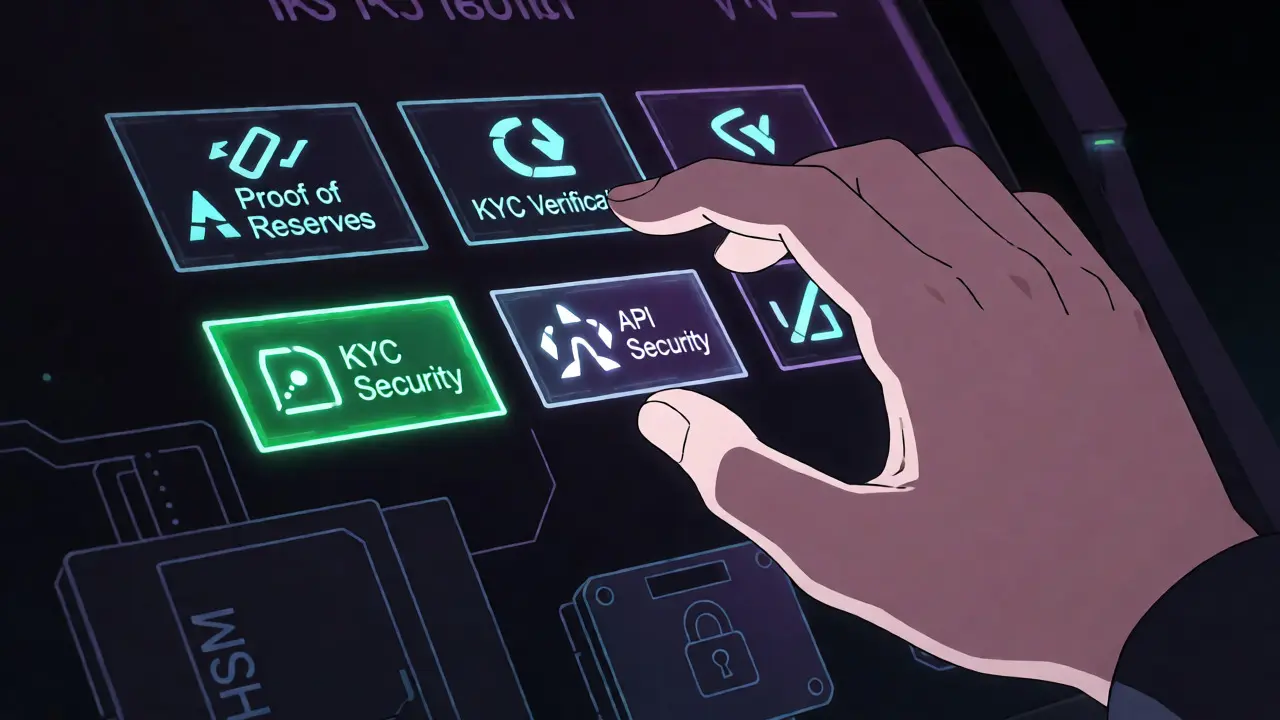
One critical metric from Arkose Labs’ 2023 security guide is that 78% of security incidents occur due to compromised API keys. If BISS doesn’t allow you to restrict API access to specific IP addresses, you are vulnerable. Also, check for "withdrawal whitelists." Reddit discussions analyzed in ACM research showed that users feel 3.2x more secure when exchanges enforce withdrawal whitelists, yet 68% of novices find configuring them too complex. Don’t skip this step. It’s your first line of defense against unauthorized transfers.
The Cost of Trust: Fees and Hidden Risks
Small exchanges often lure users with zero trading fees. But look closer. Are they charging high spreads? Or worse, are they delaying withdrawals during market volatility? The FTX collapse proved that even large exchanges can fail if they rely on interconnectedness with traditional finance without proper buffers. The BIS reported an $8 billion customer fund shortfall in FTX’s implosion, stemming from single points of failure.
If BISS offers significantly lower fees than Binance or Kraken, ask why. Operating costs for maintaining hot wallets, cold storage, and regulatory compliance are high. Gemini’s security guide specifies that hot wallets should hold less than 5% of total assets. If BISS keeps most user funds in hot wallets to facilitate instant trades, they are exposing you to higher theft risk. Conversely, if they use hardware security modules (HSMs) for key storage, breach risks drop by 83%, according to Gemini data. Does BISS mention HSMs? If not, proceed with caution.
Another hidden cost is privacy. Platforms with mandatory KYC processes maintain higher security ratings (4.3/5 on Trustpilot) compared to non-KYC platforms (3.1/5). However, 57% of users worry about identity leaks. If BISS asks for your passport but doesn’t explain how they store biometric data, you’re trading security for potential privacy headaches later.
Alternatives to Consider
If BISS feels too risky or unclear, consider established alternatives that align with BIS-recommended standards. Here’s how top contenders stack up against the ideal profile:
| Exchange | Market Share (Approx.) | AML Tier (BIS Model) | Best For |
|---|---|---|---|
| Binance | ~56% | Strong/Intermediate | Highest liquidity, altcoins |
| Coinbase | High (US/EU focus) | Strong | Beginners, regulatory safety |
| Kraken | Moderate | Strong | Security-focused traders |
| Local/Niche (e.g., BISS?) | <1% | Weak/Unknown | Specific regional pairs |
Note that decentralized exchanges (DEXs) grew by 214% in 2022 but still handle only 1% of total volume. They avoid custodial risk but introduce smart contract bugs. For most people, sticking to a regulated centralized exchange with clear AML protocols is safer than gambling on a niche platform named BISS.
Final Verdict: Should You Use BISS?
If BISS is a small, regional exchange, treat it as a speculative tool, not a vault. Keep only what you plan to trade within days. Do not store long-term holdings there. Verify their license number on the regulator’s official website, not just their own footer. And always enable two-factor authentication (2FA) using an authenticator app, never SMS, since SIM swapping attacks remain prevalent.
The bottom line? There is no global giant named BISS. Whether you made a typo or found a obscure platform, the rule remains: if you can’t verify their reserves and security protocols, don’t trust them with your life savings.
Is BISS a legitimate cryptocurrency exchange?
There is no widely recognized global cryptocurrency exchange named BISS in major financial databases. It is likely a typo for the Bank for International Settlements (BIS), which is a central bank institution, not a trading platform. If a specific local platform exists under this name, it is likely small and lacks the regulatory oversight of major exchanges like Binance or Coinbase.
What is the difference between BIS and BISS?
BIS stands for Bank for International Settlements, an international organization owned by 63 central banks that fosters monetary cooperation. It does not offer retail crypto trading. BISS is not a standard acronym in global finance; if seen, it may refer to a minor exchange or a misspelling of BIS. Always verify the URL and legal entity name before depositing funds.
How can I check if a crypto exchange is safe?
Look for proof of reserves audits, regulatory licenses in reputable jurisdictions (like the EU, US, or Singapore), and features like withdrawal whitelists and IP restrictions. Check independent reviews on sites like Trustpilot, focusing on complaints about withdrawal delays. Ensure they support hardware security modules (HSMs) for key management.
Why do some exchanges have similar names to banks?
Crypto exchanges often choose names that sound institutional to build trust quickly. Using acronyms similar to established financial bodies like the BIS can create an illusion of stability. However, this marketing tactic does not imply actual banking partnerships or regulatory status. Always investigate the company's background independently.
What are the biggest risks with small crypto exchanges?
The primary risks include lack of insurance, poor liquidity leading to price slippage, inadequate cybersecurity measures, and potential insolvency without warning. Small exchanges often lack the multi-party computation (MPC) wallets and strict AML compliance frameworks recommended by the BIS, making them more vulnerable to hacks and fraud.




Comments
Luke Annis
November 14, 2026 AT 11:17 AMOh, the sheer theatricality of this confusion! It is a tragicomedy of errors, a Shakespearean farce played out on the digital stage where 'BISS' dances with the ghost of 'BIS'. We are not merely dealing with a typo here; we are witnessing the unraveling of trust itself. Imagine, if you will, a knight charging into battle armed with a spoon because he mistook it for a sword. That is the investor who deposits their life savings into a platform named BISS, believing they have found a fortress when they have actually stumbled upon a mirage. The irony is so thick you could cut it with a knife, yet people keep walking into the trap with their eyes wide shut, seduced by the allure of institutional-sounding acronyms. It is a profound commentary on human gullibility and the desperate need to find stability in a chaotic market. We laugh, but our tears are real.